
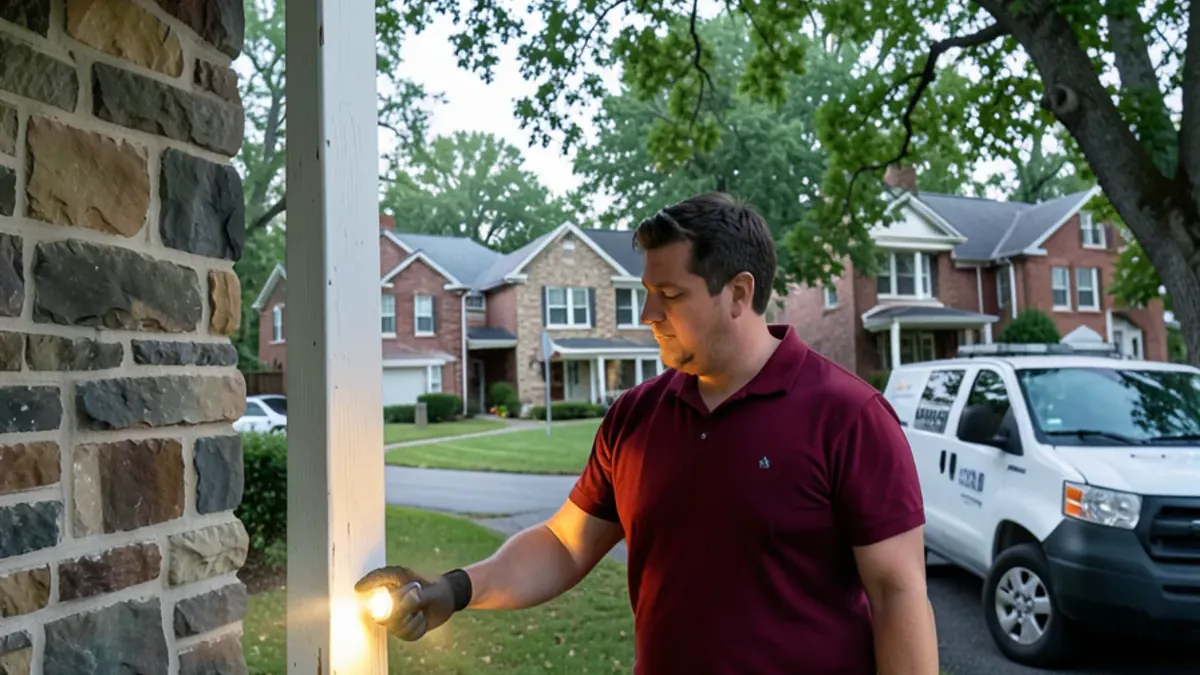
What are the signs of carpenter ants in the house?
A few foragers wandering in from the yard in May isn't the same as a nest in the house. Swarmers inside, or ants active in the kitchen in February, point to a colony living in the walls.
Around here, indoor swarmers usually show up from late winter into spring. A steady trickle of workers on an upper floor in March often traces back to a wet roof edge, a leaking skylight or a window that has been letting in water.
- Large black ants, roughly a quarter to half an inch long, often in mixed sizes
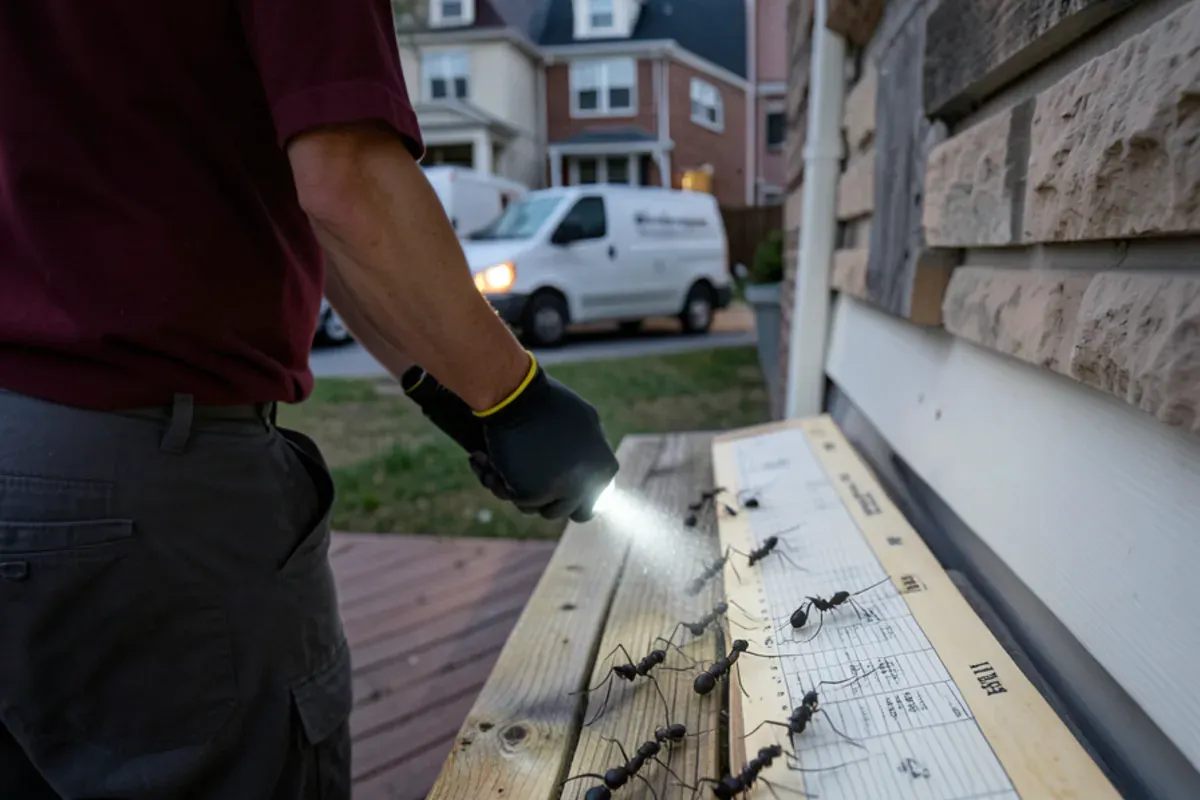
- Ants trailing indoors after dark along baseboards, pipes, wires or the top of the foundation
- Small piles of coarse, sawdust-like debris mixed with ant body parts below trim, sills or attic framing
- A faint rustling inside a wall or ceiling on a quiet night
- Winged ants emerging indoors in late winter or spring, a sign of a nest inside the structure
- Smooth, clean galleries in damp wood around windows, doors, decks or porch columns
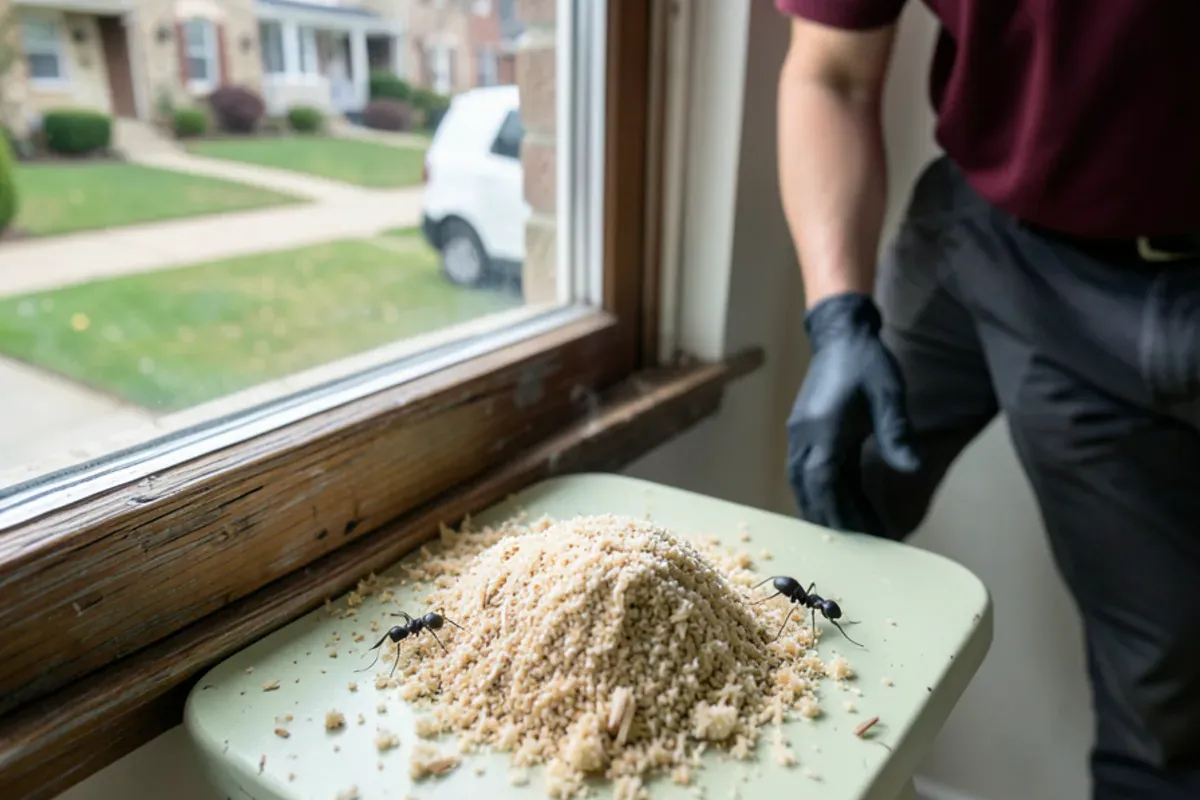
Carpenter ants vs termites: how to tell them apart
When the evidence is unclear, a termite inspection sorts it out, and so does saving a specimen. If the holes are tiny and round and the powder is flour-fine, you may be looking at beetles instead; see powderpost beetle control.
| Feature | Carpenter ants | Subterranean termites |
|---|---|---|
| Body | Black or red-black, pinched waist | Pale workers; dark swarmers with a thick waist |
| Antennae | Elbowed | Straight, bead-like |
| Wings on swarmers | Front pair longer than back | Four wings of equal length |
| Wood damage | Clean, sanded-smooth galleries | Galleries packed with soil |
| Debris | Sawdust piles pushed out of the wood | Mud tubes; no sawdust |
| Where you see them | Walking in the open at night | Rarely seen outside the wood |
Why carpenter ants move into Delaware County homes
Black carpenter ants nest outdoors in dead limbs, stumps and hollow trees, and the wooded lots around Ridley Creek State Park, the Crum Woods and Darby Creek give them plenty of both. From a parent colony in a backyard oak, workers set up satellite nests inside houses wherever wood stays wet.
The usual culprits are a leaky window on the shady side, a porch column sitting in water, rotted fascia under a clogged gutter, a bathroom floor around a failing toilet seal, or a sill plate on an old stone foundation that wicks moisture. Tree limbs touching the roof and wires running from trees to the house are their bridges in.
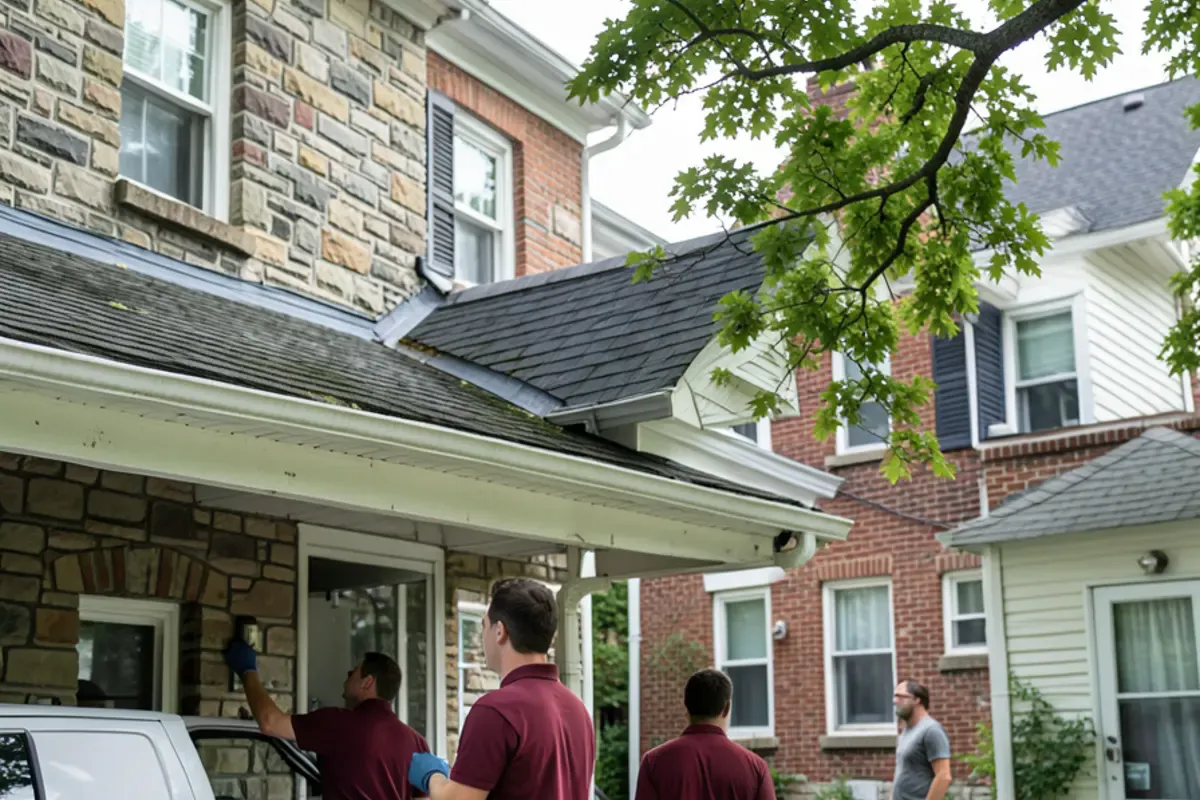
How do we find the carpenter ant nest?
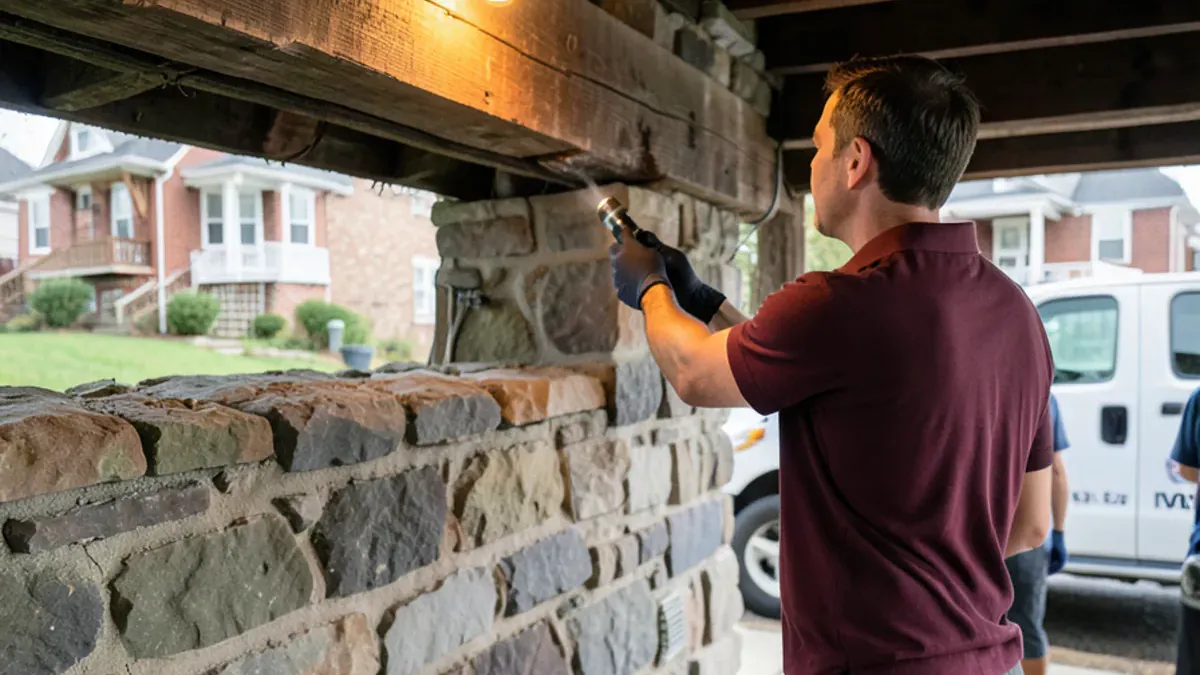
Nest-hunting starts with the trails. Carpenter ants forage most actively from dusk into the night, so we ask when and where you've seen them, then follow their routes along the foundation, deck, utility lines and tree limbs. Inside, we look for debris piles, check moisture-prone spots and listen for activity in hollow areas.
Often there are two targets: the satellite nest in the house and the parent colony outdoors. Treating only one usually means the ants return. Where a nest sits behind finished walls, small access holes may be needed to treat the gallery directly.
Carpenter ant treatment options and trade-offs
Repellent sprays on visible ants tend to scatter a colony and make the nest harder to find, which is why we avoid them inside. The written quote explains which combination fits your house.
- Non-repellent baits placed along active trails, which foragers carry back to the colony; slower, but they reach nests you can't see
- Dust or foam applied directly into a located gallery; fast, but only works where the nest is known
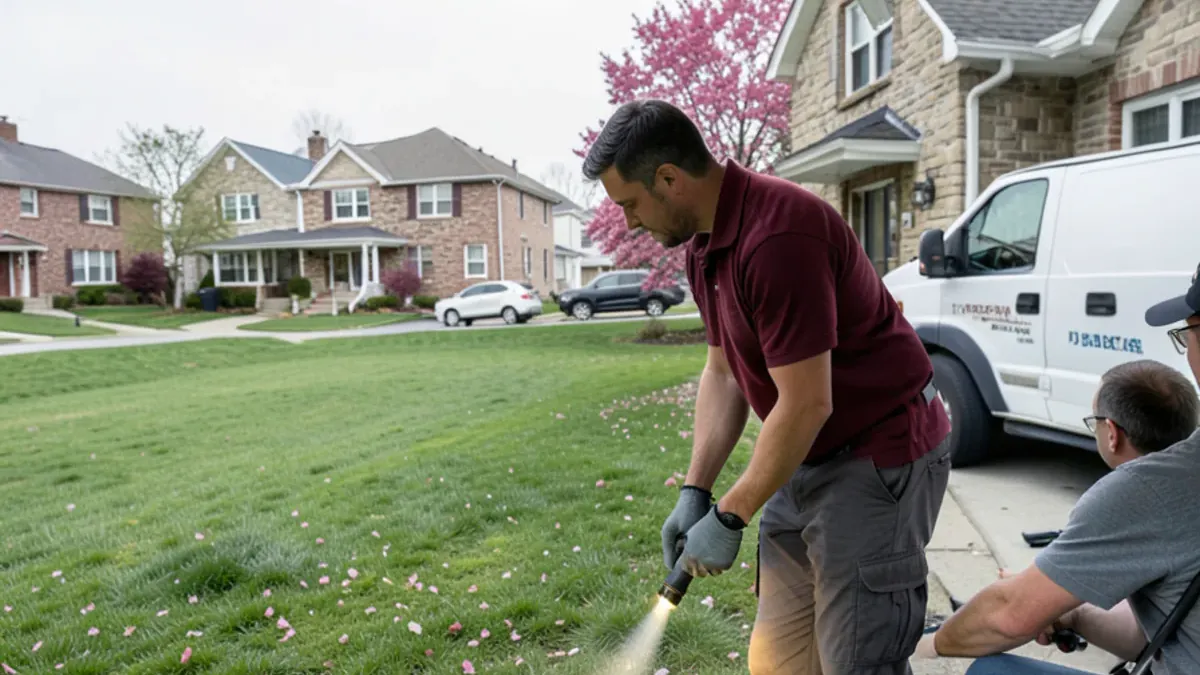
- Non-repellent perimeter treatment around the foundation to intercept workers coming from outdoor colonies
- Treatment of outdoor nests in stumps, dead limbs or landscape timbers when they're found
- Removing or replacing wet, damaged wood, which takes away the reason the ants moved in
Talk to us about carpenter ant control
Call and speak with Thom or his team. The inspection is free, and you get a written quote before any treatment.
- ★ 4.8 from 21 Google reviews
- Open 7 days, 8 a.m. to 7 p.m.
- Free inspection before treatment
- Family-run, based in Media, PA
Open 7 days, 8 a.m. to 7 p.m.
Pennsylvania pesticide rules and carpenter ants in a home sale
Baits, dusts and perimeter products for carpenter ants are pesticides, so paid treatment falls under the Pennsylvania Pesticide Control Act of 1973. The Pennsylvania Department of Agriculture (PDA) licenses the businesses that apply them and certifies the applicators, and 7 Pa. Code § 128.31 has the business license number displayed on service vehicles. Ask for it before anyone drills into a gallery in your walls.
Carpenter ants matter when a house is sold, too. They are one of the insects covered by the NPMA-33 wood-destroying insect report many lenders ask for, so an active nest found during a sale may need documented treatment before closing; our WDI inspection report page explains how that works.
The carpenter ant visit, step by step
Tell us the pattern
When you see them, where, and whether any have wings. Evening sightings are especially useful.
Free inspection
We follow trails inside and out, check damp wood, and look at trees, stumps and limbs near the house.
Written quote
You get a written quote naming the treatment, the areas involved and any repairs we recommend.
Treatment
Baits, gallery treatment and perimeter work are applied according to the quote.
Moisture fixes
We point out the leaks, gutters or wood rot that need a contractor or a weekend project.
Check-in
Activity usually drops over the following weeks; let us know if trails reappear.
What affects carpenter ant control cost
Wooded lots change the scope more than house size. A home in Upper Providence or Rose Valley with oaks over the roof and a row of stumps at the back of the yard may need outdoor colony work as well as the satellite nest, while a twin on a treeless block often comes down to one wet window frame and a short baiting plan.
Repairs are a separate line. When the nest sits in a rotted porch column or sill, a carpenter has to replace the wood, and the timing of that work against the treatment affects how many visits the plan needs. The written quote lists what we treat and what we recommend you have repaired.
- Whether the nest is located or must be reached with baits
- Number of satellite nests and whether a parent colony is outdoors
- Access to the nest behind finished walls, ceilings or soffits
- Size of the perimeter and wooded areas near the house
- Follow-up visits if activity continues
Keeping carpenter ants from coming back
Trim branches back so they don't touch the roof or siding, and pull firewood away from the house. Clean gutters, repair leaks around windows and doors, and replace soft wood on porches and decks. Keep mulch thin and away from wooden siding and trim.
If the ants you're seeing are small, brown and in the kitchen, our ant control page covers odorous house ants and pavement ants. Round holes drilled into fascia or deck rails are more likely carpenter bees; see carpenter bee control.
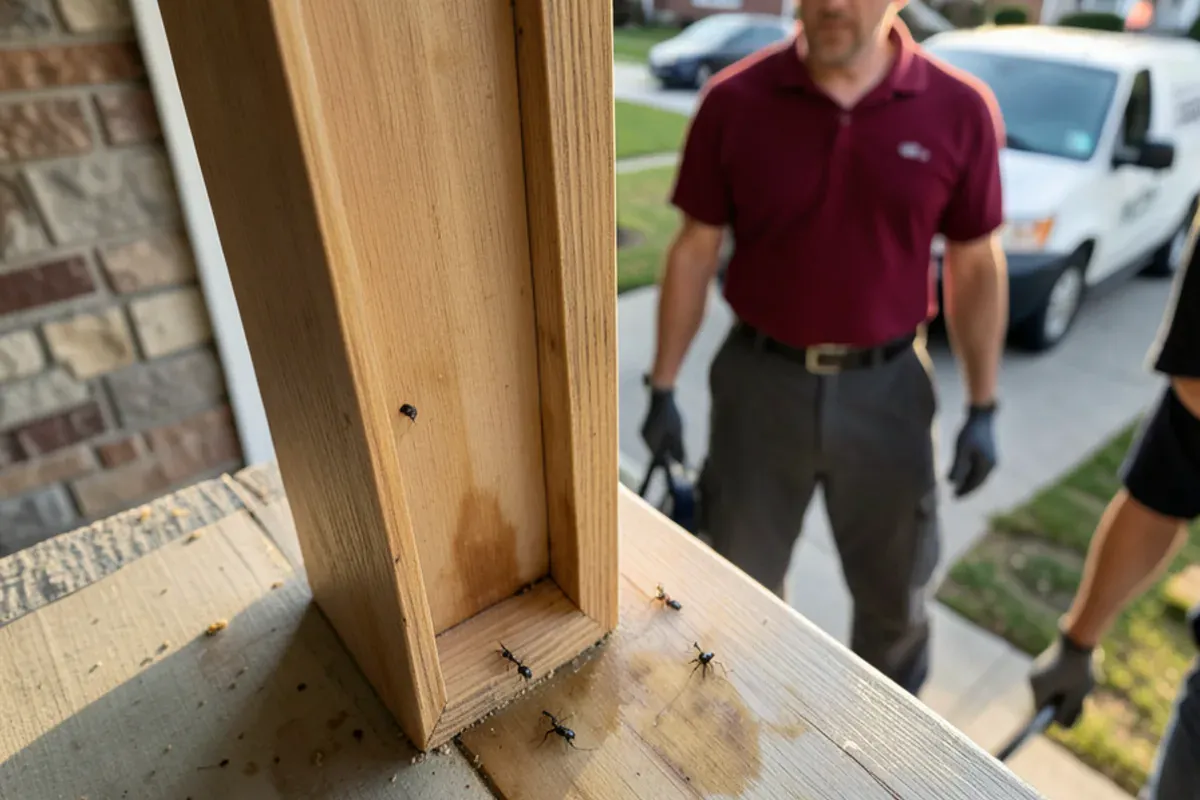
What our carpenter ant control includes
- Free inspection with trail tracking inside and outside
- Identification of carpenter ants versus termites or beetles
- Search for satellite nests and outdoor parent colonies
- Written quote naming baits, gallery treatment and perimeter work
- Treatment applied as described in the quote
- List of moisture problems and damaged wood to repair
- Advice on trimming limbs and clearing ant bridges to the house
Why call No Bugs Exterminator for carpenter ant control
Nest first
Our free inspection follows trails to the nest before any written quote, so treatment targets the colony and not just the ants you see.
Evening-friendly hours
We're open until 7 p.m. every day, which helps when you're describing ants that show up after dinner.
A local family business
Thom and his team work from Media, close to the wooded lots where carpenter ants are most common.
Same-day when possible
Same-day visits are often possible when the schedule allows — call early in the day.
Rated 4.8 on Google
Customers have given us a 4.8-star average across 21 Google reviews.
Where we provide carpenter ant control
Carpenter ants follow the trees. In Upper Providence Township and Rose Valley, homes back onto deep woods along Ridley Creek and in the Rose Valley hollows. Marple Township and Radnor Township have mature shade trees over older homes, where limbs on the roof and damp porch framing give colonies an easy way inside.
- Edgmont Township
Deer trails and woods from Ridley Creek State Park run right up to newer subdivisions, putting parent colonies in trees beside the house.
- Nether Providence Township
Wallingford and Garden City homes along Crum Creek and Smedley Park sit under mature trees whose dead limbs hold carpenter ant colonies.
- Swarthmore
The Crum Woods wrap large pre-war homes whose porches, trim and roof edges can stay damp enough for satellite nests.
- Newtown Township (Delaware County)
Newtown Square homes near the Ellis Preserve border woods and open land, so foragers trail in from outdoor colonies each spring.
- Villanova
Large estate homes off Spring Mill Road under old shade trees give carpenter ants limbs to cross and wide decks to nest in.
- Chadds Ford Township
Homes along the Brandywine and the Route 1 corridor sit among woods and older outbuildings, both favorite carpenter ant nesting sites.
- Aston Township
Split-levels on the edge of the Chester Creek valley back onto wooded slopes where stumps and fallen trees hold parent colonies.
- Willistown Township
Willistown Conservation Trust open space keeps woods close to homes, and colonies in those trees send workers into damp trim and decks.
- Ridley Park
Victorian houses around Ridley Park Lake have deep porches and older trim that hold moisture, the condition carpenter ants look for.
What customers say on Google
4.8 out of 5 from 21 reviews on Google. Quoted as written by customers.
Very professional and knowledgable service providers. They mainly solved our problems in one visit!
Easiest experience, very professional, well done 👍
Thom is a top-notch pest control specialist! And is one of the most genuine guys in the industry. He came to inspect a situation I had going on at the house, took his time, offered detailed advice, and didn’t take a penny.
Carpenter Ant Control: common questions
How can I tell carpenter ants from termites?
Look at the waist and antennae. Carpenter ants have a narrow, pinched waist and bent antennae, and you'll often see them walking in the open at night. Termites have a thick waist and straight antennae and stay hidden in soil and mud tubes. Inside damaged wood, carpenter ant galleries are clean and smooth, while termite galleries are packed with soil.
Do carpenter ants mean I have wet wood?
Very often. They prefer to start nests in wood softened by moisture, then expand into sound wood nearby. Finding an indoor nest usually leads to a leak at a window, roof edge, bathroom floor or porch column. In older Delaware County homes, sills sitting on damp stone foundations are another frequent spot. Fixing the moisture is part of keeping them out.
How do you find the nest?
We follow the ants. Trails along foundations, pipes and tree limbs lead toward nests, and sawdust-like debris, damp wood and sound help narrow the spot. Because carpenter ants forage mostly after dark, your notes on evening sightings make a real difference. If the nest can't be reached directly, baits carried by workers do the job of reaching it.
Are carpenter ants dangerous to my house?
They cause damage slowly, but a colony left alone for years can weaken window framing, porch columns and sills, especially where wood was already soft from moisture. They don't eat wood like termites do. The bigger warning is what they point to: a leak or rot problem that needs fixing either way.
Why do I see carpenter ants in winter?
Active ants indoors in January or February usually mean the colony is nesting inside the heated house, not outdoors. Outdoor colonies are dormant in a Pennsylvania winter. That makes winter sightings a stronger reason to schedule an inspection than a few ants wandering in during May.
Related services

Helpful guides from our blog
Ready to get rid of the problem?
Thom and his team serve Media, Delaware County and southeastern Pennsylvania, open 7 days, 8 a.m. to 7 p.m..
- ★ 4.8 from 21 Google reviews
- Open 7 days, 8 a.m. to 7 p.m.
- Free inspection before treatment
- Family-run, based in Media, PA
Open 7 days, 8 a.m. to 7 p.m.