
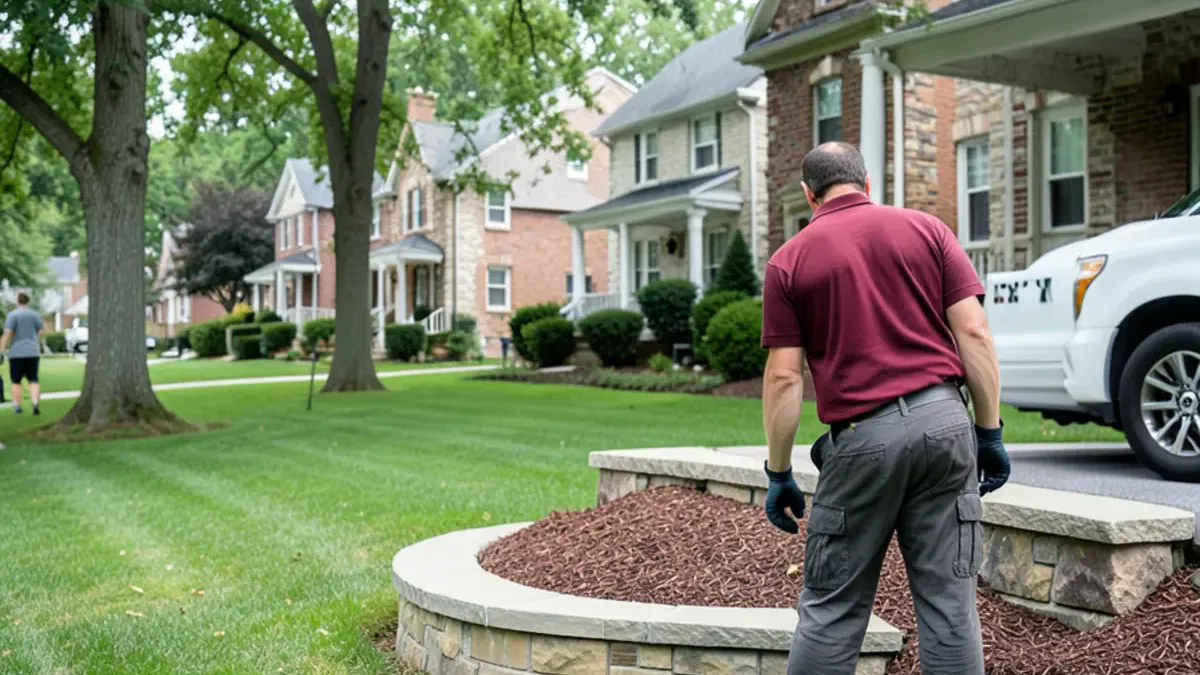
This option depends on the property. Call (209) 563-1650 and we'll confirm whether it's the right fit before anything is scheduled.
How a termite baiting system works
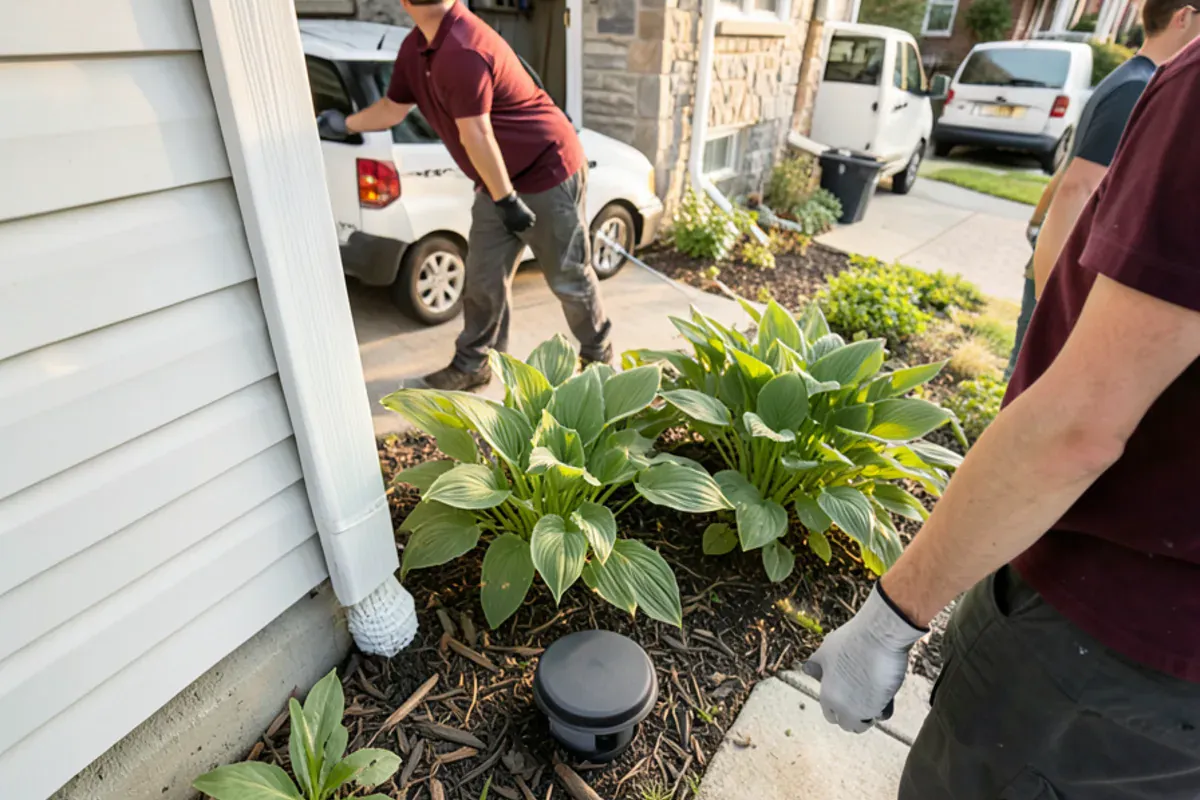
In-ground stations are plastic cylinders set into the soil around the house, usually every several feet and a short distance out from the foundation. Each holds wood or a cellulose material that foraging termites find while they search the soil for food.
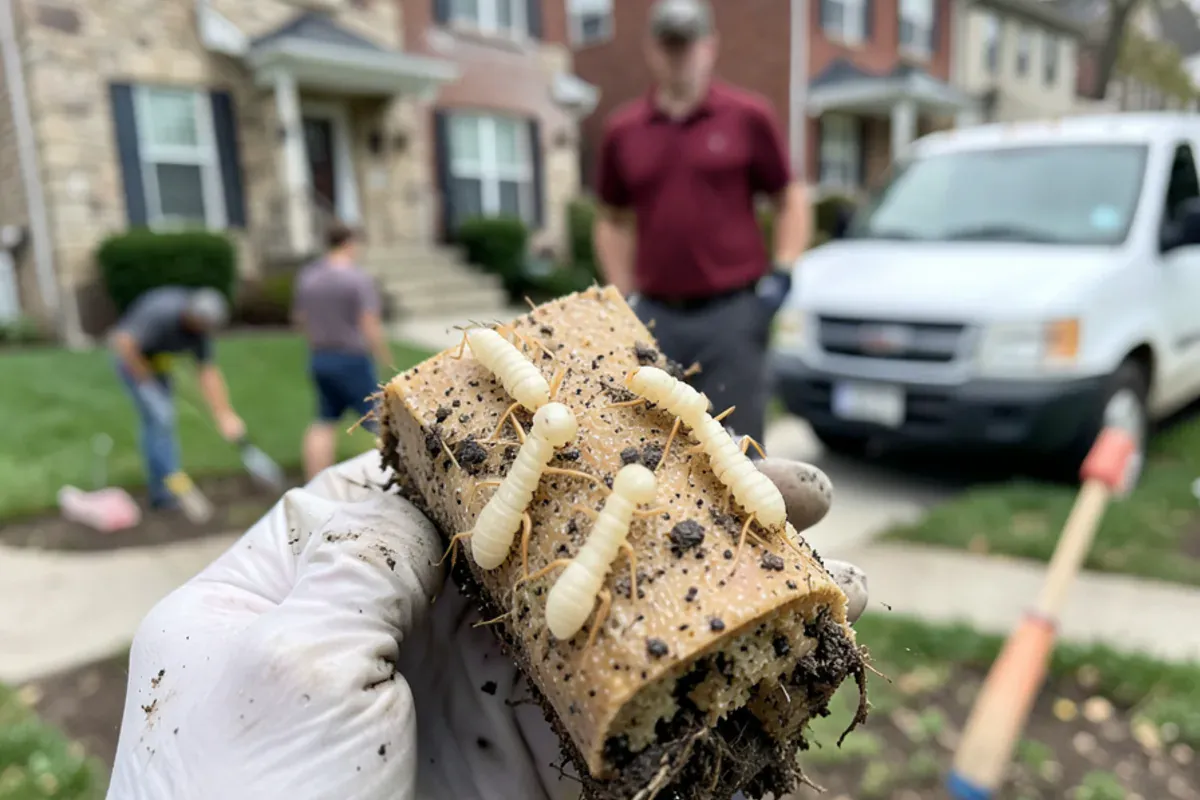
Once termites are feeding, the station is stocked with bait containing an insect growth regulator, a slow-acting ingredient that stops termites from molting properly. Because it works slowly, workers keep feeding and passing it along to nestmates before it takes effect. Over time the colony shrinks and collapses.
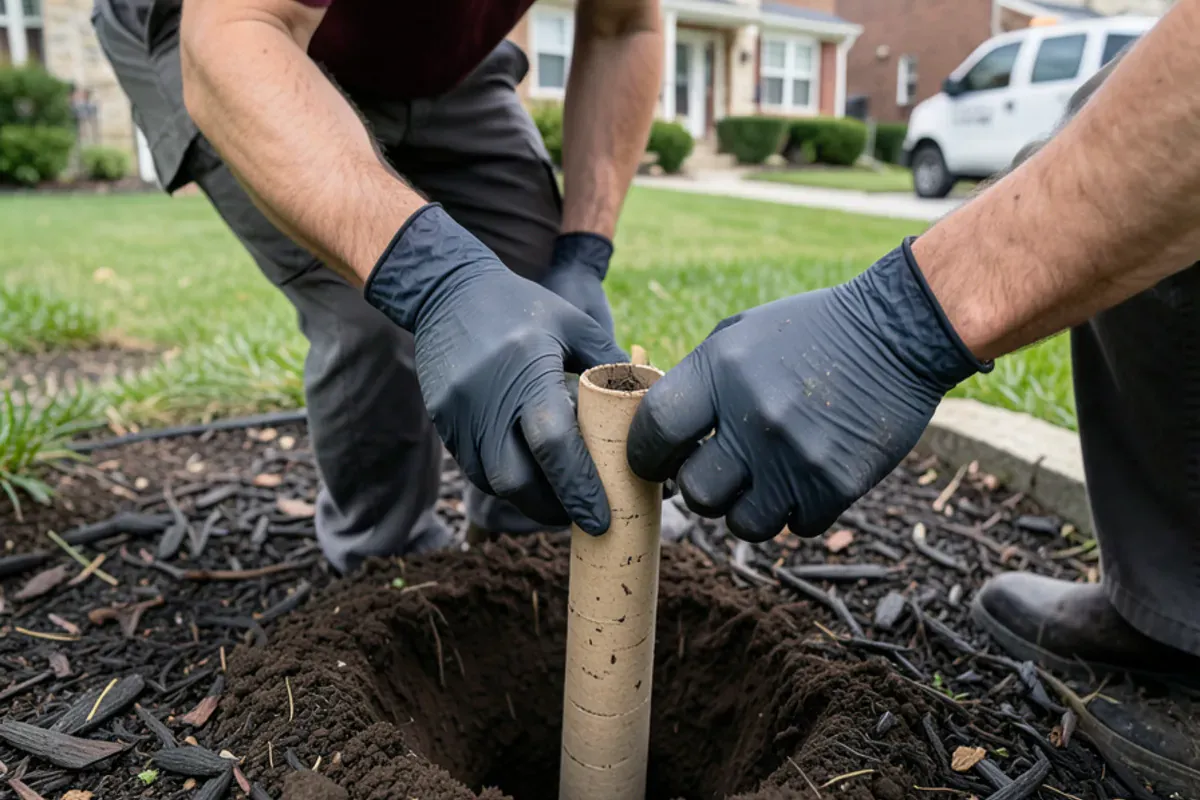
When bait stations make sense: signs and site conditions
Baiting usually comes up after a termite inspection finds one of two situations. The first is light or early activity, such as a single mud tube on a porch pier or a few swarmer wings by a basement door, where there is time for stations to intercept foraging workers. The second is a site where soil treatment is awkward: a private well close to the house, patios and walks poured tight against the walls, or stone retaining walls and planted slopes.
Some signs argue for faster action alongside the stations. Termites already eating into a sill plate, tubes on several walls, or a swarm inside a finished room point to a large colony feeding in the structure now, and above-ground bait on active tubes or spot soil treatment may be paired with the in-ground system. Well-water lots and wooded yards near Ridley Creek State Park are where this conversation happens most.
Bait vs. liquid termite treatment: which fits your house?
Neither method is right for every property. Here's how the trade-offs usually play out on Delaware County homes:
| Consideration | Bait stations | Liquid soil treatment |
|---|---|---|
| Private well or cistern nearby | Often preferred | Label setbacks may limit it |
| Patios and slabs along the walls | Little or no drilling | Drilling through concrete |
| Speed of protection | Weeks to months to reach the colony | Treated soil works immediately |
| Upkeep | Regular station checks for as long as the system runs | Periodic re-inspection |
| Disturbance to landscaping | Small stations in lawn or beds | Trench along the full foundation |
Monitoring stations vs. active bait
Some systems start every station as a monitor with untreated wood, switching to bait only where termites show up. Others are stocked with bait from day one, so termites feed on it the moment they arrive. Monitor-first setups use less active ingredient; bait-first setups skip a step.
Systems also differ in bait type, station design and how often they need checking. Whatever system is proposed, ask how it's serviced and what happens if termites show up inside the house before the stations intercept them.
Installing termite monitoring stations, step by step
Free inspection
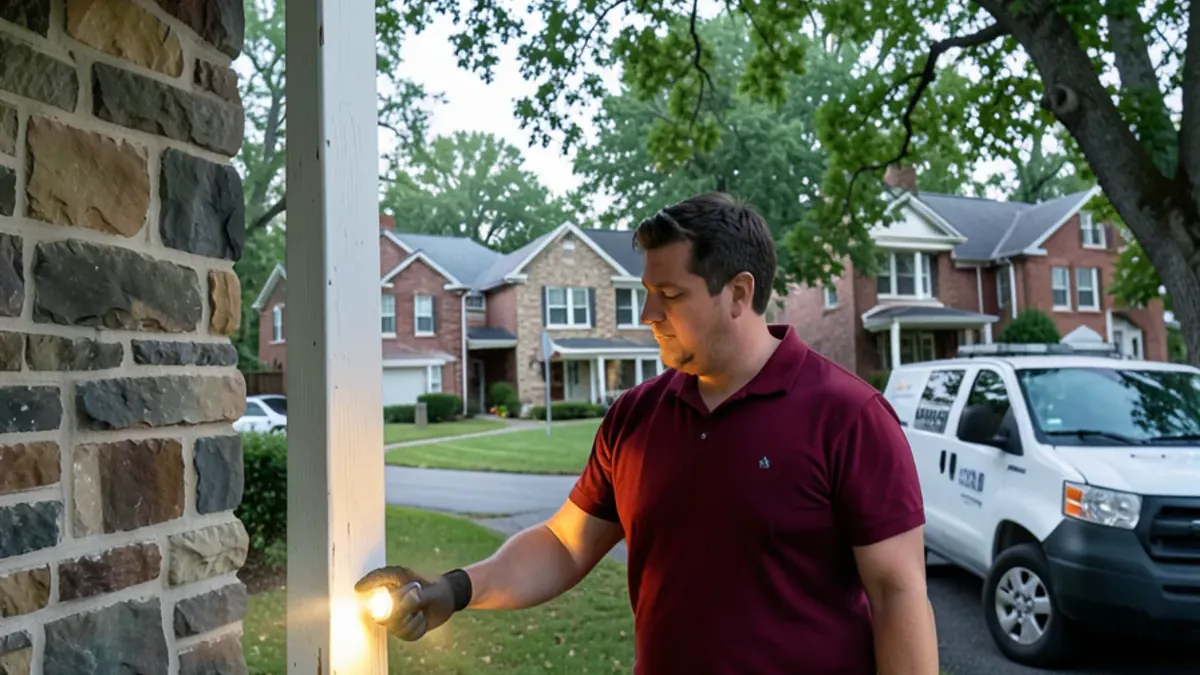
Thom or one of his team checks for active termites, wells, buried lines and damp or well-drained soil around the house.
Quote and confirmation
A written quote lays out station count, placement and service schedule. Ask on the call whether a baiting system is available for your property.
Utility marks
Buried lines are located before any holes are augered into the soil.
Station placement
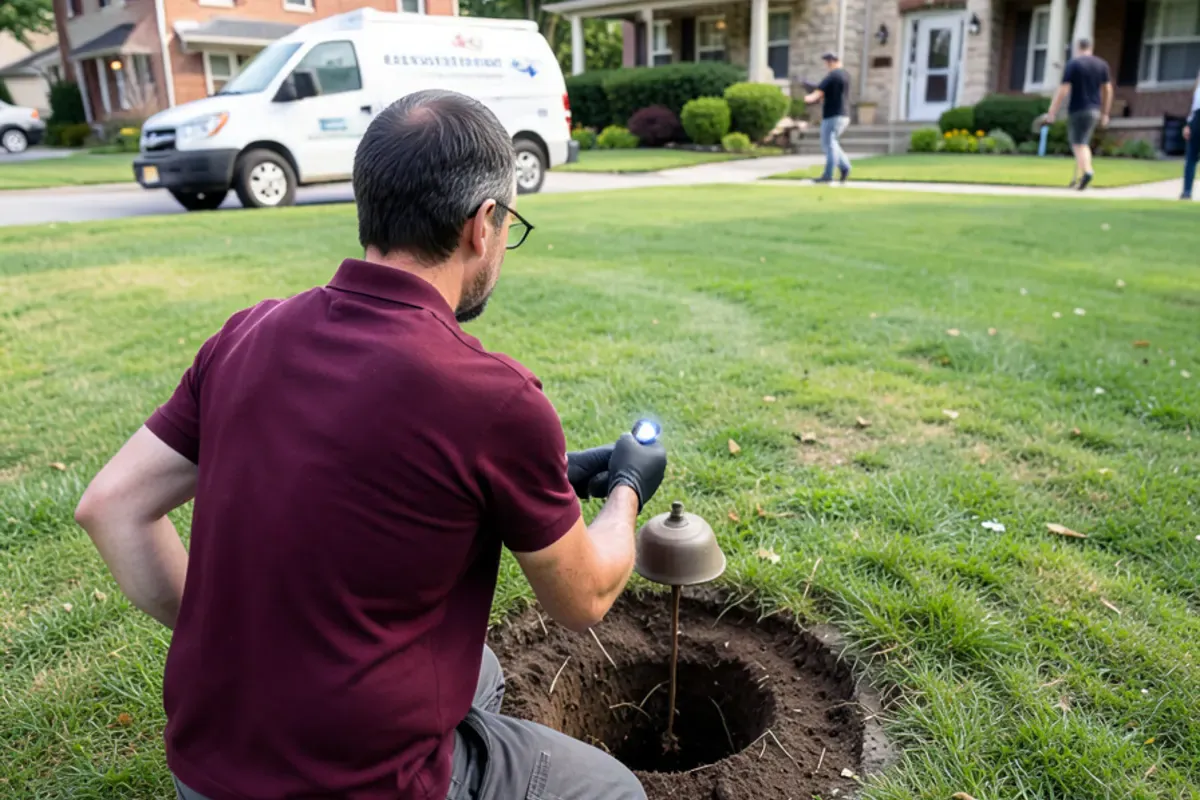
Stations go into the soil around the perimeter at set intervals, with extras near known activity, downspouts and damp spots.
Interior attention
Where termites are already in the house, active tubes may also get above-ground bait so feeding starts sooner.
Scheduled checks
Stations are opened and inspected on the agreed schedule, and bait is added or replaced when termites are feeding.
Talk to us about termite bait stations
Call and speak with Thom or his team. The inspection is free, and you get a written quote before any treatment.
- ★ 4.8 from 21 Google reviews
- Open 7 days, 8 a.m. to 7 p.m.
- Free inspection before treatment
- Family-run, based in Media, PA
Open 7 days, 8 a.m. to 7 p.m.
How long does a bait station take to eliminate a colony?
Expect months rather than weeks. Termites have to find the stations first, which may take a few weeks or a full season depending on where they're foraging. Feeding then has to continue long enough for the growth regulator to work through the colony.
Cold slows everything. Eastern subterranean termites forage deeper and feed less in a Pennsylvania winter, so stations installed in late fall may not see much activity until spring. Stations placed in March or April, around swarm season, often get hit sooner.
Pennsylvania rules for termite bait and the station service record
Termite bait is an EPA-registered pesticide even though it sits inside a plastic station rather than in the soil, so installing and servicing stations for hire comes under Pennsylvania's Pesticide Control Act of 1973. The Pennsylvania Department of Agriculture (PDA) licenses the businesses that do this work and certifies their applicators, and 7 Pa. Code § 128.31 has the business license number shown on service vehicles.
Ask for a written record of each station check: the date, which stations showed feeding and where bait was added. That log helps at resale, because lenders often call for a wood-destroying insect report on the NPMA-33 form, which notes evidence of previous treatment. Call (209) 563-1650 to confirm this option is available for your property.
What drives the cost of termite stations?
Lot size is the big local variable. A compact Media borough lot with a short perimeter needs far fewer stations than a large Thornbury or Edgmont property with a long foundation, an attached garage and a detached outbuilding the owner wants protected.
The service plan matters as much as the installation, because stations only work while someone checks them. More frequent visits during the spring and summer foraging season, bait replacement whenever feeding turns up, and the option of soil treatment at one problem corner all change the written quote, and each should be spelled out before the first station goes in.
- Perimeter length, which sets the number of stations
- Whether stations start as monitors or are baited from the first day
- Above-ground bait for termites already active indoors
- How often stations are checked under the service plan
- Lawn, mulch, gravel or paving where stations have to go
- Whether part of the house also gets soil treatment
Living with bait stations: mowing, landscaping and checks
Station caps sit flush with the ground, so a mower rolls right over them. Don't pull stations, cover them with new pavers or bury them under fresh mulch; a station termites can't reach is a gap in protection. Tell whoever services them about planned landscaping, a new deck or an addition so stations can be moved. For new construction, pre-construction termite treatment is worth a look as well.
Bait stations target subterranean termites only. Large black ants coming out of wet window trim are a different problem; see carpenter ant control. If you're still deciding, compare this method with a liquid termite treatment.
What our termite bait stations includes
- Free inspection for activity, wells and soil conditions
- Written quote listing station count, placement and check schedule
- Confirmation that a baiting system is available for your property
- In-ground stations around the full perimeter
- Extra stations near downspouts, damp spots and known activity
- Above-ground bait on active indoor tubes where it fits
- Scheduled station checks with bait added when termites feed
Why call No Bugs Exterminator for termite bait stations
Honest comparison
The free inspection weighs bait against soil treatment for your well, slabs and landscaping before any written quote.
Nearby when stations need attention
Our Media base keeps the county within easy reach, and we pick up the phone seven days a week, 8 a.m. to 7 p.m.
Family-run
We're a small, family-run business in Media, so the people inspecting your perimeter are Thom and his team.
Same-day inspections when possible
Same-day visits are often possible when the schedule allows — call early in the day.
Rated 4.8 by customers
We hold a 4.8-star average from 21 Google reviews of our work.
Where we provide termite bait stations
Baiting comes up most where soil treatment is awkward. In Edgmont Township and Thornbury Township, large lots often run on private wells. Homes in Upper Providence Township back onto Ridley Creek State Park's wooded edge, and Rose Valley houses sit in deep woods with stone walls and planted slopes where trenching would disturb a lot of ground.
- Concord Township
Garnet Valley subdivisions built around 1997 have patios, slab garages and planted beds along the walls, where stations avoid drilling and trenching.
- Bethel Township
1990s homes on former farmland near Booths Corner sit on open lots where stations can ring the house without disturbing landscaping.
- Chadds Ford Township
Brandywine-area properties along Route 1 include stone walls, wells and planted slopes that make trenching a full perimeter difficult.
- Chester Heights
Townhome communities off Route 452 have patios and walks poured tight to the foundation, a setting where in-ground stations fit well.
- Newtown Township (Delaware County)
Newtown Square homes near the Ellis Preserve border woods and fields, so stations can intercept foragers before they reach the house.
- Middletown Township (Delaware County)
Housing from the late 1970s around Lima, Wawa and Glen Riddle often has decks and slab additions where baiting spares the concrete.
- Villanova
Estate homes off Spring Mill Road with mature gardens and long perimeters are where owners often prefer stations to a trench through planted beds.
- Upper Chichester Township
1970s houses in Boothwyn, Twin Oaks and Ogden along Route 322 often have patios and slab additions where stations avoid drilling.
- Willistown Township
Conservation Trust open space and large lots put homes near fields and woods, where a ring of stations watches for foraging termites.
What customers say on Google
4.8 out of 5 from 21 reviews on Google. Quoted as written by customers.
Very professional and knowledgable service providers. They mainly solved our problems in one visit!
Easiest experience, very professional, well done 👍
Thom is a top-notch pest control specialist! And is one of the most genuine guys in the industry. He came to inspect a situation I had going on at the house, took his time, offered detailed advice, and didn’t take a penny.
Termite Bait Stations: common questions
Are bait stations better than a liquid barrier?
Not better, just different. Bait avoids drilling and works well near wells and patios, but it's slower and needs regular checks for as long as it's in place. A liquid barrier protects treated soil immediately but involves trenching and drilling. On many Delaware County properties the deciding factor is a private well or a lot of hardscape around the house.
How often are stations checked?
It depends on the system and the service plan, so ask for the schedule in writing. Checks are commonly spaced through the year, with more frequent visits while termites are actively feeding. In southeastern Pennsylvania, spring and early summer checks matter most because that's when foraging picks up after the winter slowdown.
How long until a colony is eliminated?
Usually several months, sometimes longer. Termites must first find the stations, then feed long enough for the slow-acting bait to spread through the colony. Stations installed in fall may sit quiet through a Pennsylvania winter, while spring installs tend to see feeding sooner as soil warms and foraging increases.
Can I install store-bought termite stakes myself?
You can, but retail stakes usually hold far less bait and come without inspection or regular monitoring. If termites are already in the house, waiting for them to find a few stakes leaves the framing exposed. Our free inspection will tell you whether there's activity now and which method makes sense.
Do bait stations attract termites to my house?
No. Stations don't draw termites from far away; they intercept termites already foraging in the soil around the house. Subterranean termites are present across much of southeastern Pennsylvania, so the stations simply give them something to find before they find your sill plate.
Related services


Helpful guides from our blog
Ready to get rid of the problem?
Thom and his team serve Media, Delaware County and southeastern Pennsylvania, open 7 days, 8 a.m. to 7 p.m..
- ★ 4.8 from 21 Google reviews
- Open 7 days, 8 a.m. to 7 p.m.
- Free inspection before treatment
- Family-run, based in Media, PA
Open 7 days, 8 a.m. to 7 p.m.