
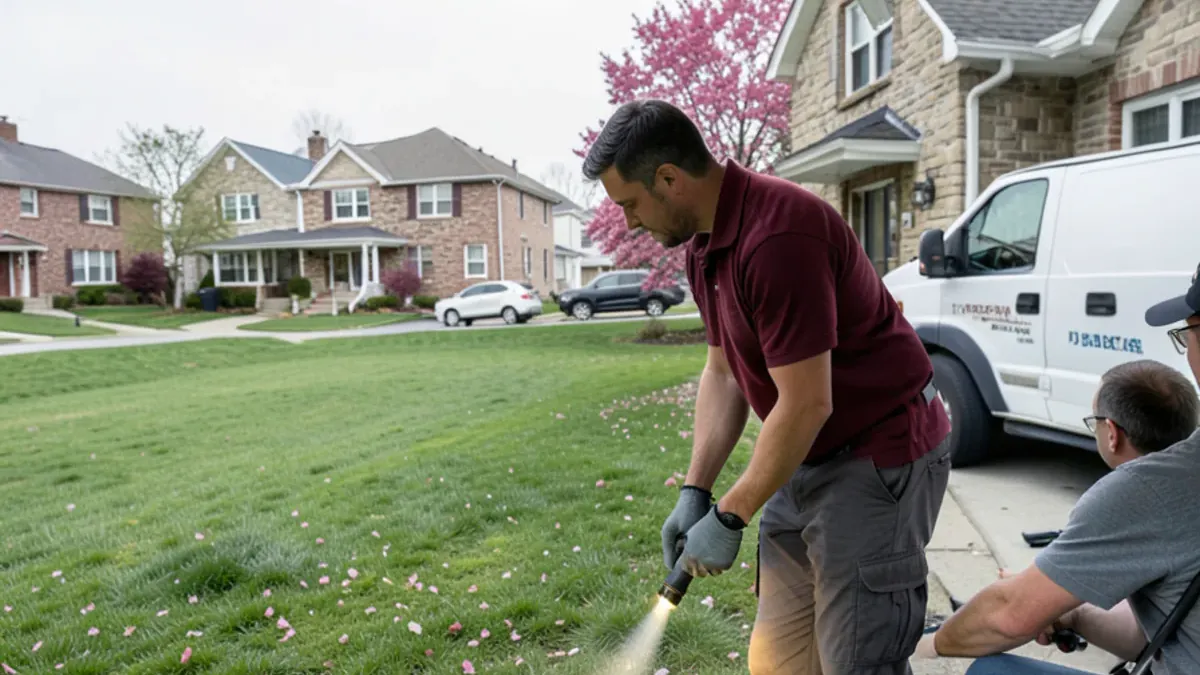
When should you schedule a termite inspection?
The most urgent reason is a swarm. Winged insects coming out of a basement wall, a window frame or the floor near a porch in spring are a signal to call that week, before the evidence is swept up.
Quieter reasons count too: a mud tube in the basement, a soft stair tread, or a neighbor on a shared twin wall who just had termites treated. Many homeowners also set an annual termite inspection each spring, especially in older houses on stone foundations.
If the inspection is for a home sale, the lender may need a specific form. That's a different service, covered on our WDI inspection report page.
Local ground conditions matter as well. Houses that back onto the Crum, Ridley or Darby creek valleys, or that have a sump running much of the spring, keep the soil along the foundation damp, and a look before swarm season tells you whether that moisture has drawn termites to the sills.
What we check during a termite inspection in Media, PA
We look wherever wood, soil and moisture come close together. On a typical Delaware County home that includes:
- The full outside foundation line, including spots hidden behind shrubs, mulch and stacked firewood
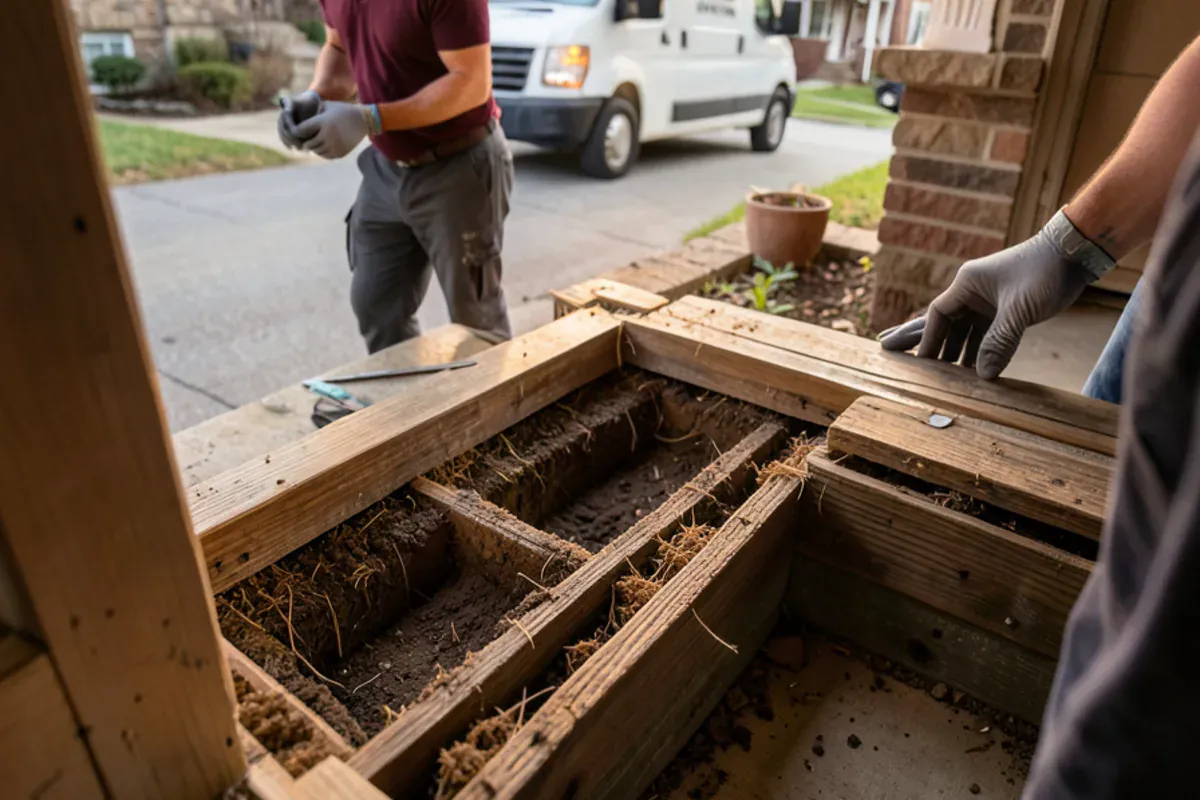
- Front porches, stoops and steps, especially soil-filled concrete porches on older twins
- Basement walls, sill plates, rim joists and the underside of the first floor
- Stone foundation mortar joints, block wall tops and cracks in poured walls
- Crawl spaces, garage slabs and the expansion joint where garage meets house
- Door and window frames near grade, cellar stairs and support posts
- Moisture sources: downspouts, gutters, sump pits, plumbing leaks and AC condensate
- Wood debris, old form boards, stumps and landscape timbers near the house
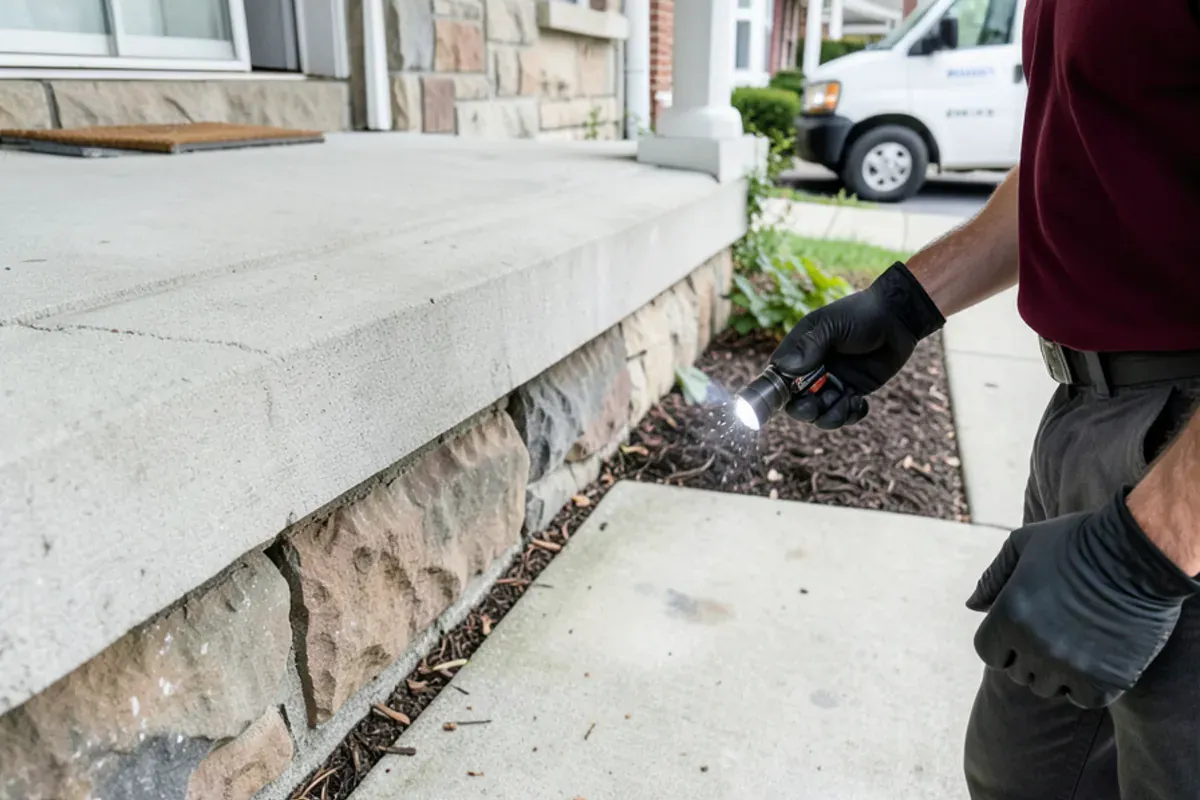
Our termite inspection, step by step
Quick call
We ask what you've seen and where, how old the house is, and whether the basement is finished. Any photos help.
Walk the exterior
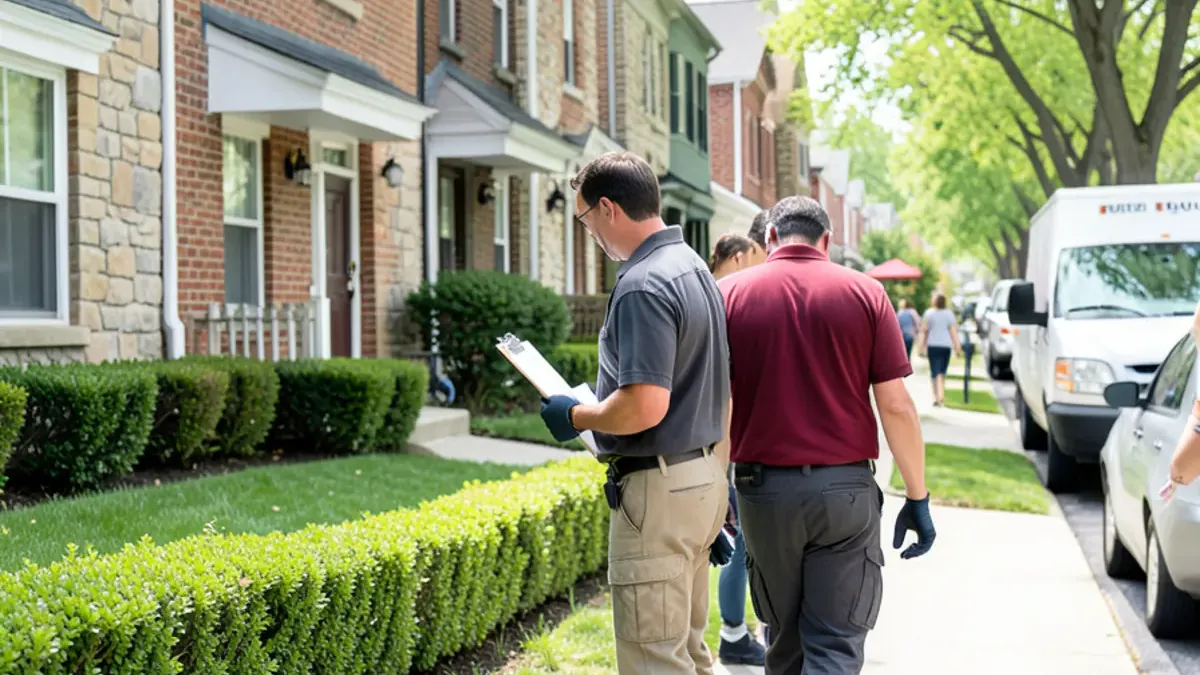
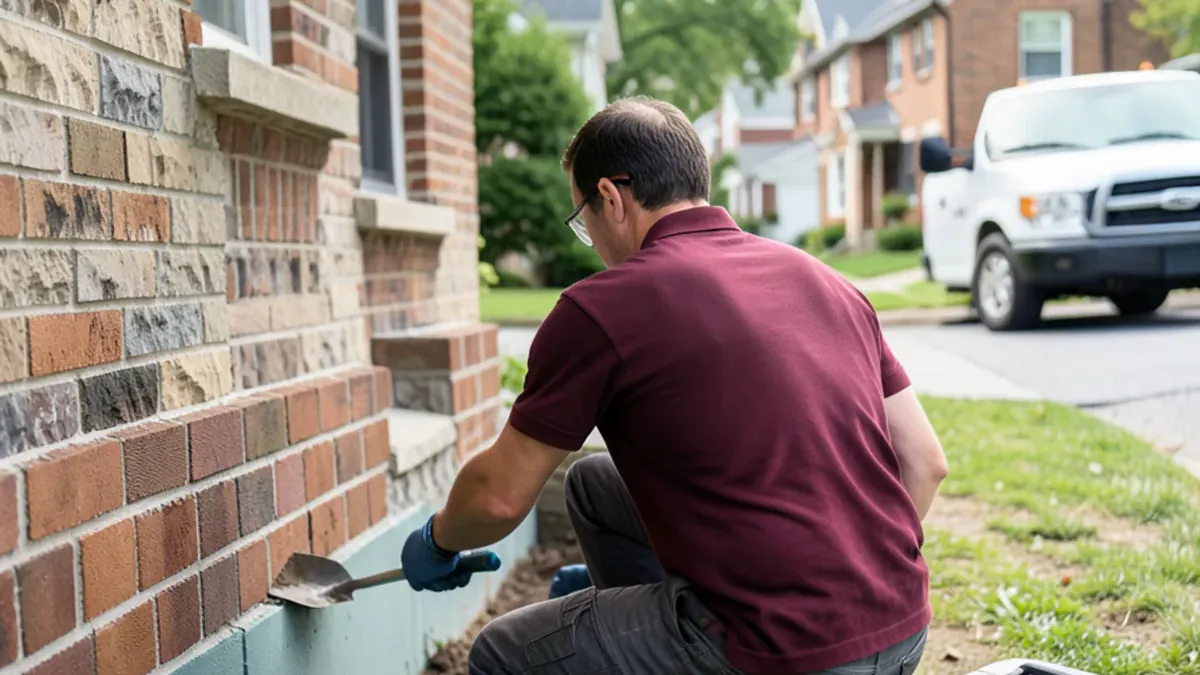
We circle the foundation, look under porches and steps, and note grading, gutters and anything stacked against the walls.
Work through the inside
In the basement or crawl space we follow sills and joists with a flashlight and sound suspect wood with a probe.
Identify the insect
Wings, bodies, frass or tube material tell us whether it's termites, carpenter ants or a wood-boring beetle.
Walk you through it
We show you what we found, where it is and how active it looks before we leave.
Written quote
If treatment is needed, you receive a written quote with the method, the areas and any prep.
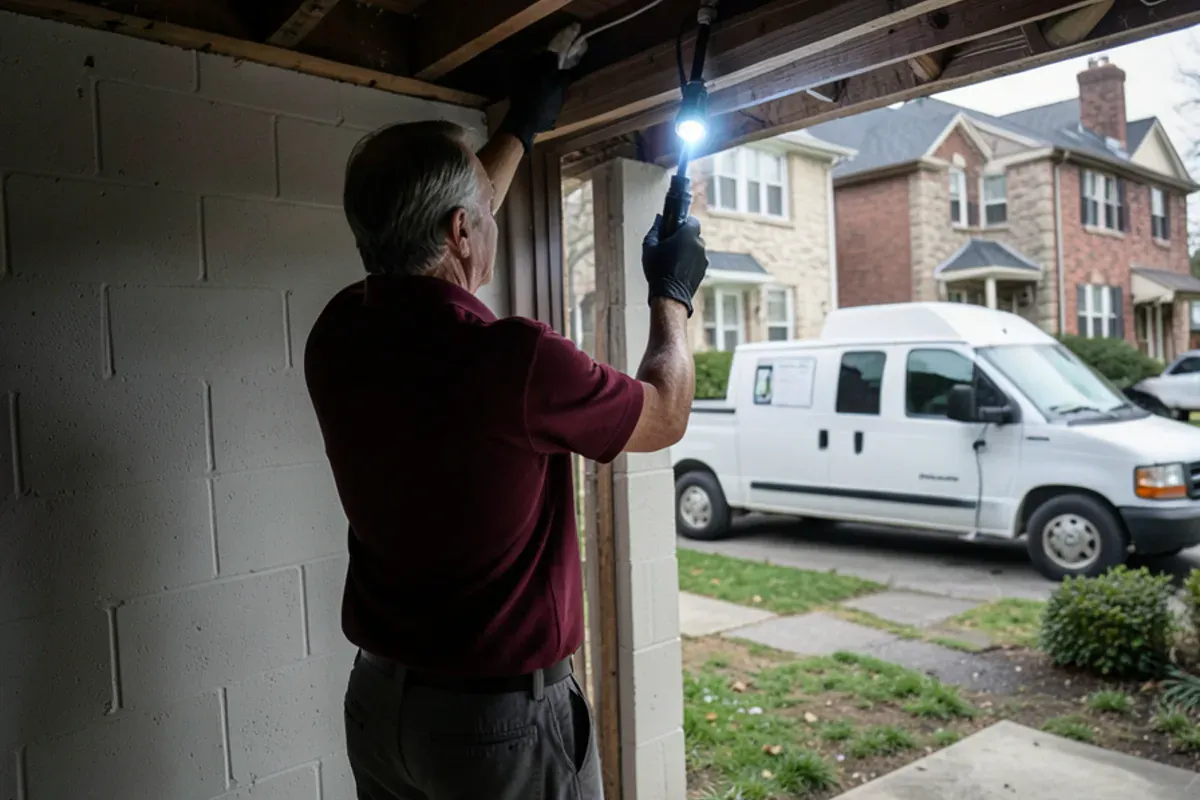
Termite swarmers in PA: spring's early warning
Eastern subterranean termites send out swarmers on warm days, often right after a spring rain, from roughly March into May. Swarmers are about a quarter inch long and dark brown to black, with four long, milky wings of equal length. They break their wings off quickly, so a pile of wings on a sill is often the only clue left by afternoon.
Seeing swarmers indoors usually means a mature colony is feeding in or under the house, not that termites just arrived. Swarmers don't chew wood and soon die indoors. Vacuum them, but save a few in a sealed bag for the inspection.
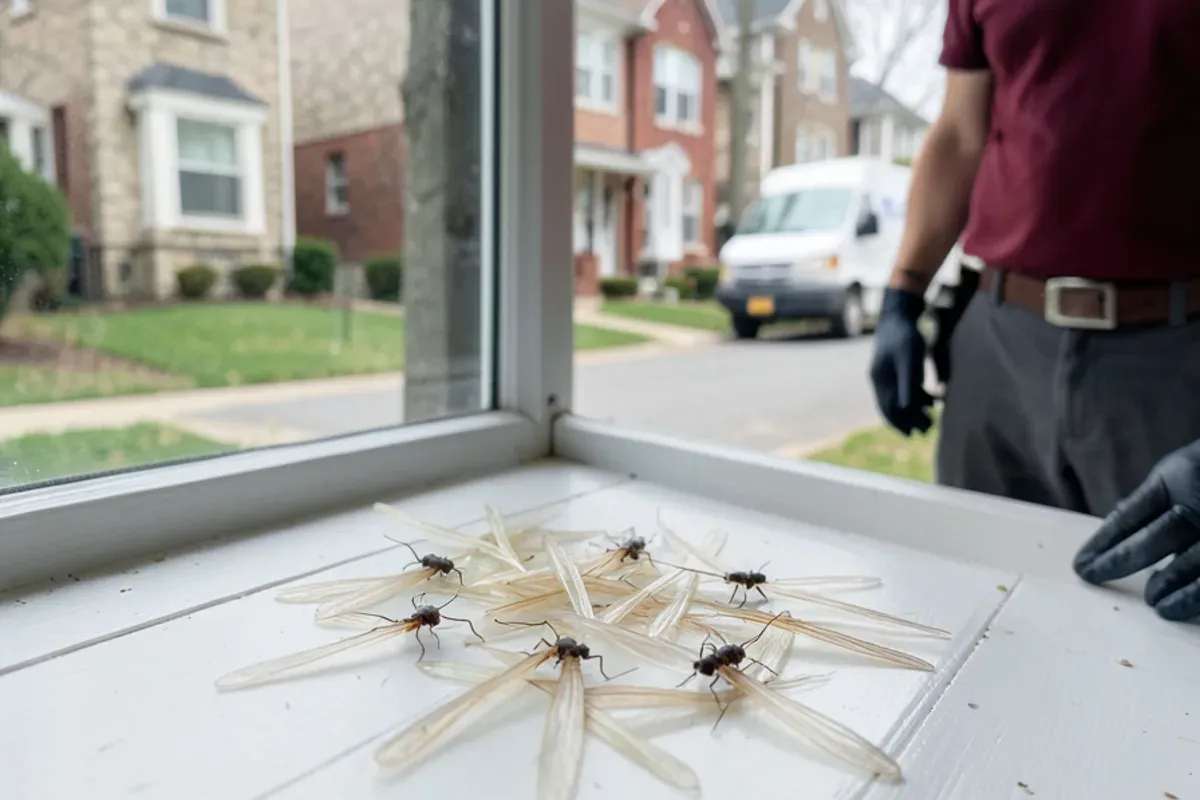
Talk to us about termite inspection
Call and speak with Thom or his team. The inspection is free, and you get a written quote before any treatment.
- ★ 4.8 from 21 Google reviews
- Open 7 days, 8 a.m. to 7 p.m.
- Free inspection before treatment
- Family-run, based in Media, PA
Open 7 days, 8 a.m. to 7 p.m.
What you receive after the inspection
Before we leave, we walk you through what we saw: active tubes, old damage, moisture problems and any spots we couldn't reach, such as a finished basement wall or a crawl space with no access.
If no treatment is needed, we'll say so and suggest any grading, mulch or gutter changes. If treatment is needed, you get a written quote.
What happens if we find termites?
Finding activity doesn't mean the house is failing. Termites work slowly, and most damage we see in Delaware County is limited to sills, joist ends and porch framing.
The quote will recommend an approach for your foundation type and site. For many older homes that's a liquid termite treatment along the foundation; properties near a well or with hard-to-drill slabs may be better candidates for in-ground bait. If we find carpenter ants or beetles instead, the plan changes to match.
Pennsylvania licensing to ask about before an inspection
An inspection uses no pesticide, but the company behind it will treat your house if termites turn up, so check its standing first. The Pennsylvania Department of Agriculture (PDA) licenses pest control businesses and certifies applicators under the Pesticide Control Act of 1973, and 7 Pa. Code § 128.31 requires the business license number on service vehicles. Ask for it when you book.
Know which kind of inspection you need, too. A general termite inspection like this one tells you what is happening in your house. A real-estate wood-destroying insect report, usually on the NPMA-33 form, is what a lender may ask for on an FHA or VA loan, and it must come from a properly licensed inspector.
Is a termite inspection free, and what affects the cost of treatment?
Our inspection before treatment is free, the same as our free pest inspection for other pests. What the follow-up work costs depends on what the inspection turns up:
A clean result ends the conversation at no cost. When we do find termites, the size of the job shows up in what we record: tubes on one porch slab of a Drexel Hill twin point to a contained treatment, while activity on three walls of a fieldstone cellar plus the garage slab points to the full perimeter.
Hidden areas are part of the picture too. Paneled basement walls, a low crawl space under a ranch addition or a porch enclosed decades ago may need access work, and the written quote spells out what is included and which areas we could not see.
- Whether termites are active, or the damage is old and inactive
- How many sides of the foundation show activity
- Access: finished basements, low crawl spaces or enclosed porches
- Detached garages, sheds or decks that also need attention
- Whether repairs by a carpenter must happen before or after treatment
What our termite inspection includes
- Exterior foundation walk, including porches, stoops and garage slab
- Basement or crawl space check of sills, rim joists and support posts
- Identification of swarmers, frass or tube material
- A list of areas that couldn't be reached or seen
- Walk-through of findings before we leave
- Written quote when treatment is recommended
Why call No Bugs Exterminator for termite inspection
No charge to look
The inspection before treatment is free, and any recommendation comes as a written quote you can take time to review.
Close to home
Our Media base keeps most of Delaware County a short drive away for a spring swarmer call.
Seven-day hours
We answer 8 a.m. to 7 p.m. every day, so a weekend swarm doesn't have to wait until Monday for a call back.
Thom and his team
A small, family-run business based in Media handles your termite call from the first look to the written quote.
Same-day when it fits
Same-day visits are often possible when the schedule allows — call early in the day.
Where we provide termite inspection
We inspect homes of every era from our Media base. In Swarthmore and Haverford Township, large pre-war houses near wooded creek banks get a close look at stone mortar and porch framing. In Springfield, post-war Cape Cods often hide termite activity behind finished basement paneling, and in Media itself we see everything from borough twins to newer townhomes.
- Marple Township
Lawrence Park and Broomall-side homes from the early 1960s often have finished basements, where an inspection checks sills hidden behind paneling.
- Broomall
Houses near the West Chester Pike and Sproul Road crossing date to around 1958, an age when porch slabs and wooden basement windows start to fail.
- Aston Township
Split-levels from the 1960s and 1970s along the Chester Creek valley have garage slabs and lower-level framing close to damp soil.
- Upper Providence Township (Delaware County)
Wooded lots behind most houses near Ridley Creek State Park mean stumps, logs and leaf litter close to foundations, all worth checking each spring.
- Woodlyn
Post-war houses just off MacDade Boulevard, built around 1957, often show mud tubes first on basement walls and porch steps.
- Folsom
Homes around Ridley High School and Morton Avenue with a 1957 median build year are at the age when an annual inspection catches activity early.
- Glenolden
MacDade Boulevard streets beside Muckinipattis Creek hold damp ground near older foundations, a setting where termites often reach the sill plate.
- Newtown Township (Delaware County)
Newtown Square homes near the Ellis Preserve border open land and woods, so foraging termites can approach from several sides.
- Brookhaven
Ranch homes off Edgmont Avenue from around 1970 often have crawl spaces and additions where tubes stay out of sight.
What customers say on Google
4.8 out of 5 from 21 reviews on Google. Quoted as written by customers.
Very professional and knowledgable service providers. They mainly solved our problems in one visit!
Easiest experience, very professional, well done 👍
Thom is a top-notch pest control specialist! And is one of the most genuine guys in the industry. He came to inspect a situation I had going on at the house, took his time, offered detailed advice, and didn’t take a penny.
Termite Inspection: common questions
What do you look for during a termite inspection?
We look for live termites, mud tubes, shed wings, hollow or soil-packed wood, and the conditions that invite them: wood touching soil, damp sills and leaky gutters. Soil-filled concrete porches on older twins get special attention because the hidden joint where porch meets house is a common entry. We also note anything we couldn't see, such as walls behind finished paneling.
How often should I have my home inspected?
Once a year is a sensible rhythm for most southeastern Pennsylvania homes, ideally in spring around swarm season. Schedule one sooner if you see swarmers or tubes, finish a basement, add a porch or deck, or notice persistent dampness. Houses on fieldstone foundations, and those with a history of treatment, benefit most from a regular yearly look.
Are winged insects in spring always termites?
No. Carpenter ants and some other ants also swarm in spring. Termite swarmers have a straight, thick waist, straight antennae and four wings of equal length. Ant swarmers have a pinched waist, elbowed antennae and front wings longer than the back pair. Save a few in a bag or on clear tape and we'll identify them during the free inspection.
How long does a termite inspection take?
For a typical twin or single-family home, plan on roughly an hour. Larger houses, homes with crawl spaces, multiple porches or a detached garage take longer. It goes faster when the basement walls are reachable, so moving boxes a couple of feet away from the foundation before we arrive helps us see the sills and joists clearly.
Can you inspect a house with a finished basement?
Yes, though paneling, drywall and carpet hide the sills and lower walls where termites usually start. We check every exposed edge, utility room and closet, plus the outside foundation, and tell you which walls we couldn't see. Many 1950s Springfield basements were finished this way, so the unfinished utility corner often tells the most.
Related services
Helpful guides from our blog
Ready to get rid of the problem?
Thom and his team serve Media, Delaware County and southeastern Pennsylvania, open 7 days, 8 a.m. to 7 p.m..
- ★ 4.8 from 21 Google reviews
- Open 7 days, 8 a.m. to 7 p.m.
- Free inspection before treatment
- Family-run, based in Media, PA
Open 7 days, 8 a.m. to 7 p.m.