
Signs of Carpenter Bees in Your Deck, Fascia or Rails
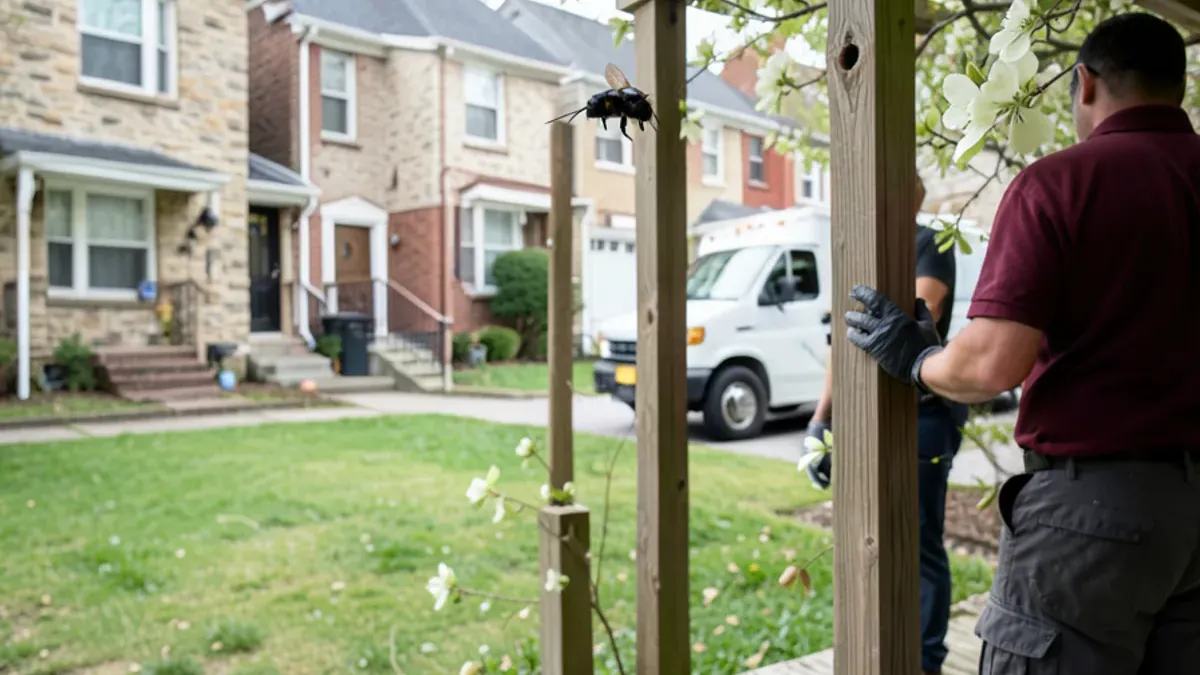
Carpenter bees look like bumble bees at first glance, but the top of the abdomen is shiny, hairless and black. In April and May they hover in front of eaves and decks, and males dart at anyone who comes close. Males can't sting; females can, but rarely do unless handled.
Bumble bees, by contrast, have fuzzy yellow hair over most of the abdomen and nest in the ground or old insulation, not in solid wood. If the bee you are watching disappears into a neat round hole in a board, it is a carpenter bee.
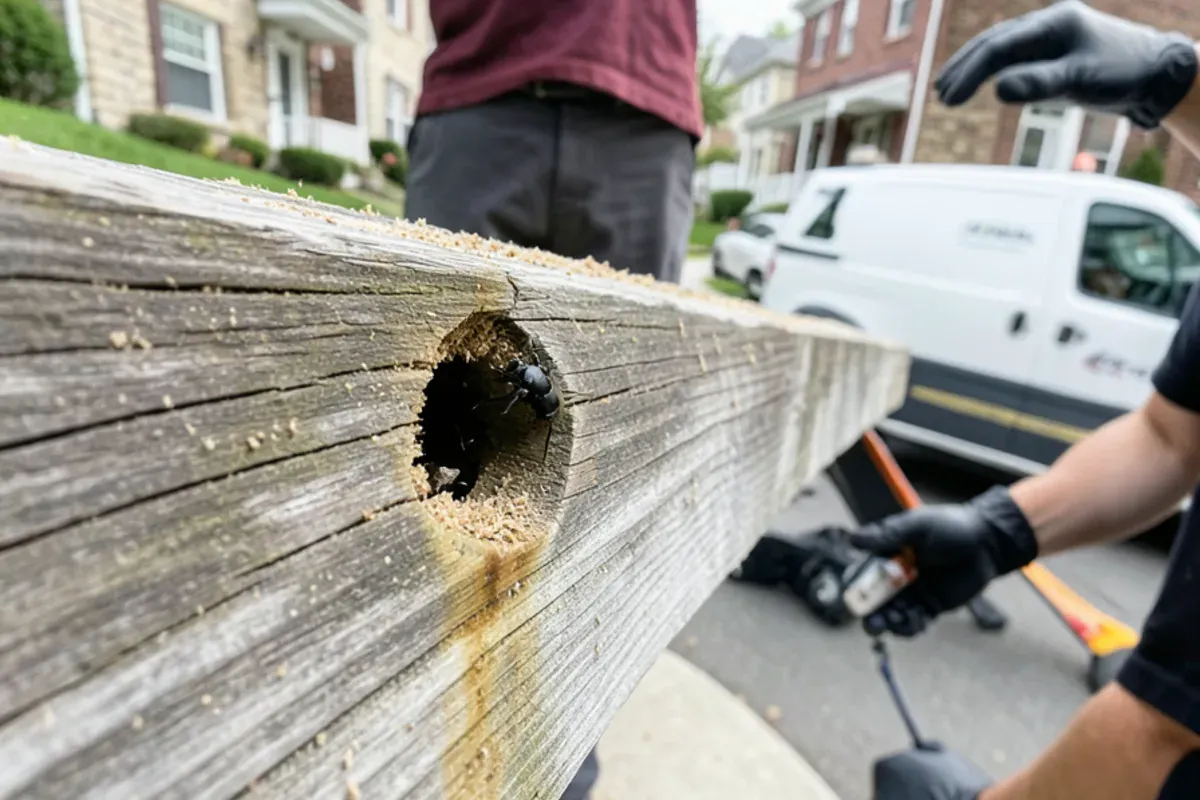
- Perfectly round holes about 1/2 inch across, usually on the underside or edge of a board
- Small piles of coarse, light-colored sawdust on the deck or ground below
- Yellowish-brown stains running down from the holes
- Bees hovering repeatedly at one spot on fascia, rails, pergolas or wood siding
- Faint chewing sounds from inside the wood in spring
How Much Damage Can Carpenter Bees Cause?
A female bores straight in about an inch, then turns and tunnels along the grain to lay her eggs. A new tunnel may be only a few inches long, but bees return to old galleries and extend them, and several bees often work the same board. Over a few seasons that can weaken rails, fascia and trim and let water into the wood.
They favor bare or weathered softwood such as cedar, pine, redwood and untreated trim. That makes newer Delaware County subdivisions with large decks and pergolas, and older homes with wooden fascia and rafter tails, regular targets. Painted, well-maintained wood is attacked far less often.
Carpenter bees spend the winter as adults inside old tunnels, which is why the same deck seems to come alive every April. Holes that were never sealed become the starting point for next year's galleries, and each generation adds to the network.
The Woodpecker Problem That Follows Carpenter Bees
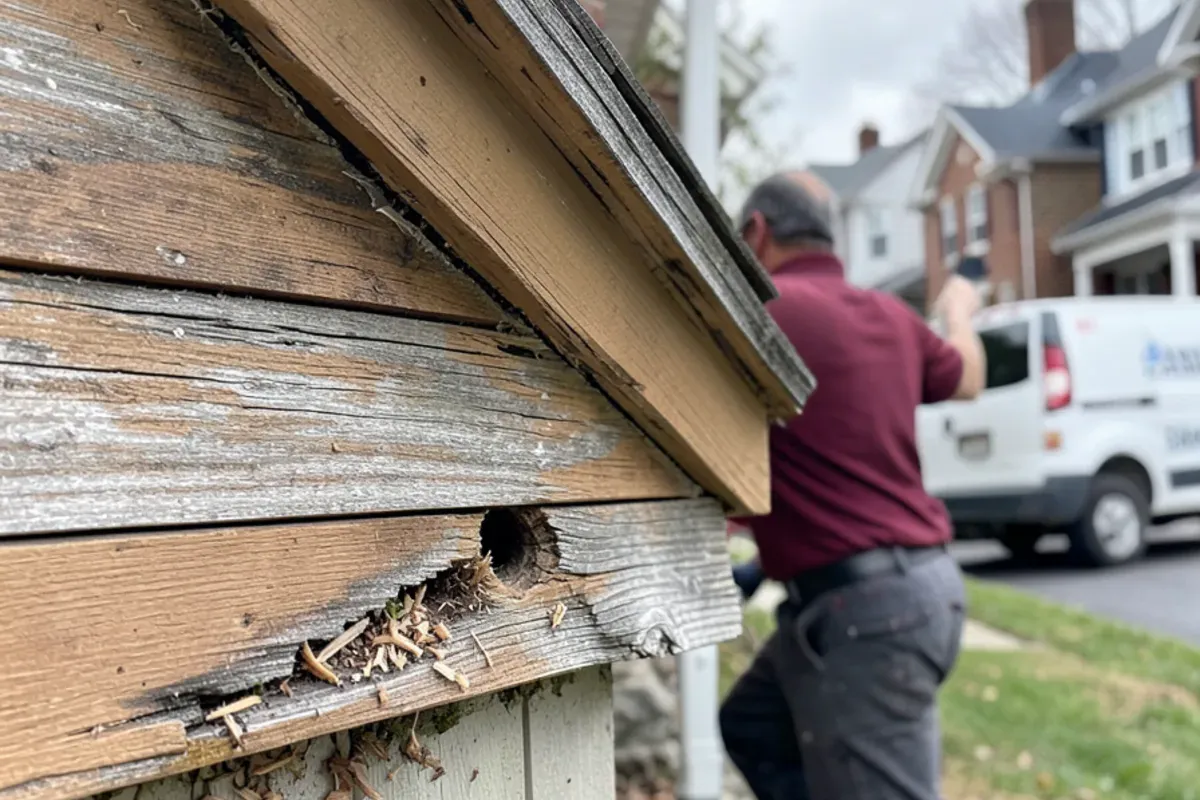
In summer, carpenter bee larvae develop inside the tunnels, and woodpeckers can hear them. The birds chisel along the gallery to get at the larvae, leaving ragged, gouged openings much larger than the bee's neat entrance. On fascia and gable trim, woodpecker damage is often the first thing a homeowner notices.
Stopping the bees removes the food that draws the birds. Treating active galleries and sealing old ones is usually what ends the woodpecker damage, along with repairing the boards they opened up.
How We Inspect Outdoor Wood for Carpenter Bees
Carpenter bees use the same boards year after year, so we look for old holes as well as active ones and note which surfaces are bare or weathered, since that drives both treatment and prevention. Soft, crumbling wood with mud tubes nearby points to termites rather than bees, and we'll tell you if we see that. The free inspection covers:
- Fascia boards, rafter tails, soffits and gable trim
- Deck rails, the undersides of deck boards and stair stringers
- Pergolas, arbors, play sets and wooden outdoor furniture
- Sheds, fences and wood or log siding
Carpenter Bee Treatment Options and Trade-Offs
The treatment that matters most goes inside the gallery, where the bees and larvae are. Surface sprays alone tend to wear off quickly in sun and rain.
Carpenter bees are solitary and don't build hives or store honey; if you are seeing a cluster of bees or a colony inside a wall, see bee removal. Paper wasps also chew weathered wood, but they scrape the surface rather than drilling holes, and our wasp nest removal page covers them.
- Gallery treatment: a dust formulation placed into each hole so bees moving through the tunnel contact it. The core of every carpenter bee job.
- Surface treatment: a residual application to favored boards can discourage new boring for a while, but it breaks down outdoors.
- Sealing: holes are plugged with a wood dowel, wood filler or exterior caulk after the bees are gone. Sealing too soon traps bees, which simply chew a new exit.
- Finishing: paint or a solid stain on bare wood makes it much less attractive to next year's bees.
Talk to us about carpenter bee control
Call and speak with Thom or his team. The inspection is free, and you get a written quote before any treatment.
- ★ 4.8 from 21 Google reviews
- Open 7 days, 8 a.m. to 7 p.m.
- Free inspection before treatment
- Family-run, based in Media, PA
Open 7 days, 8 a.m. to 7 p.m.
Pennsylvania Pesticide Law and Lead-Paint Rules for Trim Repair
Gallery treatments for hire fall under the Pennsylvania Pesticide Control Act of 1973, administered by the Pennsylvania Department of Agriculture (PDA), which licenses pest control businesses and certifies their applicators. Under 7 Pa. Code § 128.31, the business license number belongs on the service vehicle, and you're entitled to ask for it. Product labels also carry pollinator warnings that limit spraying blooming plants where bees are foraging, one reason we put product inside the holes rather than across the yard.
Sealing and repainting can bring a second rule into play. In homes built before 1978, EPA's Renovation, Repair and Painting Rule requires paid contractors who disturb painted trim to follow lead-safe work practices, which is worth knowing before anyone sands fascia on an older twin. This is general information, not legal advice.
Your Carpenter Bee Treatment Visit
Carpenter bee work is quick per hole but thorough across the house, because missed holes become next year's nests.
Call when you see activity
April through June is the usual season. Tell us where the bees are hovering and whether you've noticed sawdust or woodpecker damage.
Free inspection
We check every wood surface around the house and count active and old holes.
Written quote
The quote covers treatment, sealing recommendations and any follow-up.
Treat each active gallery
Every hole receives treatment inside the tunnel, including hard-to-see holes on the undersides of rails.
Leave holes open for now
Treated holes stay open for a short period so returning bees pass through the treatment.
Seal and finish
Once activity stops, the holes are plugged and the wood can be painted or stained.
What Affects Carpenter Bee Treatment Cost?
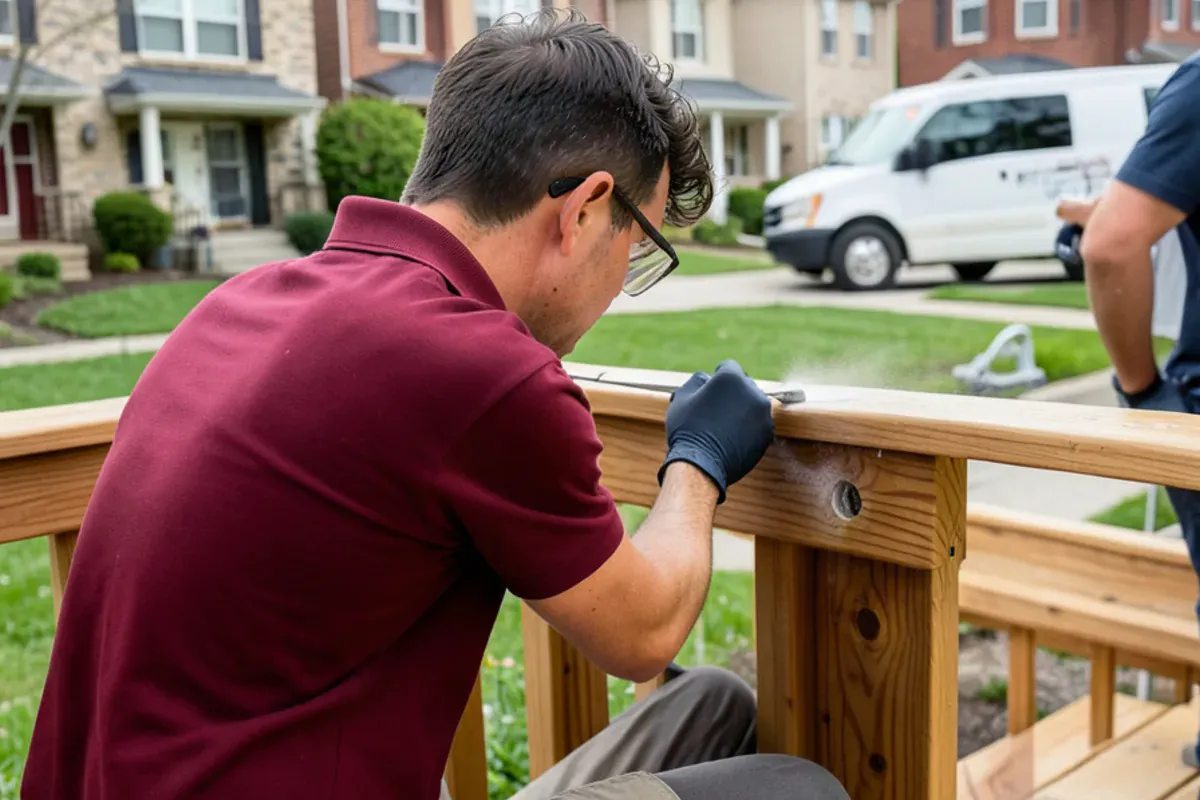
Carpenter bee jobs are quoted in writing after the free inspection. These factors set the price:
House style changes the math. A newer Concord or Chester County deck with forty holes along waist-high rails can be treated from the ground in one pass, while a 1940s Delaware County twin with a dozen holes in the gable trim needs ladder work at the roofline and more time per hole. If woodpeckers have already opened the galleries, we treat what's left of the tunnels and flag the boards for a carpenter, since that repair sits outside a pest control quote.
- How many active holes there are and how spread out they are
- Height, from deck rails at waist level to gable trim on a second story
- How much bare or weathered wood is involved
- Whether sealing the holes is part of the job
- Whether a return visit is needed later in the season
- Woodpecker damage that should be flagged for carpentry repair
Carpenter Bee Control in PA: Timing, Sealing and Next Spring
Treat when bees are active, typically April through June, and again in late summer if new adults are emerging from old holes. Wait until activity has stopped, usually a few days to a couple of weeks after treatment, before sealing. Holes left open over winter give next year's bees a ready-made home, so get them plugged by fall.
A few habits keep the bees from coming back:
- Paint or apply solid stain to bare decks, rails and trim
- Replace soft, heavily tunneled boards rather than just patching them
- Check fascia and deck undersides each April for fresh sawdust
- Plug any old holes you find before spring
- If the deck is due for staining anyway, do it after the holes are sealed so the finish covers the plugs
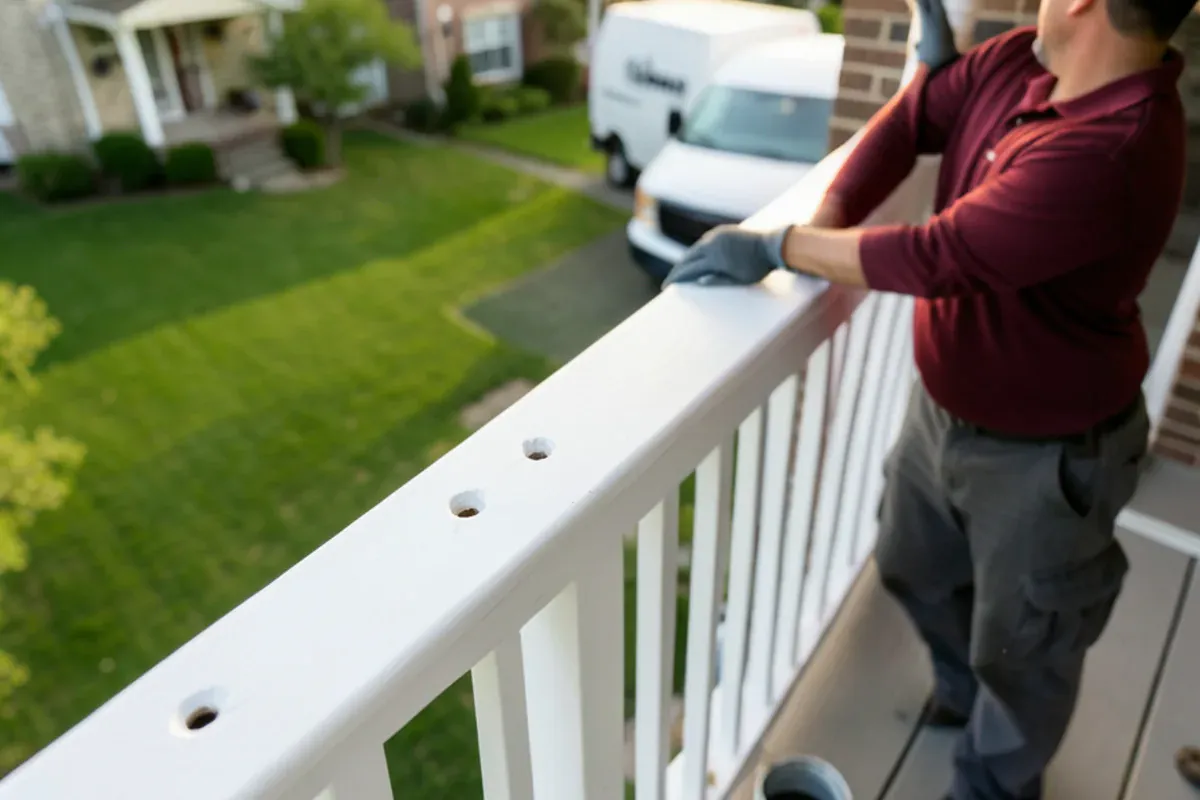
What our carpenter bee control includes
- Free inspection of fascia, soffits, decks, rails, pergolas and sheds
- Count of active and old carpenter bee holes
- Treatment inside each active gallery
- Attention to holes on the undersides of rails and boards
- Guidance on when and how to seal treated holes
- Notes on woodpecker damage and boards needing repair
- Written quote before work begins
Why call No Bugs Exterminator for carpenter bee control
Every hole, not just the busy ones
Thom and his team check old galleries as well as active ones during the free inspection.
Spring scheduling
We're open 7 days, 8 a.m. to 7 p.m., during the April-to-June carpenter bee season.
Clear written plan
Your written quote spells out treatment and sealing, so no hole is left open by accident.
Bees, not termites
If soft wood near the holes points to termites instead, we say so during the free inspection, so the quote targets the right problem.
Family-run in Media
We are a small, family-run business based in Media, a short drive from the decks, pergolas and fascia of most Delaware County neighborhoods.
Where we provide carpenter bee control
Decks, pergolas and wooden trim make carpenter bees a steady spring problem in parts of Delaware County with lots of exposed wood. Concord Township and Chadds Ford Township have many newer homes with large cedar and pressure-treated decks, while Radnor Township has older Main Line houses with wooden fascia and rafter tails that bees return to every April.
- Lima
Apartment and townhome communities near the Promenade at Granite Run have wooden balconies and railings, and Census (ACS) estimates show 68% of homes are rented, so property managers often call.
- Chester County
Subdivisions from the 1990s and 2000s west of Route 202 have large cedar and pressure-treated decks that weather quickly without regular staining.
- Upper Chichester Township
Route 322 corridor homes from the 1970s in Twin Oaks and Ogden often keep original wooden fascia and add-on decks that females bore into every spring.
- Boothwyn
Homes from the early 1970s near Naamans Creek pair wood decks, fences and sheds with nearby tree cover, a common setup for returning carpenter bees.
- Aldan
Older homes near the Clifton-Aldan rail stop have wooden porches, rafter tails and trim that draw boring bees once the paint starts to fail.
- Rutledge
This planned turn-of-the-century borough, median built 1938, has wood-framed porches and eaves where unpainted trim attracts nesting females each April.
- St. Davids
Properties near Eastern University and St. Davids Square on Lancaster Avenue have wooden pergolas, fences and trim that the same bees return to year after year.
- Parkside
Compact early-1900s bungalows have exposed rafter tails and wooden porch posts, classic carpenter bee targets as paint begins to peel.
- Yeadon
Twin homes running up to Cobbs Creek have rear decks and wooden porch ceilings, and with 55% of homes rented, owners and landlords share the upkeep calls.
What customers say on Google
4.8 out of 5 from 21 reviews on Google. Quoted as written by customers.
Professional service with great results!
Thom is a top-notch pest control specialist! And is one of the most genuine guys in the industry. He came to inspect a situation I had going on at the house, took his time, offered detailed advice, and didn’t take a penny.
Thom + his team were amazing. Very professional + provided me with a quote that made the most sense for my situation. Clearly I was not being gouged. Thom put the client first.
Carpenter Bee Control: common questions
Do carpenter bees damage wood?
Yes, though slowly. One bee's tunnel does little harm, but bees reuse and lengthen the same galleries every year and several often share a board, so damage builds over seasons. The bigger trouble comes when moisture gets into the tunnels or woodpeckers tear open the wood to reach the larvae. Fascia and deck rails take most of the damage on Delaware County homes.
When should holes be treated and sealed?
Treat while the bees are active, usually from April into June, so they pass through the treatment inside the gallery. Seal afterward, once you no longer see bees going in or out, typically within a couple of weeks. Sealing an active hole just makes the bee chew a new exit. Any holes still open in fall should be plugged before winter.
Why do woodpeckers follow carpenter bees?
They are after the larvae. By mid to late summer the tunnels hold developing bees, and woodpeckers can locate them by sound. The birds chip along the tunnel to reach them, which can turn a neat half-inch hole into a long, splintered gouge. Ending the carpenter bee activity is usually what makes the woodpeckers move on.
Do carpenter bees sting?
Rarely. The males that hover and dive at you have no stinger at all. Females can sting but usually only do so if handled or trapped against skin. The bigger concern is the wood damage they cause, though anyone with a known sting allergy should still keep clear of active holes and seek medical care for a severe reaction.
Will painting my deck stop carpenter bees?
It helps a lot. Carpenter bees prefer bare, weathered softwood, and a coat of paint or solid stain makes boards far less attractive. Clear sealers and semi-transparent stains offer less protection. Painting won't evict bees already inside, so active galleries should be treated and sealed first, and the wood finished after that.
Related services
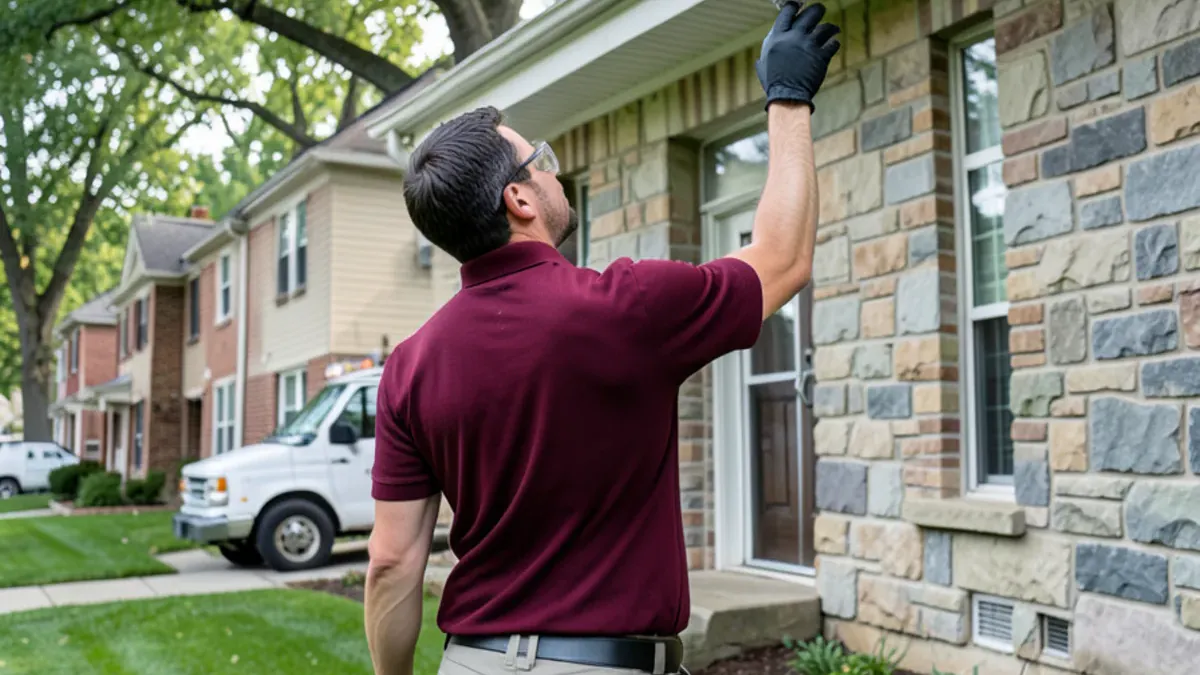
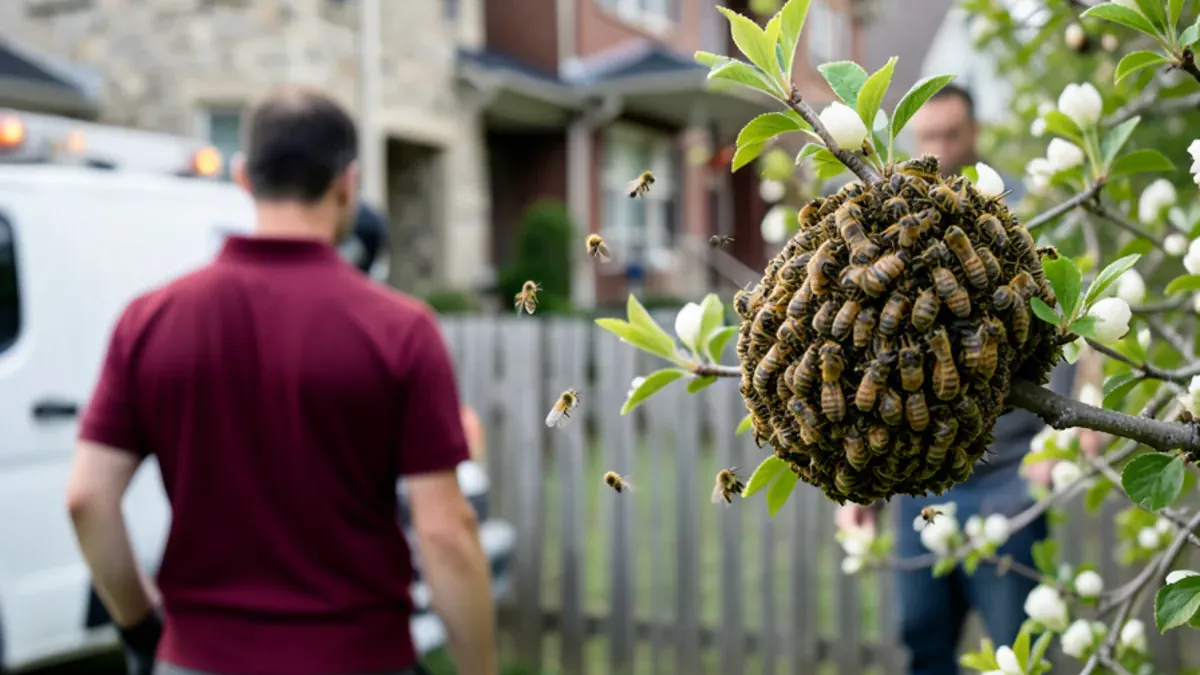
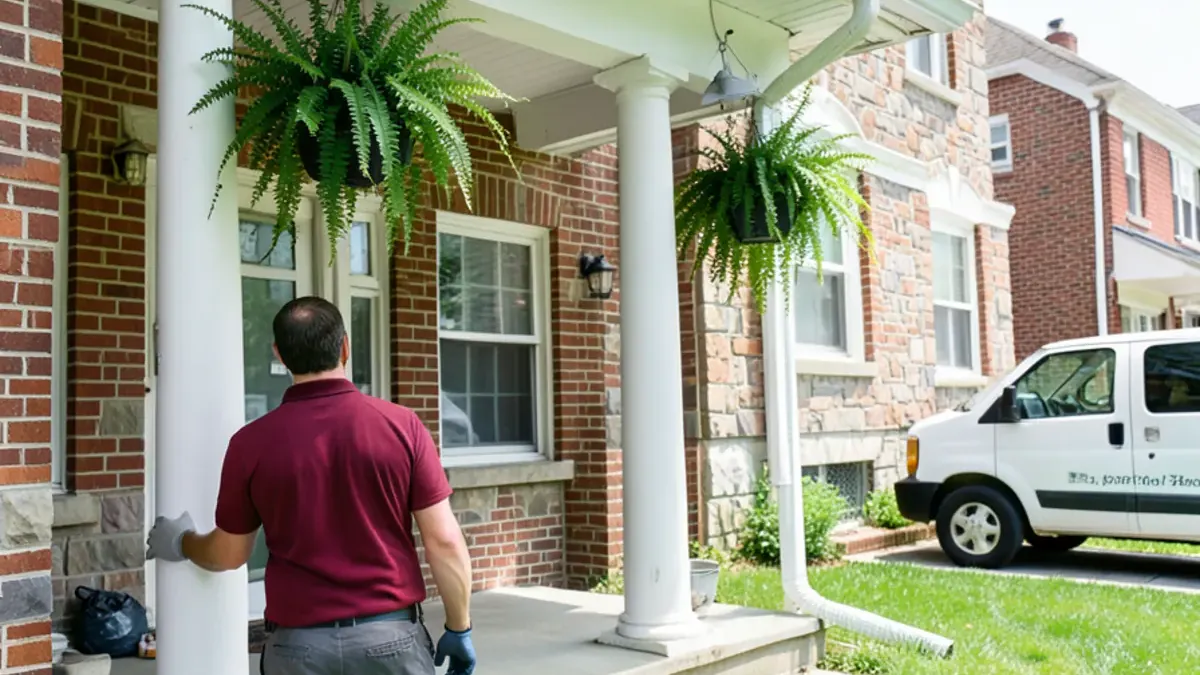
Helpful guides from our blog
Ready to get rid of the problem?
Thom and his team serve Media, Delaware County and southeastern Pennsylvania, open 7 days, 8 a.m. to 7 p.m..
- ★ 4.8 from 21 Google reviews
- Open 7 days, 8 a.m. to 7 p.m.
- Free inspection before treatment
- Family-run, based in Media, PA
Open 7 days, 8 a.m. to 7 p.m.