
Signs of a Yellow Jacket Nest in the Ground or a Wall
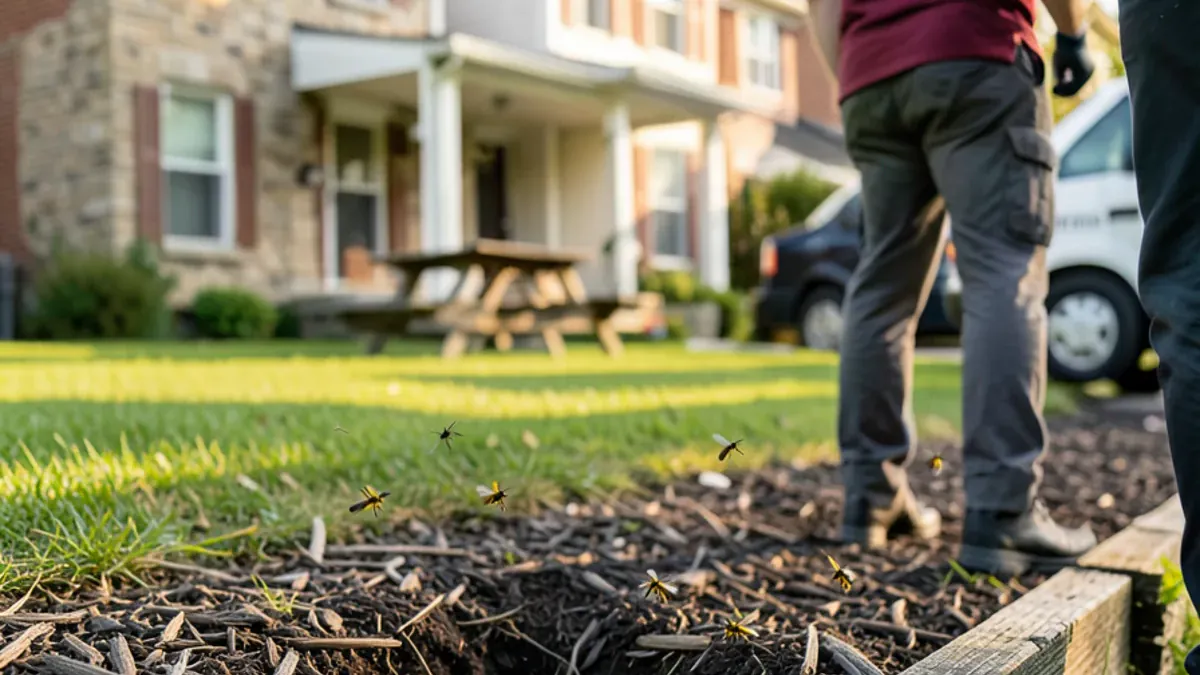
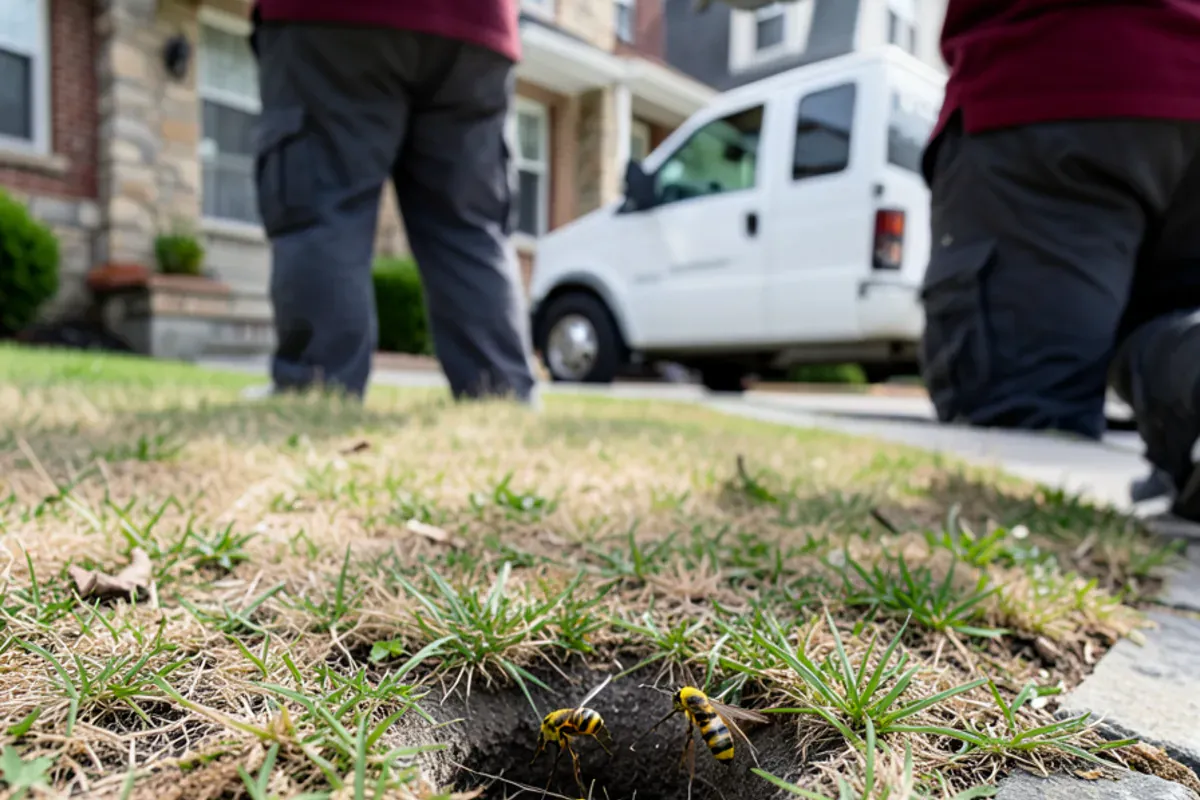
Yellow jackets are compact wasps with bright yellow and black bands and almost no hair. Unlike paper wasps, they nest out of sight, so the clue is traffic: a steady line of insects flying straight into and out of one small opening.
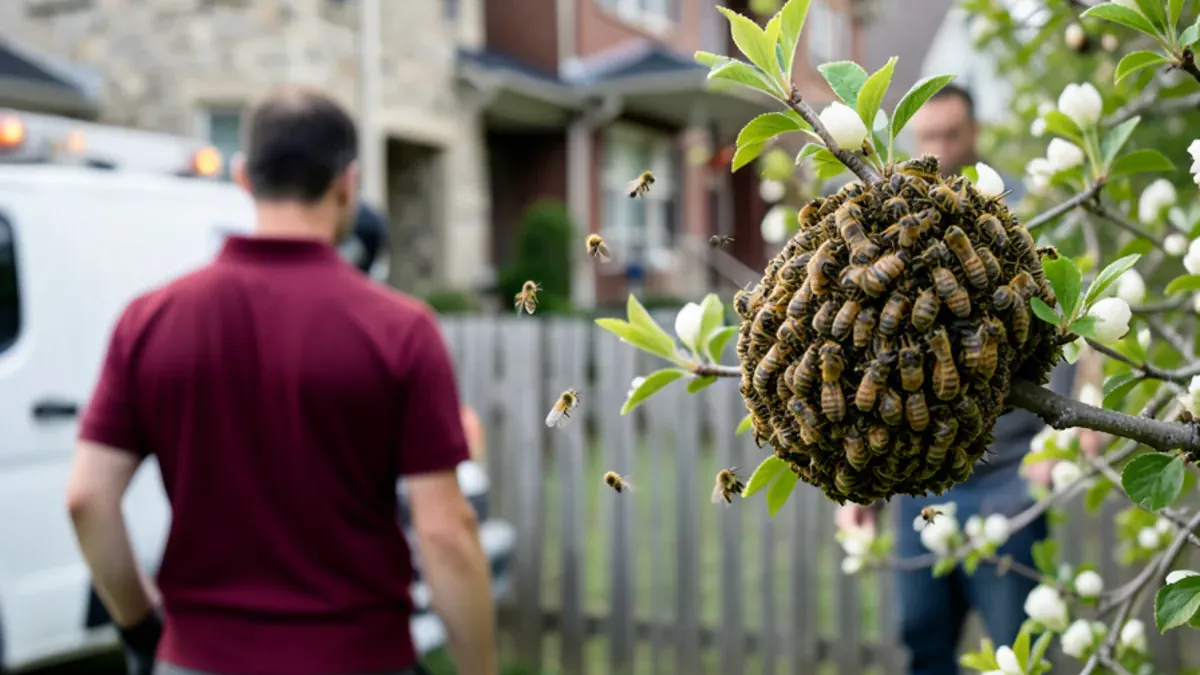
Round, drilled holes in wood trim point to carpenter bees instead, and fuzzy, golden-brown bees streaming into a wall may be honey bees that need a different approach, explained on our bee removal page.
- A hole in the lawn, a mulch bed or the base of a shrub with constant traffic
- Activity under landscape timbers, stone walls, steps or patio edges
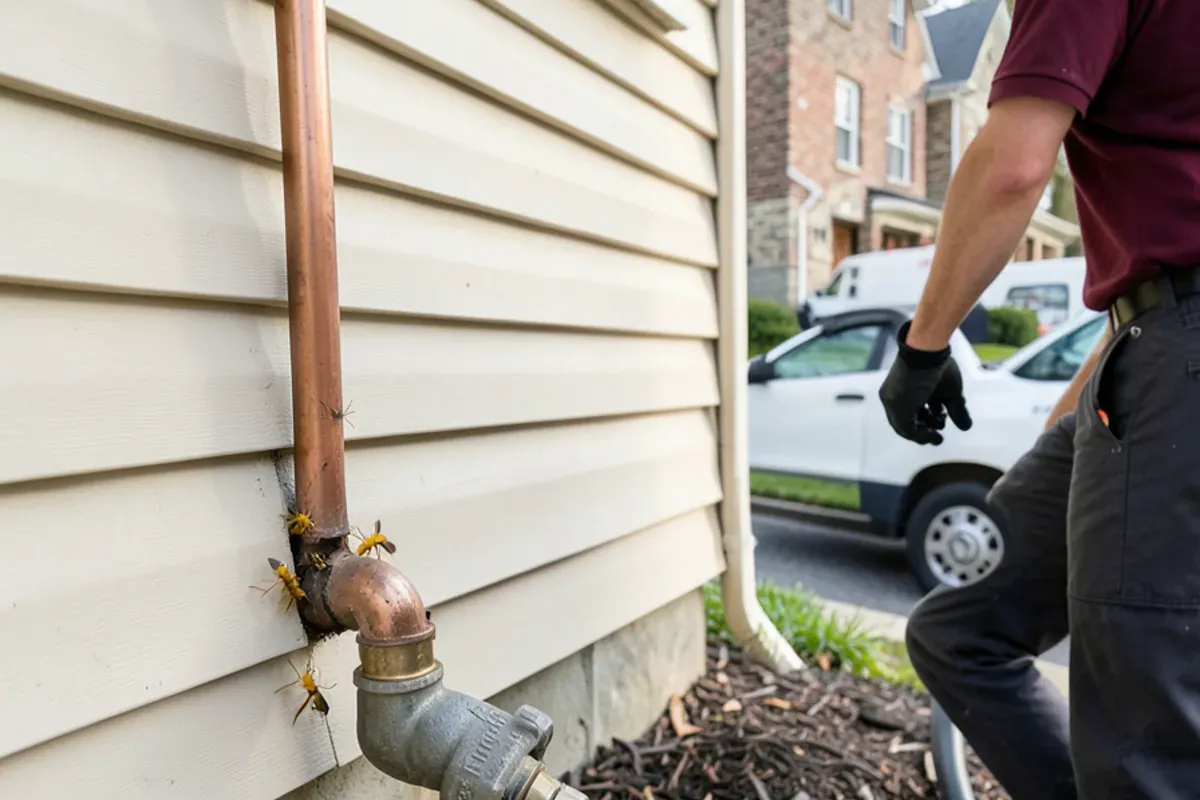
- Yellow jackets slipping behind siding, trim or a gap where pipes enter the house
- A papery rustling or scratching sound inside a wall or ceiling
- Yellow jackets showing up indoors near light fixtures or windows, especially in late summer
Late Summer Yellow Jackets: Peak Season in Delaware County
A yellow jacket colony starts with one queen in spring, often in an abandoned rodent burrow or a hollow under a landscape timber. Through June and July the workers feed the growing brood on insects, and the nest expands underground or inside the wall. By August and September a single colony can hold thousands of workers.
Late in the season the colony stops raising new workers, and foragers switch to sugar: soda cans, trash bins, fallen apples and picnic food. That's when yellow jackets crash cookouts, and it's why mowing over a ground nest in September can go so badly. The first hard frost kills the workers, and only new queens survive the winter.
Delaware County yards offer plenty of nest sites, from mulch beds and stone retaining walls to railroad-tie edging and the old rodent burrows common near wooded lots.
Found a Ground Nest? What Not to Do
The instinct is to pour something down the hole or cover it, and both can backfire. Anyone allergic to stings should avoid the area completely, and if someone is stung many times or shows signs of a severe reaction, call 911 or get medical care immediately.
- Don't pour gasoline or other fuel into the hole; it is a fire hazard and contaminates the soil
- Don't flood the nest with a hose, which usually just stirs up the colony
- Don't cover or plug the entrance; yellow jackets will dig a new exit, sometimes toward the house
- Don't mow or run a string trimmer over the spot until it has been treated
- Do mark the spot from a distance with a stake or flag and keep children and pets away
Yellow Jackets in the Wall: Should You Seal the Hole?
No, not while the colony is active. A yellow jacket nest inside a wall or ceiling has one way in and out. Block it, and the workers look for another exit, which can mean chewing through drywall and emerging inside a bedroom or living room.
We treat through the existing entrance, then leave it open so returning workers carry the treatment into the nest. Once activity has stopped, usually after a week or two or after a hard frost, the gap can be sealed. The paper nest left inside the wall dries out; unlike a honey bee hive, it holds no honey or wax to melt or attract other pests.
How Does Yellow Jacket Removal Work for Ground and Wall Nests?
The goal is to reach the queen and the brood, not just the foragers. Treatment works well late in the day, when most workers are back inside, and a colony in a wall void can take a few days to quiet completely. Our options:
- Dust at the entrance: a dust formulation placed into the opening that workers carry deep into the nest. The standard choice for ground and wall nests.
- Liquid treatment: useful for some ground nests in loose soil, though it may not reach a deep nest as well as dust.
- Traps and baits: they catch foragers around a patio, but they don't kill the colony and are no substitute for treating the nest.
- Digging the nest out: rarely needed, and only after the colony is dead.
Talk to us about yellow jacket control
Call and speak with Thom or his team. The inspection is free, and you get a written quote before any treatment.
- ★ 4.8 from 21 Google reviews
- Open 7 days, 8 a.m. to 7 p.m.
- Free inspection before treatment
- Family-run, based in Media, PA
Open 7 days, 8 a.m. to 7 p.m.
Yellow Jacket Treatment Rules in Pennsylvania
Commercial yellow jacket work is governed by the Pennsylvania Pesticide Control Act of 1973. Under that law the Pennsylvania Department of Agriculture (PDA) issues business licenses to pest control companies and certifies the people who apply products for them, and 7 Pa. Code § 128.31 calls for the license number on company vehicles. Any homeowner can ask a provider for it.
Labels add limits of their own, such as how close a dust or liquid may go to a vegetable garden, a well or a fish pond. Ground nests on public school athletic fields and playgrounds are handled through the district's integrated pest management plan under Pennsylvania Act 35 of 2002, which also requires notice before applications.
Yellow Jacket Exterminator Visit in PA, Step by Step
Here's what to expect from the first call to the day the entrance can be closed.
Phone call
Tell us where the entrance is, how busy it looks and whether anyone at home is allergic. Calling early in the day improves the odds of a visit the same day.
Free inspection
We locate each entrance and check the rest of the yard and house for additional nests.
Written quote
You see the plan and price for each nest before any treatment.
Prepare the area
Pets and children stay inside, and we may ask you to keep doors near a wall nest closed.
Treat each nest at its entrance
Dust or liquid goes into the opening, timed for when most workers are home.
Leave entrances open, then seal
We explain which openings to leave alone and for how long. Once activity stops, we tell you which holes to fill and which gaps to seal.
Cost Factors for Yellow Jacket Control
We quote yellow jacket jobs in writing after the free inspection. The main factors are:
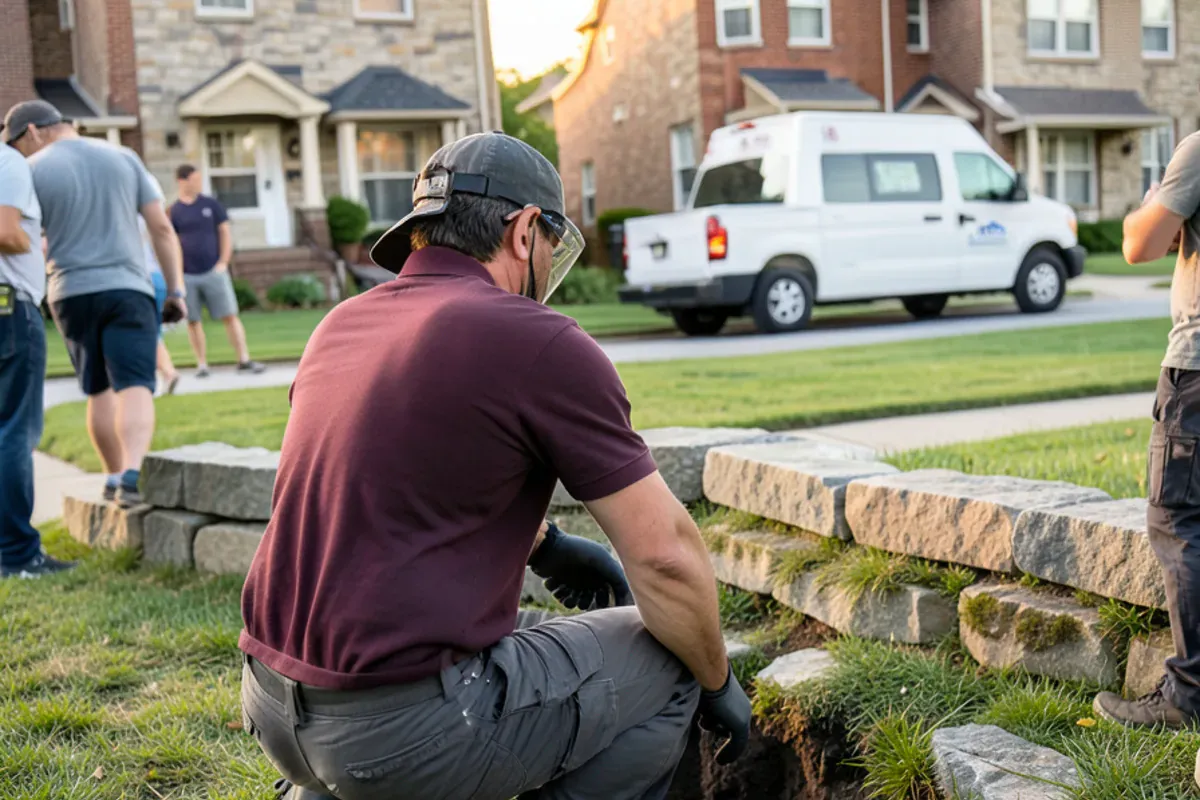
The calendar matters as much as the location. A ground nest found in June may hold a few dozen workers and take one treatment, while the same colony in mid-September can number in the thousands and stay busy for a couple of days afterward. Wall nests usually cost more than lawn nests because we have to find the true entrance, which can be a few feet from where the insects seem to be going in, and protect the interior side of that wall.
- The number of nests in the lawn, beds and structure
- Whether a nest is underground, in a wall void or inside a ceiling
- Height and access for nests in upper walls or eaves
- How large the colony has grown, which peaks in late summer
- Whether yellow jackets have already started getting indoors
- Sealing or repair needed once the colony is dead
Keeping Yellow Jackets Away From Your Yard
Preventing next year's colony comes down to fewer nest sites in spring and less food in late summer:
- Fill old rodent burrows and soft spots in the lawn in early spring
- Seal gaps in siding, trim and around pipes and wires entering the house
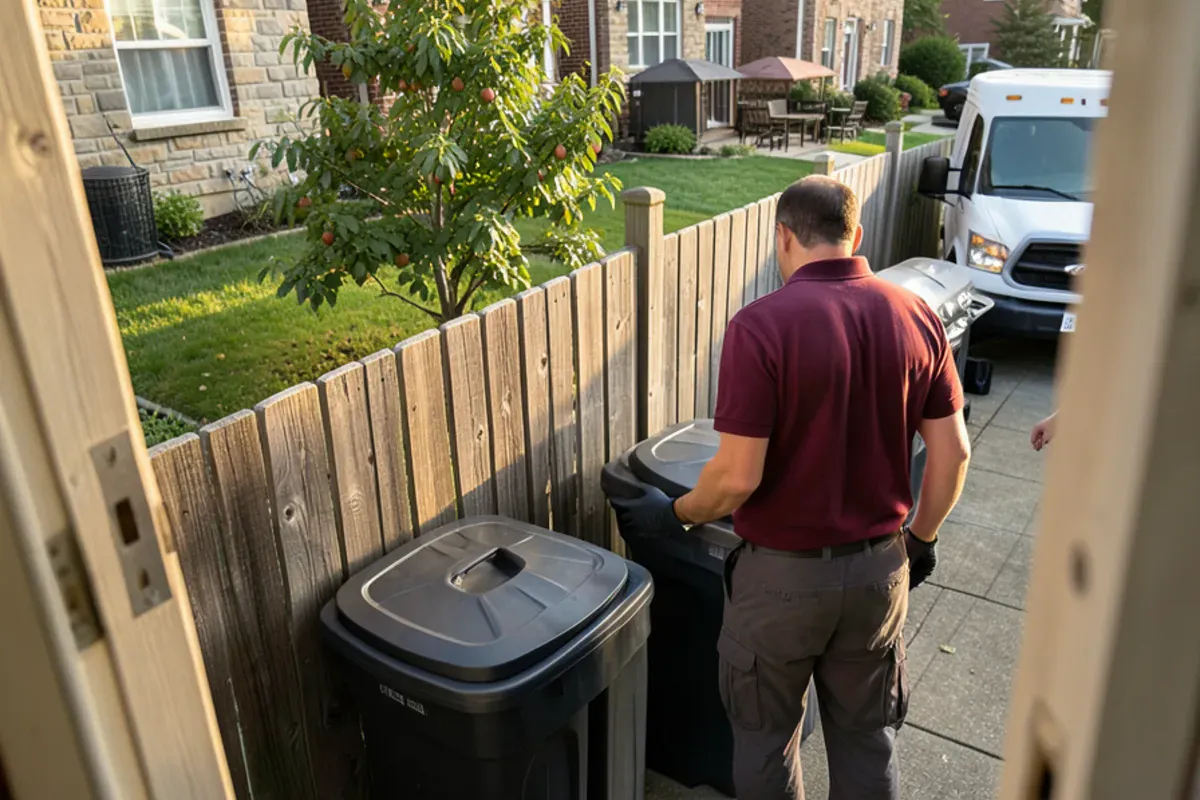
- Keep tight lids on trash and recycling bins, and rinse cans and bottles
- Pick up fallen fruit under apple, pear and plum trees
- Cover drinks and food outdoors in August and September
- Watch for traffic at mulch beds and stone walls before starting yard work
What our yellow jacket control includes
- Free inspection of lawns, beds, walls and eaves for active entrances
- Identification of yellow jackets versus honey bees or other wasps
- Written quote for each nest
- Treatment of ground nests at the entrance
- Treatment of wall and ceiling voids through the existing opening
- Guidance on when entrances can be filled or sealed
- Late-summer prevention advice for trash, fruit and outdoor dining
Why call No Bugs Exterminator for yellow jacket control
We find the entrance
Our free inspection traces the flight path back to each opening, so the written quote covers every nest we find.
Here for peak season
We're open 7 days, 8 a.m. to 7 p.m., through the August and September rush.
Homes and businesses
Thom and his team handle yellow jackets for homeowners and businesses alike, including patios and outdoor seating areas.
Wall nests handled from outside
When yellow jackets are in a wall, Thom and his team explain why the entrance has to stay open and tell you exactly when it is safe to seal it.
Where we provide yellow jacket control
Yellow jackets thrive in the established yards common across central Delaware County. Aston Township has 1960s and 1970s split-levels with landscape timbers and mulch beds along the Chester Creek valley, Middletown Township mixes newer lots with wooded parcels, Marple Township has mature lawns around Lawrence Park, and Ridley Township has compact yards where a ground nest is never far from a door.
- Folsom
Yards around Ridley High School and Morton Avenue, mostly built around 1957, have mature lawns and foundation beds where ground nests surface by August.
- Woodlyn
Post-war lots off MacDade Boulevard are compact, so a yellow jacket hole in the lawn or under a stoop is rarely more than a few steps from a door.
- Village Green-Green Ridge
Ranch and split-level streets off Pennell Road, with a 1962 median build year, have railroad-tie edging and mulch beds that hide ground colonies.
- Brookhaven
Ranch homes and garden apartments off Edgmont Avenue share lawns and dumpster areas, where late-season yellow jackets forage and nest close to doorways.
- Glenolden
Yards beside Muckinipattis Creek have stone walls and damp soil edges where yellow jacket queens take over old rodent burrows each spring.
- Norwood
Bounded by Darby and Muckinipattis creeks, this Amosland Road borough has wooded creek banks where abandoned burrows become ground nests near backyards.
- Clifton Heights
Former mill-borough homes along Darby Creek, median built 1951, have stone foundations with mortar gaps that yellow jackets use to reach wall voids.
- Prospect Park
Rail-borough homes near the Morton Homestead, median built 1949, have aging siding and pipe penetrations where wall nests often start.
- Bethel Township
1990s subdivisions on former farmland near Booths Corner Farmers Market have big lawns and fresh mulch, so ground colonies grow unnoticed until mowing.
What customers say on Google
4.8 out of 5 from 21 reviews on Google. Quoted as written by customers.
Professional service with great results!
Thom is a top-notch pest control specialist! And is one of the most genuine guys in the industry. He came to inspect a situation I had going on at the house, took his time, offered detailed advice, and didn’t take a penny.
Thom + his team were amazing. Very professional + provided me with a quote that made the most sense for my situation. Clearly I was not being gouged. Thom put the client first.
Yellow Jacket Control: common questions
Why are yellow jackets worse in late summer?
Because the colony is at its largest and its food needs have changed. By August a nest may hold thousands of workers, and once the queen stops producing new workers they shift from hunting insects to scavenging sweets. That sends them to soda cans, trash bins and fallen fruit, and makes them quicker to defend a nest that gets bumped or mowed over.
What should I do about a nest in the wall?
Leave the entrance open and call us. Sealing the gap from outside can force the colony to chew inward through drywall. Keep the room nearest the nest closed off, watch for yellow jackets around indoor light fixtures, and don't spray into the gap. We treat through the existing opening and tell you when it's safe to seal it.
How do you treat ground nests?
We place a dust or liquid treatment directly into the entrance hole, usually late in the day when most workers are inside. Returning yellow jackets carry it into the nest, where it reaches the queen and brood. We mark the spot, ask you to keep mowers and pets away for a day or two, and let you know when the hole can be filled.
Do yellow jacket traps get rid of a nest?
No. Traps catch foragers around a patio or picnic table, but a large colony replaces them faster than a trap can catch them, and the queen keeps laying underground. Traps can cut down on nuisance around outdoor seating once the nest itself has been treated, or where the nest is on a neighbor's property.
Will yellow jackets come back to the same hole?
Not to the same nest. Yellow jacket colonies die off each fall, and new queens start fresh nests the next spring. A yard with plenty of old rodent burrows or loose stone walls can draw a new queen to a nearby spot, though, so filling holes and sealing gaps lowers the chance of a repeat.
Related services
Helpful guides from our blog
Ready to get rid of the problem?
Thom and his team serve Media, Delaware County and southeastern Pennsylvania, open 7 days, 8 a.m. to 7 p.m..
- ★ 4.8 from 21 Google reviews
- Open 7 days, 8 a.m. to 7 p.m.
- Free inspection before treatment
- Family-run, based in Media, PA
Open 7 days, 8 a.m. to 7 p.m.