
This option depends on the property. Call (209) 563-1650 and we'll confirm whether it's the right fit before anything is scheduled.
Are They Honey Bees or Something Else?
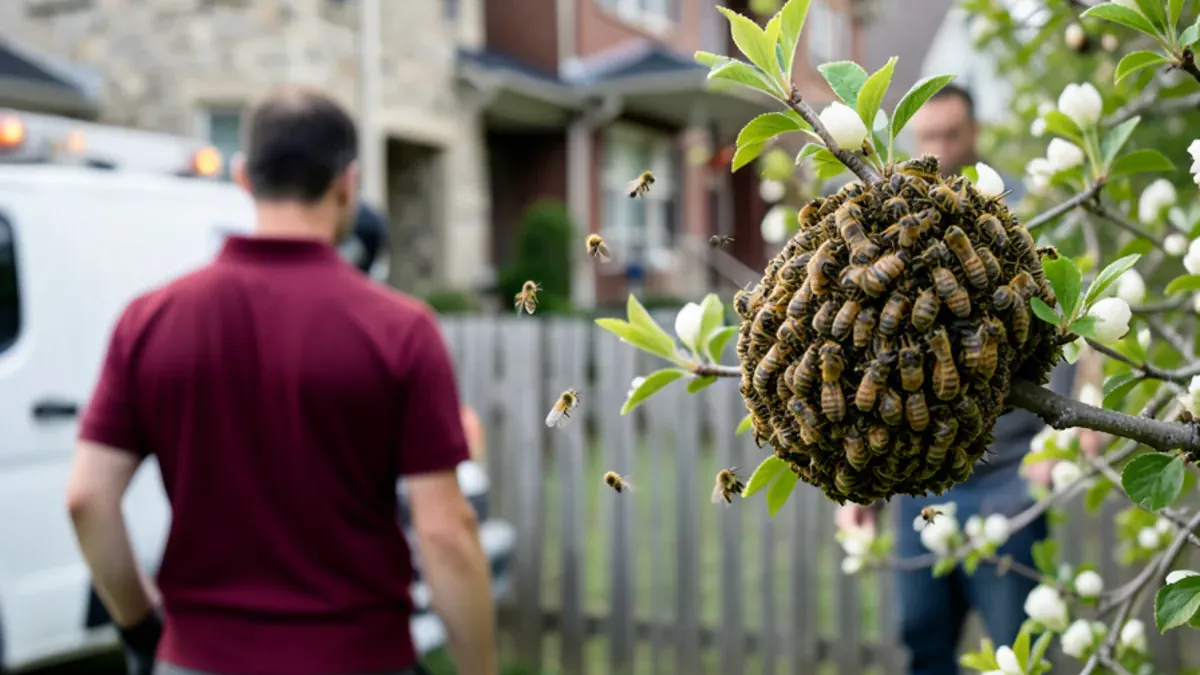
Many bee calls turn out to be wasps. Honey bees are smaller than most people expect, about half an inch, and look fuzzy and amber-brown rather than shiny yellow. Here's a quick guide to what you might be seeing and where each one leads.
If it turns out to be wasps, our wasp nest removal and hornet nest removal pages explain what we do about them.
| What you see | Likely insect | Usual next step |
|---|---|---|
| A large, humming cluster of fuzzy brown bees hanging from a branch, fence or mailbox | Honey bee swarm | Contact a local beekeeper; the swarm often moves on within days |
| Fuzzy bees streaming in and out of one gap in siding, a soffit or a chimney for weeks | Established honey bee colony | Beekeeper removal plus opening and repairing the wall |
| Large, round, hairy bees going into a hole in the ground or old insulation | Bumble bees | Often left alone if out of the way; the colony is small and gone by fall |
| Large, shiny black bees hovering near decks and fascia | Carpenter bees | Gallery treatment and sealing |
| Slick yellow-and-black insects at a lawn hole or wall gap | Yellow jackets | Nest treatment at the entrance |
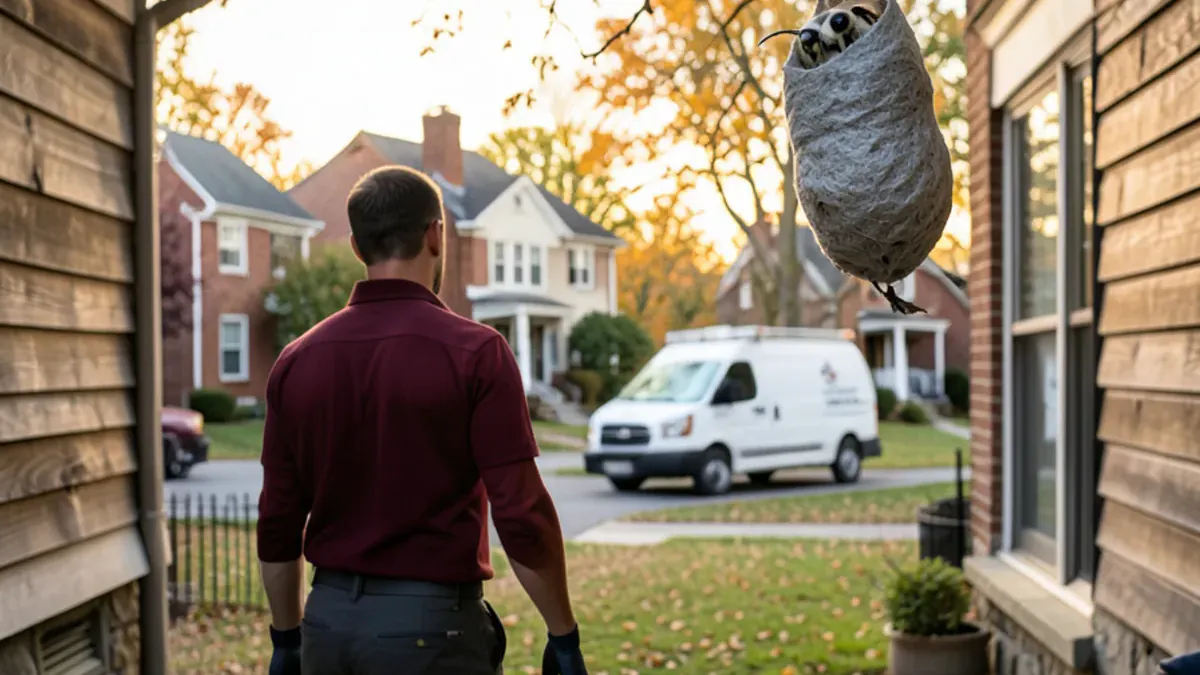
| Insects on a gray paper comb or ball-shaped nest | Paper wasps or hornets | Nest treatment and removal |
Bee Swarm Removal: Why a Cluster on a Branch Usually Moves On
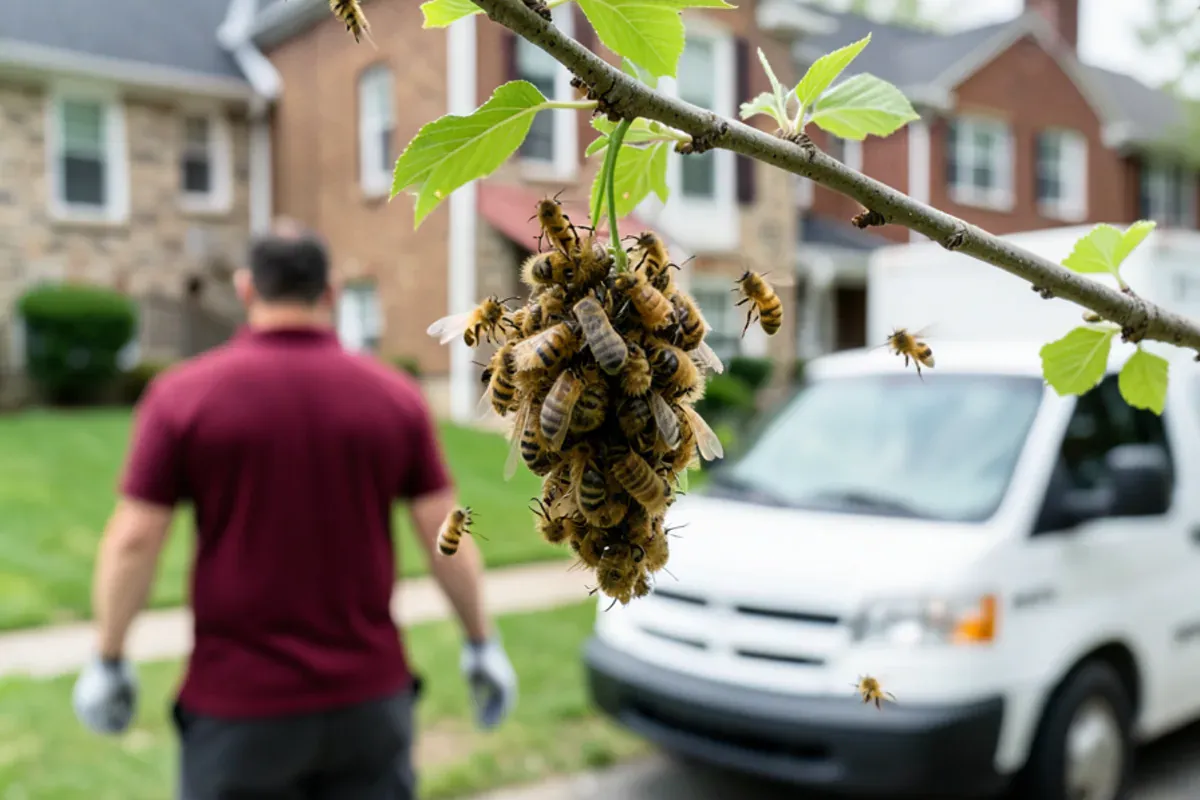
Swarming is how honey bee colonies reproduce. In spring and early summer, a large share of a crowded colony leaves with the old queen and hangs in a cluster while scout bees search for a new home. The cluster may stay a few hours or a few days, then the whole swarm lifts off at once.
Swarming bees have no comb or brood to defend, so they are usually calm, but they will still sting if disturbed. Keep people and pets back, don't spray the cluster, and don't try to shake it into a box yourself. Many local beekeepers will collect a swarm that is within reach, and we can point you in the right direction when you call.
Anyone allergic to stings should stay indoors until the swarm has gone, and a severe reaction calls for 911 or medical care.
Why Are Bees in the Wall a Bigger Job?
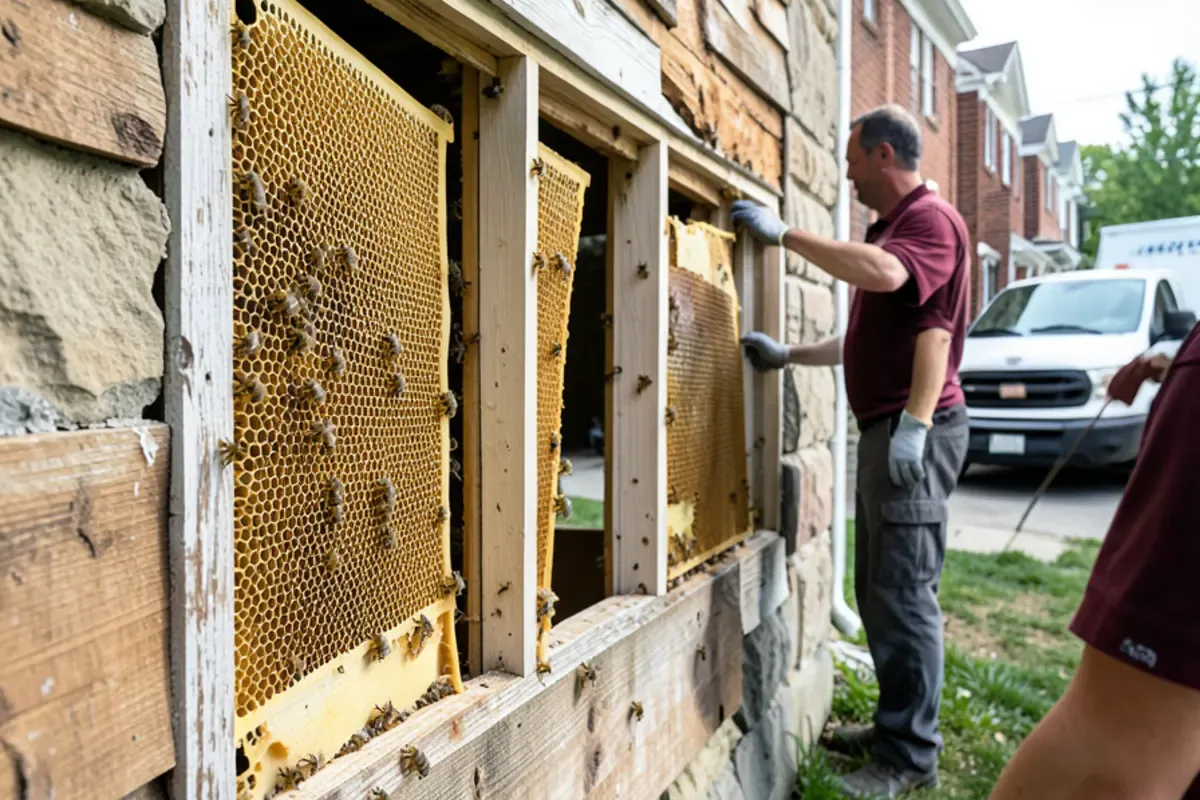
When a swarm moves into a wall void, soffit, chimney chase or hollow tree, it builds wax comb and stores honey, and the colony can live there for years. That's very different from a yellow jacket nest, which dies every fall.
Killing the bees and leaving the comb behind creates new problems. Without bees to cool and guard it, honey can ferment and seep through ceilings and drywall, softened wax stains surfaces, and the leftover comb attracts wax moths, ants, rodents and often the next swarm. That's why an established colony usually has to be physically removed.
Removal generally means a cut-out: opening the wall or soffit, taking out the comb and bees so a beekeeper can relocate them, cleaning the cavity, then repairing and sealing the opening. It often involves both a beekeeper and a contractor, and we'll advise on how to approach it for your home.
Beehive Removal in PA: Relocation Options and Trade-Offs
Each route has its place, and the right one depends on where the bees are and how long they've been there.
- Swarm collection: a beekeeper gathers the cluster and takes it to a new hive. Fast and simple when the swarm is within reach.
- Cut-out and relocation: the wall or soffit is opened, comb and bees are removed and relocated, and the structure is repaired. The most thorough option for an established colony.
- Trap-out: a one-way exit lets bees leave but not return over several weeks, a method some beekeepers use when opening the wall isn't practical. Comb stays behind, so odor and sealing need follow-up.
- Treatment: a last resort, discussed only when relocation isn't workable and the colony poses a real hazard. The comb still has to come out afterward.
Talk to us about bee removal
Call and speak with Thom or his team. The inspection is free, and you get a written quote before any treatment.
- ★ 4.8 from 21 Google reviews
- Open 7 days, 8 a.m. to 7 p.m.
- Free inspection before treatment
- Family-run, based in Media, PA
Open 7 days, 8 a.m. to 7 p.m.
Pennsylvania's Bee Law, PDA Rules and Who Handles What
Pennsylvania's Bee Law gives the Pennsylvania Department of Agriculture (PDA) oversight of honey bees: beekeepers register their apiaries with PDA, and state apiary inspectors check colonies for diseases such as American foulbrood. A colony cut out of a wall usually ends up in a beekeeper's registered hive, which is part of why relocation, not spraying, is the normal route here.
Pesticide work that is part of the same job, such as treating yellow jackets found nearby, is regulated separately under the Pesticide Control Act of 1973. PDA licenses the businesses that do it, and 7 Pa. Code § 128.31 puts the license number on their vehicles. Wall and trim repairs after a cut-out belong to a contractor. This is general information, not legal advice.
What Happens When You Call Us About Bees
With bees, advice comes before anything else. Call (209) 563-1650 to confirm this option is available for your property.
Describe what you see
Tell us whether the bees are clustered on something or flying in and out of an opening, how long they've been there and whether anyone at home is allergic.
Help with identification
We help you work out whether you're dealing with honey bees, bumble bees, carpenter bees or wasps.
Free inspection when it helps
If the insect or the nest location is unclear, we can schedule a free inspection to look in person.
Advice on the right route
Swarms usually go to a local beekeeper; established colonies may need a beekeeper plus wall repair. We'll explain the options.
Written quote for our part
Any work we do, such as treating wasps or yellow jackets found on the property, is quoted in writing before we start.
Sealing and prevention guidance
Once the bees are out, we tell you which openings to close so a new swarm doesn't move in.
What Affects the Cost of Bee Removal in Delaware County
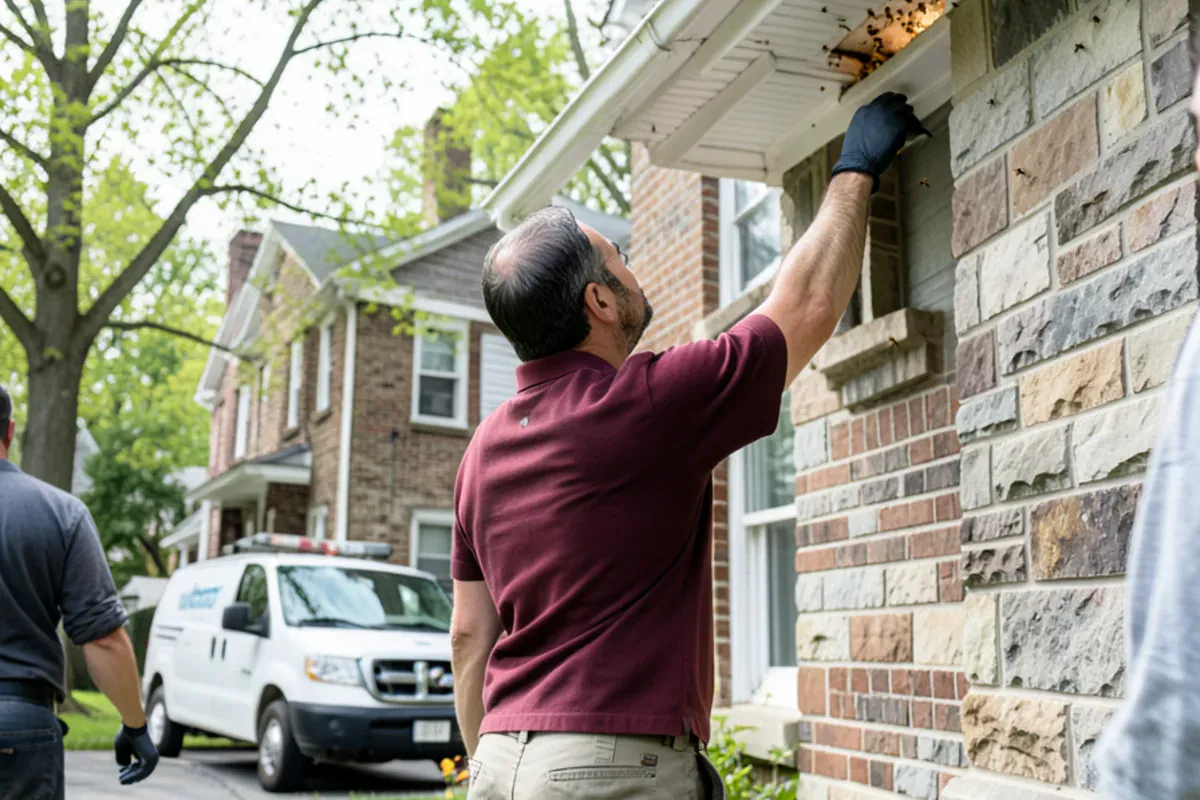
Costs vary widely with the situation, and beekeepers and contractors set their own fees for their part of the work. The main factors:
Because a cut-out involves more than one trade, the total often comes from two or three separate quotes: the beekeeper's removal, a contractor's repair to drywall, siding or a chimney chase, and our part if wasps or yellow jackets on the property need treatment. A colony that has lived in a rowhome cornice for several seasons can hold a lot of comb, which means a larger opening and more repair than a swarm that moved in last month.
- Whether you have a temporary swarm or an established colony with comb
- Where the colony is: wall, ceiling, soffit, chimney or hollow tree
- Height and access to the opening
- How long the colony has been there, which drives the amount of comb and honey
- Repairs to drywall, siding, trim or flashing after a cut-out
- Other stinging insects that need treatment on the same property
After the Bees Are Gone: Sealing and Preventing a Return
Old comb and honey give off a scent that scout bees find from a distance, so a cavity that once held a colony tends to attract new swarms. Once the comb is out and the space is cleaned, the entry should be closed with materials bees can't chew through or squeeze past.
Never seal an opening while bees are still using it. Trapped bees look for another way out, and that can be into your living space.
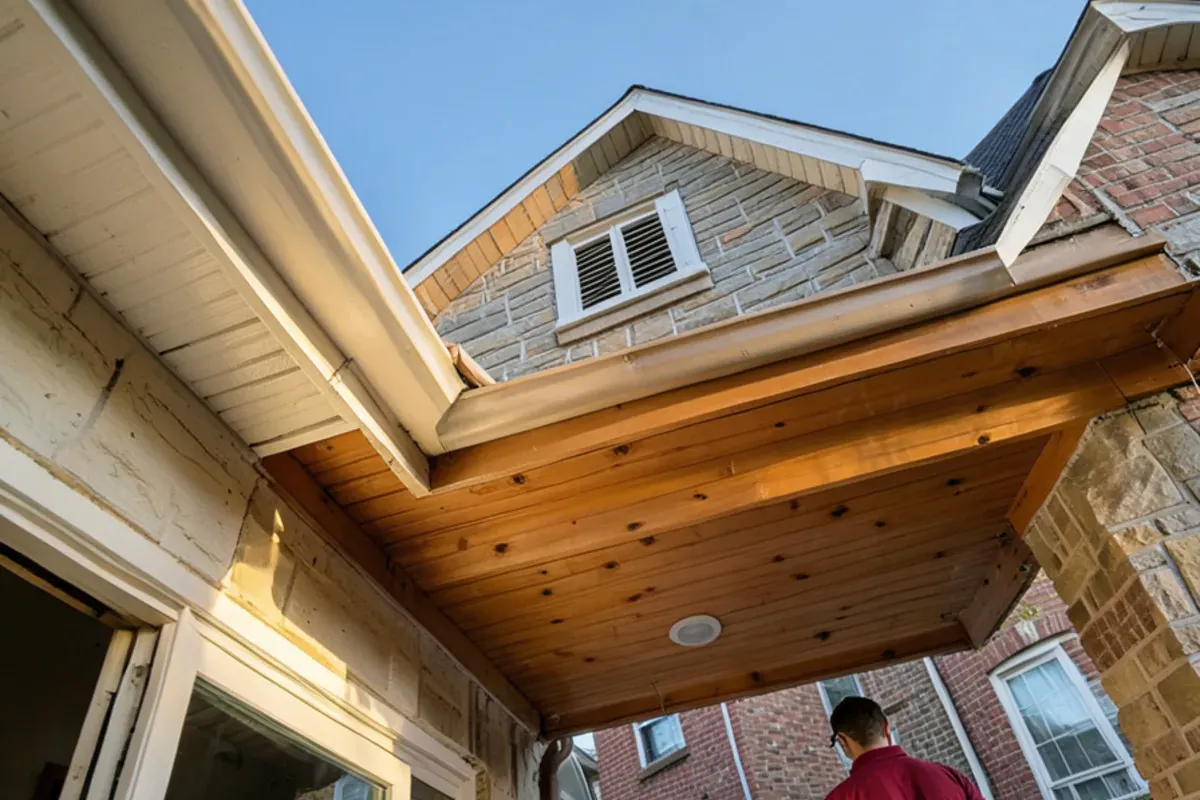
- Close gaps around soffits, fascia, chimney flashing and siding seams
- Screen attic and gable vents
- Cap unused chimneys and check where utility lines enter the house
- Have hollow trees close to the house looked at by an arborist
What our bee removal includes
- Help identifying honey bees, bumble bees, carpenter bees and wasps
- Free inspection when the insect or nest location is unclear
- Advice on contacting a local beekeeper for swarms
- Guidance on cut-out removal and repair for colonies in walls
- Written quote for any treatment of wasps, hornets or yellow jackets
- Recommendations for sealing entry points afterward
Why call No Bugs Exterminator for bee removal
Pollinator-first advice
We steer honey bees toward beekeepers and save treatment for the wasps and yellow jackets that need it.
Someone to talk to every day
We're open 7 days, 8 a.m. to 7 p.m., so you can describe a swarm the day you see it.
A free look when needed
If you can't tell what's flying in and out, Thom and his team can inspect for free and give a written quote for any work we do.
Straight talk on who does what
On the phone we tell you whether your situation calls for a beekeeper, a contractor or us, so you never pay for treatment that does not fit.
Where we provide bee removal
Older homes with hollow wall cavities and big shade trees are where honey bee colonies tend to settle in our area. Media has borough homes and walk-up apartments over shops, Villanova has large estate homes among mature trees, Lower Merion Township has Main Line houses with chimneys and deep soffits, and West Chester has a brick downtown of older buildings. Wherever the bees are, we'll advise on the call.
- Delaware County
Across the county’s 49 municipalities, pre-war twins and rowhomes in the east offer the most wall cavities, while wooded western townships give swarms more trees to rest in.
- Darby
Settled in 1682 on Darby Creek, the borough has trolley-line rowhomes, median built 1949, with old cornices and wall cavities a swarm can move into.
- Darby Township
Briarcliffe and the township’s second section sit near the Darby Creek tidal marsh and its tree lines, where passing swarms often stop to rest.
- Folcroft
Bordering the John Heinz refuge, homes with a 1960 median build year sit beside open wetlands and tree lines that swarms cross in May and June.
- Tinicum Township
Essington’s riverfront and the Heinz refuge marsh border older homes, median built 1956, where siding gaps and unused chimneys can draw scout bees.
- Eddystone
This Delaware River town at the mouth of Crum Creek has homes with a 1948 median build year whose aging chimneys and cornices offer cavities for colonies.
- Upland
Chester Creek mill-town houses near the 1683 Caleb Pusey House, median built 1946, have hollow walls and old trim where a colony can stay for years.
- Chester Township
Toby Farms homes along Chester Creek sit near wooded banks, so both hollow trees and nearby soffits can end up hosting honey bee colonies.
- Sharon Hill
At the end of the Route 102 trolley line, attached homes with a 1954 median build year share cornices, so a colony in one wall can affect the house next door.
What customers say on Google
4.8 out of 5 from 21 reviews on Google. Quoted as written by customers.
Professional service with great results!
Thom is a top-notch pest control specialist! And is one of the most genuine guys in the industry. He came to inspect a situation I had going on at the house, took his time, offered detailed advice, and didn’t take a penny.
Thom + his team were amazing. Very professional + provided me with a quote that made the most sense for my situation. Clearly I was not being gouged. Thom put the client first.
Bee Removal: common questions
Do you kill honey bees?
Not as a first choice. Honey bees are valuable pollinators, and swarms or colonies that can be relocated should go to a beekeeper. Treatment only comes up when relocation isn't workable and the colony is a genuine hazard, and even then the comb has to be removed. We'll talk through your situation on the phone before anything is decided.
What should I do about a swarm on a tree?
Leave it alone, keep people and pets back, and call. A swarm clustered on a branch is resting while scouts look for a permanent home, and it often leaves within a day or two. Local beekeepers frequently collect swarms like these. Spraying it can scatter agitated bees and kills a colony that could have been saved.
How are bees removed from a wall?
Usually by a cut-out. The wall, ceiling or soffit is opened over the colony, the bees and comb are removed so a beekeeper can relocate them, the cavity is cleaned, and the opening is repaired and sealed. Leaving the comb inside invites leaks, odors and new swarms. We'll explain who to involve for your particular home.
Are bumble bees in the ground a problem?
Usually not. Bumble bee colonies are small, rarely aggressive and die off by fall, and they are important pollinators. If a nest sits beside a door, a play area or a spot you mow, or someone at home is allergic, call us and we'll talk through the options. Otherwise it's often fine to leave them be.
Can I just seal the hole the bees are using?
No. Sealing an active entrance traps the colony inside, and the bees will hunt for another exit, sometimes through a light fixture or vent into the house. The comb and honey also stay behind and cause problems of their own. Seal only after the colony and comb have been removed and the cavity has been cleaned out.
Related services
Helpful guides from our blog
Ready to get rid of the problem?
Thom and his team serve Media, Delaware County and southeastern Pennsylvania, open 7 days, 8 a.m. to 7 p.m..
- ★ 4.8 from 21 Google reviews
- Open 7 days, 8 a.m. to 7 p.m.
- Free inspection before treatment
- Family-run, based in Media, PA
Open 7 days, 8 a.m. to 7 p.m.