
Signs of an Ant Problem, Not Just a Few Scouts
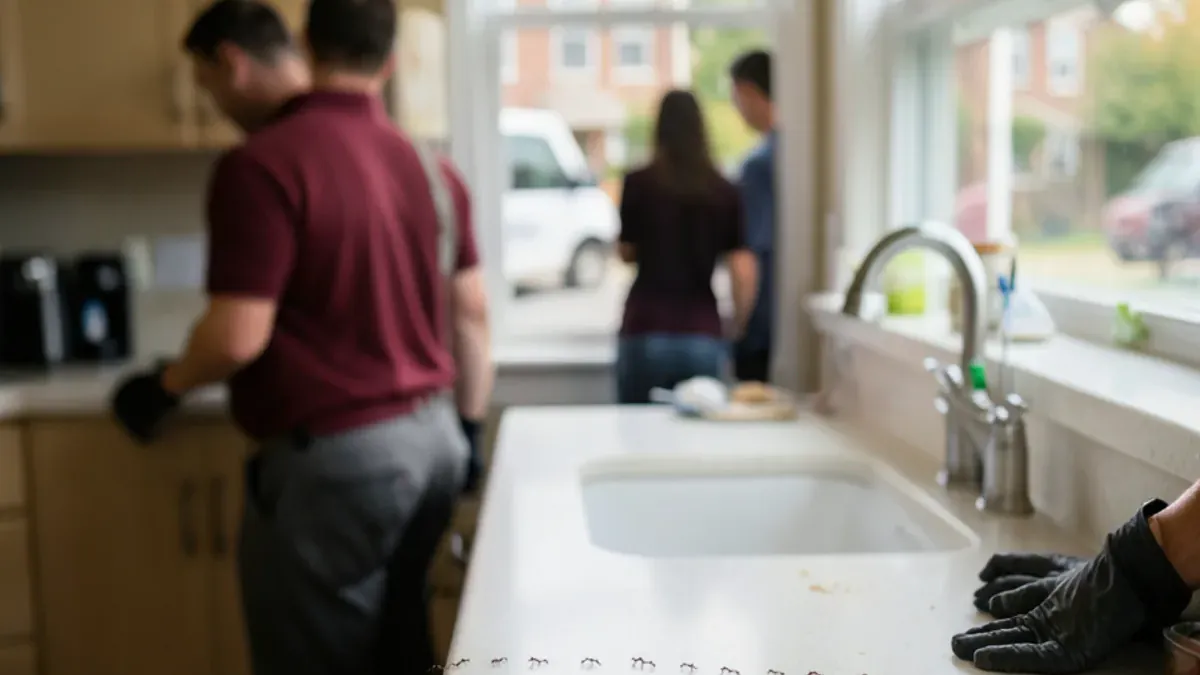
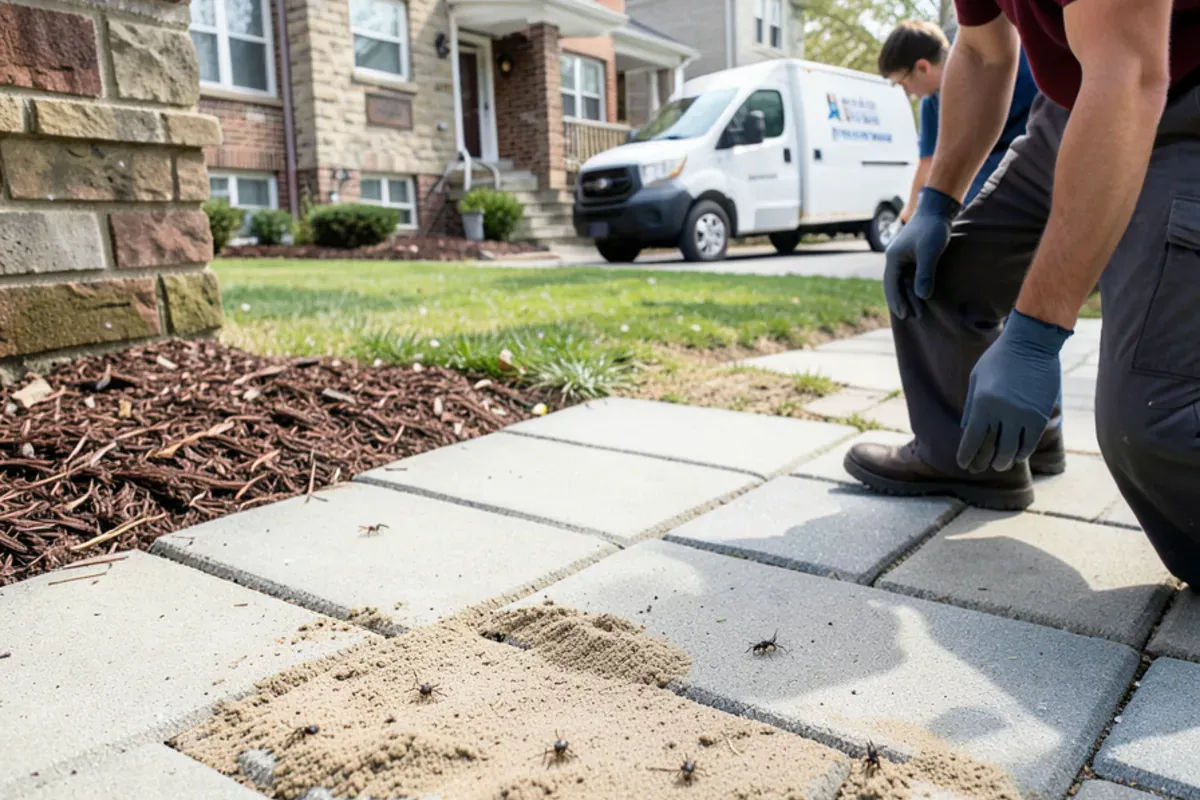
One ant on the windowsill in April is a scout. A steady line running from a baseboard to the sink, the dog bowl or the sugar canister means a colony has found food and is recruiting more workers. Other clues include small piles of sand pushed up between patio pavers or along a basement slab, and winged ants swarming indoors in late winter or spring.
Location tells us a lot. Ants in the kitchen and bathroom are usually after sugar and water, while ants rising through slab cracks in a basement or attached garage are often pavement ants nesting under the concrete.
Timing is a clue as well. Odorous house ants tend to march indoors right after a soaking rain, or in late summer when the aphid honeydew they feed on outdoors dries up. A trail that appears overnight after a storm usually points to a nest close to the foundation rather than one at the far end of the yard.
Odorous House Ants and Pavement Ants: The Usual Culprits
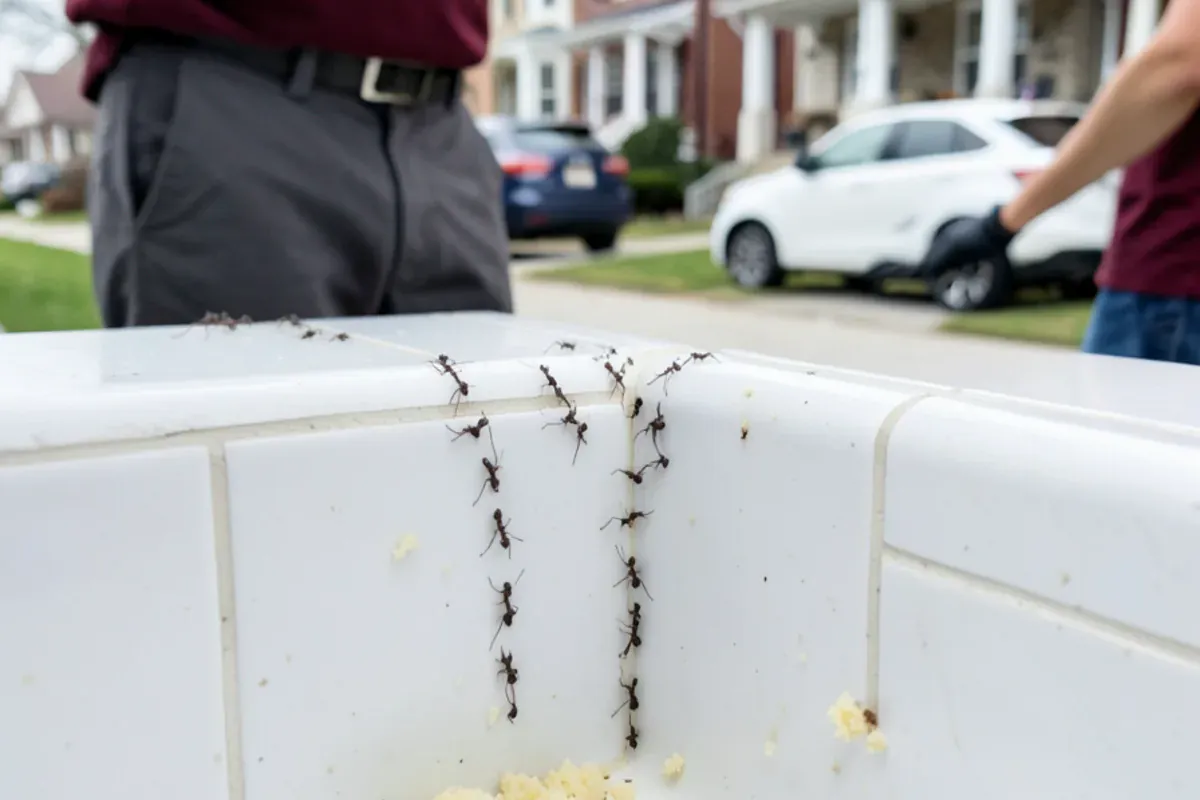
Two species account for most ant calls around Media. Odorous house ants are tiny, dark brown, and smell like rotten coconut when crushed. They nest in wall voids, under siding and in mulch beds, and their colonies hold many queens, which is why they split apart and return after a spray.
Pavement ants are slightly larger and nest under sidewalks, patios and slab foundations. Post-war houses common in Springfield, Broomall and Ridley Township often have slab additions, concrete stoops and thick mulch against the foundation, giving both species a direct route inside. Heavy spring rain floods outdoor nests and sends foragers indoors looking for dry ground.
Where We Look During an Ant Inspection
We follow the trail back as far as it goes. Ants travel along edges such as baseboards, backsplashes, pipe runs and wires, so tracing them usually leads to a gap in a wall, a window frame or a crack in the slab. The usual checkpoints:
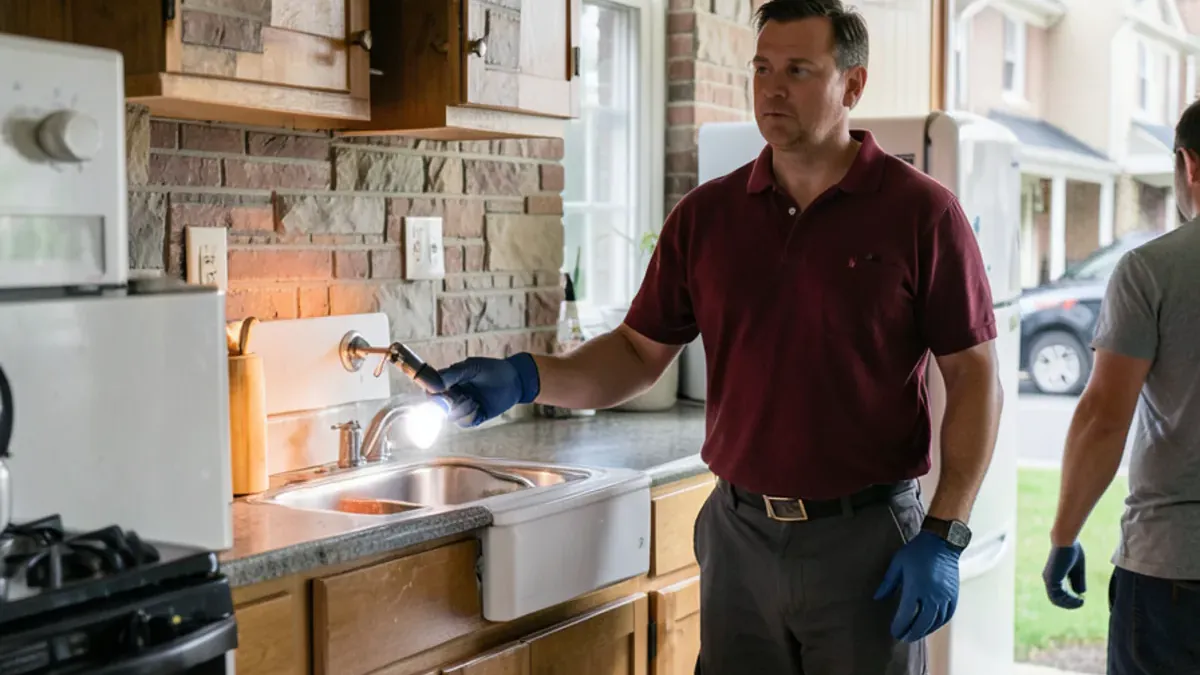
- Plumbing penetrations under kitchen and bathroom sinks
- Window frames, door thresholds and sill plates
- Foundation cracks, slab joints and expansion gaps
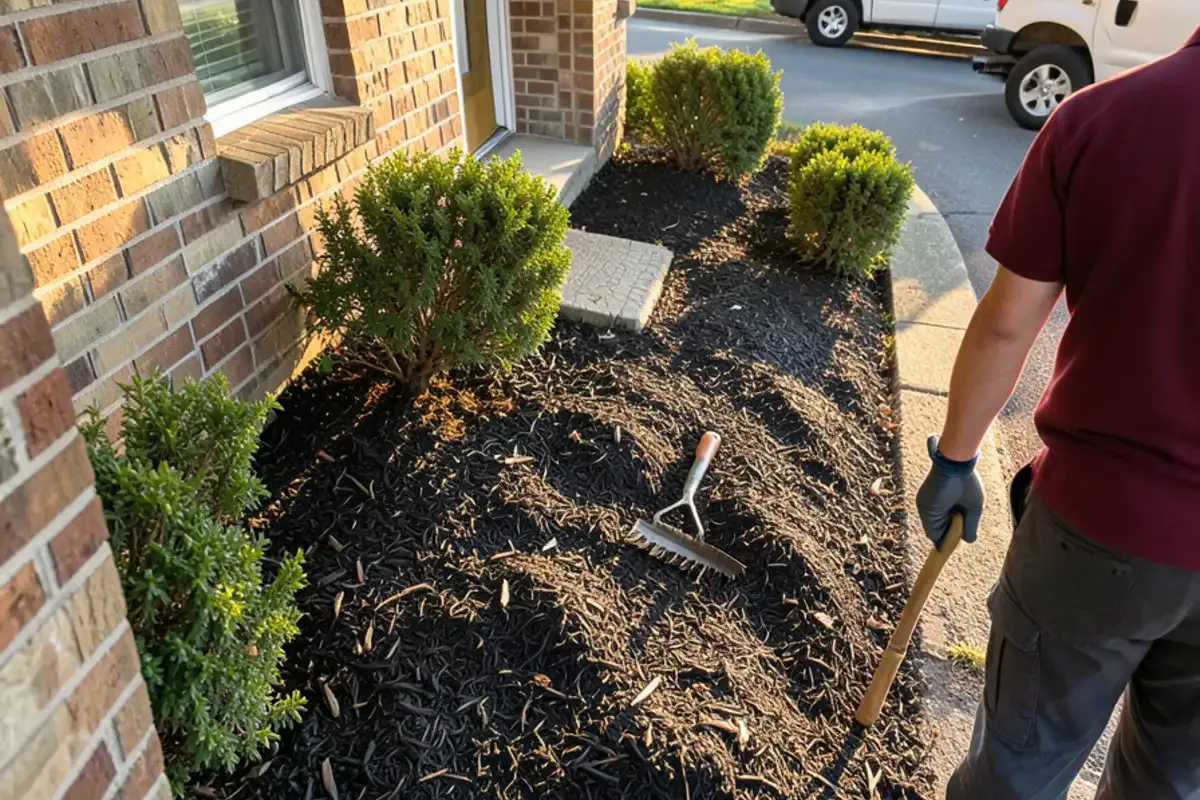
- Mulch beds, stone edging and landscape timbers against the house
- Tree limbs and shrubs touching siding or the roofline
- Moisture sources such as a leaking dishwasher line or a damp crawlspace
Ant Bait Service or Spray: Which One Works?
Bait is our default indoors. Ants carry a slow-acting bait back to the nest and share it with the queens and larvae, so the colony collapses from the inside. The trade-off is time: you will often see more ants for a few days while they feed, and the trail fades over one to two weeks.
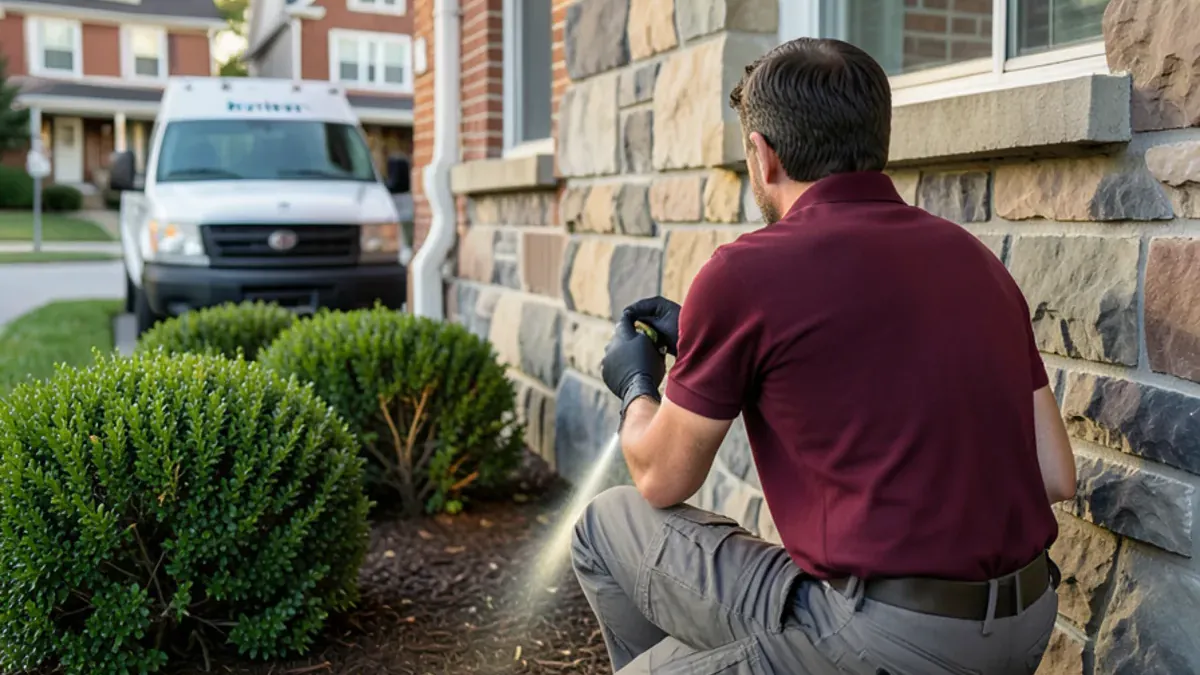
Outdoors, a non-repellent liquid along the foundation and entry points creates a treated zone the ants cannot detect, so they pick it up and carry it home as well. Repellent hardware-store sprays do the opposite. They kill only the ants they touch and push odorous house ant colonies to bud into several new nests. We never spray over bait placements, and we ask you not to either.
Talk to us about ant control
Call and speak with Thom or his team. The inspection is free, and you get a written quote before any treatment.
- ★ 4.8 from 21 Google reviews
- Open 7 days, 8 a.m. to 7 p.m.
- Free inspection before treatment
- Family-run, based in Media, PA
Open 7 days, 8 a.m. to 7 p.m.
What Happens During an Ant Control Visit?
A typical first visit covers both sides of the wall in one trip.
Trail and nest tracing
We start where you see ants, follow them to the entry point, then check the exterior for the matching nest.
Species check
We confirm which ant it is, because odorous house ants and pavement ants accept different baits and placements.
Written quote
You get the scope and price on paper before we treat anything.
Indoor baiting
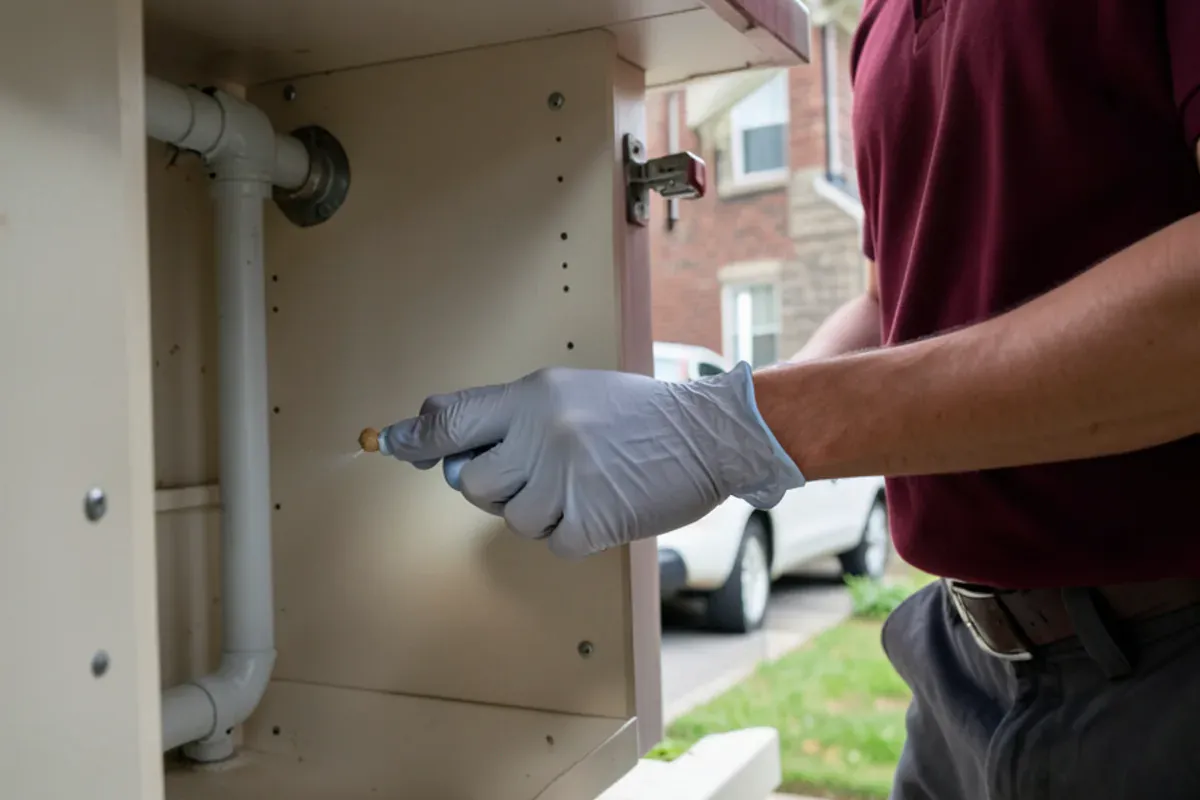
Small bait placements go along trails, inside cabinet voids and at plumbing gaps, out of reach of children and pets.
Exterior treatment
A non-repellent application goes along the foundation, door thresholds and nest sites in mulch or under pavers.
What to do next
We tell you what to wipe, what not to spray, and when to call if activity has not dropped.
How Much Does Ant Treatment Cost?
Around Media and the rest of Delaware County, construction shapes the quote as much as the ants do. A slab addition or enclosed porch on a post-war house can hide a pavement ant nest that needs treatment along its full edge, and a fieldstone foundation with open mortar joints gives odorous house ants dozens of doorways to cover. In twins and rowhomes, the colony may be nesting on the neighbor's side of the party wall, which can add an exterior visit. Calls in March or April, before a colony has had a summer to bud into satellite nests, tend to stay simpler than the same problem left until July.
Ant treatment cost depends on what the inspection turns up, and we put the price in writing before any work. What moves it:
- Species, since multi-queen odorous house ant colonies usually need more follow-up than one pavement ant nest
- Number of rooms and floors with activity
- Whether the nest sits in a wall void, under a slab or outdoors in mulch
- Length of the exterior perimeter that needs treatment
- One-time treatment versus ongoing coverage through ant season
Ant Baits, Product Labels and Pennsylvania Pesticide Rules
Ant baits and perimeter products are pesticides, so a kitchen trail falls under the same state rules as a larger job. In Pennsylvania, paid pest work is overseen by the Department of Agriculture (PDA) through the Pesticide Control Act of 1973. PDA issues the business licenses and tests and certifies applicators, and 7 Pa. Code § 128.31 has companies show their license number on service vehicles. Any ant service should give you that number and the certified applicator's name when you ask.
The label carries legal weight as well. It decides whether a bait may sit loose in a cabinet or must go inside a tamper-resistant station, and where an outdoor application has to stop short of drains and runoff. This is general information, not legal advice.
Keeping Ants Away Once the Colony Is Gone
Most homes see activity fall off within one to two weeks of baiting, and the exterior treatment helps hold the line through the warm months. Colonies in neighboring yards can still send new scouts next spring, so a few habits matter as much as the treatment.
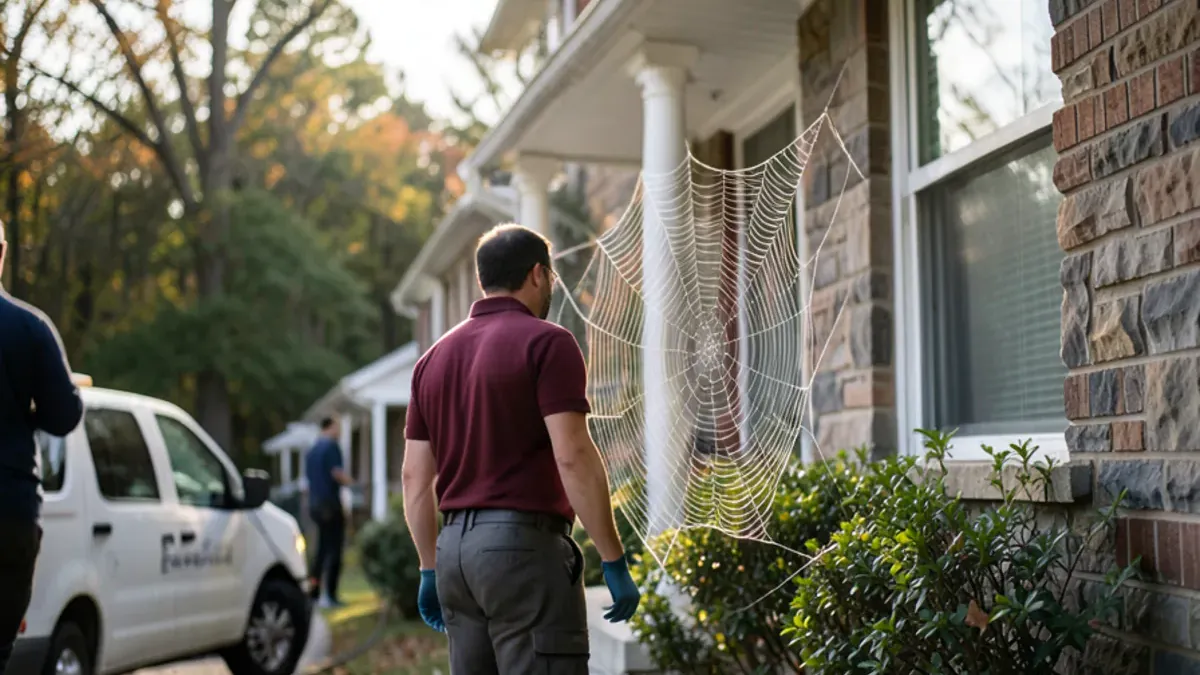
Ants are rarely the only visitor drawn to a damp sink cabinet. If you spot roaches there too, see cockroach control. Webs along the same baseboards can mean spider control is worth adding, since spiders feed on foraging ants. Homes that fight ants every spring often do well on a quarterly pest control plan.
- Wipe counters and sweep crumbs nightly while baits work, but leave the bait placements alone
- Pull mulch back a few inches from the foundation and trim shrubs off the siding
- Caulk gaps around sink plumbing and window frames
- Keep pet food in a sealed bin and pick up bowls overnight
- Fix dripping faucets and dishwasher leaks that give ants water
What our ant control includes
- Free inspection that traces trails to the entry point and nest
- Species identification before any product goes down
- Written quote before treatment
- Indoor bait placements along trails and inside cabinet voids
- Non-repellent exterior treatment at the foundation and thresholds
- Treatment of nests in mulch beds or under pavers
- Instructions for the bait period and what to avoid
Why call No Bugs Exterminator for ant control
Based in Media
Thom and his team work from Media, so spring ant calls in Delaware County are close to home.
Seven days a week
Ant trails rarely wait for Monday. We take calls every day from 8 a.m. to 7 p.m.
We find the nest first
The free inspection locates the colony and confirms the species before we quote, and the price is in writing.
Small, family-run team
A local family business that treats ants in homes and commercial spaces alike.
Same day when there's room
Same-day visits are often possible when the schedule allows — call early in the day, especially if a trail appeared overnight after a spring storm.
Where we provide ant control
Ant pressure follows housing and landscaping. In Springfield, where the median house dates to 1955, slab additions and concrete stoops give pavement ants a ready nest site. In Broomall and the rest of Marple Township, 1950s and 1960s homes with deep mulch beds give odorous house ants a foothold, while houses along Crum Creek in Nether Providence see ants move indoors after heavy spring rain.
- Rose Valley
Deep woods around this 1901 Arts-and-Crafts community put fallen limbs and leaf litter beside nearly every house, ideal ground for odorous house ant colonies.
- Village Green-Green Ridge
Ranch and split-level streets off Pennell Road, median built 1962, have slab floors and patios where pavement ants nest and surface each spring.
- Brookhaven
Ranch homes and garden apartments off Edgmont Avenue sit beside long concrete walks and slab edges that pavement ants follow toward kitchen doors.
- Concord Township
Late-1990s subdivisions behind Concordville carry deep mulch beds and irrigated landscaping, both favorite spots for odorous house ant satellite nests.
- Newtown Township (Delaware County)
Wooded lots around Newtown Square send foraging ants toward 1960s houses once spring rain soaks the ground near Routes 3 and 252.
- Lansdowne
Victorian houses with a 1943 median build year have stone foundations and hollow porch bases where ant colonies stay out of sight.
- Folsom
Post-war homes around Ridley High School and Morton Avenue often have concrete stoops and slab additions that hide pavement ant nests.
- Morton
Small lots and shared driveways in this Media/Wawa Line rail borough let ant colonies spread across neighboring yards and back into kitchens.
- Glenolden
Houses near Muckinipattis Creek see ant trails surge after storms, when saturated soil pushes colonies toward drier foundations.
What customers say on Google
4.8 out of 5 from 21 reviews on Google. Quoted as written by customers.
No Bugs Exterminator is the best I have seen. The owner is the nicest person in the world, he doesn’t rush anything, and is very thorough in job.
Thom is a top-notch pest control specialist! And is one of the most genuine guys in the industry. He came to inspect a situation I had going on at the house, took his time, offered detailed advice, and didn’t take a penny.
Thom + his team were amazing. Very professional + provided me with a quote that made the most sense for my situation. Clearly I was not being gouged. Thom put the client first.
Ant Control: common questions
Why do ants keep coming back to my Media, PA kitchen?
Usually because the colony survived. Spraying the trail kills foragers but leaves the queens, and odorous house ants react by splitting into new nests. Kitchens in Media's older houses and walk-up apartments also have plumbing gaps and loose window frames that give ants an easy route. Baiting the colony and sealing the entry together stop the cycle, and we look for both on the free inspection.
Which ants are most common in Delaware County?
Odorous house ants and pavement ants. Odorous house ants are tiny and dark, smell like rotten coconut when crushed, and nest in walls and mulch. Pavement ants nest under slabs, patios and sidewalks and leave little piles of sand at the cracks. In spring we also get calls about winged ants indoors, which homeowners sometimes mistake for termite swarmers.
How long does ant treatment take to work?
Most homes see a clear drop within one to two weeks. Bait is slow on purpose, giving foragers time to share it with the queens and brood. For the first few days you may see more ants gathered on the bait, which is a good sign, so leave them alone and skip the spray. Pavement ant colonies under a slab can take a little longer than ants in a wall.
Do you treat outside as well as inside?
Yes, on most ant jobs. Many colonies live outdoors in mulch beds, under pavers or along the foundation and send foragers in through small gaps. We bait inside along the trails and apply a non-repellent treatment around the foundation, door thresholds and outdoor nest sites. Treating only one side of the wall tends to bring the ants back within weeks.
Should I spray ants myself while I wait for the visit?
Better not. Repellent sprays scatter the trail and can split an odorous house ant colony into several nests that are harder to find. Wipe the trail with soapy water to clear the scent and keep food sealed instead. If you have already sprayed, mention it when you call so we can work around it during the inspection.
Related services
Helpful guides from our blog
Ready to get rid of the problem?
Thom and his team serve Media, Delaware County and southeastern Pennsylvania, open 7 days, 8 a.m. to 7 p.m..
- ★ 4.8 from 21 Google reviews
- Open 7 days, 8 a.m. to 7 p.m.
- Free inspection before treatment
- Family-run, based in Media, PA
Open 7 days, 8 a.m. to 7 p.m.