
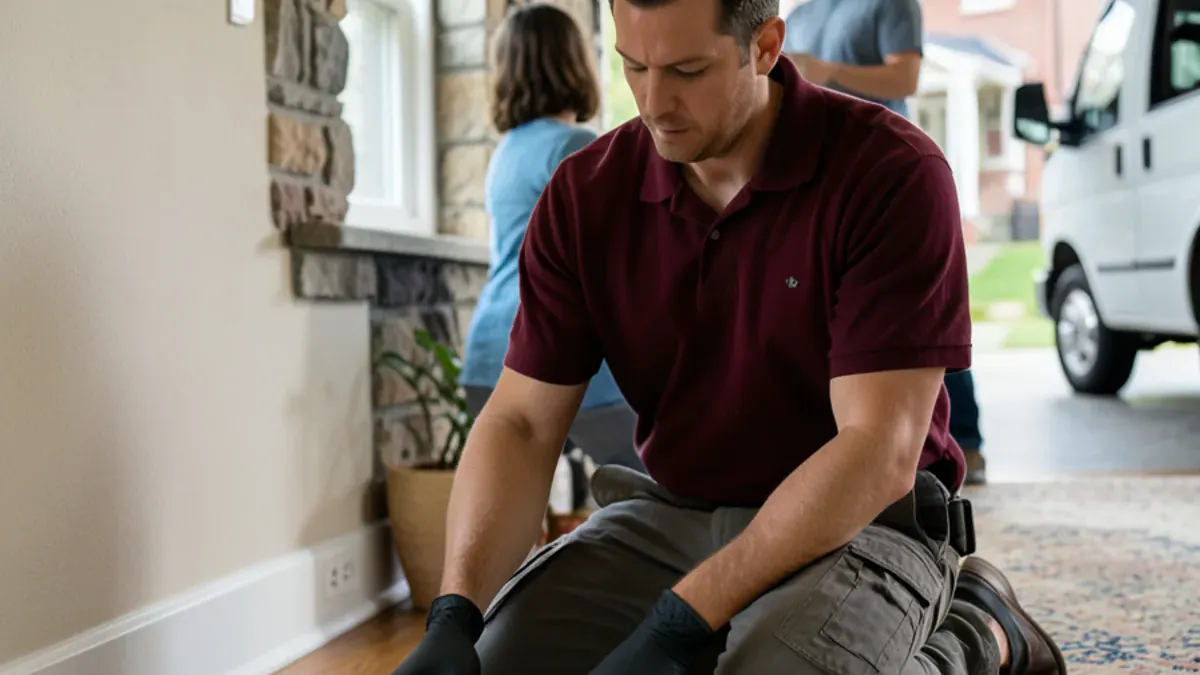
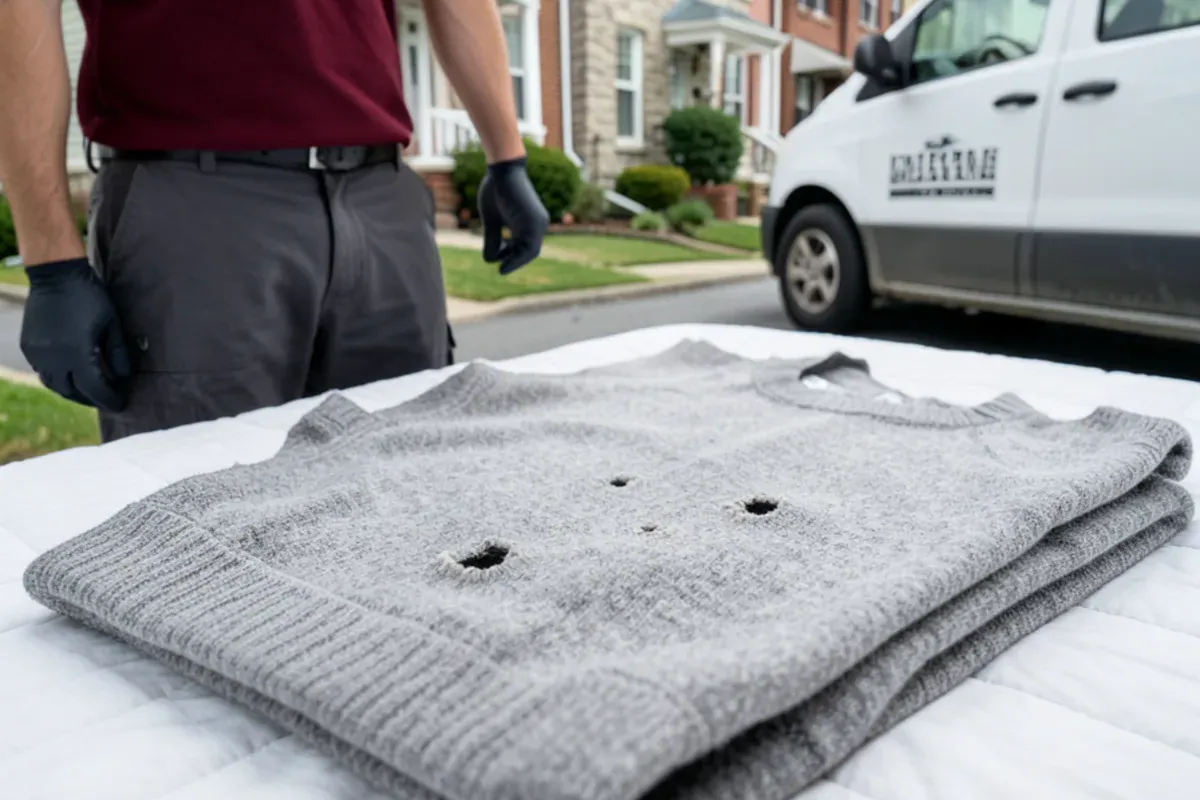
Moth holes in sweaters and other early warnings
By the time you find holes, larvae have usually been feeding for months. Fabric pests prefer dark, undisturbed places and items stained with sweat, food or body oils, so damage tends to show up in clothing that is stored rather than worn.
- Clean-edged holes or grazed patches in wool sweaters, suits, coats, felt and silk
- Bare tracks in wool rugs, often under furniture or along the edges
- Silk tubes or webbing on fabric, or small cases stuck to it
- Small, fuzzy, banded larvae or their shed skins in drawers, closet corners and along baseboards
- Tiny buff moths that flutter low and scurry rather than fly toward lights
- Small round, mottled beetles on windowsills in spring
Is it a clothes moth or carpet beetle larvae?
Carpet beetles are the more common of the two in Pennsylvania homes, and they matter because they live in more places. Dead boxelder bugs, cluster flies or stink bugs in a wall void or attic can feed a carpet beetle population that later moves into closets. Our pages on boxelder bug and lady beetle control and fly control cover those overwintering insects.
| Feature | Webbing clothes moth | Carpet beetles |
|---|---|---|
| Adult | Buff-gold moth about 1/4 inch long that hides from light | Round beetle 1/8 inch or smaller, mottled or black, drawn to windows |
| Stage that does the damage | Creamy white larva with a dark head | Fuzzy brown, banded larva covered in bristles |
| Leaves behind | Silk webbing, tunnels and cases | Shed bristly skins and scattered holes |
| Diet | Wool, silk, fur, feathers, felt | The same fabrics plus dead insects, pet hair, lint and some stored foods |
| Where else it lives | Rarely far from the closet or rug | Attics, wall voids, bird nests, behind baseboards |
Where fabric pests start in older homes
Moths in closets are rarely the starting point. The source is often a wool rug rolled up in a third-floor attic, a cedar chest of heirlooms that has not been opened in years, a forgotten felt hat, a piano with wool-covered hammers, or a bird or squirrel nest in a soffit. Feather pillows, mounted animals and wool batting can feed larvae too.
Stone colonials and Victorians in places like Merion Station, Narberth and Swarthmore often have deep closets, finished attics and built-in storage that stay dark and undisturbed. Census (ACS) estimates put their median build years between 1938 and 1949, and many still hold furnishings passed down through families.
Season gives a clue as well. In a heated Delaware County house, larvae can feed all year, but adults are easiest to spot from spring into summer: buff moths fluttering out when a closet door opens, and carpet beetles gathering on sunny sills from April on. Damage discovered in September, when sweaters come out of storage, usually happened over the summer.
Treatment choices from a clothes moth exterminator, weighed
No single method reaches every life stage in every place, so most jobs combine several of these.
- Laundering and dry cleaning. Hot washing or dry cleaning kills eggs and larvae on items that can take it. Reliable, but only for what you can move, and it takes your time.
- Freezing. Bagged items held in a chest freezer near 0°F for several days lose every life stage. Good for heirlooms that cannot be washed; slow for large volumes.
- Targeted residual treatment. We treat closet floors, shelf edges, baseboards, carpet perimeters and under rugs where larvae crawl. It catches what laundering misses, but it never goes on clothing you will wear.
- Pheromone monitoring. Traps for webbing clothes moths catch males and show whether activity has stopped. They measure rather than cure, and they do not track carpet beetles well.
- Vacuuming. Thorough vacuuming of closet corners, rug edges and upholstery removes larvae, eggs and the lint they feed on. Simple and essential, but it has to be repeated.
Talk to us about clothes moth control
Call and speak with Thom or his team. The inspection is free, and you get a written quote before any treatment.
- ★ 4.8 from 21 Google reviews
- Open 7 days, 8 a.m. to 7 p.m.
- Free inspection before treatment
- Family-run, based in Media, PA
Open 7 days, 8 a.m. to 7 p.m.
The closet and rug visit, step by step
Find the feeding sites
We check closets, drawers, under rugs and furniture, attic storage and baseboards for larvae, cases and cast skins.
Identify the culprit
Moth or carpet beetle decides where we look next, including attics and wall voids when beetles are involved.
Written quote and prep sheet
The free inspection is followed by a written quote and a prep sheet before treatment day.
Your prep
Items are bagged, then laundered, dry-cleaned or frozen, and closets are emptied and vacuumed.
Treatment day
We treat empty closet floors and shelf edges, carpet perimeters, under-rug areas and baseboards where larvae travel.
Monitoring
Pheromone traps and visual checks over the following weeks confirm whether the cycle is broken.
Clothes moth control cost in PA: what drives the quote?
In Delaware County homes, the amount of stored textile moves the quote most. A Swarthmore or Lansdowne house with wall-to-wall wool carpet, a third-floor storage room and a cedar closet of family coats has far more ground to cover than a newer home with synthetic carpet and one wool rug. Carpet beetles feeding in an attic or an old bird nest in a soffit add a separate treatment area beyond the closets.
Prep shapes the visit too. Bagging, laundering and freezing happen on your side before treatment day, and the more of that is finished, the more of our time goes to closet floors, rug edges and baseboards.
Each quote is written and in your hands before work begins. Call (209) 563-1650 with prep questions ahead of your visit.
- Number of closets, rooms and rugs involved
- Whether carpet beetles are living in an attic, wall void or old nest
- Wall-to-wall wool carpet versus area rugs
- How much clothing and stored textile must be handled
- Attic and crawlspace access
- How many follow-up checks you want
Mothball Labels, PDA Rules and Fabric Pest Treatments
Mothballs and moth crystals are registered pesticides, and their labels allow use only in tightly closed containers, garment bags or chests. Scattering them in an open closet, attic or crawlspace is a use the label does not permit, and the fumes build up in living space. In Pennsylvania, the Department of Agriculture (PDA) enforces pesticide use under the Pesticide Control Act of 1973.
For paid treatment, the same law has PDA license the business and certify the applicator, and 7 Pa. Code § 128.31 puts the license number on service vehicles. Ask for it before anyone treats closets where children sleep or dress. Most closet and carpet product labels also forbid spraying clothing or bedding, which is why our work stays on floors, shelves and edges.
The next six weeks and beyond
Clothes moth larvae can take weeks to months to mature in cool rooms, so stray adults may turn up for a month or more after treatment. Carpet beetle adults also keep appearing on windowsills through spring, because they are trying to get outside to feed on flower pollen.
Long-term protection is mostly about storage and housekeeping:
- Clean wool and silk before storing them for the season, since stains attract larvae
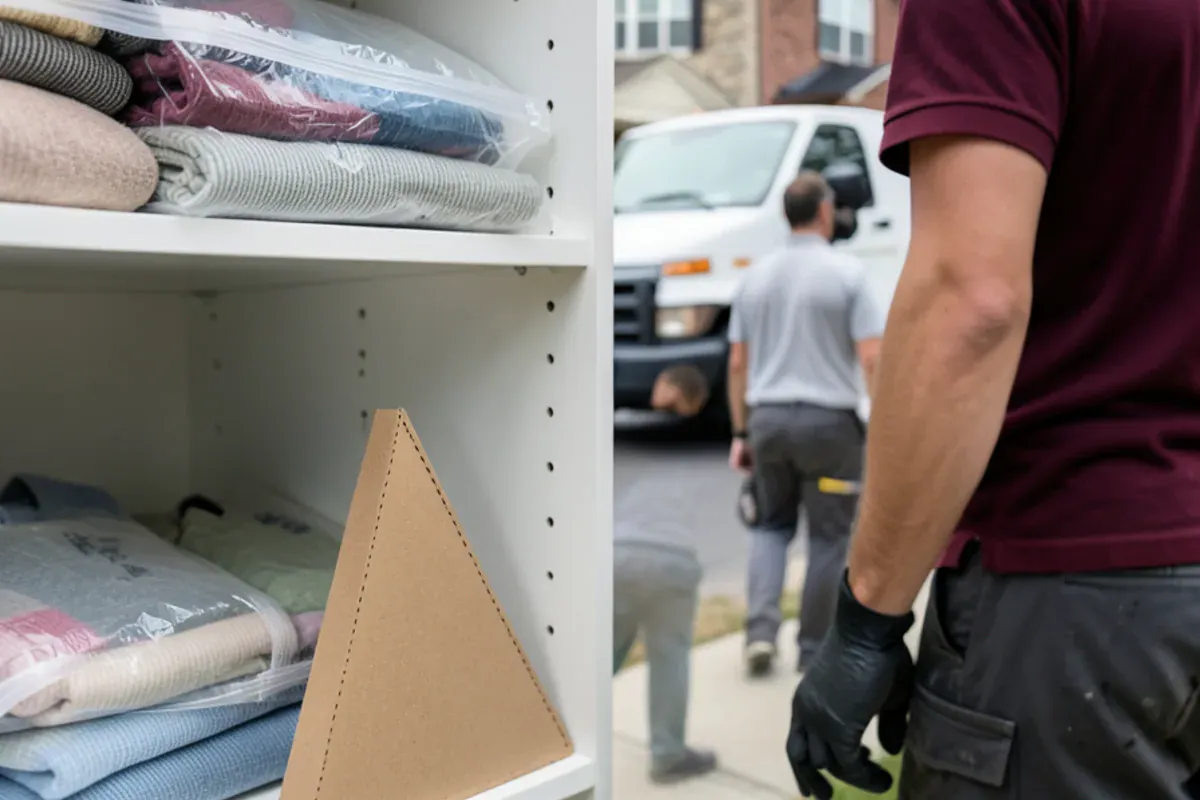
- Store off-season clothing in sealed plastic bins or zippered garment bags
- Vacuum closet floors, rug edges and under heavy furniture regularly
- Rotate and inspect rugs and stored textiles every few months
- Have old bird and wasp nests cleared from attics and soffits
What our clothes moth control includes
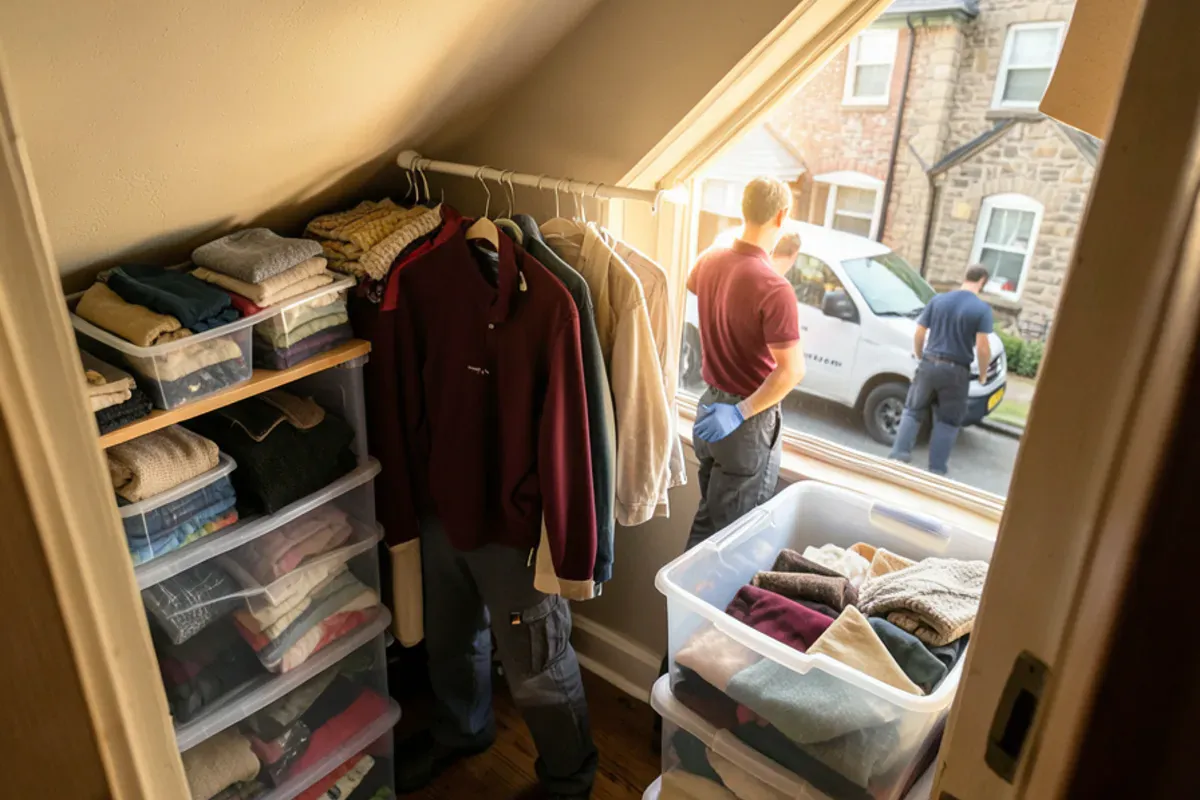
- Free inspection of closets, rugs, attic storage and baseboards
- Clothes moth versus carpet beetle identification
- Written prep sheet for laundering, dry cleaning and freezing
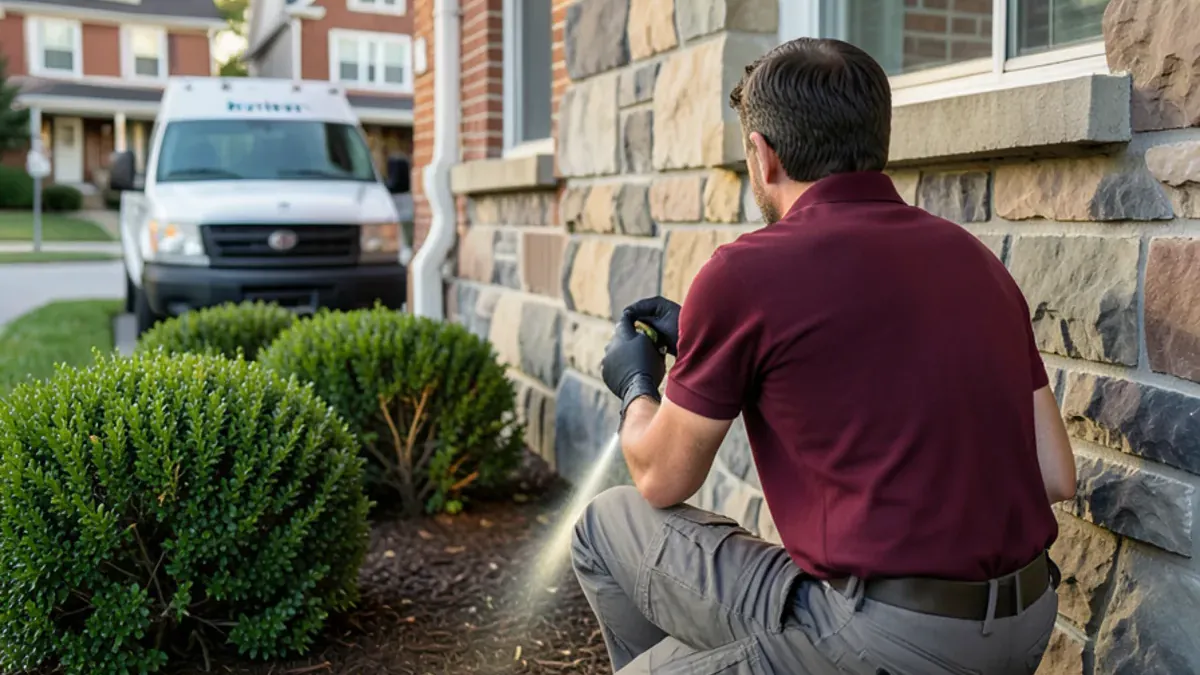
- Treatment of closet floors, shelf edges, baseboards and carpet perimeters
- Under-rug and furniture-edge treatment where larvae feed
- Pheromone traps for webbing clothes moths
- Storage and monitoring guidance
Why call No Bugs Exterminator for clothes moth control
Time to sort heirlooms
As a small, family-run business, Thom and his team take the time to work out which items need freezing or cleaning before anything is treated.
Written quote up front
A free inspection comes first, and the written quote makes prep and treatment costs clear before treatment day.
Homes, shops and offices
We serve residential and commercial customers, including businesses that store textiles, uniforms or wool goods.
Seven days, 8 to 7
Holes found while unpacking winter coats on a Sunday? We take calls every day from 8 a.m. to 7 p.m. and can explain bagging and freezing on that first call.
Bed bugs and beyond
Bed bugs are our specialty, and the same careful closet and fabric work carries over to moths and carpet beetles.
Where we provide clothes moth control
Fabric pests show up most in homes with long-held furnishings and plenty of dark storage. Pre-war stone colonials in Merion Station and Narberth, both with a 1938 median build year in Census (ACS) estimates, Arts-and-Crafts houses in the woods of Rose Valley, and the estate homes of Villanova often have finished attics, cedar closets and wool rugs where larvae work unnoticed.
- Swarthmore
Large pre-war homes near Swarthmore College, median built 1949, often keep wool rugs, attic trunks and deep closets that larvae work through undisturbed.
- Lansdowne
Victorian streets with a 1943 median build year have third-floor storage rooms and old plaster closets where carpet beetles and moths go unnoticed.
- Wayne
Victorian rail-suburb houses near Lancaster Avenue hold heirloom textiles, upholstered antiques and cedar closets that need careful moth work.
- Haverford Township
Homes in the Haverford College and Llanerch sections, many from around 1950, store wool coats and rugs in basements and attics that rarely get opened.
- Radnor Township
Main Line houses in St. Davids, Rosemont and Wayne carry wall-to-wall wool carpet and formal rooms where carpet beetle larvae feed at the edges.
- Ridley Park
A Victorian railroad suburb around Ridley Park Lake, where tall attics and old window frames let carpet beetles and dead insects collect.
- Media
Older homes and walk-ups near State Street mix vintage furniture, wool rugs and shared walls that let carpet beetles travel between units.
- Rutledge
Turn-of-the-century homes in this tiny planned borough, median built 1938, often keep heirloom wool and feather pillows in dark storage.
- Chadds Ford Township
Old farmhouses and stone homes near the Brandywine store quilts, wool blankets and mounted pieces that feed fabric pests in attics and chests.
What customers say on Google
4.8 out of 5 from 21 reviews on Google. Quoted as written by customers.
No Bugs Exterminator is the best I have seen. The owner is the nicest person in the world, he doesn’t rush anything, and is very thorough in job.
Excellent service, very professional and friendly! Most importantly the results gave me peace of mind! Highly recommended!
Very happy with the service, they helped me quickly to control the problem.
Clothes Moth Control: common questions
How can I tell clothes moths from carpet beetles?
Look at the larvae and what they leave behind. Clothes moth larvae are creamy white, smooth and spin silk webbing or cases. Carpet beetle larvae are brown, fuzzy and banded, and leave shed bristly skins instead of silk. Adult carpet beetles are tiny round beetles at windows; adult clothes moths are small buff moths hiding in dark closets. We confirm which you have on the free inspection.
Do I have to wash everything in the closet?
Not always, but everything has to be checked. Items with damage, webbing or larvae nearby must be laundered, dry-cleaned or frozen. Unaffected cotton and synthetics in the same closet usually just need shaking out and a look. Wool, silk and fur stored near the activity are the priority, and we help you sort what needs what so you are not cleaning more than necessary.
Are mothballs enough?
Usually not. Mothballs only reach a killing concentration inside a sealed container, and their labels direct that use; in an open closet the vapor mostly irritates people and pets without stopping larvae. They also do nothing for carpet beetles living in rugs, baseboards or the attic. Sealed storage, cleaning and targeted treatment work far better.
Does cedar protect a closet from moths?
Only a little, and only while it is fresh. Cedar oil can kill very young larvae, but the aroma fades within a few years and has little effect on older larvae or carpet beetles. Light sanding refreshes it somewhat. Treat a cedar closet or chest as a good storage space, and still clean items before storing them and check them each season.
Why do carpet beetles keep showing up on windowsills?
Adult carpet beetles head toward light because they want to get outdoors to feed on pollen. Seeing them on sills in spring means they developed somewhere inside, often in a rug, a closet, an attic or a wall void with dead insects. The windowsill is where you notice them, not where they breed, so we trace them back to the source.
Related services


Helpful guides from our blog
Ready to get rid of the problem?
Thom and his team serve Media, Delaware County and southeastern Pennsylvania, open 7 days, 8 a.m. to 7 p.m..
- ★ 4.8 from 21 Google reviews
- Open 7 days, 8 a.m. to 7 p.m.
- Free inspection before treatment
- Family-run, based in Media, PA
Open 7 days, 8 a.m. to 7 p.m.