
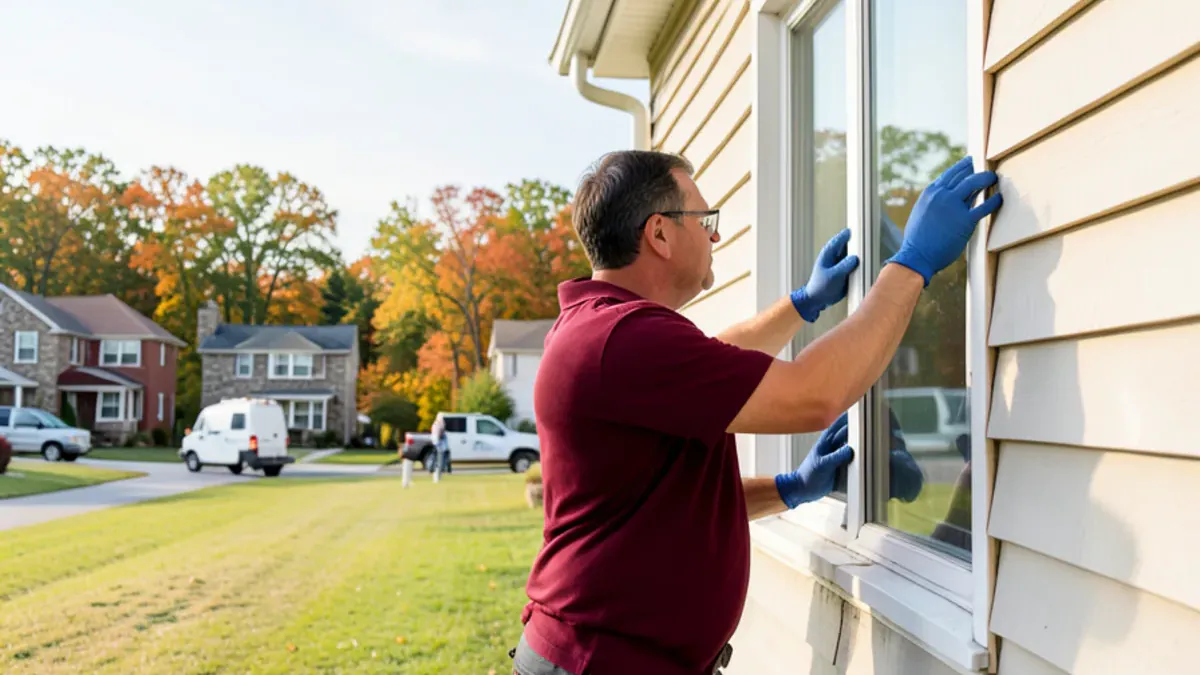
Boxelder bugs on the house: what the clusters mean
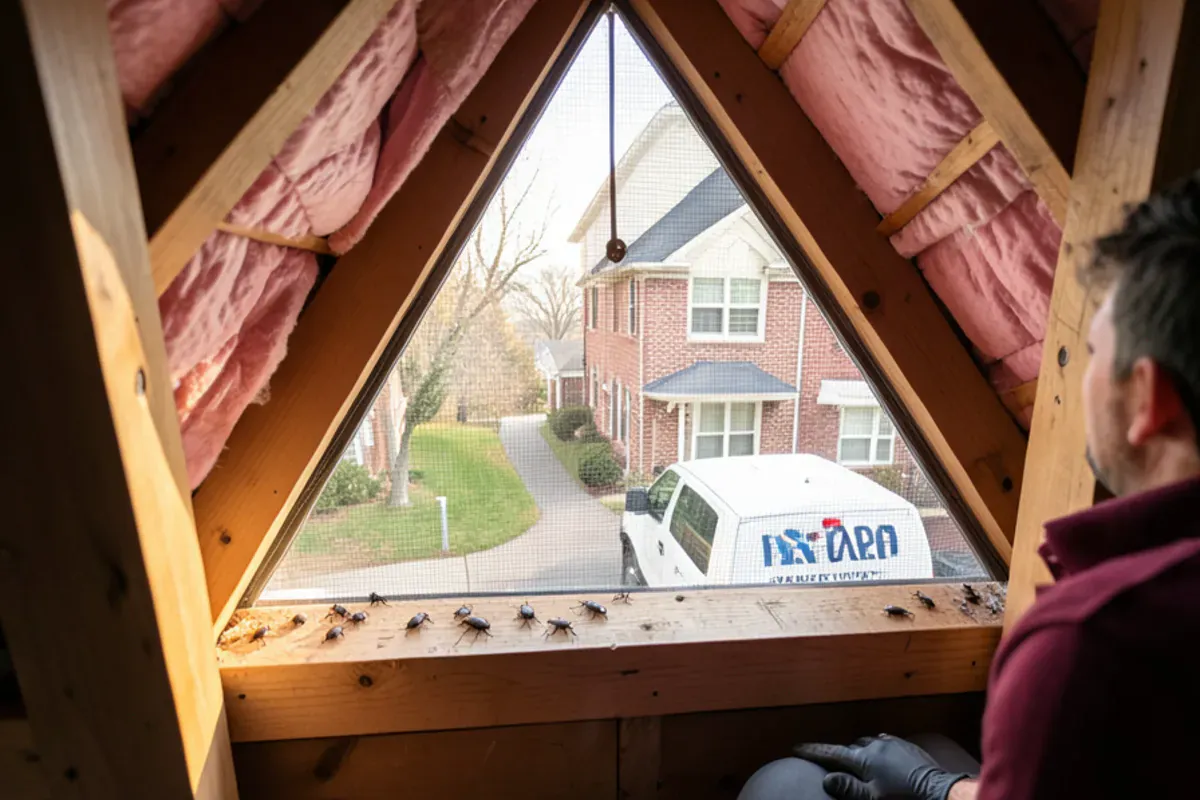
Boxelder bugs are about half an inch long, black with red-orange lines along the back and wing edges; their nymphs are bright red. From early September into October they gather by the hundreds on sunny south- and west-facing siding, foundations, decks and door frames, warming up while they hunt for a crack to crawl into.
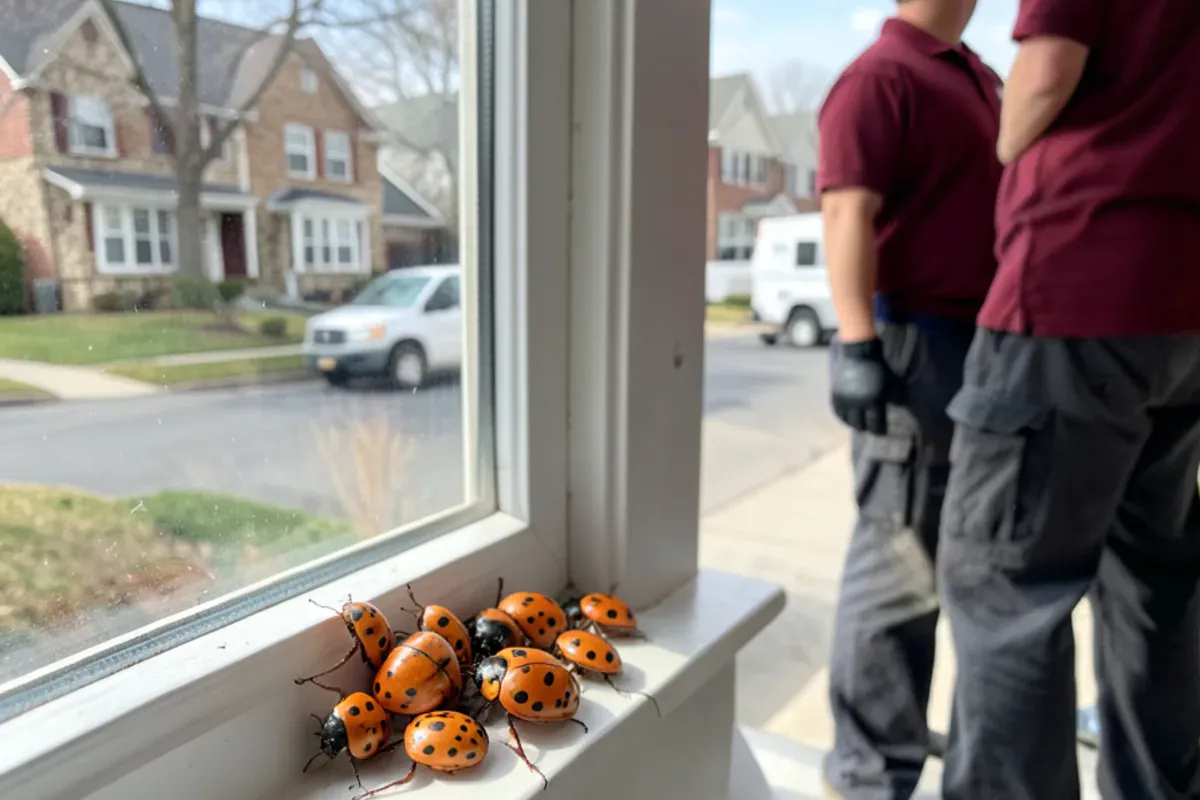
Asian lady beetles follow the same pattern a few weeks later, often in a sudden swarm on a warm afternoon after the first cool nights. They range from pale orange to red, with anywhere from no spots to many, and a black M- or W-shaped mark on the white area behind the head.
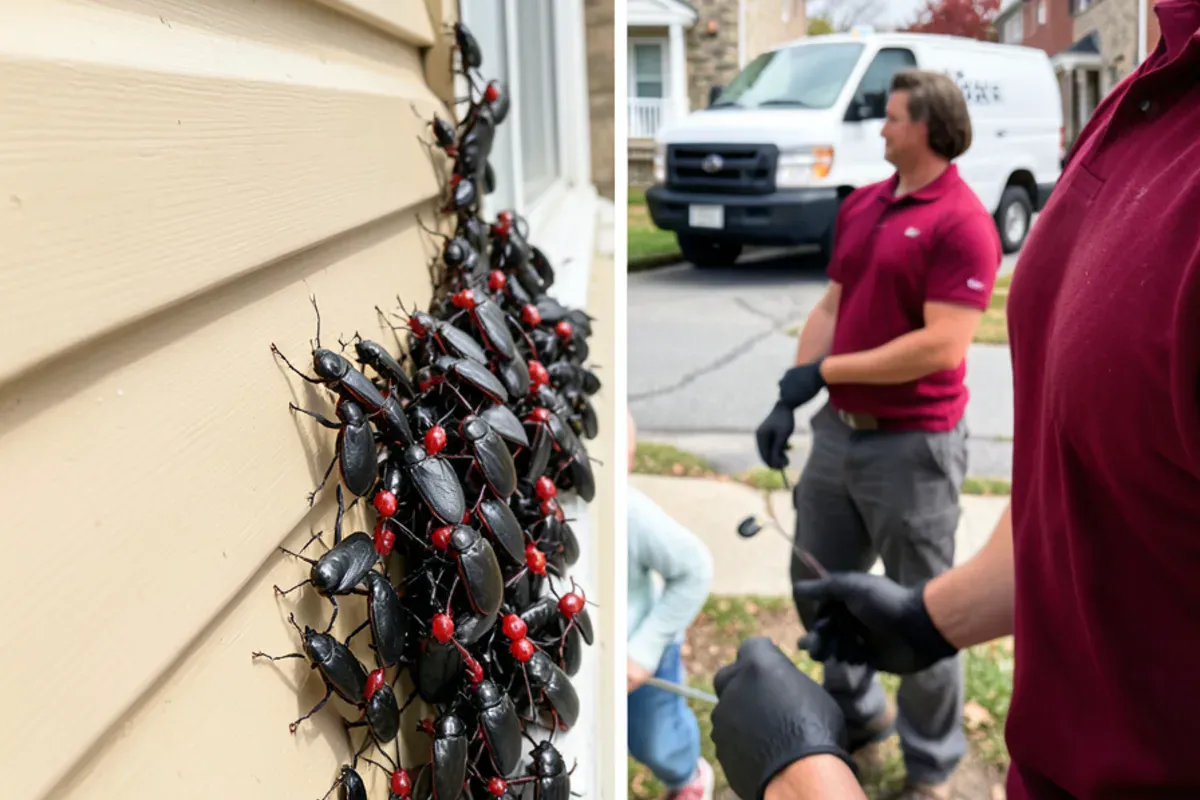
A year of overwintering pests, season by season
The calendar matters because exterior treatment does very little once the insects are already inside the walls. Missing the late-summer window usually means living with stragglers until spring.
| Season | Boxelder bugs | Asian lady beetles | What we do |
|---|---|---|---|
| Spring | Leave walls and attics on warm days and return to trees | Appear at windows, then fly out | Removal advice; note entry points for fall |
| Summer | Feed and breed on female boxelder and maple trees | Feed on aphids in gardens, fields and woods | Schedule the fall visit; inspect siding and vents |
| Late summer to early fall | Cluster on sunny walls and start entering gaps | Swarm light-colored, sunlit walls on warm afternoons | Seal gaps and treat exterior walls |
| Winter | Dormant in wall voids and attics; wander inside on warm days | Dormant in attics and walls; turn up on windowsills | Indoor vacuuming; attic check if numbers are high |
Do boxelder bugs and lady beetles breed indoors?
No. Unlike ants or cockroaches, which build colonies and reproduce inside a home, boxelder bugs and Asian lady beetles only shelter there. They do not eat food, wood or fabric, and the numbers you see in January are the same insects that got in during the fall.
They are still a nuisance. Crushed boxelder bugs leave reddish stains on curtains and walls. Lady beetles release a yellow, foul-smelling fluid from their leg joints when disturbed, which can stain light fabric and paint, and some people are allergic to them. Dead insects piling up in an attic or wall can also become food for carpet beetles.
Stink bugs keep the same fall schedule and use the same gaps, so homes that get one usually get the others; our stink bug control page covers that pest.
Why some Delaware County homes draw far more fall home invaders
Boxelder bugs feed on seed-bearing female boxelder trees, a native maple that grows thickly along creek banks and field edges, and to a lesser degree on silver and red maples. Homes near the Ridley, Crum and Chester creek corridors often have boxelders within easy flying distance.
Asian lady beetles favor light-colored walls in full sun near woods or fields, and they return to the same buildings year after year. Older homes with wood siding, loose window trim, unscreened attic vents and gaps around chimneys and utility lines give them easy entry. Newer subdivisions on former farmland are not exempt, since big south-facing gables and ridge vents work just as well.
This year's pattern is the warning sign for next year. A few dozen bugs on one wall is normal near trees; hundreds every afternoon in September, lady beetles at upstairs windows in January, or a musty, yellow-stained attic means the house has become a regular overwintering site.
Talk to us about boxelder bug and lady beetle control
Call and speak with Thom or his team. The inspection is free, and you get a written quote before any treatment.
- ★ 4.8 from 21 Google reviews
- Open 7 days, 8 a.m. to 7 p.m.
- Free inspection before treatment
- Family-run, based in Media, PA
Open 7 days, 8 a.m. to 7 p.m.
The fall exclusion visit, step by step
Exterior survey
We walk the house and mark the sunny walls, soffits, gable vents, window and door trim, and utility openings where bugs gather and enter.
Attic look
If you have had winter sightings, we check the attic for overwintering clusters and openings to the outside.
Written quote
After the free inspection you get a written quote covering sealing recommendations and treatment.
Gap list
Openings around trim, vents, pipes and siding seams are marked for caulk, screening or sweeps, ranked by how much they matter.
Exterior treatment
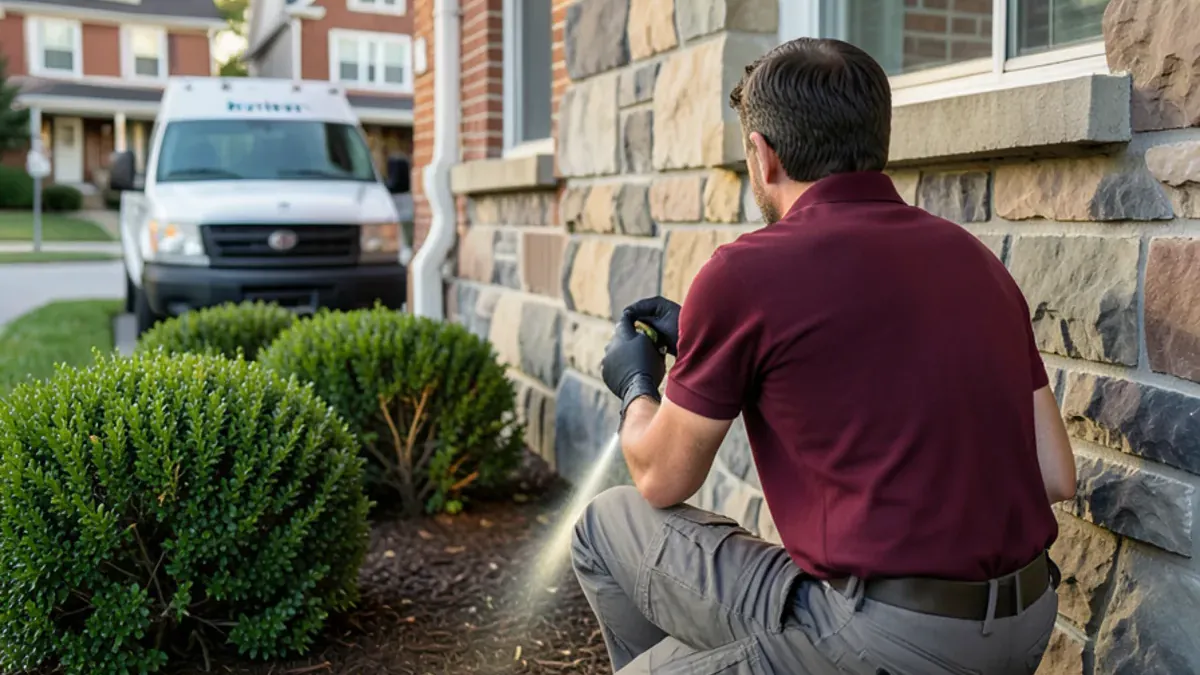
A residual treatment goes on the sunny walls, eaves and entry points while the insects are gathering outside.
Winter guidance
We explain how to remove the few that still get in without crushing them or staining anything.
Boxelder bug control in PA, inside and out: which options work?
Each approach has its place, and the trade-offs are worth knowing before you decide.
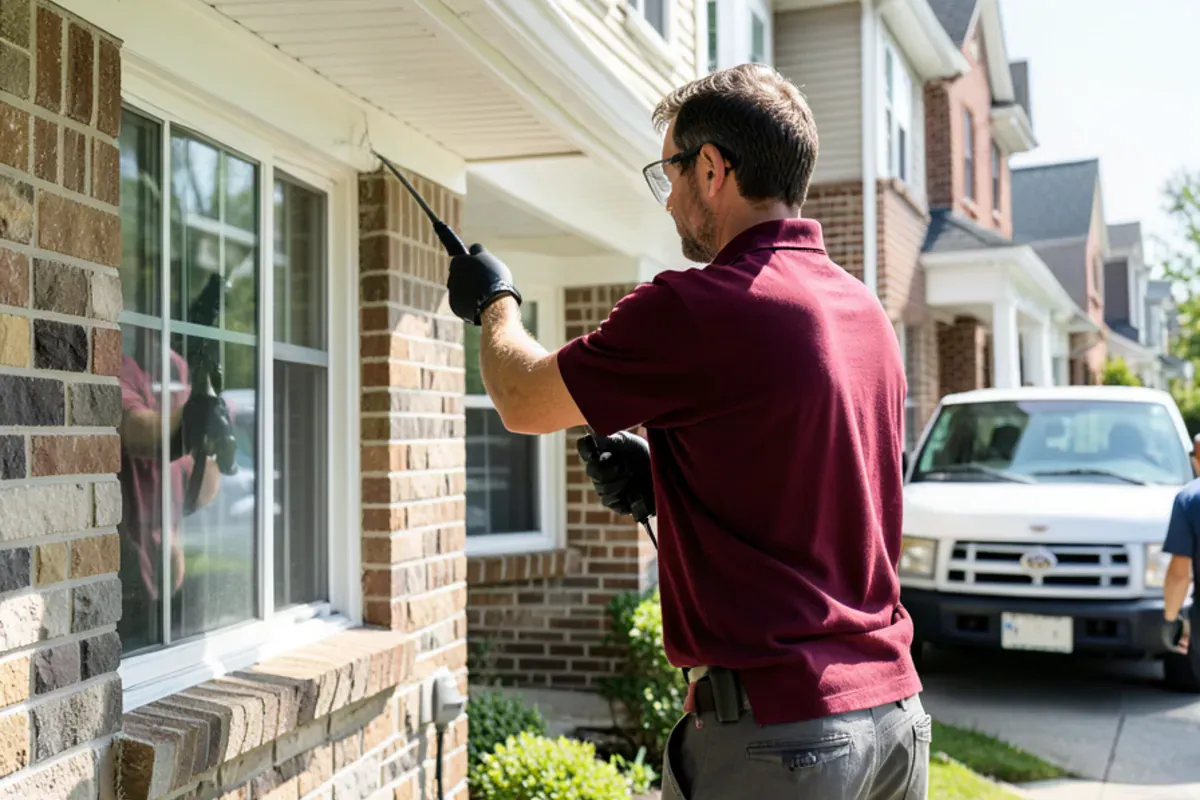
- Exterior residual treatment in late summer. The single most effective step, but the window is narrow: too early and it weakens before the insects arrive, too late and they are already inside.
- Sealing and screening. Permanent and chemical-free, but hard to do perfectly on older homes with many small gaps, which is why it pairs well with treatment.
- Vacuuming indoors. The right way to clear a ladybug infestation from windowsills in winter; put a stocking inside the hose or use a bag you can empty outside. Do not crush or sweep them.
- Indoor spraying. Rarely useful. Sprays do not reach insects hidden in walls, and dead bugs left in voids can attract carpet beetles.
- Removing boxelder trees. Can reduce boxelder bugs but not lady beetles, and bugs often fly in from neighboring trees anyway.
Things that shape the cost
In Delaware County, the size of the sun-facing side does most of the work on the quote. A three-story house with a tall south gable, dormers and a slate or wood shake roof takes ladder time a ranch never needs, and older wood siding with loose storm windows has far more gaps to note than vinyl or brick.
Inside matters too. An attic already holding thousands of lady beetles adds a vacuum-and-seal job before any outdoor work pays off, and a house with female boxelder trees along a creek line may get a heavy first wave that is worth treating a little earlier.
Every price is quoted in writing before work begins. To get on the late-summer schedule, call (209) 563-1650 in July or August.
- House height, siding type and how many sunny walls need treatment
- Number of gable vents, soffits and roof penetrations
- Whether the attic already holds an overwintering population
- How much sealing you do yourself versus hand to a contractor
- A pre-season visit versus a mid-winter attic problem
- Combining boxelder bugs, lady beetles and stink bugs in one visit
Fall Invader Treatments and Pennsylvania's Pesticide Rules
Boxelder bugs and lady beetles are not regulated pests, but the residual products sprayed on sunny siding are. Under Pennsylvania's Pesticide Control Act of 1973, the Department of Agriculture (PDA) licenses businesses that apply pesticides for hire and certifies their applicators, and 7 Pa. Code § 128.31 has the license number displayed on service vehicles. You can ask for it at the door.
Labels limit exterior work as well. Many wall products may not be sprayed onto pavement or other hard surfaces where rain carries them to storm drains, and many restrict spraying blooming plants while bees are visiting. On creek-side lots along the Ridley, Crum or Chester corridors, the treated band stops short of the water.
What our boxelder bug and lady beetle control includes
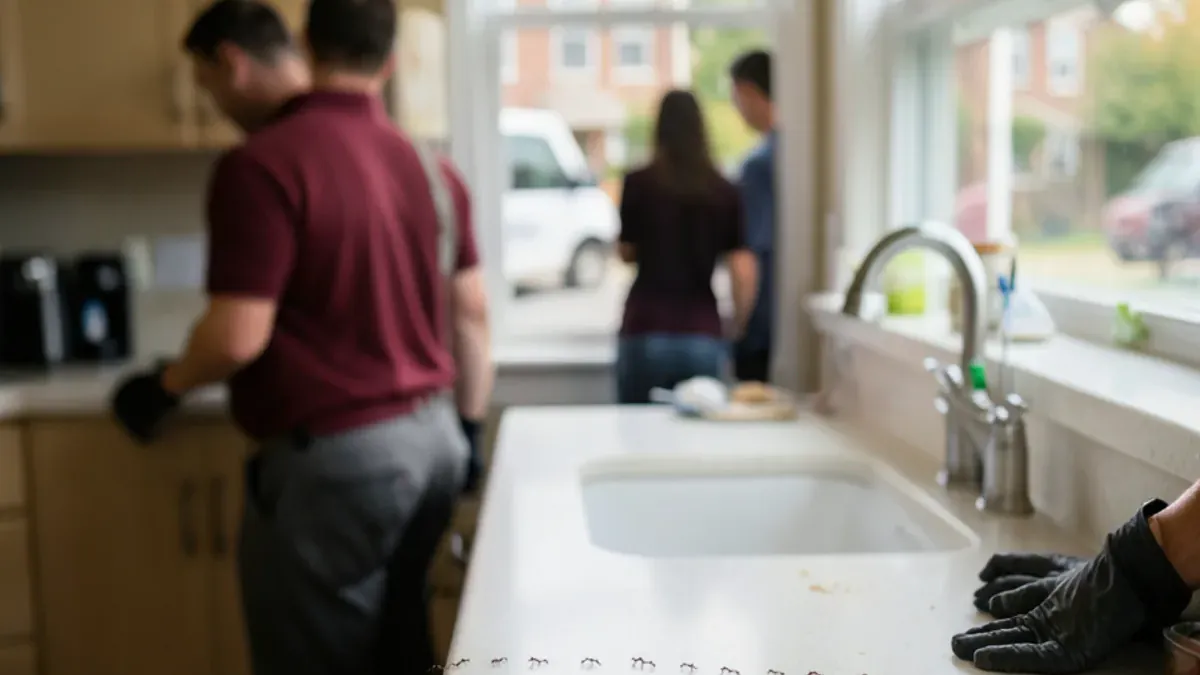
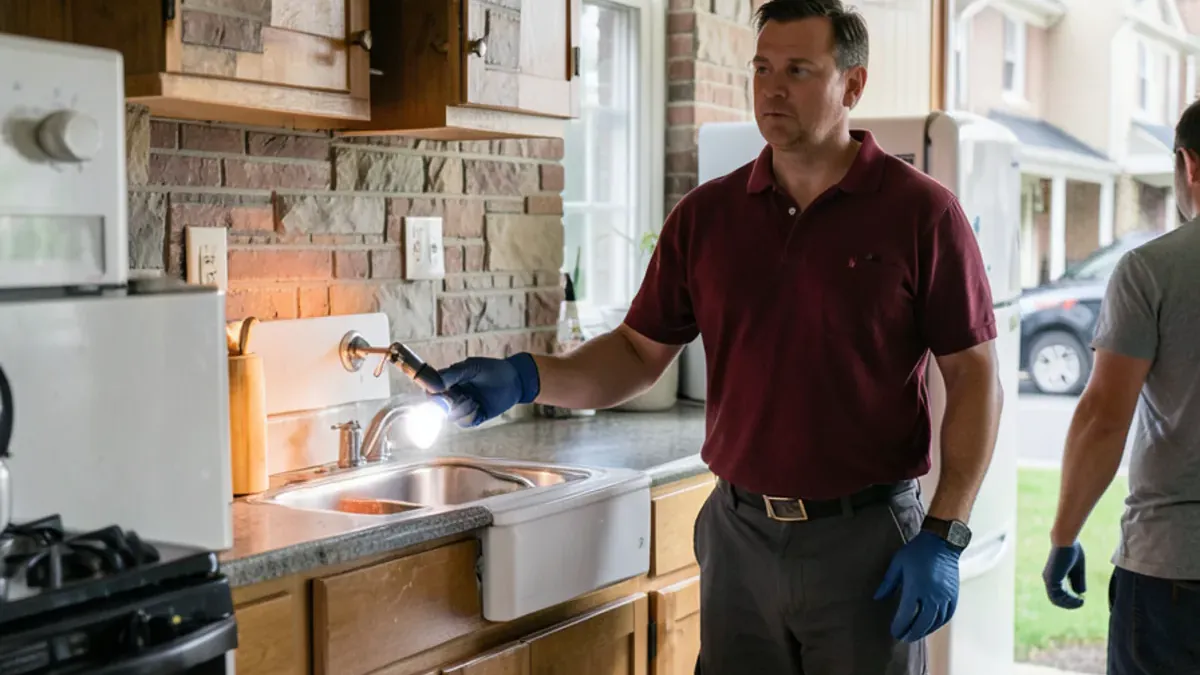
- Free inspection of sunny walls, eaves, vents and attic
- Identification of boxelder bugs, Asian lady beetles and other overwintering pests
- Written quote with a ranked sealing list
- Exterior residual treatment of walls and entry points in season
- Attic check for overwintering clusters
- Winter removal advice to avoid stains and odor
Why call No Bugs Exterminator for boxelder bug and lady beetle control
Local seasonal timing
Working out of Media, we book fall invader visits around how the season is running in Delaware County.
Whole-house look for free
Thom and his team inspect the full exterior at no charge and give you a written quote.
Weekend appointments
We are open 7 days, 8 a.m. to 7 p.m., which makes it easier to fit a visit in before the bugs move in.
Same day when the swarm hits
Same-day visits are often possible when the schedule allows — call early in the day on the warm October afternoon the lady beetles show up.
Houses and storefronts
Fall invaders coat office, school and shop walls as readily as houses, and we serve residential and commercial buildings alike.
Where we provide boxelder bug and lady beetle control
Wooded and field-edge lots see the heaviest fall invasions. Rose Valley homes sit in deep woods, and in Chadds Ford along the Brandywine, houses face open fields and tree lines that lady beetles favor. In Bethel Township, where 1990s subdivisions replaced farmland, and in Concord Township, tall sunny gables and ridge vents draw boxelder bugs and stink bugs every September.
- Nether Providence Township
Wallingford and Garden City homes beside Crum Creek and Smedley Park sit near the creek-bank boxelder trees that feed these bugs all summer.
- Swarthmore
Large pre-war houses at the edge of the Crum Woods have tall sunny gables and old wood trim where lady beetles return every October.
- Upland
Chester Creek runs through this mill town, and the boxelders along its banks put fall clusters on the sunny walls of 1940s homes.
- Thornbury Township (Delaware County)
Large-lot Glen Mills and Cheyney homes facing open fields draw Asian lady beetles, which favor light walls near farmland and woods.
- Village Green-Green Ridge
Ranch and split-level streets off Pennell Road, median built 1962, often have aging window trim that lets fall invaders reach the attic.
- Middletown Township (Delaware County)
Wooded lots around Glen Riddle and Wawa mix tree lines and open ground, so boxelder bugs and lady beetles arrive in the same September weeks.
- Newtown Township (Delaware County)
1960s homes with big south-facing walls near Newtown Square's wooded edges give lady beetles the warm, light surfaces they seek in fall.
- Haverford Township
Houses along Darby Creek's wooded banks, many built around 1950, have maples and boxelders nearby and older siding with plenty of gaps.
- Aston Township
Split-levels from the 1960s and 70s near the Chester Creek valley see boxelder bugs on south walls and lady beetles in upstairs bedrooms.
What customers say on Google
4.8 out of 5 from 21 reviews on Google. Quoted as written by customers.
No Bugs Exterminator is the best I have seen. The owner is the nicest person in the world, he doesn’t rush anything, and is very thorough in job.
Excellent service, very professional and friendly! Most importantly the results gave me peace of mind! Highly recommended!
Very happy with the service, they helped me quickly to control the problem.
Boxelder Bug and Lady Beetle Control: common questions
Why do boxelder bugs cluster on sunny walls?
They are warming up and searching for winter shelter. As nights cool in September, boxelder bugs leave their host trees and gather on the warmest surfaces nearby, usually south- and west-facing siding, foundations and decks. The heat keeps them active while they look for cracks to crawl into. A wall that draws them one fall tends to draw them every fall.
Do lady beetles bite?
Asian lady beetles can give a small pinch when they land on skin, but it is not dangerous and they do not carry disease. The bigger nuisances are the yellow fluid they release when disturbed, which stains and smells, and allergies in some people. Native ladybugs rarely come indoors; the October swarms on Delaware County homes are almost always the Asian species.
How do I keep overwintering pests out of the attic?
Close the openings before September. Screen gable and soffit vents with fine mesh, seal gaps where the fascia meets the roof, and caulk around pipes, wires and chimney flashing. An exterior treatment on sunny walls and eaves while the insects gather adds a second barrier. Once they are inside the attic, vacuuming is the safest way to remove them until spring.
Should I cut down my boxelder tree?
Only if you have other reasons to remove it. Female boxelder trees do feed the bugs, but they also fly in from trees on neighboring lots and along creeks, so removal often makes less difference than people expect. It does nothing for lady beetles. Sealing the house and timing an exterior treatment correctly usually gives more relief for less disruption.
Why do they come back to the same house every year?
Lady beetles leave chemical traces where they spent the winter, and the next year's beetles are drawn to those spots. Boxelder bugs keep choosing the same warm walls and the same gaps. Until the entry points are sealed, a house that hosted them once is likely to host them again, which is why our visit centers on exclusion.
Related services
Helpful guides from our blog
Ready to get rid of the problem?
Thom and his team serve Media, Delaware County and southeastern Pennsylvania, open 7 days, 8 a.m. to 7 p.m..
- ★ 4.8 from 21 Google reviews
- Open 7 days, 8 a.m. to 7 p.m.
- Free inspection before treatment
- Family-run, based in Media, PA
Open 7 days, 8 a.m. to 7 p.m.