
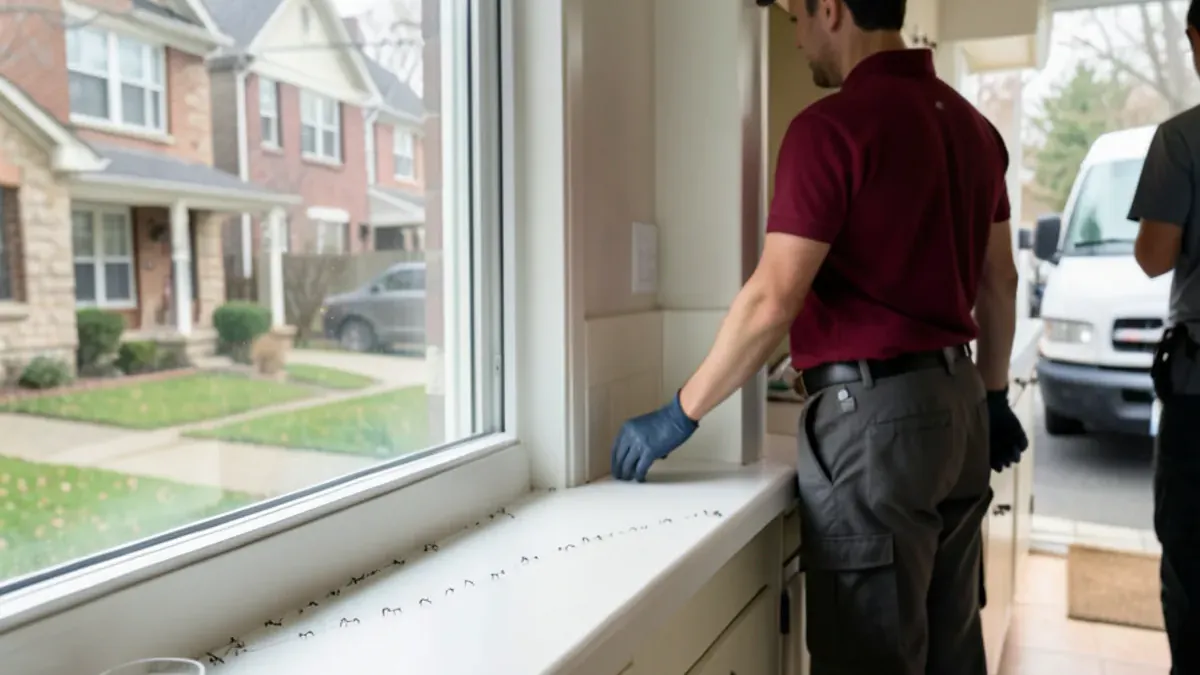
Why do ants keep coming back no matter how often you clean? Because the ants on your counter are a tiny fraction of a colony living somewhere else, usually in a wall, under a slab or beneath a mulch bed outside. Lasting relief means getting something back to the nest.
The trail is a delivery route, not the problem
Wiping or spraying the trail removes a few workers, and the colony simply sends more. To see why, it helps to know what the trail actually is.
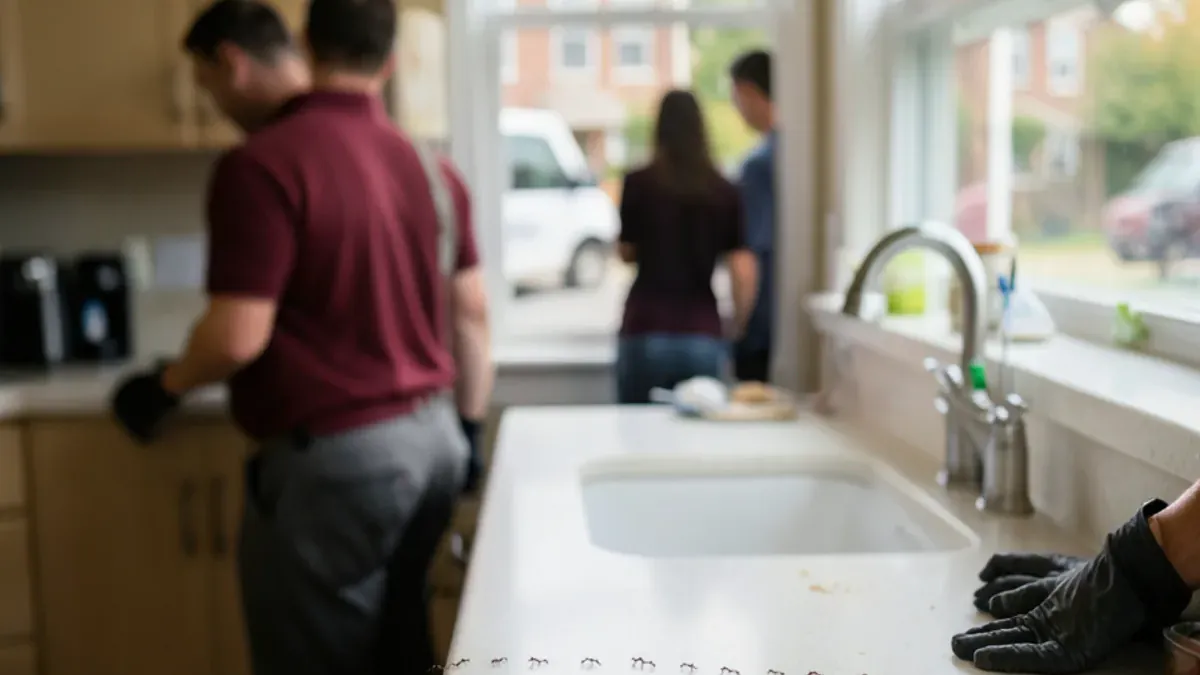
Ants that find food lay down a scent trail on the walk home, and every worker that follows reinforces it. By the time you notice a line running from the window to the sugar bowl, dozens of trips have already been made, and the colony has learned your kitchen is a reliable source.
Cleaning the counter helps, but scent clings to grout lines, window tracks and the backs of cabinets. Even when the scent fades, scouts rediscover the same spot because the conditions that drew them there in the first place have not changed.
Odorous house ants: the usual suspect in Delaware County kitchens
Most of the small, dark brown ants we find on kitchen counters around here are odorous house ants. Crush one and you will notice a sour smell often compared to rotten coconut. They love sweets, fruit and grease, and outdoors they feed on the honeydew made by aphids on shrubs.
What makes them stubborn is their structure. A single colony can have many queens and spread across several satellite nests linked by trails. When one nest is disturbed, the colony simply shifts to another, and heavy rain often pushes a whole nest indoors overnight, which is why ant trails seem to appear out of nowhere after a storm.
Why do ants keep coming back after you spray? Ant baits vs spray
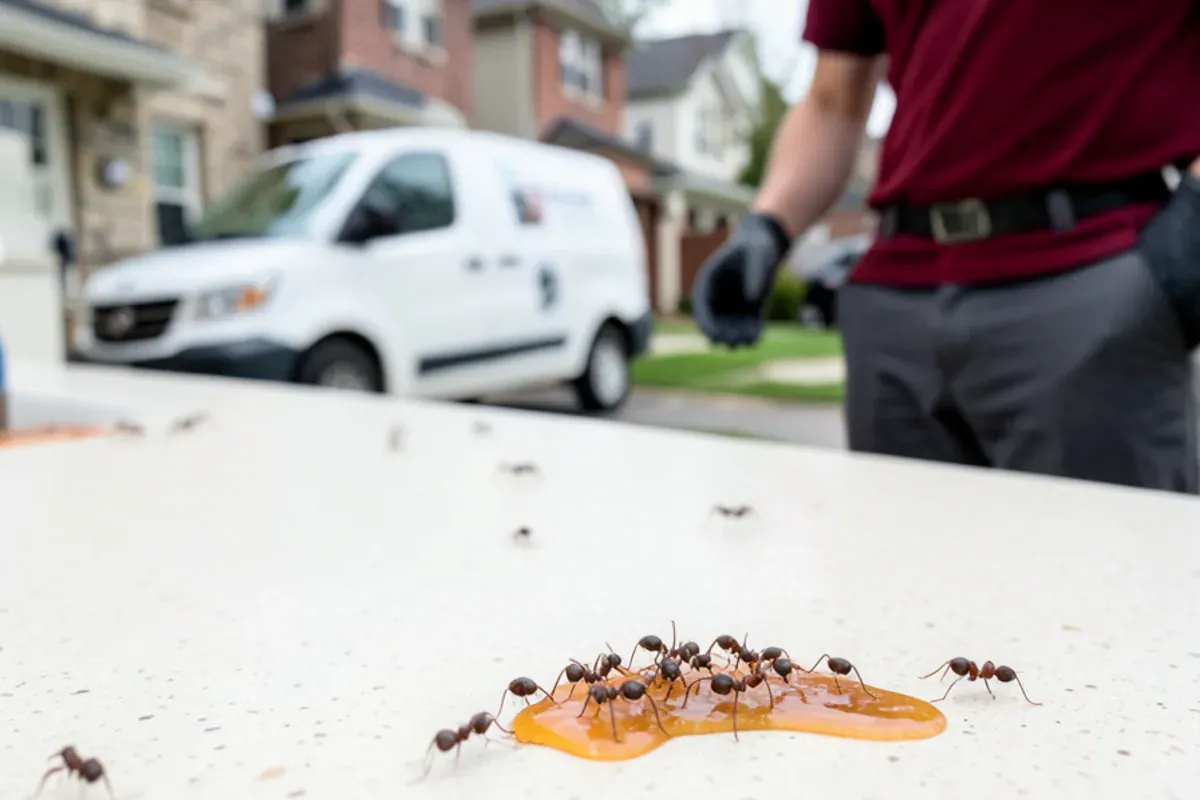
Spray kills the ants it touches, and that is the problem. Those workers were the ones carrying food back, so the colony never gets a dose. Worse, repellent sprays can stress an odorous house ant colony into splitting, a process called budding, which turns one colony into several.
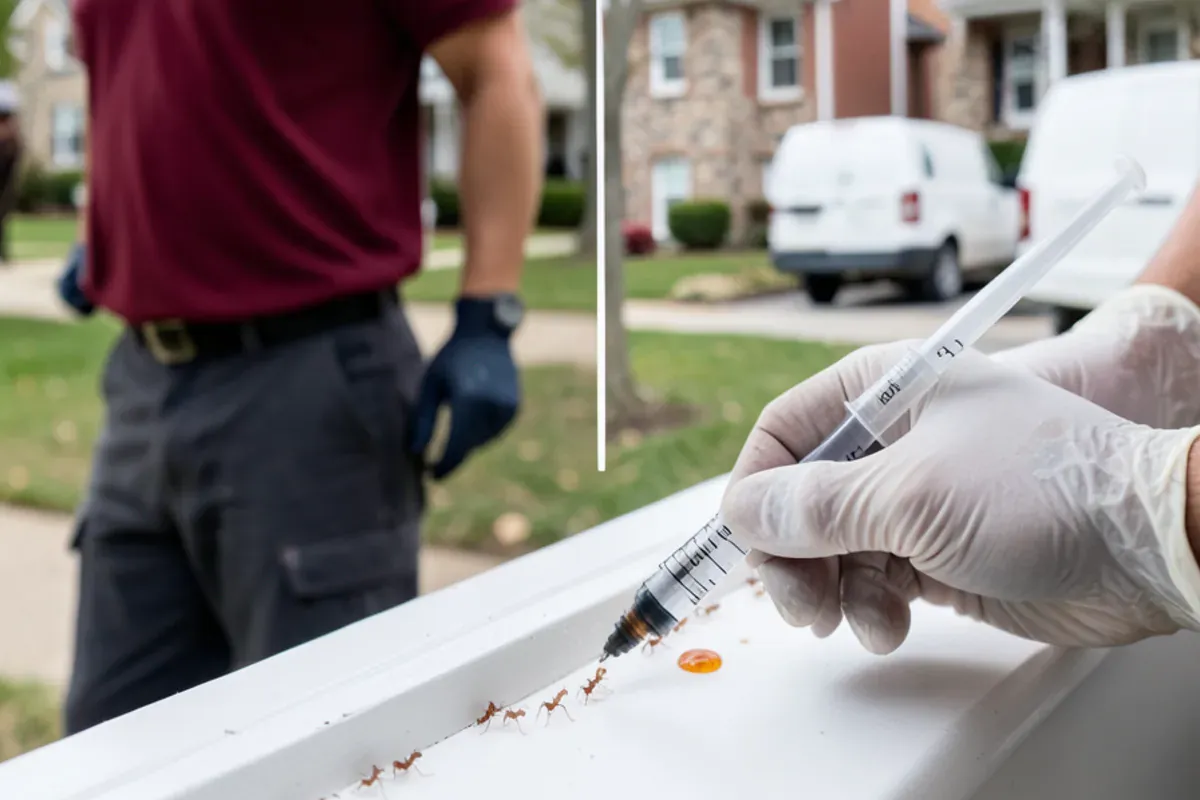
Bait works the opposite way. A slow-acting bait tastes like food, workers carry it home, and they share it with the queens and larvae. Expect to see more ants at the bait for a few days; that means it is working. Spraying near the bait, or cleaning the trail right next to it, ruins the whole approach.
How to stop ants in a kitchen: a 10-day plan
This sequence works for odorous house ants and most other small sugar-feeding ants. Stick with it for the full stretch before judging the results.
Day 1: find the entry point
Follow the trail backward with a flashlight to where it disappears: a window frame, an outlet, a gap behind the sink or a crack in the floor.
Day 1: remove competing food
Wipe up crumbs and spills, seal open food, rinse recyclables and take out the trash, so the bait is the most attractive thing around.
Day 1: place bait beside the trail
Set a sweet gel or liquid bait right next to the line, not on top of it, and leave the trail alone.
Days 2 to 5: keep the bait fresh
Refill or replace the bait if it dries out or is emptied. Busy bait stations are a good sign.
Days 6 to 10: watch the numbers drop
Activity should fall sharply. Once it stops, clean the area thoroughly to remove the scent, then seal the entry point with caulk.
Common reasons ant trails come back after baiting
If ants return after a successful round, one of these is usually the reason:
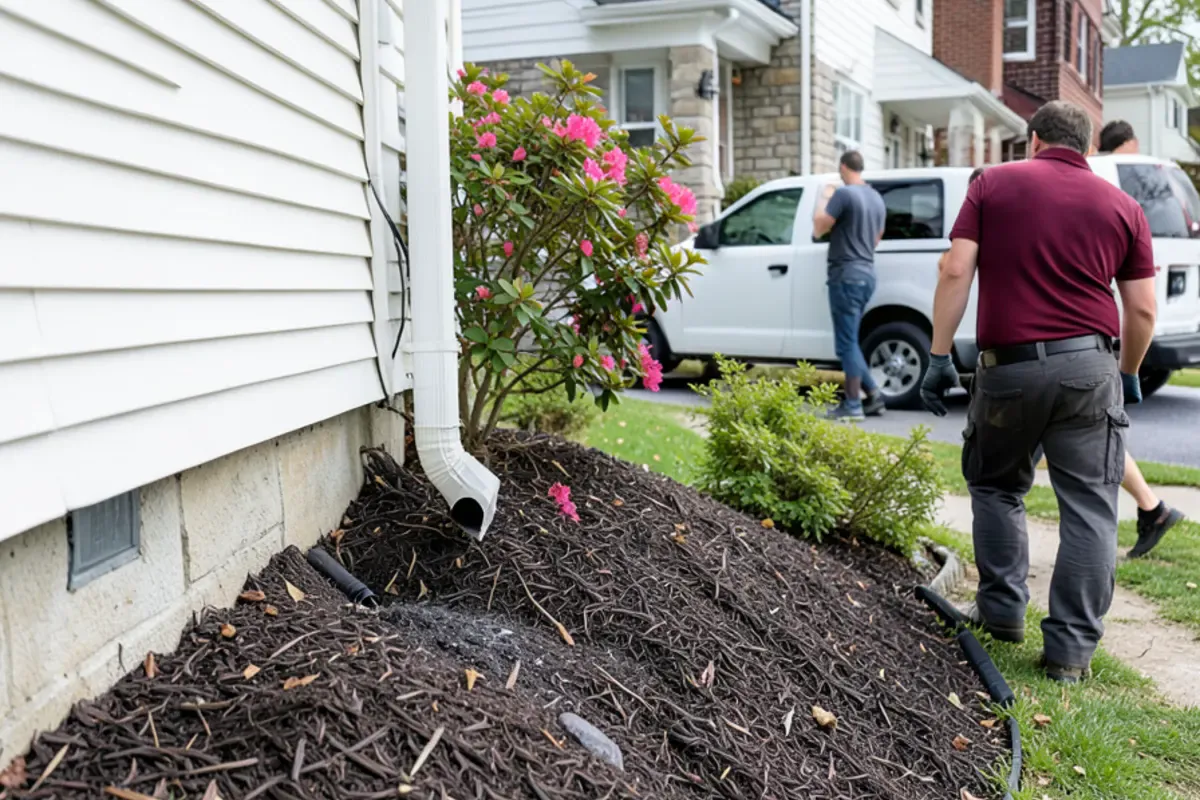
- A second colony moved in from the yard, often from mulch piled against the foundation
- Shrubs touching the siding give ants a bridge to the windows
- Aphids on nearby plants feed the colony and keep it strong
- The bait was the wrong type, such as a sugar bait for an ant that wanted protein
- A plumbing leak inside a wall is providing water and a nesting spot
- Spray was used near the bait and stopped workers from feeding
When is it time for professional ant control?
Call if ants survive two careful rounds of baiting, if trails show up in several rooms at once, or if the ants are large and black. Big black ants trailing through a kitchen at night are often carpenter ants, which nest in damp wood and need a different plan entirely.
Professional ant control adds accurate identification, non-repellent treatments around the foundation that foragers carry back without noticing, and an inspection of the outside conditions feeding the colony. If what you are seeing turns out to be something other than ants, our wider insect control services cover the rest, from beetles in the pantry to silverfish in the bathroom.
Where kitchen ants come from in Springfield's post-war homes
Most of Springfield Township's houses are post-war Cape Cods and colonials. The township's median home dates to 1955 (Census ACS), and rentals make up a small share, around 6 percent. When we inspect for ants in homes like these, the trail very often leads to a kitchen window above the sink, a back door threshold, or the joint where a later addition meets the original foundation.
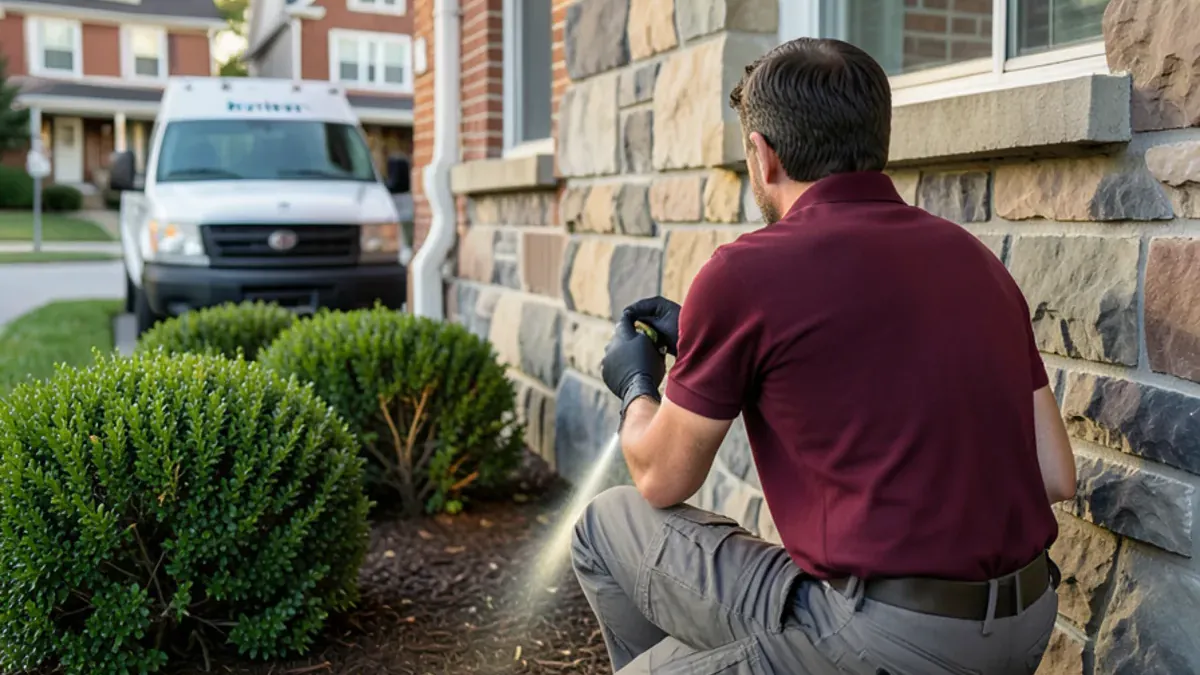
Outside, we routinely find the nest itself in mulch beds piled high against the house or under landscape stones near the downspouts. Pulling the mulch back and adjusting the downspout often does as much as any bait. We handle these calls across Springfield Township every spring and summer.
Season tells us something too. A trail in April or after a summer storm usually traces back outside. A steady trail in January, in a heated kitchen, usually means the colony has a nest inside the structure, often in a wall void near the dishwasher or under a bathroom floor where a slow leak keeps things damp. Those winter cases take longer, because the nest is out of reach and the bait has to do all the traveling.
Quick answers
Why do ants show up right after it rains?
Heavy rain floods shallow nests in mulch and soil, so odorous house ants move the whole colony, queens and brood included, somewhere drier, and a wall cavity or the space under your kitchen floor qualifies. That is why a trail can appear overnight. Bait placed during that first wet-weather invasion often works well, because the colony is hungry and disrupted.
Do vinegar or essential oil sprays keep ants away?
Only briefly. Vinegar and oils mask the scent trail and can deter ants from one spot for a day or two, but they do nothing to the colony, and the workers simply find a new path. They are fine for cleaning a counter after the bait has done its work, but they will not stop the problem on their own.
How long should ant bait take to work?
Most kitchen infestations drop noticeably within a week and clear within about two, as long as the bait stays fresh and nobody sprays nearby. Large or multi-nest odorous house ant colonies can take longer. If you see no change after two weeks, the bait may be the wrong type, or ants are coming from more than one colony.
Are odorous house ants harmful to people or pets?
Not directly. Odorous house ants do not sting, and their bite is rarely noticed. The real concern is contamination: they walk from garbage and soil onto food, pet bowls and dishes. Keep pet food covered during an infestation, and remember that baits must stay out of reach of dogs and cats.
The bottom line
Ants keep coming back when only the trail gets treated; they stop when the colony does. If two rounds of patient baiting have not worked, call (209) 563-1650, and we will trace the trail to its source and treat it at the nest.
Sources
Written by the No Bugs Exterminator team
A small, family-run pest control business in Media, PA, led by owner Thom. We write about what we see on inspections in Delaware County and southeastern Pennsylvania. About us.
Services mentioned in this guide
Want a professional opinion?
Book a free inspection and get a written quote before any treatment.
- ★ 4.8 from 21 Google reviews
- Open 7 days, 8 a.m. to 7 p.m.
- Free inspection before treatment
- Family-run, based in Media, PA
Open 7 days, 8 a.m. to 7 p.m.