
What Is Rodent Exclusion, and When Does It Make Sense?
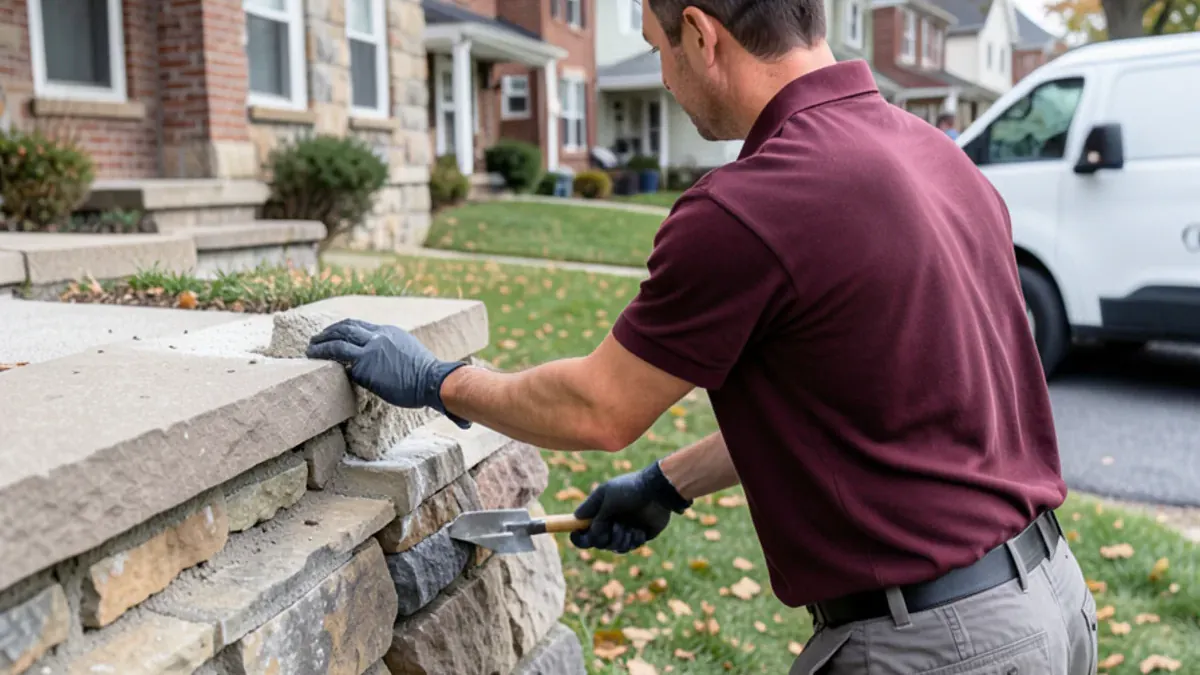
Exclusion pest control is building repair aimed at one target: no gap big enough for a rodent. Mice need about 1/4 inch and rats about 1/2 inch, so the work focuses on small openings most people never notice.
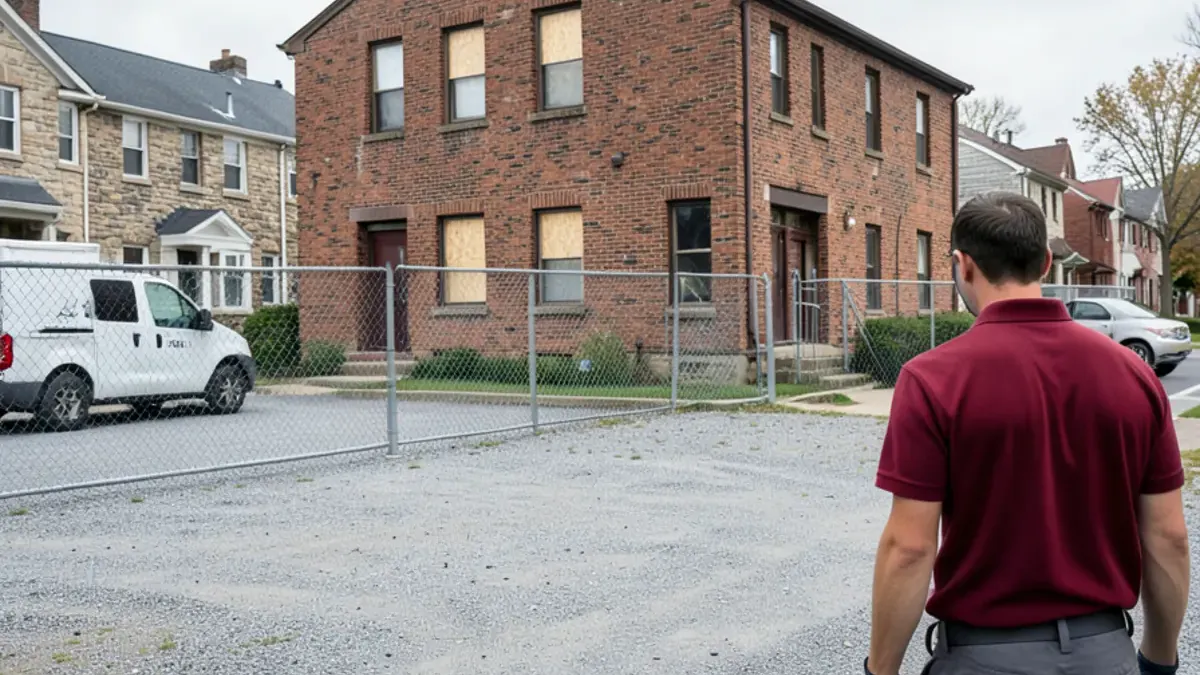
It makes sense if mice come back every autumn, if you have trapped rodents before and they returned, or if you just bought an older house and want to get ahead of the problem. It also pays off before a neighboring building is torn down, since demolition scatters rodents to nearby homes. Exclusion is usually done alongside trapping, not instead of it.
The age of the house often decides it. Census (ACS) estimates put the median Delaware County home at 1957, and foundations that old have had decades of mortar weathering, settling and new lines drilled through them. If droppings come back within weeks of trapping, the openings are still there and exclusion is the missing step.
Common Rodent Entry Points in Delaware County Houses
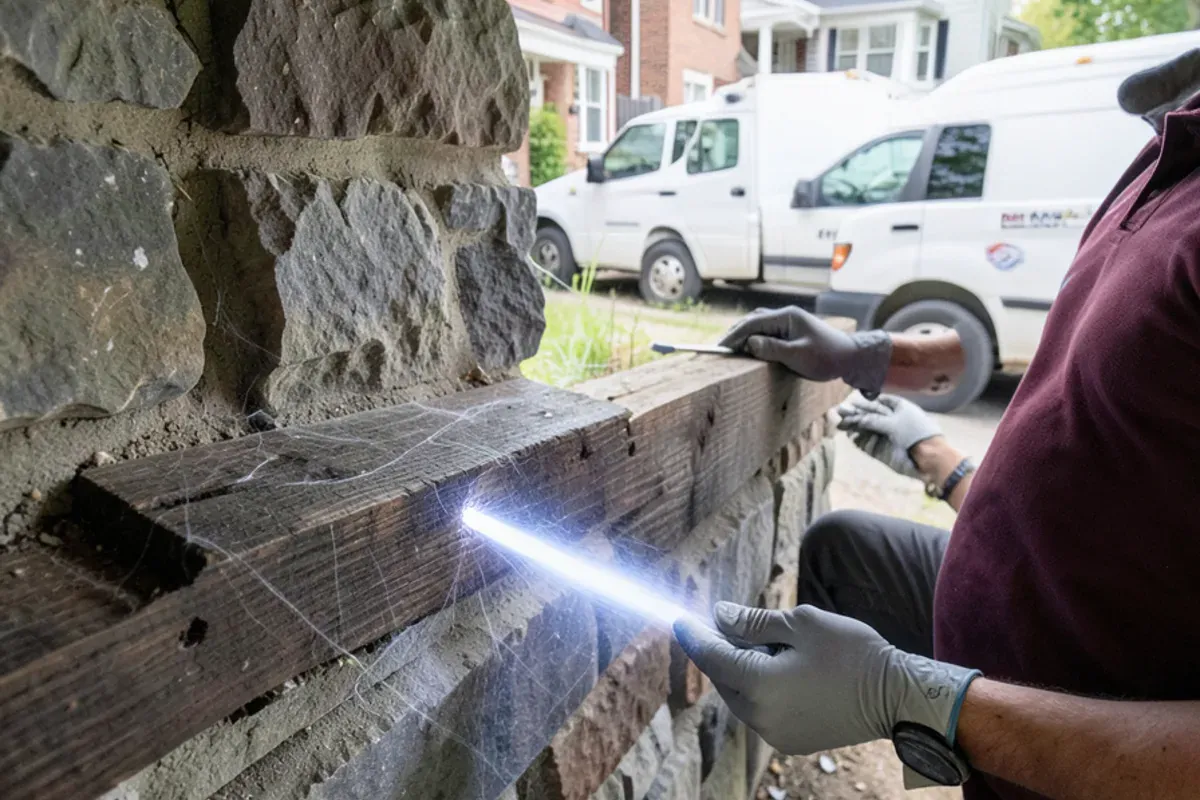
Older homes here share a familiar list of weak spots. Pre-war twins and rowhomes add a few of their own because of shared walls and old masonry.
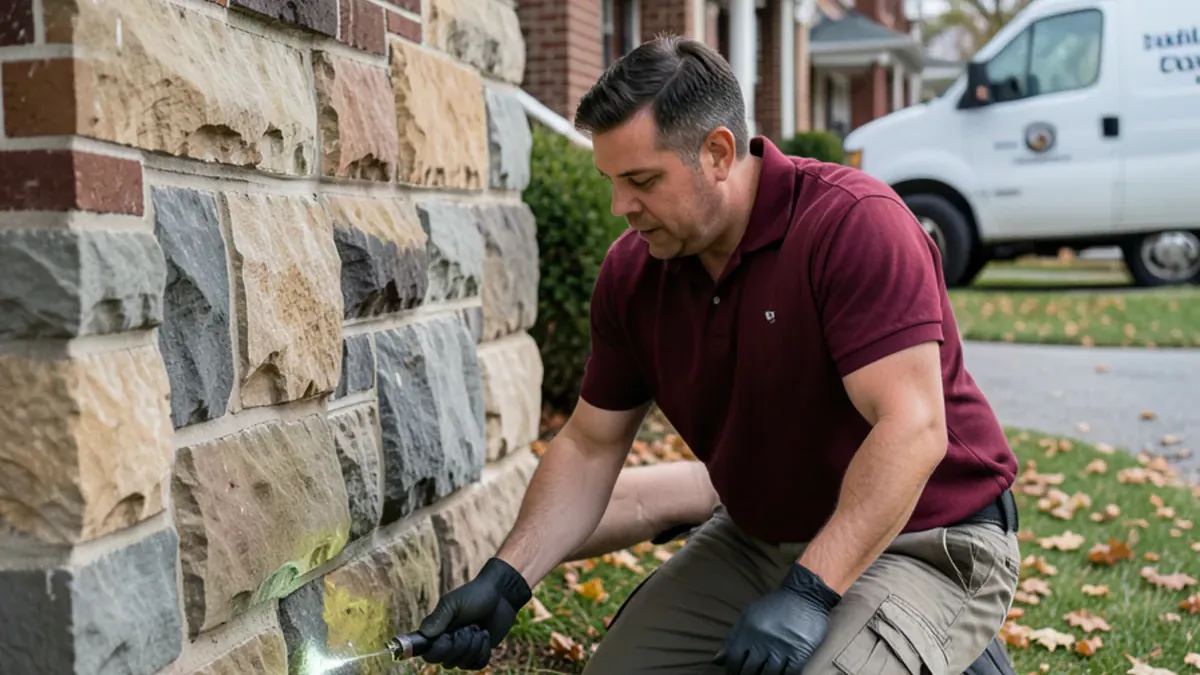
- Crumbling mortar joints in fieldstone and block foundations
- The sill plate, where the wood frame rests on the foundation
- Gaps around gas, water, cable and air-conditioning lines
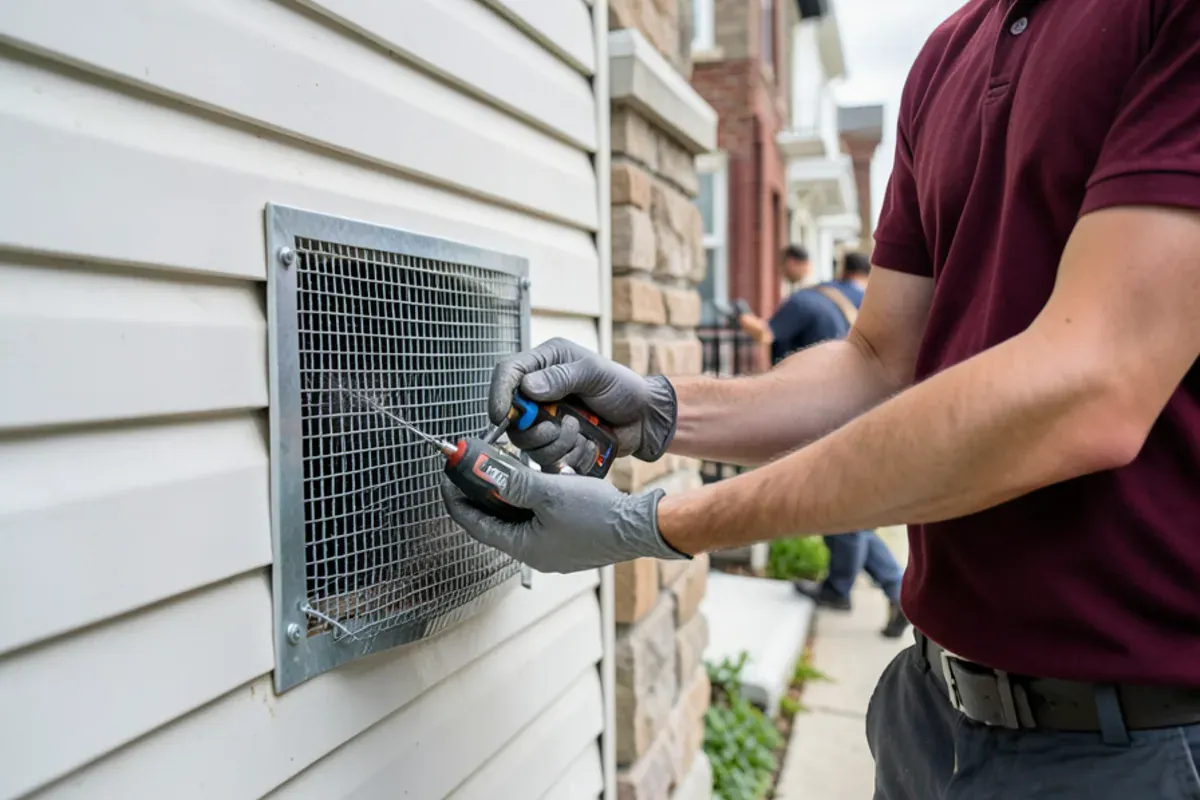
- Dryer, bath and kitchen exhaust vents without screens or flaps
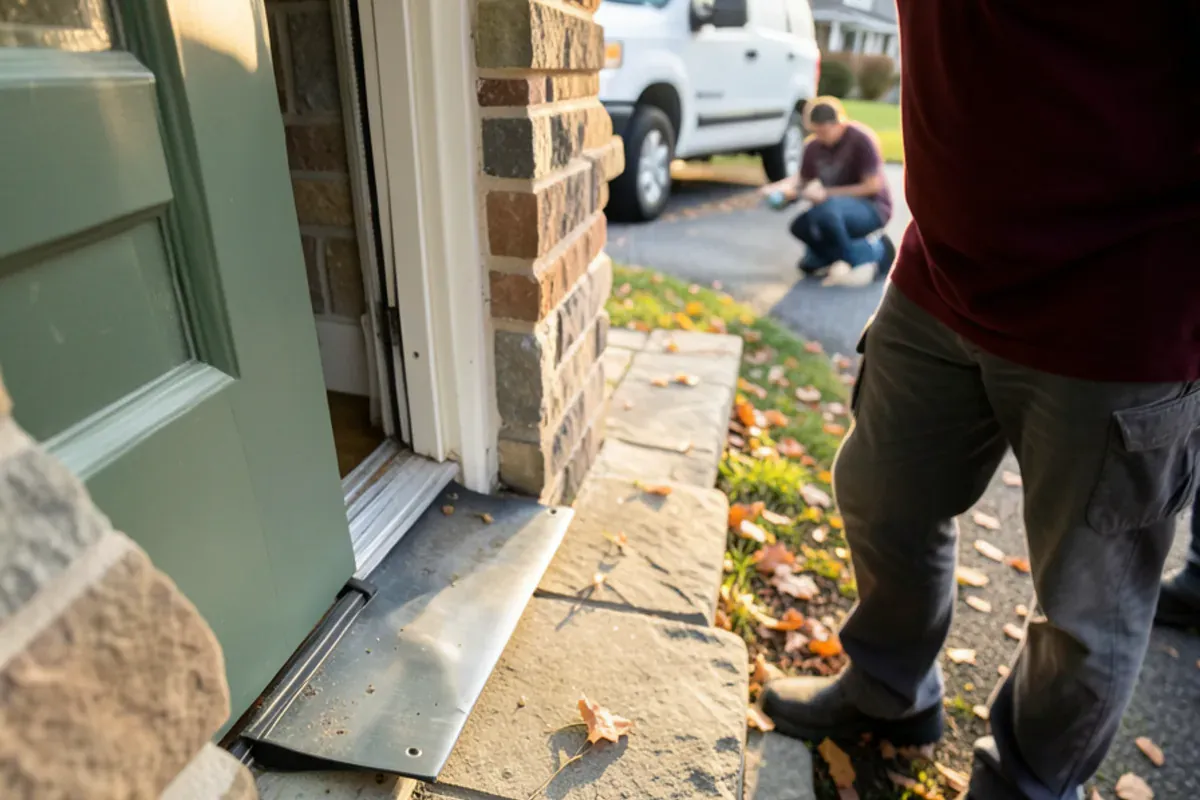
- Garage door corners and worn bottom seals
- Bulkhead and basement doors that no longer close tightly
- Open voids along the party wall in twins and rowhomes
- Roof returns, soffits and gaps where a porch roof meets the house
Rodent Proofing Materials: What Goes Where
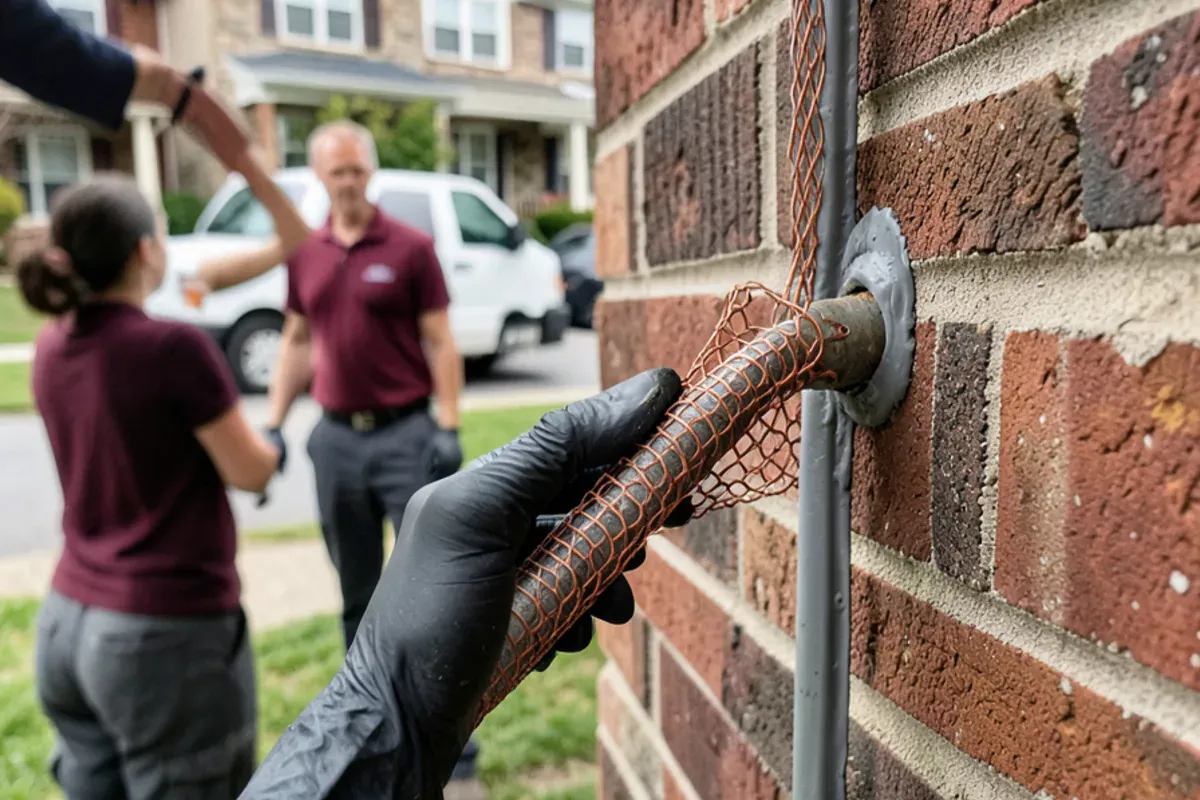
The material has to match the gap and the animal. Soft fillers alone — foam, caulk or plain steel wool — get chewed through or rust away, so they are always paired with something tougher.
| Material | Typical use | Trade-off |
|---|---|---|
| Copper or stainless mesh | Packed into gaps around pipes and wires | Will not rust like steel wool; needs sealant to hold it in place |
| Galvanized hardware cloth | Vents, crawlspace openings, burrow barriers | Strong against rats; has to be cut and fastened neatly |
| Mortar or masonry patch | Foundation joints and holes in stone or block | Permanent and chew-proof; needs time to cure |
| Exterior-grade sealant | Thin cracks, and over mesh to lock it in | Not rodent-proof on its own |
| Door sweeps and garage seals | Gaps under exterior and garage doors | Wear out with use and need replacing |
| Metal flashing or vent covers | Roof returns, larger openings, exhaust vents | Must keep vents working while blocking animals |
How the Exclusion Process Unfolds
Full exterior survey
We go around the whole building at ground level and check the roofline, photographing or noting each gap.
Interior confirmation
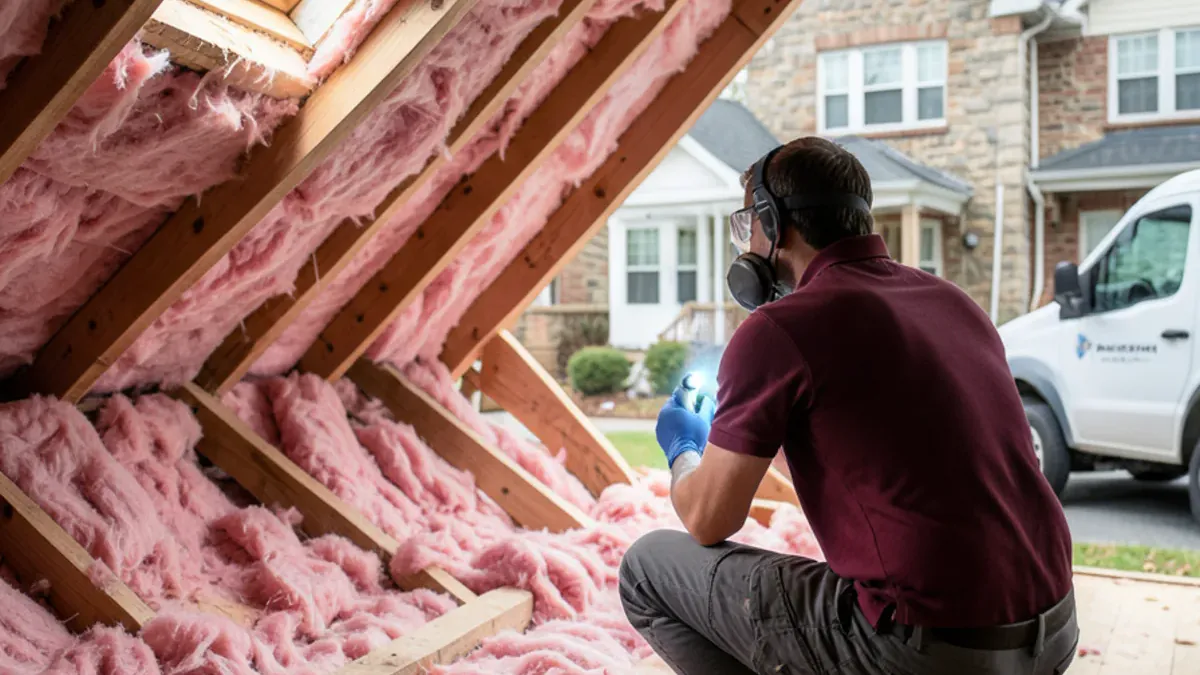
From the basement and attic we look for daylight, drafts and rub marks that confirm which gaps rodents use.
Written scope
Your quote lists every entry point and the material planned for it.
Trapping first
Traps go out so the rodents already inside are caught rather than sealed in.
Sealing in stages
Secondary gaps are closed first; the main entry is closed once activity drops.
Recheck
A follow-up visit confirms no new gnawing or droppings and that seals are holding.
Talk to us about rodent exclusion
Call and speak with Thom or his team. The inspection is free, and you get a written quote before any treatment.
- ★ 4.8 from 21 Google reviews
- Open 7 days, 8 a.m. to 7 p.m.
- Free inspection before treatment
- Family-run, based in Media, PA
Open 7 days, 8 a.m. to 7 p.m.
What Drives the Cost of Sealing Rodent Entry Points?
Exclusion is scoped opening by opening, so the walk-around count drives most of the total. A 1990s home in Concord or Chester Heights may have a few unsealed utility lines and a worn garage seal, while a 1940s stone house in Swarthmore or Lansdowne can have dozens of open mortar joints plus soffit gaps two stories up.
Materials change the labor as well. Rat-grade sealing with hardware cloth and mortar takes longer than packing mesh against mice, and an attached twin adds the party-wall line. The written scope lists each gap and its material, so you can see what drives the total.
- Number of entry points and how spread out they are.
- Foundation material: fieldstone often needs the most patching.
- Height and access: rooflines and soffits take ladders and more time.
- Whether the target is mice, rats or both, which changes the materials.
- Attached homes, where the party wall and shared basements complicate the job.
- Whether trapping and follow-up visits are bundled with the sealing.
Rules and Permits That Touch Rodent Proofing Work
Most exclusion is building repair rather than pesticide work, but it rarely happens alone. When bait goes down as part of the job, Pennsylvania's Pesticide Control Act of 1973 applies: the Pennsylvania Department of Agriculture (PDA) licenses the business and certifies the applicator, and 7 Pa. Code § 128.31 puts the business license number on its service vehicles.
Two other authorities can matter. Bats are protected wildlife overseen by the Pennsylvania Game Commission, so an attic opening that bats use should not be closed while flightless young are inside in early summer. Larger masonry or structural repair at a foundation may need a permit from your township or borough code office. This is general information, not legal advice.
Can a Twin or Rowhome Be Fully Sealed?
You can seal your side, but in an attached home, the neighbor's side matters. Mice often travel along the party wall, through shared basement voids and under shared porch roofs, so we seal openings on your side of that wall where they can be reached and tell you plainly what is outside our control.
When neighbors on both sides of a twin are dealing with mice, sealing both halves at the same time works far better. Landlords with several attached units often get the most from this approach.
After the Seal: Upkeep and What to Expect
Good exclusion lasts for years, but houses keep changing. New cable lines get drilled through walls, door sweeps wear down, mortar keeps weathering and a contractor may leave a gap behind. A quick look around the foundation each late summer catches most of these before mice do.
Once the animals are out, soiled insulation or droppings in the attic or basement may still need attention; our rodent cleanup and sanitation page covers that. If a building next door is scheduled for demolition, read about pre-demolition rodent baiting, which is how owners reduce the rodents pushed into nearby homes.
What our rodent exclusion includes
- Full exterior and roofline survey for rodent-sized gaps
- Basement and attic check to confirm active entry points
- Written scope listing each gap and the material for it
- Copper or stainless mesh packed into pipe and wire penetrations
- Hardware cloth over vents and crawlspace openings
- Mortar patching of foundation holes and joints
- Door sweeps and garage seal repairs where needed
- Follow-up check that the seals are holding
Why call No Bugs Exterminator for rodent exclusion
Built for older Delaware County homes
From our Media base we work on stone foundations, party walls and old masonry, where exclusion is most often needed.
Every gap in writing
Your free inspection ends with a written quote listing each entry point, so you can see what you are paying to close.
Trapping and sealing together
Thom and his team pair exclusion with trapping, so rodents are removed rather than shut inside.
Open 7 days, 8 to 7
Calls are answered every day, so you can book a late-summer walk-around before mice start moving in.
Rated 4.8 on Google
That rating comes from 21 Google reviews left by homeowners and businesses.
Where we provide rodent exclusion
Exclusion matters most in older housing. Haverford Township homes date to around 1950 and back onto Darby Creek's wooded banks. Swarthmore has large pre-war houses with stone foundations next to the Crum Woods. In Clifton Heights and Prospect Park, twin and row streets from the late 1940s and early 1950s mean party walls and shared basements that need careful sealing.
- East Lansdowne
A tiny borough of pre-war twins with a 1938 median build year, where party-wall voids and weathered mortar are the usual sealing targets.
- Rutledge
Houses in this tenth-of-a-square-mile planned borough, with a 1938 median build year, have had nearly a century of settling around sill plates and utility lines.
- Aldan
Pre-war homes by the Clifton-Aldan rail stop tend to need sealing at basement windows, bulkhead doors and old utility penetrations.
- Ridley Park
Victorian homes around Ridley Park Lake have porches, roof returns and tall soffits, so exclusion here often has to reach the roofline.
- Norwood
Bounded by Darby and Muckinipattis creeks, Norwood's early-1950s homes face rodent pressure from two creek corridors at the foundation line.
- Glenolden
Homes from the 1950s along MacDade Boulevard and Muckinipattis Creek often need foundation, sill and garage-corner sealing before the first frost.
- Morton
With a 41% renter share in a small rail borough, landlords here often seal several attached units at once rather than one at a time.
- Wayne
Victorian rail-suburb houses off Lancaster Avenue have aging masonry, deep porches and roof returns where mice and squirrels find a way in.
- Folsom
Houses around Ridley High School and Morton Avenue, with a 1957 median build year, usually need utility-line and door-sweep work before fall.
What customers say on Google
4.8 out of 5 from 21 reviews on Google. Quoted as written by customers.
Excellent service, very professional and friendly! Most importantly the results gave me peace of mind! Highly recommended!
Professional service with great results!
Thom is a top-notch pest control specialist! And is one of the most genuine guys in the industry. He came to inspect a situation I had going on at the house, took his time, offered detailed advice, and didn’t take a penny.
Rodent Exclusion: common questions
What does exclusion include?
It includes finding and sealing every gap a rodent can use, from the foundation up to the roofline. Typical work covers pipe and wire penetrations, vents, sill plate gaps, door sweeps, garage seals and mortar patching. The written quote after your free inspection lists each opening and the material planned, so the scope is clear before work starts.
Is exclusion a one-time cost?
Mostly, yes. Sealing is a project rather than a recurring service, and good repairs last for years. Houses change, though: door sweeps wear out, mortar weathers and new utility lines get added. A yearly check in late summer, before mice start moving in, catches new gaps while they are still small.
Will sealing trap rodents inside?
Not if it is done in the right order. We set traps first and close secondary gaps early, then seal the main entry once catches drop and no fresh droppings appear. That way rodents already inside are removed rather than shut in a wall void, which would cause odor and new chewing.
Does steel wool keep mice out?
Steel wool alone is a weak fix. Mice can pull it loose, and it rusts in damp basements, leaving stains and a gap again within a season or two. Copper or stainless mesh lasts much longer, and we lock it in with sealant or mortar so it stays put.
Do you seal the roofline as well as the foundation?
Yes, when the inspection shows activity up high. Mice climb brick, downspouts and vines, then enter at soffits, roof returns and gaps where a porch roof meets the wall. Attic droppings with no basement activity usually point to the roofline, and those gaps go into the written scope like any other.
Related services
Helpful guides from our blog
Ready to get rid of the problem?
Thom and his team serve Media, Delaware County and southeastern Pennsylvania, open 7 days, 8 a.m. to 7 p.m..
- ★ 4.8 from 21 Google reviews
- Open 7 days, 8 a.m. to 7 p.m.
- Free inspection before treatment
- Family-run, based in Media, PA
Open 7 days, 8 a.m. to 7 p.m.