
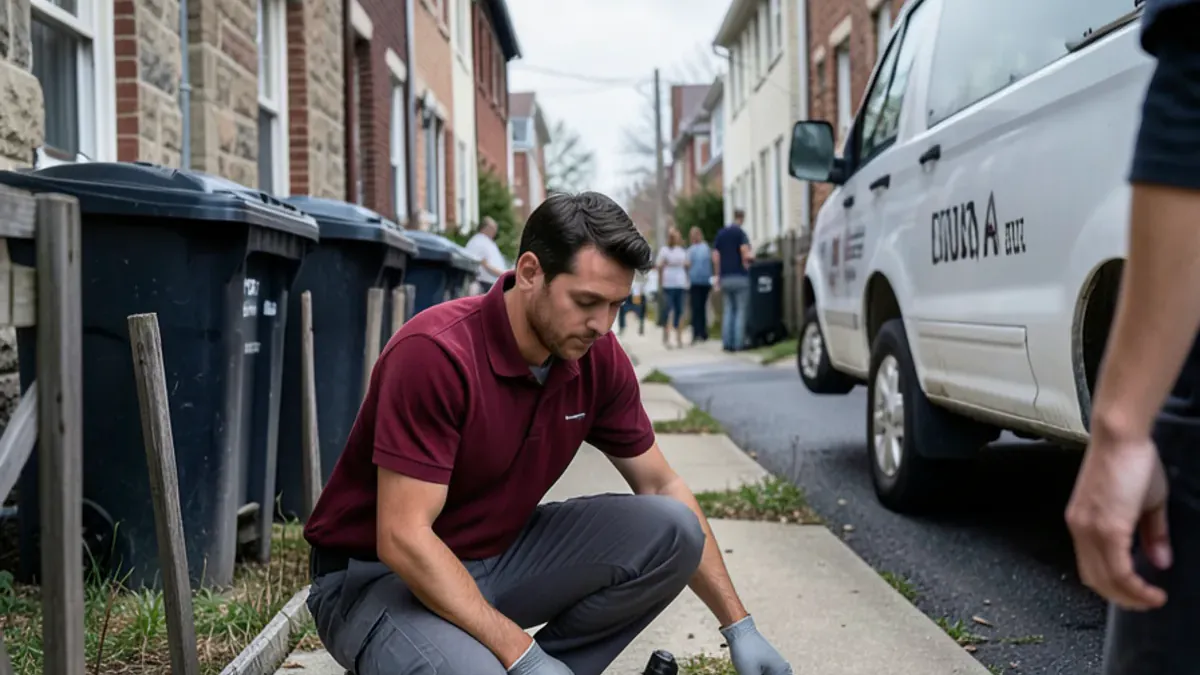
Signs of Norway Rats in a Yard or Basement
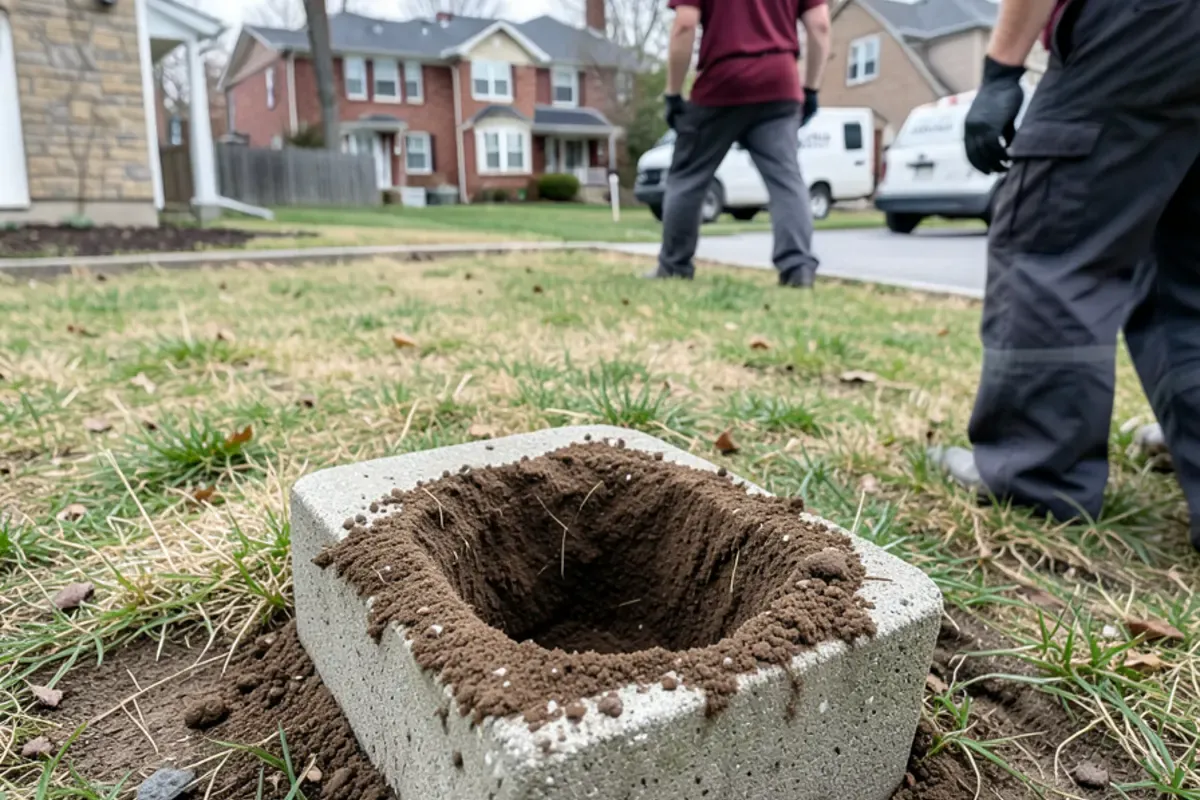
Rat burrows are the clearest outdoor sign: holes about 2 to 4 inches wide with smooth, packed edges, usually along a foundation, under a shed, beneath a concrete slab or at the base of a fence. Fresh dirt fanned out at the opening means the burrow is in use.
Inside, look for capsule-shaped droppings up to 3/4 inch long, often grouped in one spot, plus greasy dark smears along basement walls and gnawed holes in doors, drywall or plastic pipes. Many people first hear rats at night as heavy thumping or scraping, much louder than mice.
Rats stay active all year here, but two moments bring the most calls: late fall, when garden food runs out and rats push toward basements, and the days after heavy summer storms, when flooded creek-bank burrows send them toward higher ground near houses. At either time, check for rub marks low on the wall, a sour ammonia smell in a crawlspace and chewed corners on wooden basement stairs or doors.
Where Rats Come From Near Creeks, Alleys and the City Line
Norway rats need food, water and soft ground to dig. Delaware County's creek corridors — Darby, Cobbs, Crum and Chester creeks — give them banks to burrow in, and the rear alleys behind rowhome blocks provide trash, compost and shelter under porches and sheds.
Neighborhoods along the Philadelphia city line, from Yeadon to Upper Darby and Darby, share alleys, storm drains and creek banks with the city, so rats move freely across the boundary. Older houses add another route: cracked clay sewer laterals and abandoned floor drains in pre-war basements can let rats up from below.
How Do We Inspect for Rat Burrows and Runways?
We start outside. Every burrow gets mapped, and we look for well-worn paths through grass, gaps under fences and doors, damaged vent screens and openings where pipes leave the house. We also note what is feeding the rats: bird feeders, dog waste, open compost, fallen fruit or trash bins without lids.
Inside, we check the basement perimeter, floor drains, sump pits, utility penetrations and any room where gnawing or droppings have appeared. Rats rarely go far from their burrow, so tracing their runways tells us where traps and stations will do the most.
Rat Removal Methods and Their Trade-Offs
Rats are suspicious of new objects, which shapes every choice below.
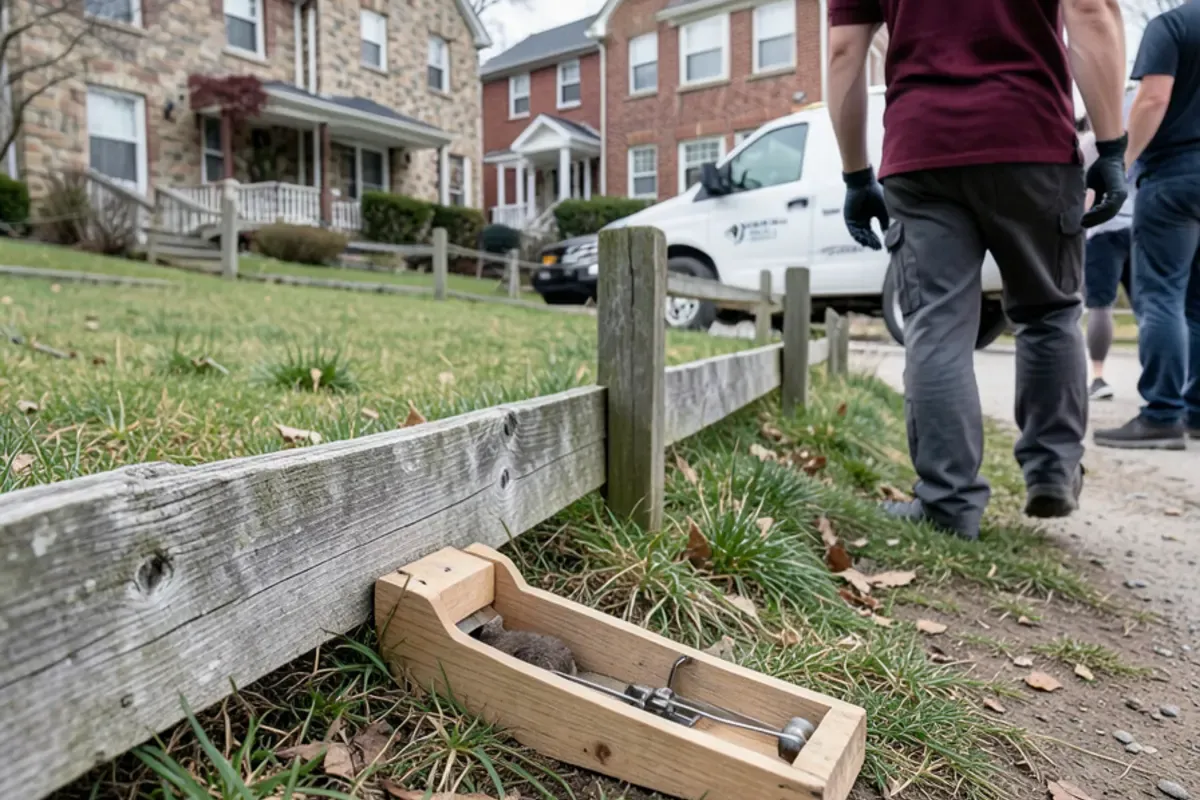
- Pre-baited snap traps — rat-sized traps left unset with food for a few days so the rats accept them, then set; very effective but take patience.
- Tamper-resistant bait stations — locked stations along the foundation and fence lines where label directions allow; they reach rats that avoid traps, though a rat may die underground.
- Burrow treatment and closure — once activity stops, burrows are collapsed and filled so new rats do not move in.
- Exclusion — heavier materials such as hardware cloth and mortar patching, since rats chew through soft fillers.
- Removing food sources — not a service, but nothing we place works well while a bird feeder or open compost keeps feeding the colony.
What a Rat Control Visit Looks Like
Burrow and runway survey
We walk the yard, alley side and foundation, marking each burrow and travel path.
Food and water check
We point out feeders, compost, trash and leaks that keep rats nearby.
Written quote
The quote lists trap and station locations, exclusion work and the visit schedule.
Pre-baiting and placement
Traps go out unset at first so rats get used to them; locked stations are secured near burrows.
Monitoring burrows
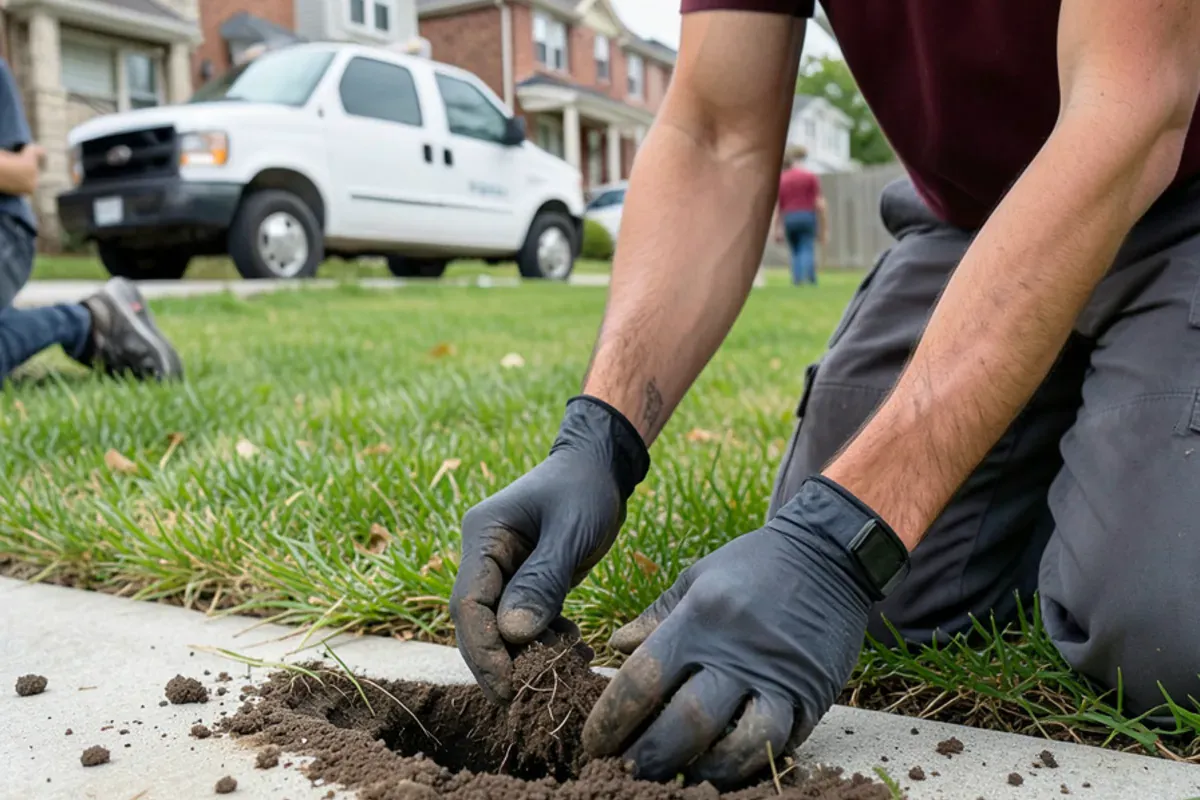
Burrows are plugged with loose soil and checked on each visit; reopened holes show where rats are still active.
Closing out
When burrows stay shut and traps stay empty, we fill burrows and seal the building.
Talk to us about rat control
Call and speak with Thom or his team. The inspection is free, and you get a written quote before any treatment.
- ★ 4.8 from 21 Google reviews
- Open 7 days, 8 a.m. to 7 p.m.
- Free inspection before treatment
- Family-run, based in Media, PA
Open 7 days, 8 a.m. to 7 p.m.
How Long Until the Rats Are Gone?
Expect rat removal to take longer than a mouse job, often three to six weeks for an established colony, because of the pre-baiting period and because rats in burrows feed cautiously. A single rat that wandered in from next door can be gone in days.
Once the colony is gone, droppings, urine stains and nesting in a basement or crawlspace should be cleaned with care; see rodent cleanup and sanitation for how that works. Neighboring properties matter too, since rats from an untreated yard next door can recolonize empty burrows.
Rat Control Cost Factors
A rat quote depends first on where the colony lives. Rats burrowing under one backyard shed in Ridley Park are a smaller job than a colony using a shared rear alley in Collingdale, where devices have to cover ground the homeowner does not control and a neighbor's trash keeps feeding the population.
Older construction adds work too. Pre-war basements with clay sewer laterals, open floor drains or rubble stone foundations may need heavier exclusion before the job can close, sometimes with a plumber's repair in between. The written quote lists visits, devices and sealing so you can compare it line by line.
- Number of active burrows and how large the colony appears.
- Whether rats are only in the yard or also inside the house.
- Exclusion needed, especially rat-proof materials at the foundation and doors.
- Pre-baiting time and the number of follow-up visits.
- Access issues: decks, sheds, slabs and shared alleys.
- Commercial sites, such as restaurants with dumpsters, usually need ongoing service.
Rat Bait Rules and Property Maintenance Codes in Pennsylvania
Rat baits are regulated rodenticides, and in Pennsylvania their use for hire falls under the Pesticide Control Act of 1973, administered by the Pennsylvania Department of Agriculture (PDA). PDA licenses pest control businesses and certifies the applicators who place bait, and 7 Pa. Code § 128.31 requires the business license number to appear on service vehicles. Ask any provider for its PDA number before stations go down near a burrow.
Rats can also become a code matter. Many townships and boroughs enforce a property maintenance code, often based on the International Property Maintenance Code, that requires yards and buildings to be kept free of rodent harborage. Your municipal code office can tell you what applies on your street. This is general information, not legal advice.
Making Your Yard and Basement Unattractive to Rats
Take down bird feeders or add catch trays, pick up dog waste daily, use a closed compost bin and keep trash in lidded cans set away from the house. Clear wood piles, old lumber and dense ivy where rats hide, and repair leaky outdoor spigots.
Then make the building harder to enter. Rats need a gap only about 1/2 inch wide, so torn vent screens, gaps under doors and holes around pipes all count. Our rodent exclusion work uses rat-resistant materials for exactly these spots. If a rat is loose in your living space right now, see emergency rodent removal.
What our rat control includes
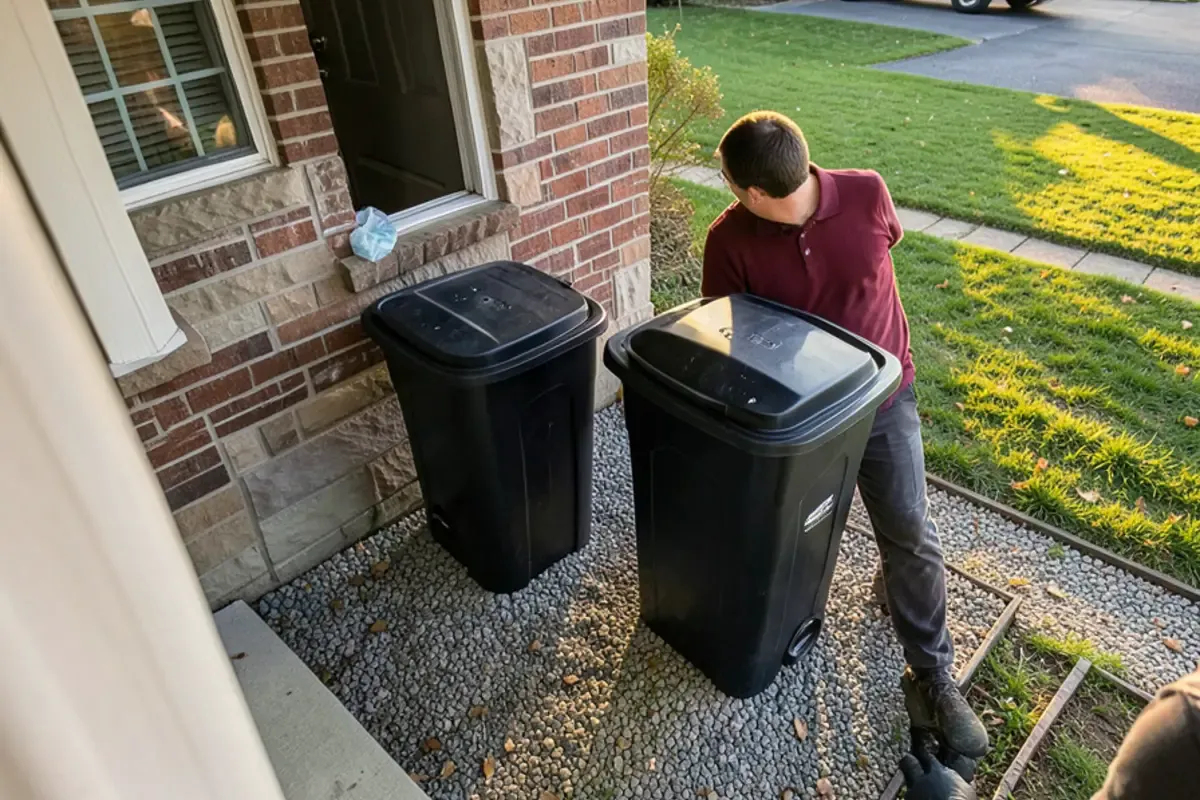
- Free inspection of the yard, alley side, foundation and basement
- Mapping of every active burrow and runway
- Written quote with trap and station locations and visit schedule
- Pre-baited rat-sized snap traps
- Secured rat bait stations along foundations and fences, set where the label permits
- Burrow monitoring, then filling once activity stops
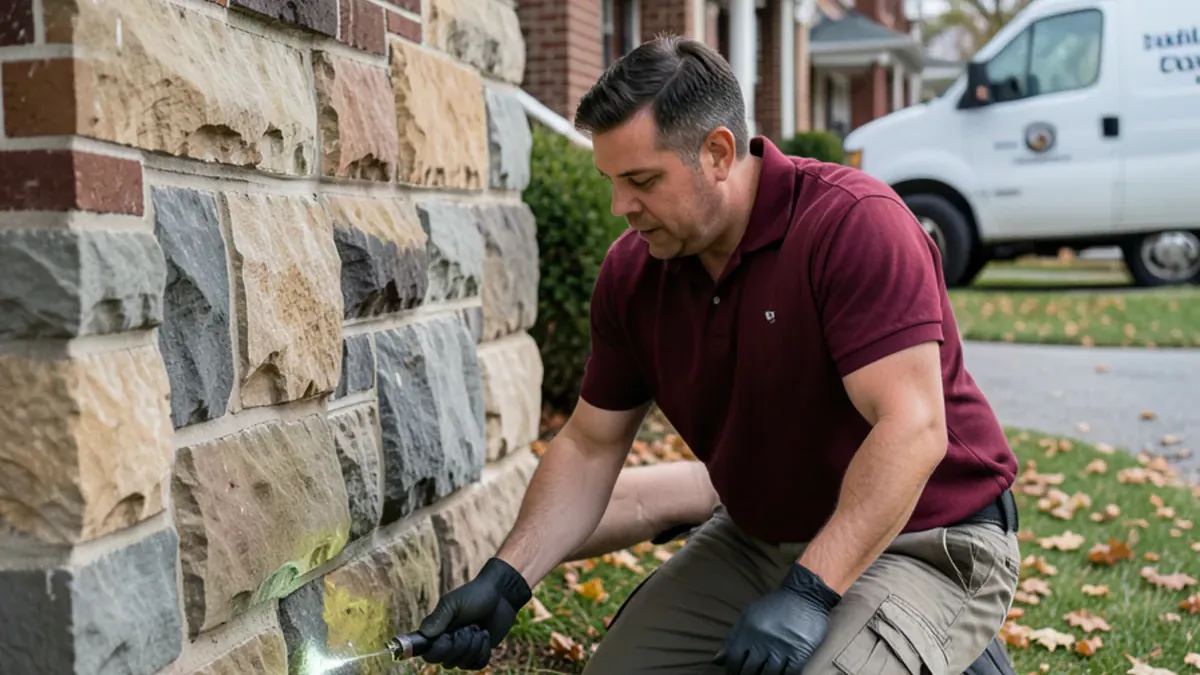
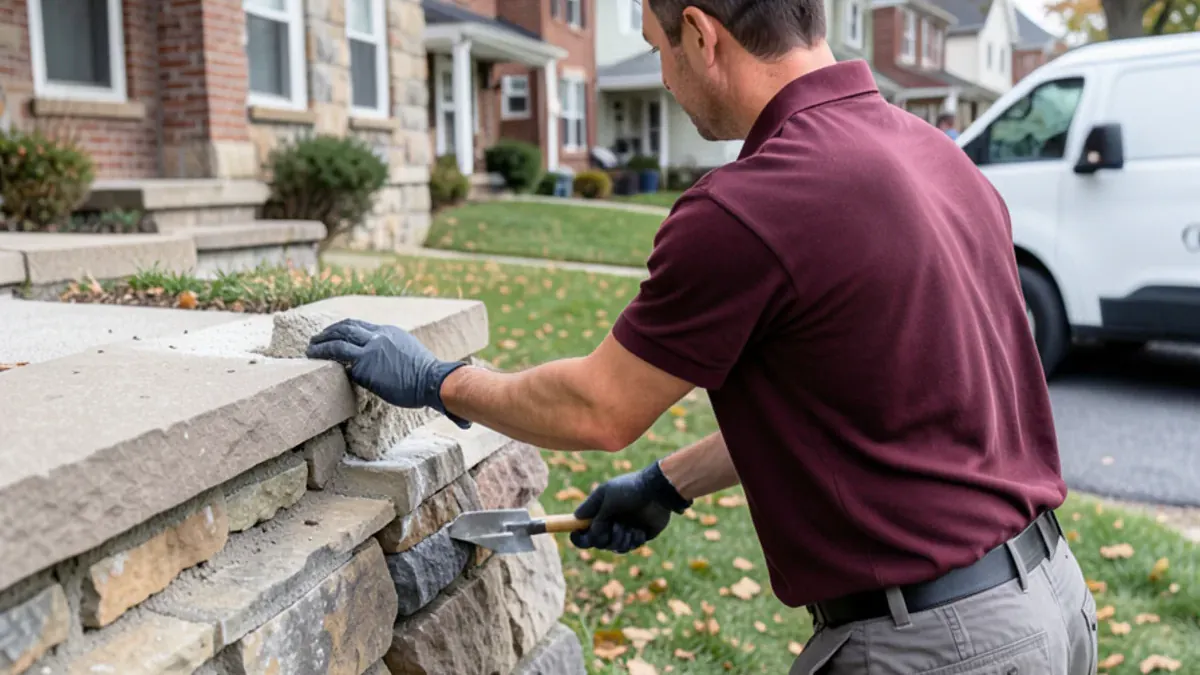
- Rat-resistant sealing of entry points at the foundation, doors and vents
- Guidance on removing food sources around the property
Why call No Bugs Exterminator for rat control
We know the creek and alley neighborhoods
Working out of Media, we treat rats along Delaware County creek banks, rowhome alleys and the Philadelphia line.
Patience built into the plan
Your written quote includes the pre-baiting time and follow-ups rats require, so nothing is a surprise.
Owners, landlords and shops
Rats are a common call from landlords and restaurants as well as homeowners, and we answer the phone 7 days a week from 8 a.m. to 7 p.m.
A free burrow survey
Mapping burrows and runways costs you nothing, and Thom and his team come back for each check until every burrow stays closed.
Where we provide rat control
Rats concentrate where creeks, alleys and older sewers meet. Yeadon runs right up to Cobbs Creek on the Philadelphia line, and Darby grew up along Darby Creek with trolley-line rowhomes. Collingdale has row and twin streets with shared rear alleys, while across the line in Philadelphia, rowhome blocks and older housing stock give Norway rats plenty of burrowing room.
- Darby
Settled on Darby Creek in 1682, with trolley-line rowhomes and a 50% renter share, Darby has rats using both creek banks and shared rear alleys.
- Colwyn
Where Cobbs Creek meets Darby Creek at the city line, burrowing rats move between creek banks, storm drains and row-street yards.
- Collingdale
Twin and row streets along the Route 102 trolley share rear alleys, so one block's trash and compost can feed rats for several houses.
- Sharon Hill
At the end of the Route 102 trolley on Chester Pike, 1950s homes sit close to commercial dumpsters that draw rats toward backyards.
- Clifton Heights
This former mill borough on Darby Creek has older basements and creek-side lots where Norway rats dig under sheds and slabs.
- Prospect Park
1940s homes on the Darby Creek side near the Morton Homestead see rats travel from the creek banks into basements with aging foundations.
- Eddystone
At the Crum Creek mouth on the Delaware River, riverfront ground and 1940s homes give rats water, cover and easy digging.
- Upland
A Chester Creek mill town with a 1946 median build year and a 58% renter share, where rats in one rowhome basement often reach the next.
- Marcus Hook
In this Delaware River port town, a 64% renter share, older housing and nearby industrial land make rats a year-round concern.
What customers say on Google
4.8 out of 5 from 21 reviews on Google. Quoted as written by customers.
Excellent service, very professional and friendly! Most importantly the results gave me peace of mind! Highly recommended!
Professional service with great results!
Thom is a top-notch pest control specialist! And is one of the most genuine guys in the industry. He came to inspect a situation I had going on at the house, took his time, offered detailed advice, and didn’t take a penny.
Rat Control: common questions
What attracts rats to a yard or alley?
Food comes first: bird feeders, pet food, dog waste, open compost, fallen fruit and trash bins without tight lids. Shelter is next, such as wood piles, sheds on dirt, dense ivy and junk stored against fences. In the shared rear alleys behind Delaware County rowhomes, one neighbor's open trash can feed rats for the whole block.
Are rats moving out from Philadelphia into the suburbs?
Rats do not stop at the city limit. Neighborhoods along the Philadelphia line share alleys, storm drains and creek corridors such as Cobbs Creek, so populations overlap. Demolition and construction can also push rats out of one area and into nearby blocks. What matters for your property is whether food and shelter are available close by.
How do you close rat burrows?
We close burrows only after the colony is gone. First, each burrow is loosely plugged with soil and checked on later visits; any that reopen still have rats. Once all stay closed, burrows are packed with soil or gravel and tamped down. Along slabs and sheds, buried hardware cloth can block rats from digging back in.
Can rats come up through toilets or floor drains?
It is uncommon but possible, mainly in older homes with cracked clay sewer laterals or uncapped basement floor drains. A broken pipe gives rats a path from the sewer into the basement. If droppings center around a floor drain or cleanout, we point it out, and a plumber may need to camera the line and repair it.
If I see one rat, is there a whole colony?
Not always, but it is wise to assume more until proven otherwise. A single rat sometimes wanders in from a neighbor's yard, while active burrows, fresh droppings in several places or nightly noise point to an established group. Burrow counts during the inspection usually answer the question quickly.
Related services
Helpful guides from our blog
Ready to get rid of the problem?
Thom and his team serve Media, Delaware County and southeastern Pennsylvania, open 7 days, 8 a.m. to 7 p.m..
- ★ 4.8 from 21 Google reviews
- Open 7 days, 8 a.m. to 7 p.m.
- Free inspection before treatment
- Family-run, based in Media, PA
Open 7 days, 8 a.m. to 7 p.m.