
Which rodent problems need a call today?
Rodents rarely hurt people directly, but a few situations justify an urgent visit: an animal loose where you eat or sleep, a rat coming up through plumbing, or gnawing on electrical wiring, which is a fire risk.
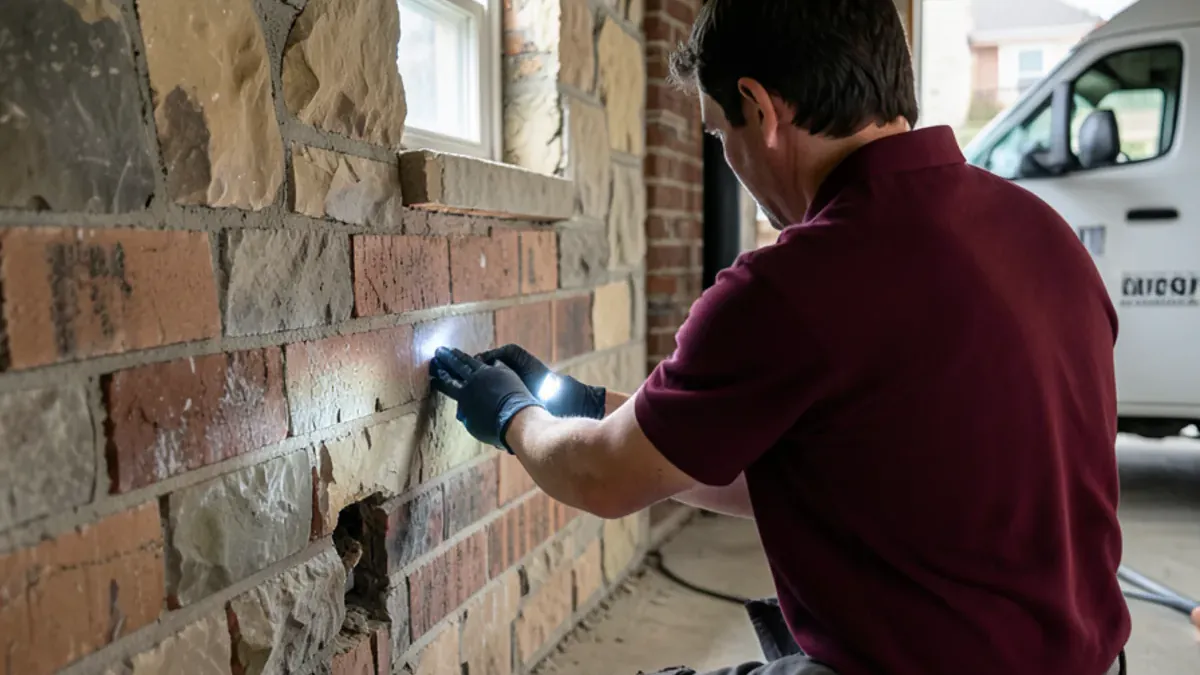
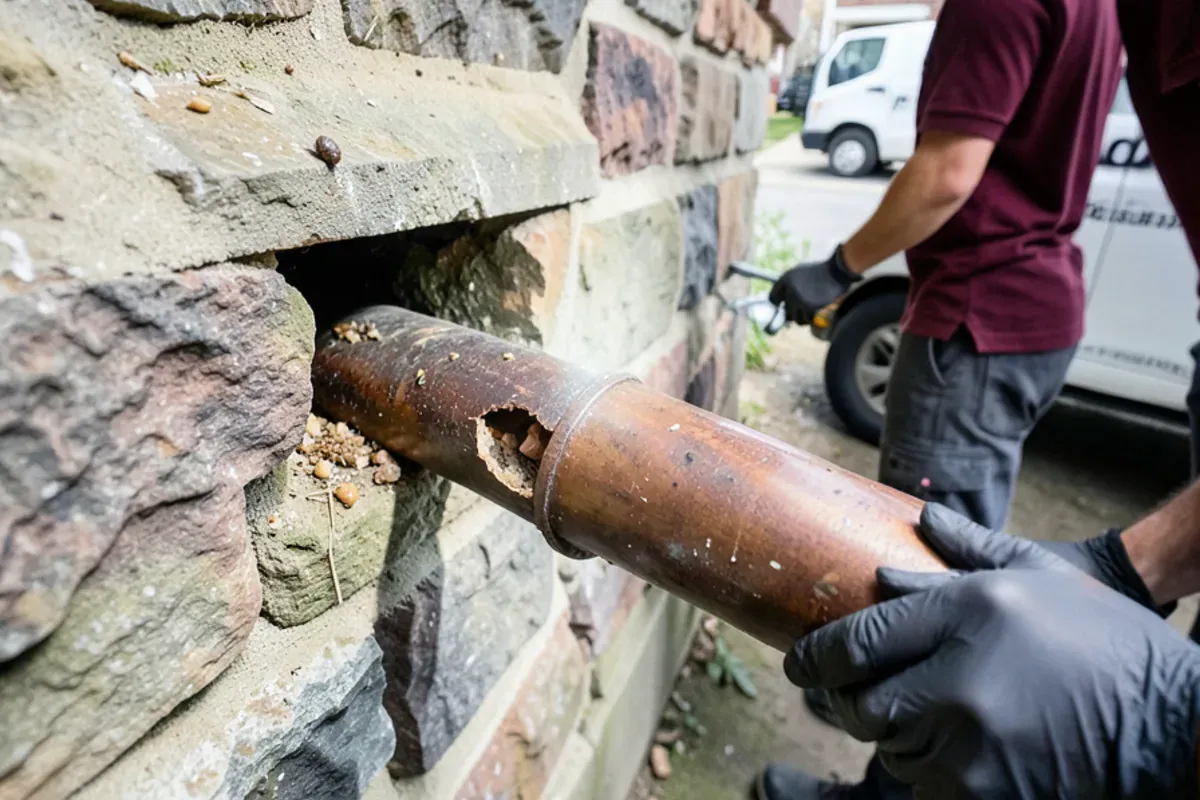
The causes here are mostly local. Fieldstone foundations and settled mortar in pre-war Delaware County houses leave gaps around pipes and sills, rowhome basements connect along shared walls, and creek banks along the Darby, Cobbs and Crum give Norway rats burrows close to back yards. A hard freeze or heavy rain that floods those burrows is often the night a rat first shows up indoors.
- A rat or mouse running loose in a kitchen, bedroom or living room
- A rat in a toilet or floor drain
- Scratching and gnawing inside walls or ceilings at night
- Fresh droppings on counters, in a pantry or near a baby's things
- Chewed wires or insulation in an attic or basement
- A dead-animal odor coming from a wall or floor
- Rodents in a restaurant kitchen or food storage area
What to do right now with a rodent in the house
Handle bites first, then clear the room
Seek medical care for any bite, and call 911 for a severe reaction. Move kids, cats and dogs out and close the door behind you. A cornered rat will bite.
Give it a way out, or nowhere to go
If the room has an exterior door, prop it open and leave the room quiet; a rat will sometimes leave on its own. Otherwise, roll a towel under the interior door to keep it in that one room.
Rat in the toilet: lid down, weight on top
Close the lid, set something heavy on it, such as a stack of books, and keep the bathroom door shut.
Hold off on poison
Store-bought bait kills slowly, so the animal often dies inside a wall, and it's a hazard to pets and children.
Don't sweep up droppings
Sweeping or vacuuming droppings raises dust. Leave cleanup until after the visit and follow CDC guidance for rodent cleanup.
Call with what you saw
Size, color, where it went and when: those details tell us mouse or rat and where to look first.
Is it a mouse or a rat?
In older rowhomes and twins, mice follow pipe chases and shared walls from one unit to the next. Norway rats usually come from outside, along creek banks such as the Darby and Cobbs or from sewer lines. Cold snaps each fall push both indoors.
| Sign | House mouse | Norway rat |
|---|---|---|
| Body size | About 3 inches, plus a long thin tail | About 7 to 10 inches, plus a shorter scaly tail |
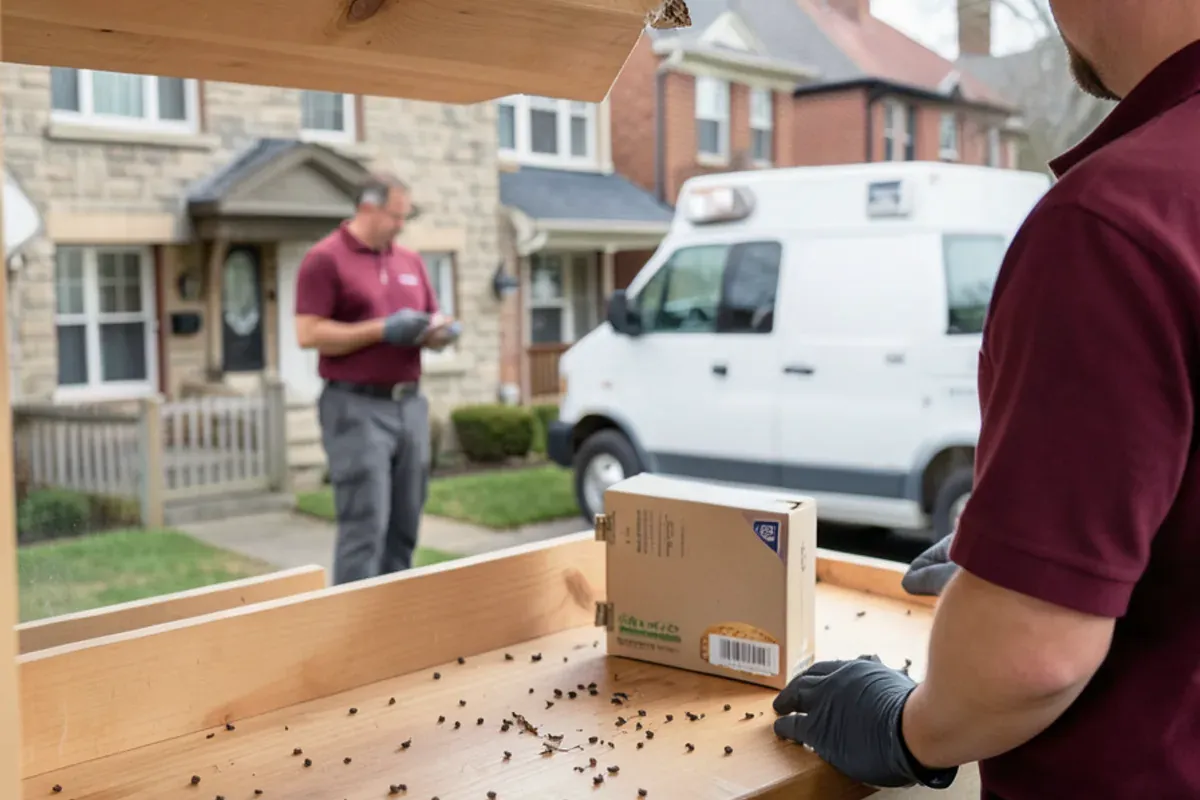
| Droppings | Rice-grain size with pointed ends | Larger, about 3/4 inch, with blunt ends |
| Entry gap | About 1/4 inch, the size of a dime | About 1/2 inch, roughly the size of a quarter |
| Where it shows up | Kitchens, wall voids, attics | Basements, drains, yards with bird feeders, creek-side lots |
How we handle emergency rodent removal on arrival
Listen and look
We start where you saw or heard it, reading droppings, rub marks and gnaw marks to confirm the species.
Deal with the animal in the room
A rodent loose in living space gets handled first, with traps set where it's hiding.
Free inspection for entry points
We check the foundation, utility lines, garage door seals, dryer vents and roofline for gaps.
Written quote
Trapping, sealing and any follow-up visits are spelled out with the price before work starts.
Trap and monitor
Traps go where the inspection points, away from kids and pets, and we come back to check them.
Close the gaps
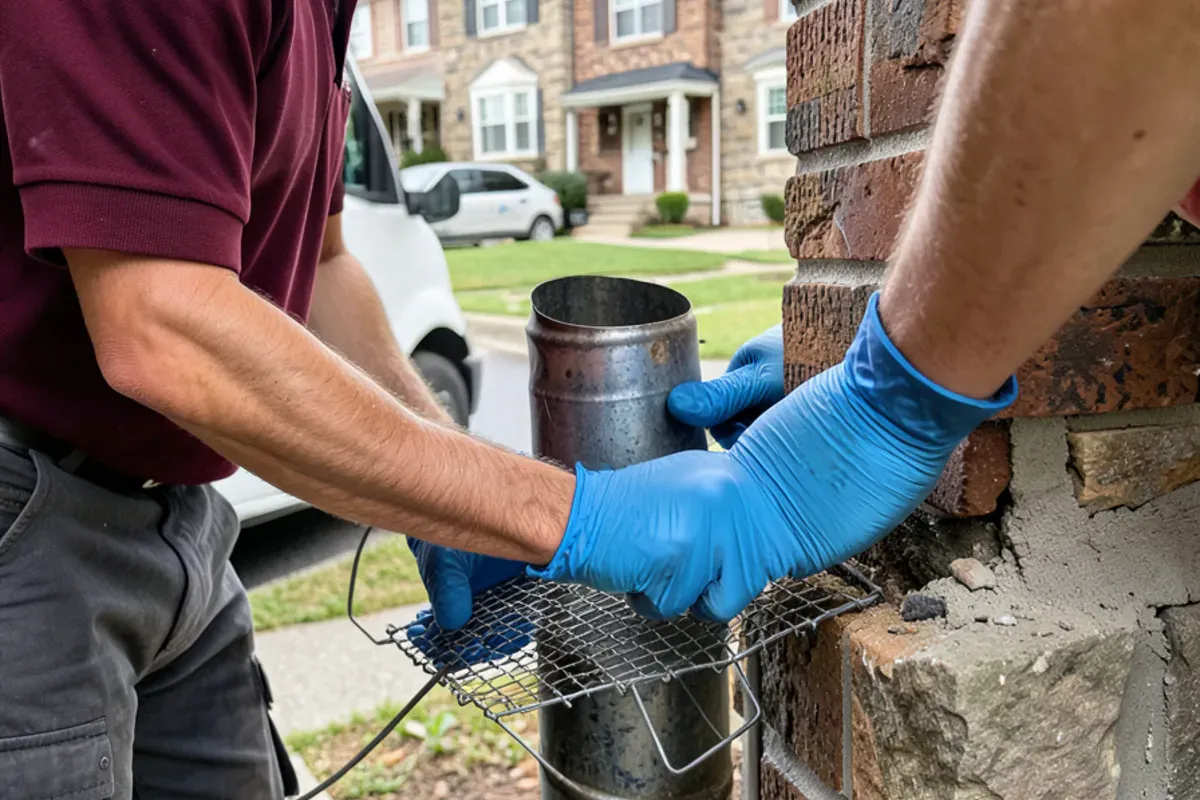
Sealing entry points with materials rodents can't chew through stops the next one. Our rodent exclusion page explains the options.
Talk to us about emergency rodent removal
Call and speak with Thom or his team. The inspection is free, and you get a written quote before any treatment.
- ★ 4.8 from 21 Google reviews
- Open 7 days, 8 a.m. to 7 p.m.
- Free inspection before treatment
- Family-run, based in Media, PA
Open 7 days, 8 a.m. to 7 p.m.
Same-day timing and what shapes the price
Rodent calls follow our regular hours, 8 a.m. to 7 p.m. every day; see how weekend exterminator visits work if the problem turns up on a Saturday. Same-day rodent visits are often possible when the schedule allows, and our same-day exterminator page explains how to improve your odds. We don't work overnight, so a rat that appears at 10 p.m. gets the containment steps above until morning.
After the free inspection, you'll see the price on paper before anything is done. Curious whether urgent timing changes the price? Ask on the call. The quote depends on:
Rats generally take more work than mice: bigger traps, more checks and sturdier sealing at the foundation. A single mouse that came in through a dryer vent can be a short job, while a rat using a broken sewer line or a burrow under the porch slab may need several visits and a plumber’s help.
- Rat or mouse, and how many are active
- The number and type of entry points
- Home size, crawlspaces and attic access
- Follow-up trap checks
- Sealing or dead-animal removal you choose to add
Pennsylvania rules, rodenticide labels and local property codes
Rodent work involves pesticides, so it falls under Pennsylvania’s Pesticide Control Act of 1973. The Department of Agriculture (PDA) licenses pest control businesses and certifies applicators, and you can ask any provider for its PDA business license number. Federal label rules also limit rodent baits sold to homeowners to ready-to-use bait stations, one more reason not to scatter loose pellets in a basement.
Local codes can come into play too. Many Pennsylvania municipalities adopt the International Property Maintenance Code, whose pest elimination section requires buildings to be kept free of rodent infestation and assigns that duty to owners or occupants. Your borough or township code office can tell you which version applies. This is general information, not legal advice.
Dead rodents, odors and prevention
A dead mouse or rat in a wall gives off a strong odor that can linger for a couple of weeks as it dries out. Finding it means tracing the smell and flies to the right stud bay, and reaching it can mean opening a small section of drywall or working from a basement or attic. Call (209) 563-1650 to confirm removal and cleanup options for your property.
For the long term, store food and pet food in sealed containers, keep firewood and bird feeders away from the foundation, and trim shrubs back from the siding. Our main rodent control page covers ongoing programs.

What our emergency rodent removal includes
- Phone guidance to contain the animal before we arrive
- A free inspection to confirm the species and find entry points
- A written quote before any work
- Trap placement targeted at active areas
- Follow-up trap checks
- Recommendations for sealing gaps rodents use
Why call No Bugs Exterminator for emergency rodent removal
Rodents are part of our specialty
Rodent control sits within our specialty, alongside bed bugs and all insect pests.
Every day, 8 to 7
A rat on a Sunday morning is handled the same way as one on a Tuesday.
Gaps, not just traps
The free inspection looks for how rodents got in, so the quote can include sealing as well as trapping.
Media-based
Our office is about 15 minutes from Upper Darby and Chester and about 20 from Lansdowne and Darby.
Reviewed on Google
Google reviewers have given our work an average of 4.8 stars.
Calls answered early
Same-day visits are often possible when the schedule allows — call early in the day.
Where we provide emergency rodent removal
Rodent emergencies follow older housing and water. Lansdowne homes date to a Census (ACS) median of 1943, with Darby Creek along its edge, and Darby shares that creek with trolley-line rowhomes. Yeadon twins run up to Cobbs Creek, and Haverford Township backs onto Darby Creek's wooded banks, where Norway rats find cover close to foundations.
- Upper Darby Township
Rowhome basements from around 1948 connect along shared walls, and a mouse in one kitchen often means activity next door as well.
- Clifton Heights
This former mill borough sits on Darby Creek, and its older foundations near the water give Norway rats easy access to basements.
- Eddystone
Near the Crum Creek mouth on the Delaware River, homes from around 1948 see rats moving in from the waterfront and rail lines.
- Chester
Old rowhomes along the Delaware riverfront, with a median build year of 1949, have aging sewer laterals and basements rats use.
- Upland
Chester Creek runs through this old mill town, where houses from around 1946 have stone foundations and creek-side yards rats burrow into.
- Colwyn
Where Cobbs and Darby creeks meet at the city line, twin homes sit close to the banks Norway rats use for cover.
- Drexel Hill
Brick twins from around 1949 have shared basement walls and old utility entries that mice use to cross between homes each fall.
- Prospect Park
On the Darby Creek side of this rail borough, older twins with fieldstone and block basements get fall mice and the occasional creek rat.
- Springfield Township (Delaware County)
Post-war Cape Cods with garages and bird feeders near Baltimore Pike attract mice and rats once the first freeze arrives.
- Rutledge
Homes in this compact pre-war borough, with a median build year of 1938, sit close together, so mice move easily from lot to lot.
What customers say on Google
4.8 out of 5 from 21 reviews on Google. Quoted as written by customers.
Excellent service, very professional and friendly! Most importantly the results gave me peace of mind! Highly recommended!
Professional service with great results!
Thom is a top-notch pest control specialist! And is one of the most genuine guys in the industry. He came to inspect a situation I had going on at the house, took his time, offered detailed advice, and didn’t take a penny.
Emergency Rodent Removal: common questions
What should I do with a rat loose in the house?
Get people and pets out of that room and shut the door; don't try to corner or grab it, since a trapped rat will bite. If the room opens to the outside, prop that door open and keep the space quiet. Then call us; we'll locate it, trap it and find the gap it used, which in older homes is often near pipes or the foundation.
Is a rat in a toilet an emergency?
Yes, treat it as one. Norway rats are strong swimmers and can travel up sewer lines into a toilet, especially in older plumbing. Close the lid, weigh it down, shut the bathroom door and call. The visit focuses on catching the rat and on how it got into the line, which may also mean calling a plumber about a damaged pipe.
Can you remove a dead rodent from a wall?
In many cases it can be done, depending on where the animal is. We trace the odor, check for flies and stains, and work out the least invasive way in, through an attic, a crawlspace or a small drywall opening. Removal and sanitation are confirmed case by case, so ask on the call whether it's available for your home.
Will poison get rid of the rat faster?
Not in a way you'll like. Bait takes days to work, and the rodent usually dies wherever it hides, often inside a wall or ceiling, which leads to odor and flies. Loose bait also puts pets and children at risk. Traps set by a technician, along with sealing the entry, clear an indoor rodent faster and more cleanly.
How are mice getting into my brick twin?
Usually through dime-sized gaps around pipes, gas and cable lines, dryer vents, and where porches or steps meet the foundation. In twins built in the 1940s and 1950s, mice also move through the shared wall from next door. The free inspection finds these spots, and the quote lists the ones worth sealing.
Related services
Helpful guides from our blog
Ready to get rid of the problem?
Thom and his team serve Media, Delaware County and southeastern Pennsylvania, open 7 days, 8 a.m. to 7 p.m..
- ★ 4.8 from 21 Google reviews
- Open 7 days, 8 a.m. to 7 p.m.
- Free inspection before treatment
- Family-run, based in Media, PA
Open 7 days, 8 a.m. to 7 p.m.