
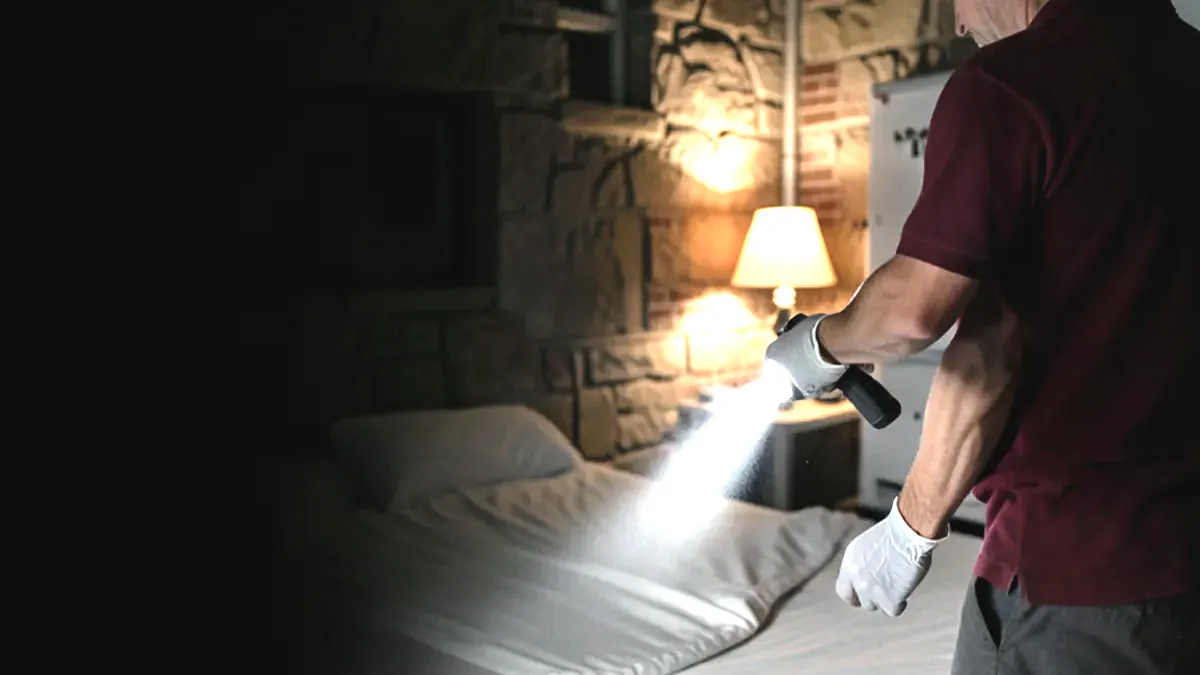
Here is what to do if you find bed bugs tonight: capture one, keep the bedroom closed off, and leave the furniture exactly where it is until someone has inspected it. This guide walks through the next 24 hours, from the moment the light goes on to the moment a technician walks in.
Hour one: is it really a bed bug?
Most of the harm people do to themselves happens in that first panicked night, when mattresses get dragged to the curb and bugs get carried into the next room. So before anything moves, confirm what you caught.
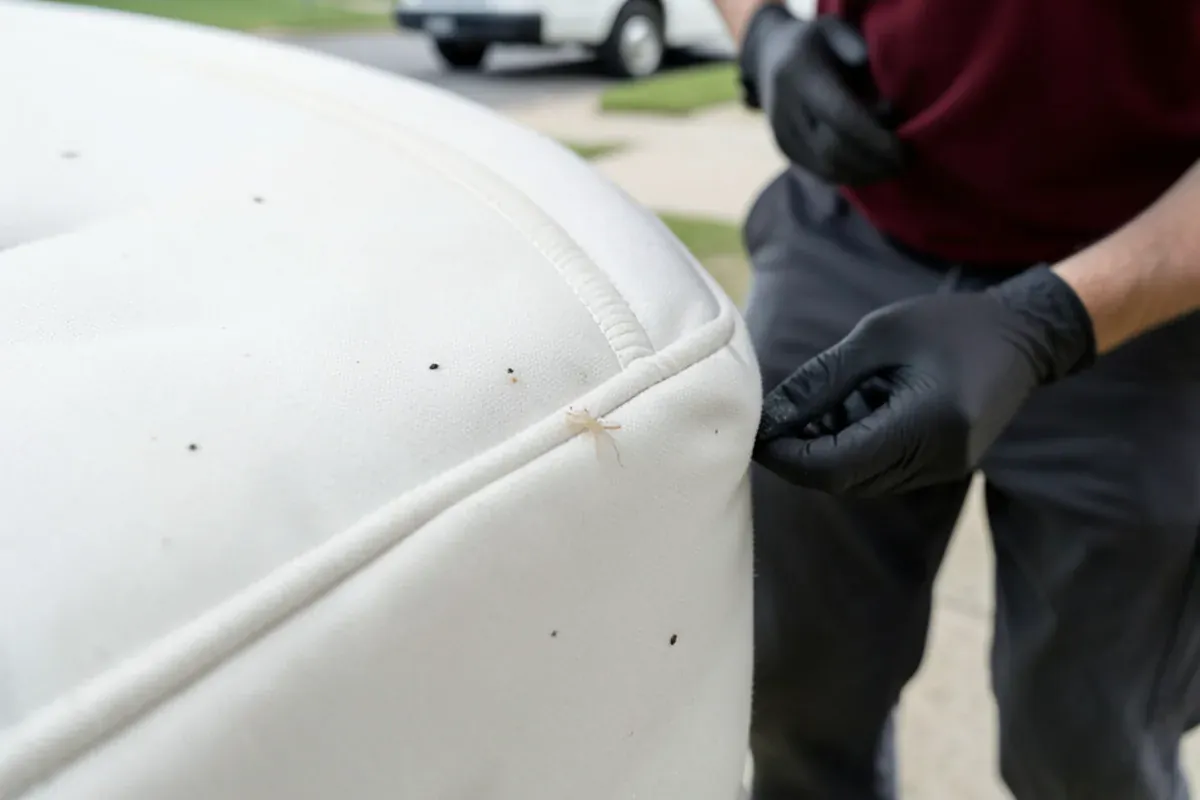
An adult bed bug is flat, oval and reddish-brown, about the size of an apple seed. After a meal it swells and turns darker and more elongated. Young bed bugs (nymphs) are smaller and almost translucent until they feed, which is why many people only notice the adults at first.
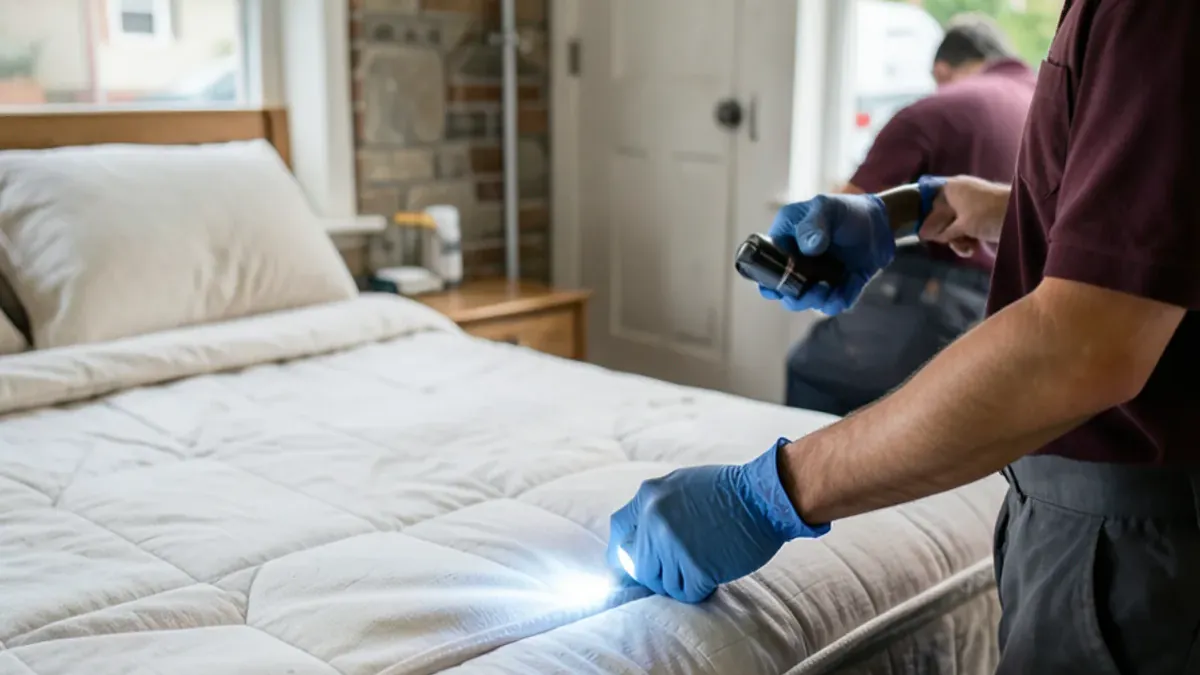
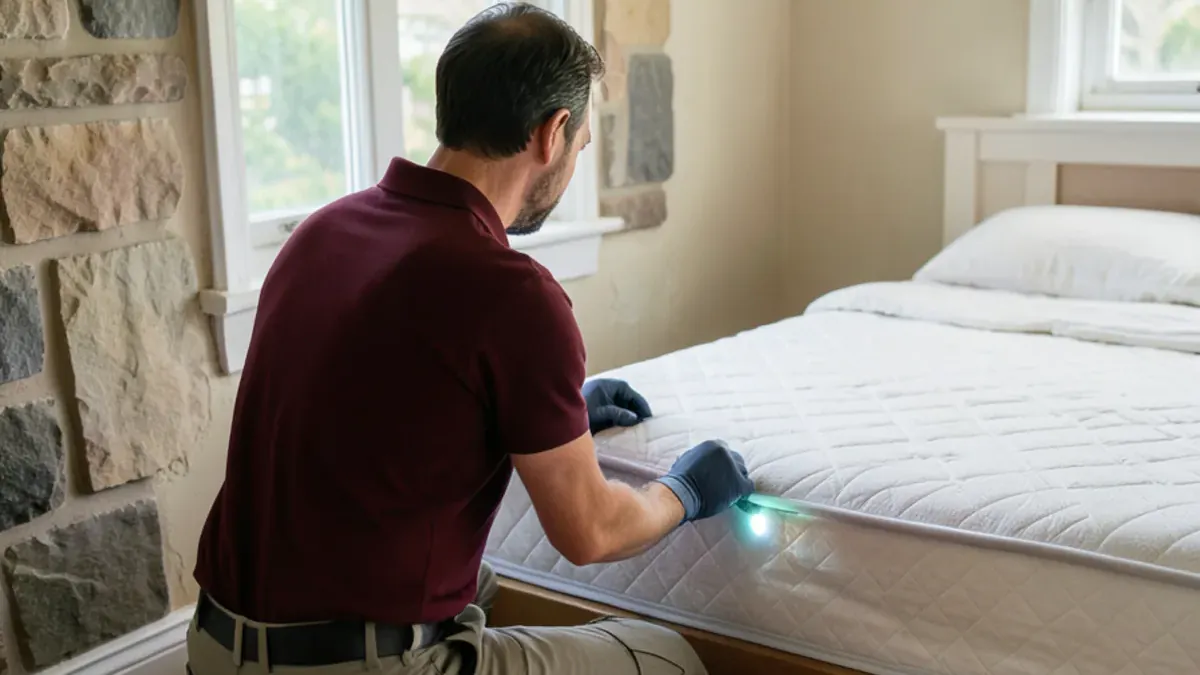
Look along the mattress piping, the box spring corners and the headboard for the clues bed bugs leave behind: rusty or black pinpoint spots, pale shed skins and tiny white eggs glued into seams. A single bite pattern on your arm is not proof on its own, since mosquitoes, fleas and skin reactions can look similar.
Common look-alikes in Delaware County homes include carpet beetle larvae, bat bugs from attics, and swollen ticks carried in from a wooded yard. The fastest way to settle the question is to keep the insect so it can be identified.
What to do if you find bed bugs at night: the first hour
Capture a sample
Press clear packing tape over the bug, or slide it into a sealed zip bag or empty pill bottle. Take a close, well-lit photo as a backup.
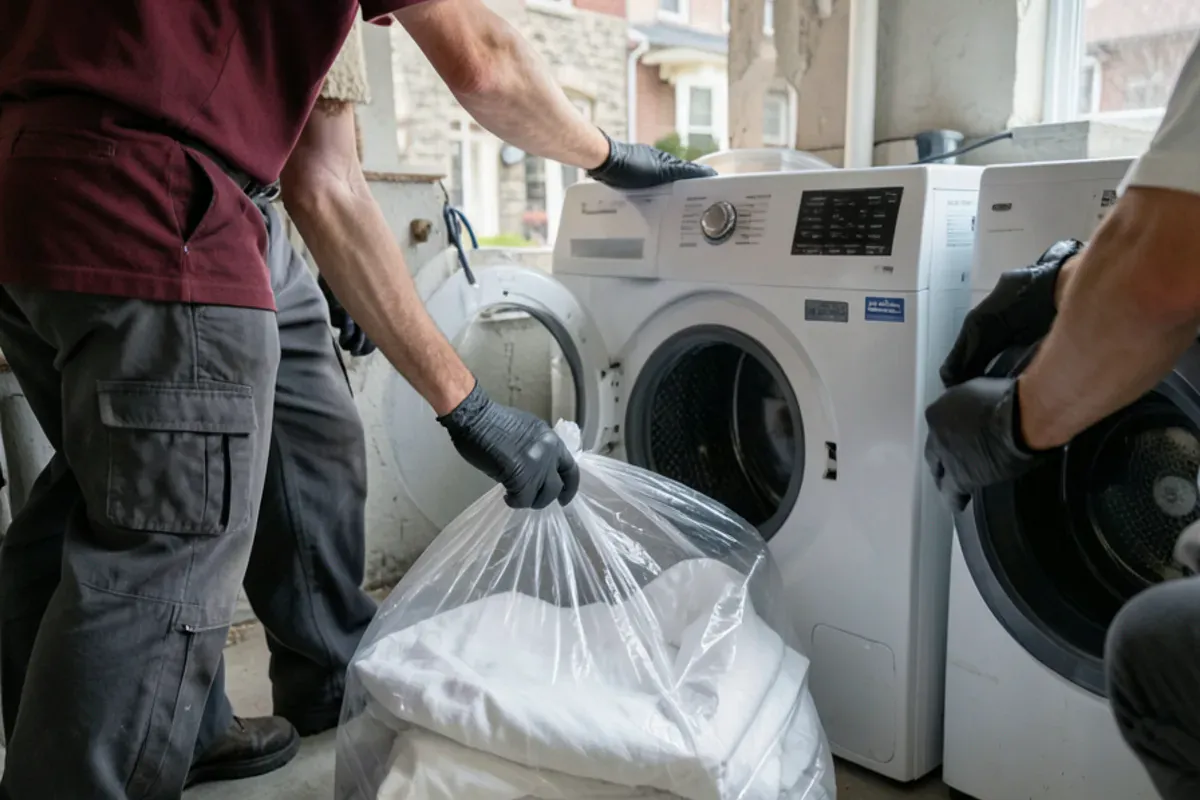
Bag the bedding at the bed
Strip sheets, pillowcases and blankets straight into a plastic bag, tie it shut beside the bed, and carry it directly to the laundry.
Run the dryer hot
Dry the bedding on the highest setting the fabric allows for at least 30 minutes. Heat in the dryer, not the wash cycle, is what kills bed bugs and eggs.
Pull the bed off the wall
Move the frame a few inches out so blankets and the headboard do not touch the wall or nightstand. That cuts off easy climbing routes.
Note where you found it
Write down the room, the spot and the time. That record helps the inspection go straight to the most likely harborage.
Should I throw out my mattress?
Usually not, and certainly not tonight. Carrying an infested mattress through hallways and down stairs shakes bugs and eggs into carpet, door frames and other rooms. A mattress left on the curb can also be picked up by a neighbor, which moves the problem down the street.
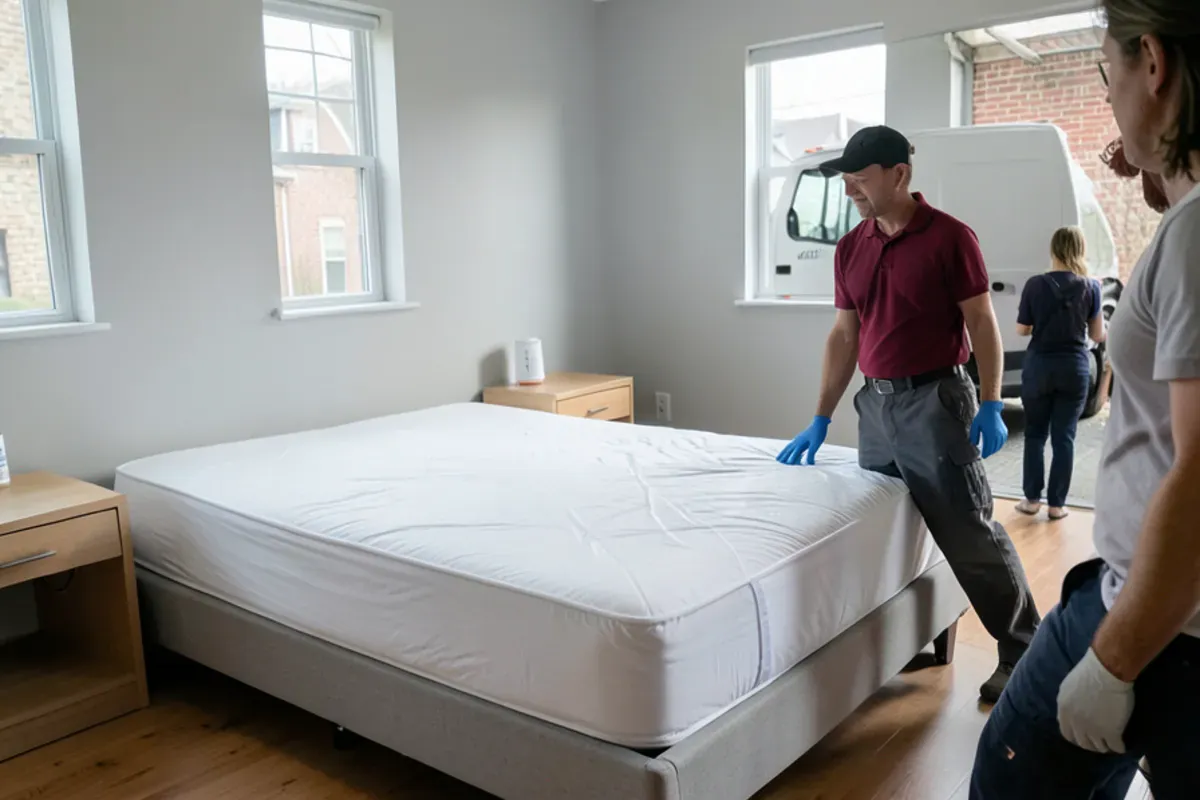
Most mattresses and box springs can be treated, then sealed in zippered bed bug encasements that trap anything left inside and give the bugs no seams to hide in. Replacement makes sense only if the mattress is torn, already due for replacement, or heavily soiled. If you do replace it, wait until treatment has started, wrap the old one in plastic, and mark it as infested before it leaves the house.
What not to do in the first 24 hours
Bed bug emergency mistakes tend to spread the infestation or create a safety hazard. Skip these:
- Setting off foggers or bug bombs, which push bed bugs deeper into walls and outlets and can be a fire risk near pilot lights.
- Dousing the mattress with rubbing alcohol or other flammable liquids.
- Moving to the couch or a child's room, which invites the bugs to follow you to a new sleeping spot.
- Hauling dressers, nightstands or upholstered chairs out of the bedroom before an inspection.
- Packing a bag to stay with relatives without heat-drying the clothes first.
- Spraying store-bought products on every surface, which can make a later professional treatment less effective.
Tonight and tomorrow morning: sleep, laundry and a clean zone
It sounds backward, but the safest plan is usually to keep sleeping in your own bed with fresh, dryer-heated sheets. Bed bugs follow carbon dioxide and body heat, so a person who switches rooms tends to carry the infestation along.
Set up a clean zone: one closet shelf or a sealed plastic tote for clothing that has just come out of a hot dryer. Dress from that tote in the morning so you are not pulling clothes from an infested dresser before work or school.
If you have traveled recently, keep the suitcase zipped and out of the bedroom, ideally in a garage or a bathtub, until it can be checked. Renters should also tell the landlord or property manager in writing the next day, since bed bugs in one unit often reach neighboring units through shared walls.
How quickly can treatment start in Media?
We answer the phone seven days a week from 8 a.m. to 7 p.m. Same-day visits are often possible when the schedule allows, so call early in the morning rather than waiting for the weekend to pass. Our emergency bed bug treatment page explains how an urgent visit is handled from start to finish.
Every job begins with a free inspection, followed by a written quote before any work starts. The inspection confirms whether you are dealing with bed bugs, how many rooms are involved, and which treatment approach fits. You will also get a prep checklist, so laundry, clutter and furniture are handled in the right order. Our bed bug treatment overview covers the methods in more detail, and homes across Media, PA and the surrounding townships are a short drive from our base.
Call (209) 563-1650 with your photo or sample ready; it shortens the first conversation and helps us plan the visit.
What first-night bed bug calls usually reveal
When we inspect a bedroom the morning after a discovery, live bugs are usually clustered within a few feet of where someone sleeps: the mattress piping, the box spring frame, the gap behind the headboard. Early infestations rarely spread far from the bed on their own.
The harder rooms are typically the ones where something was moved or sprayed in a hurry. A fogger set off the night before, a mattress dragged into the hallway, or a couch someone slept on can widen the search from one room to three. Leaving things in place gives the treatment a smaller target.
A taped sample handed over at the door often settles identification in a minute or two, and it changes the whole visit. A carpet beetle larva points the search toward closets and wool rugs; a bat bug points it toward the attic and any old roost, not the mattress. The honest trade-off of the first night is that containment buys time rather than a cure. Hot-dried sheets and a bed pulled off the wall cut down on bites, but eggs already glued into seams keep hatching for a week or two, which is why we plan a follow-up check on bed bug jobs instead of calling one visit the end.
Quick answers
Can I sleep in my bed if I just found bed bugs?
Yes, in most cases you should. Put on freshly dried sheets, pull the bed away from the wall and keep blankets off the floor. Moving to another room or a sofa tends to spread bed bugs to a second sleeping area, which makes the inspection and treatment larger. Keep sleeping in place until a technician has looked at the room and given you a prep plan.
Do I need to wash every piece of clothing in the house tonight?
No. Focus on bedding and the clothes kept in or near the affected bedroom. The dryer on high heat for at least half an hour is what matters; washing alone does not reliably kill eggs. The rest of the house can wait for the inspection, which tells you which rooms actually need laundry and which can be left alone.
Is finding one bed bug a sign of a big infestation?
Not necessarily. One bug can be a recent hitchhiker from travel, a dorm or a used piece of furniture, or the first visible sign of a small, growing population. A careful inspection of the bed, the furniture beside it and nearby baseboards is the only way to tell which, and it is the first step of every bed bug visit we make.
What should I do with my kids' backpacks and stuffed animals tonight?
Run them through a hot dryer cycle. Most stuffed animals, fabric backpacks and soft lunch bags tolerate 30 minutes on high, which kills bed bugs and eggs hidden in seams. Items that cannot take heat can go into a sealed bag until the inspection. Then keep the clean ones in a tote outside the bedroom, so a backpack does not carry a bug to school or to a grandparent's house in the morning.
The bottom line
The first 24 hours are about containment, not cleanup: keep the evidence, keep the room in place and keep the bugs from traveling. Once that is done, a free inspection and a written quote turn a scary night into a plan, and we are glad to help you take that next step.
Sources
Written by the No Bugs Exterminator team
A small, family-run pest control business in Media, PA, led by owner Thom. We write about what we see on inspections in Delaware County and southeastern Pennsylvania. About us.
Services mentioned in this guide
Want a professional opinion?
Book a free inspection and get a written quote before any treatment.
- ★ 4.8 from 21 Google reviews
- Open 7 days, 8 a.m. to 7 p.m.
- Free inspection before treatment
- Family-run, based in Media, PA
Open 7 days, 8 a.m. to 7 p.m.