
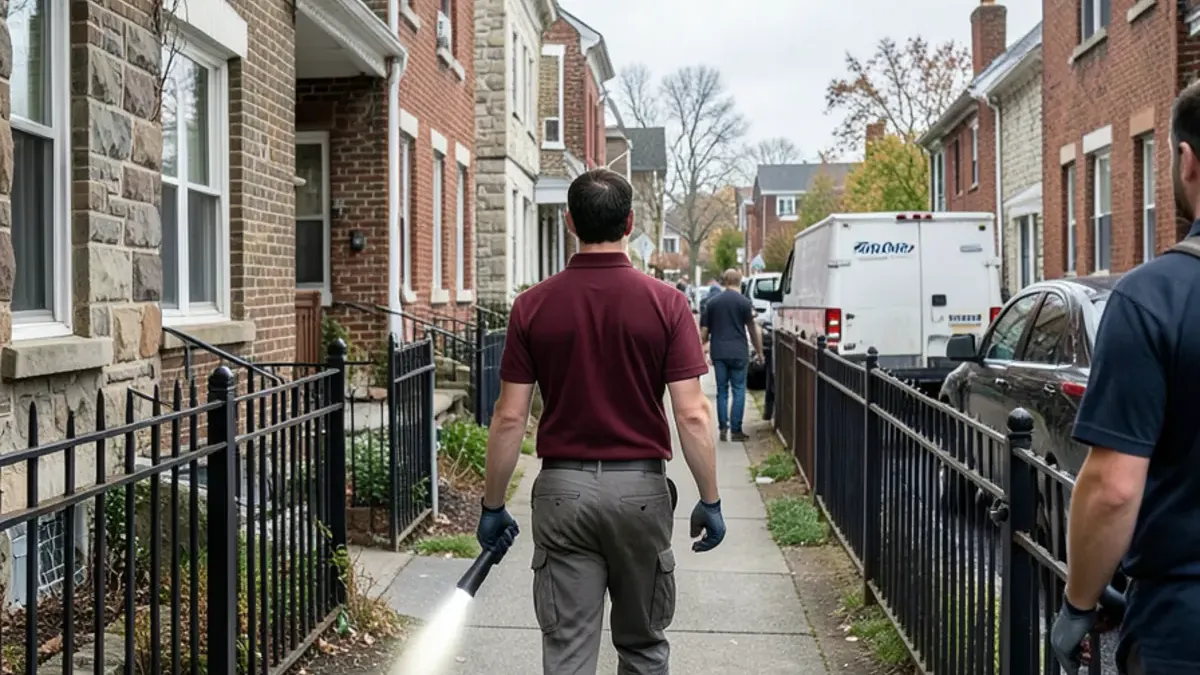
Rats in Delaware County, PA are not a new arrival from the city; Norway rats have lived in the region's older neighborhoods for generations. What changes is where they show up, and that follows conditions: open food, standing water, shelter and ground disturbed by construction or sewer work. Fix those, and rats move on or die out; ignore them, and a single burrow becomes a colony within a season.
Are there more rats in Delaware County, PA than there used to be?
We cannot point to a reliable count of rats in the suburbs, and anyone who quotes one should be asked where it came from. What we can say is that the conditions rats need are common in inner-ring neighborhoods: dense housing close to transit and commercial corridors, older sewers, alleys with shared trash storage, and backyards with bird feeders, compost and pet food.
When something disrupts an established population, such as a demolition, a road project or a sewer replacement, rats scatter into nearby yards. Homeowners on the next block suddenly see them for the first time, and it feels like an invasion even though the population simply moved.
What draws Norway rats into older suburban neighborhoods?
Norway rats need three things within a short distance of each other: food, water and a place to burrow. These are the attractants we find most often in yards and alleys:
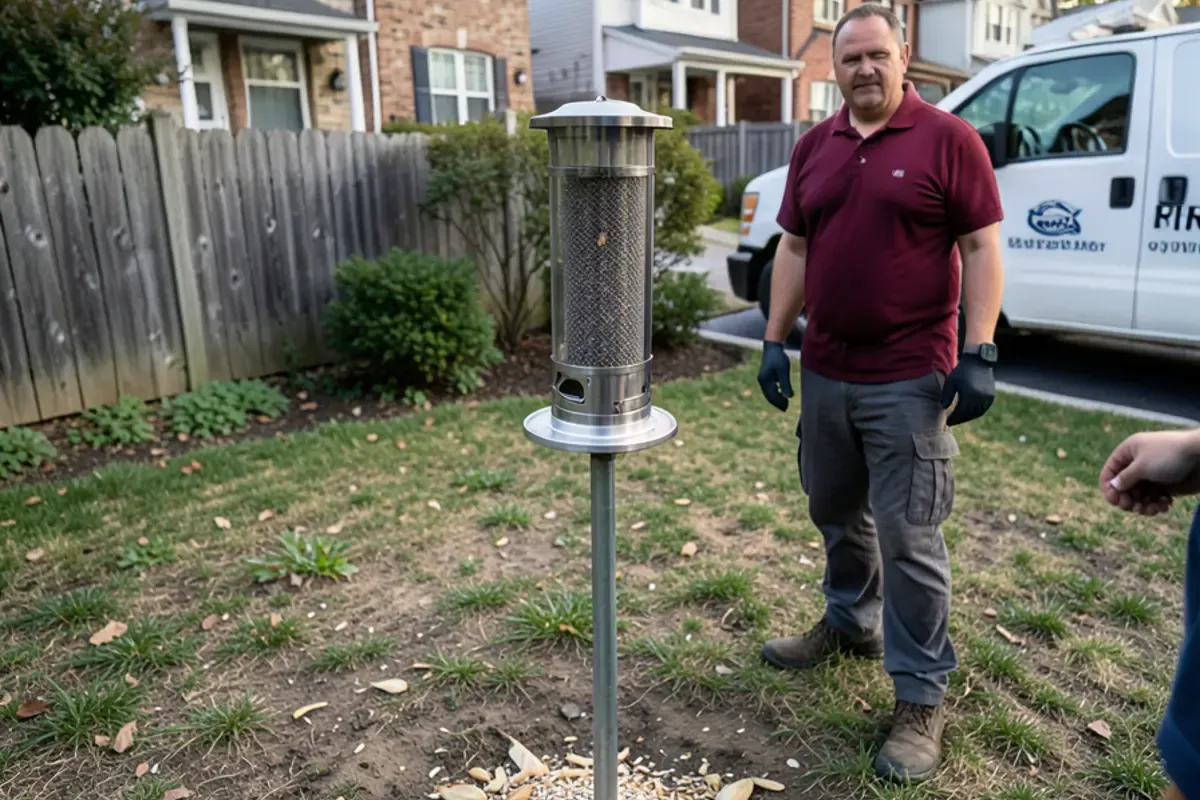
- Bird feeders and the seed that collects on the ground below them
- Open compost piles, especially with kitchen scraps
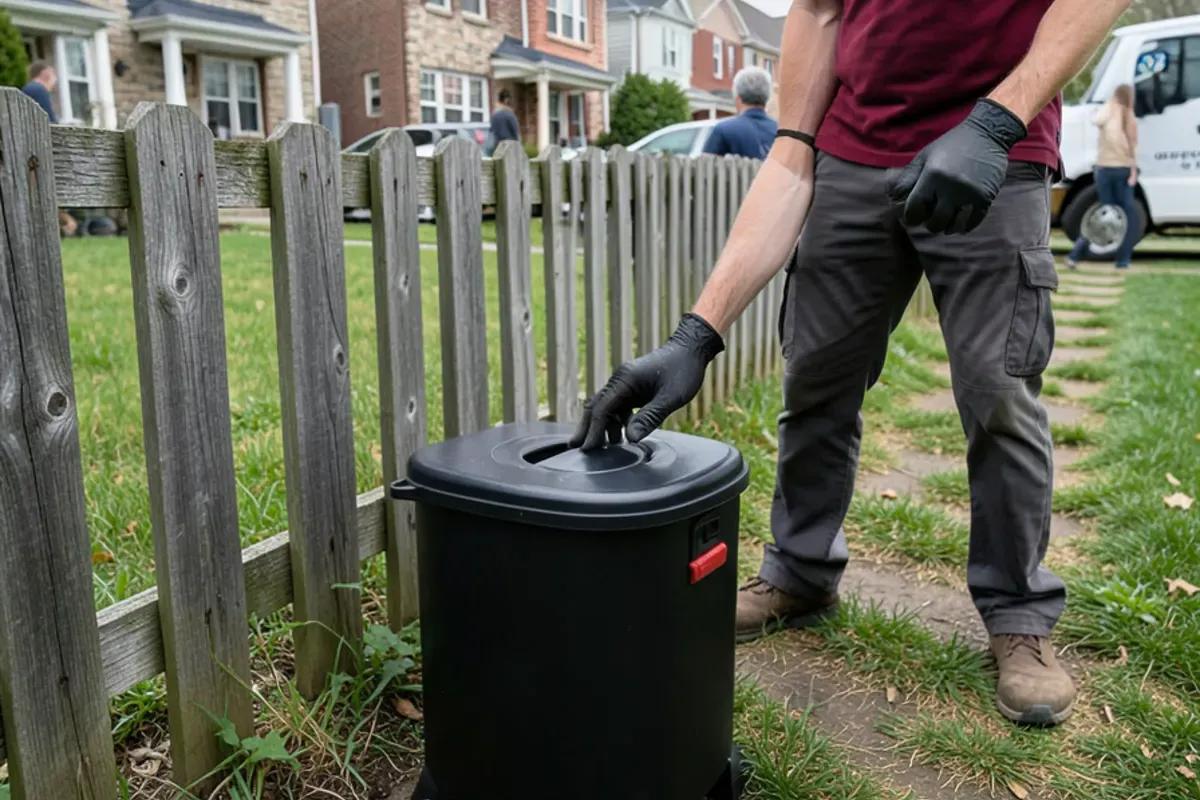
- Trash cans without tight lids, or bags left out overnight
- Pet food bowls left outside and dog waste in the yard
- Backyard chickens and their feed
- Woodpiles, overgrown shrubs and clutter beside sheds and garages
- Leaking spigots, clogged gutters and low spots that hold water
Rat burrows and other signs rats are in your yard
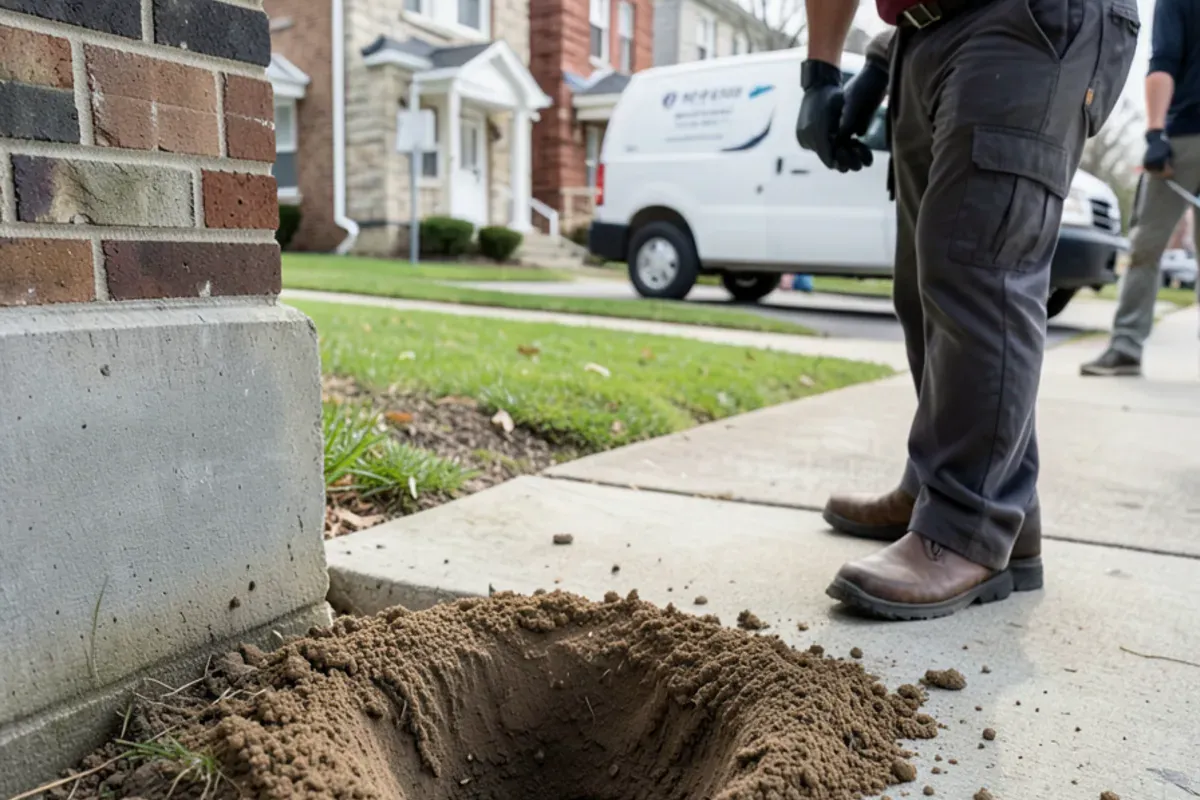
Norway rats dig. Burrow entrances are usually a few inches across, with smooth, packed edges and a fan of loose soil spilled outside. You will find them along foundations, under concrete slabs and stoops, beneath sheds and decks, and at the base of fences and shrubs. An active burrow has no cobwebs or leaves across the opening.
Other signs include droppings about three-quarters of an inch long with blunt ends, greasy rub marks along walls and fence lines where rats travel, gnaw marks on wooden doors and plastic bins, and well-worn paths through grass. Rats are also cautious of new objects, which is one reason a trap set yesterday often sits untouched.
Norway rat or house mouse? How to tell
The two need different approaches, so it helps to know which one you have:
| Feature | Norway rat | House mouse |
|---|---|---|
| Adult size | Large, heavy body, tail shorter than the body | Small, slender, tail as long as the body |
| Droppings | About three-quarters of an inch, blunt ends | Rice-sized, pointed ends |
| Smallest gap | About half an inch, roughly a quarter coin | About a quarter inch, roughly a dime |
| Nesting | Burrows in soil outside; lower floors and basements inside | Inside walls, cabinets, attics and stored items |
| Behavior | Wary of new objects, travels set routes | Curious, investigates new things quickly |
| Sounds | Heavier thumping and gnawing | Light scratching and pattering |
When do rats show up most in Delaware County yards?
Norway rats breed all year when food and shelter hold out, and one female can raise several litters in a year, so a handful of rats in April can be a colony by October. The seasons mostly change where you notice them.
- Spring: new burrows open along foundations and under sheds as the ground thaws, and freshly turned garden beds get dug into.
- Summer: activity spreads to vegetable gardens, fallen fruit, compost and grills, with rats moving at dusk along fence lines.
- Fall: as gardens finish and nights cool, rats work closer to buildings, and gnawing at garage and basement doors picks up.
- Winter: rats that got inside stay in basements, crawlspaces and wall voids near heat. Outside, tracks in snow lead straight to the burrow or gap.
Rats after construction and sewer work
Large building projects, demolition and sewer or water line replacement are among the most common triggers for sudden rat activity in an established neighborhood. Digging and vibration break up burrows, and loss of the old food source sends rats looking for new ones nearby.
If a project is starting near you, tighten up before it begins: secure trash, take bird feeders down for a while, clear clutter from beside the house and seal any foundation gaps. It is far easier to keep displaced rats from settling in than to remove them after they do.
Rats in a shared alley: why one yard cannot fix it alone
On attached-home blocks, rats rarely belong to one property. A burrow under one garage can feed on trash from three houses down, and trapping on a single lot often just opens room for rats from next door. Results come faster when neighbors work on the same conditions during the same few weeks.
- Agree on a trash routine: lidded cans, nothing bagged on the ground, cans pulled back in after pickup.
- Take bird feeders down across the block for a season, not just at one house.
- Report a vacant lot or empty house with open trash or overgrowth to the township or borough code office. Many Pennsylvania municipalities enforce a property maintenance code that addresses rodent harborage.
- Tell each other where burrows appear, so traps or bait stations go on the runways rats actually use.
- If a storm drain or sewer cleanout looks like the source, report it to the municipality's public works department rather than baiting next to it yourself.
What shuts rats down
Remove the food
Take away feeders, secure trash and compost, bring pet food in, and clean up fallen fruit and seed.
Remove the shelter
Clear clutter and woodpiles from beside the house and trim shrubs up off the ground so burrows are exposed.
Reduce the population
Use traps or tamper-resistant bait stations placed along runways, away from children, pets and wildlife.
Seal the building
Close gaps of half an inch or more around foundations, doors, vents and utility lines with metal and mortar.
Monitor and follow up
Check burrows after treatment by lightly filling them with soil; reopened burrows mean rats are still active.
Rat calls along Upper Darby's border with the city
Upper Darby borders West Philadelphia, has the 69th Street Terminal at its center, and roughly half its homes were built by 1948, per Census (ACS) estimates. Many blocks have attached homes with shared back alleys. When we inspect for rats here, the source is usually not a single house but a shared alley, a cluster of trash cans or a vacant property nearby, so we look at the whole block, not just one yard.
Inside homes, the common entry points are gaps around old basement windows, worn door thresholds at the rear of the house and openings around sewer and water lines. We handle rat control throughout Upper Darby Township, and when the entry is inside the house, our rodent exclusion service closes it permanently.
Quick answers
Is it a bad sign if I see a rat during the day?
Often, yes. Norway rats are mostly active at night, so daytime sightings usually mean the local population is large enough that some rats are pushed out by competition, or that a food source is very easy to reach. It is a good moment to look for burrows along foundations, sheds and fences and to secure trash and feeders.
Can rats get into the house through the toilet or sewer lines?
It is uncommon but possible, especially in older buildings with damaged lines or open floor drains. More often, rats come in through basement gaps, worn doors and openings around pipes. If you see signs inside near a floor drain or toilet, mention it during the inspection so we can check the plumbing entry points too.
Should I fill in a rat burrow myself?
You can, as a test, but not as a fix. Kick loose soil into each opening and look again the next day; reopened holes are active and show where traps or bait stations belong. Filling alone does not remove rats, which simply dig back out. Wear gloves, keep away from droppings, and never pour gasoline or other chemicals into burrows beside a foundation.
Do rats in my yard mean they are inside the house too?
Not necessarily. Many Norway rats live entirely outdoors in burrows under sheds, decks and stoops, feeding on seed and trash. They come inside when a gap of about half an inch lets them, usually at a worn basement door, an old window frame or a pipe opening. Gnawing low in the house, droppings in the basement or a greasy line along a wall mean they have.
The bottom line
Rats in the suburbs follow food, water and shelter, and they leave when those are taken away. If you are seeing burrows or droppings, call (209) 563-1650 and we will inspect the property and the conditions around it.
Sources
Written by the No Bugs Exterminator team
A small, family-run pest control business in Media, PA, led by owner Thom. We write about what we see on inspections in Delaware County and southeastern Pennsylvania. About us.
Services mentioned in this guide

Want a professional opinion?
Book a free inspection and get a written quote before any treatment.
- ★ 4.8 from 21 Google reviews
- Open 7 days, 8 a.m. to 7 p.m.
- Free inspection before treatment
- Family-run, based in Media, PA
Open 7 days, 8 a.m. to 7 p.m.