
Signs of Mice in Walls, Attics and Kitchens
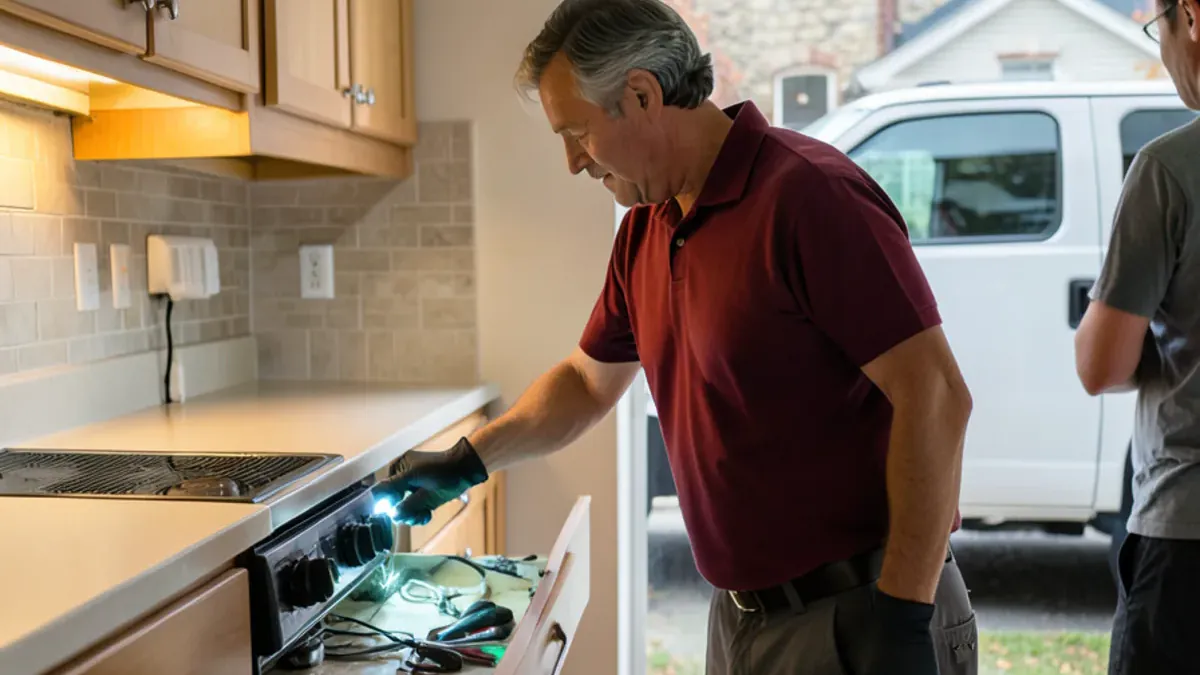
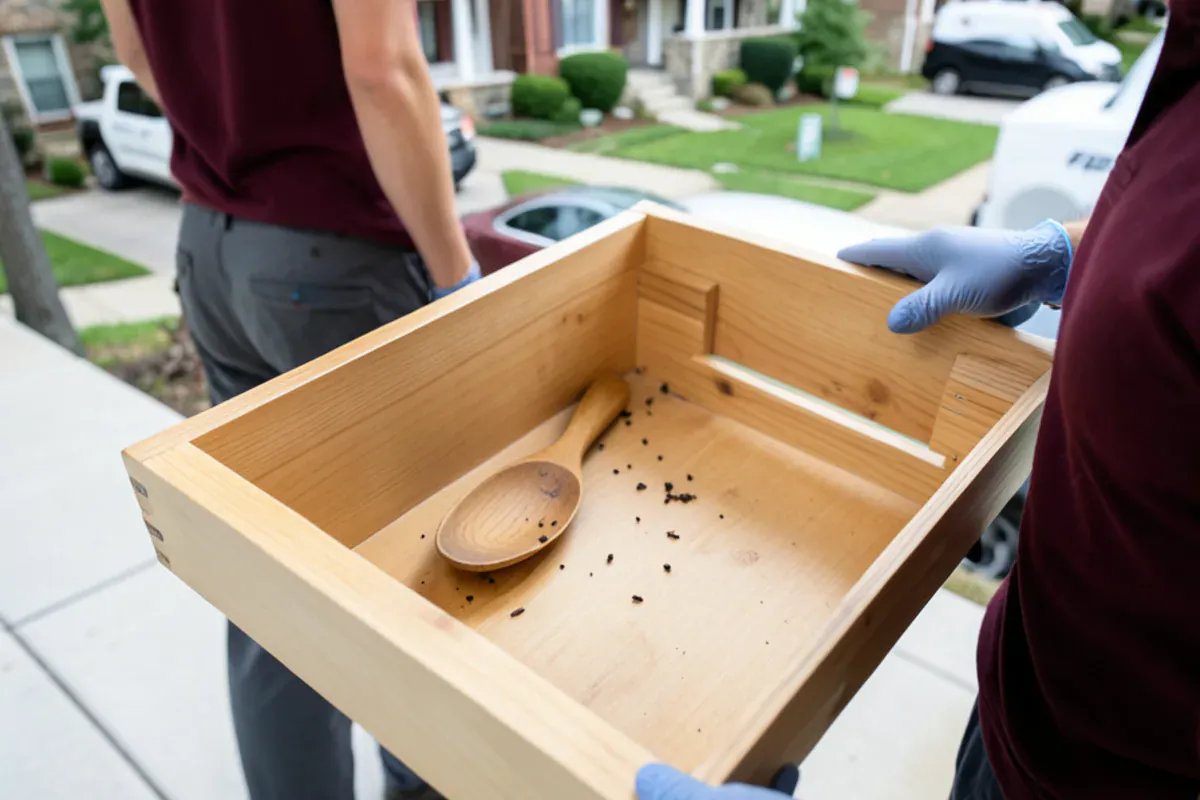
Mouse droppings are the giveaway: dark, rice-sized pellets with pointed ends, scattered in drawers, along the back of the stove or on top of basement sill plates. Fresh ones are soft and shiny; old ones turn gray and crumble.
Sound is the next clue. Mice in walls make light scratching or skittering noises at dusk and before dawn, while mice in the attic tend to rustle through insulation above bedrooms. You may also find chewed cereal boxes, small holes gnawed in drywall corners, shredded paper towels or a faint musky smell in a closed cabinet.
Where the signs turn up tells us how the mice are travelling. Droppings on top of the basement sill plate and along hot-water pipes point to a foundation entry, while droppings on attic floorboards and flattened insulation over a bedroom ceiling point to the roofline. In the older twins common around Drexel Hill and Upper Darby, signs on one side of the party wall usually mean the neighbor's half has mice too.
Why Fall Brings Mice Into Delaware County Homes
House mice and field mice spend summer outdoors, but the first freezing nights send them toward heated buildings. A mouse needs a gap only about 1/4 inch wide, about the diameter of a dime, so a loose mortar joint or a gap around a gas line is plenty.
Older homes give them more options. Fieldstone and block foundations in twins built before 1950 lose mortar over time, and the party wall between two halves of a twin often has open voids where pipes and wires run. On wooded lots near Ridley Creek State Park and the Crum Woods, white-footed and deer mice also wander into garages and attics, especially where firewood or birdseed is stored.
How We Track Mice Back to Their Entry Points
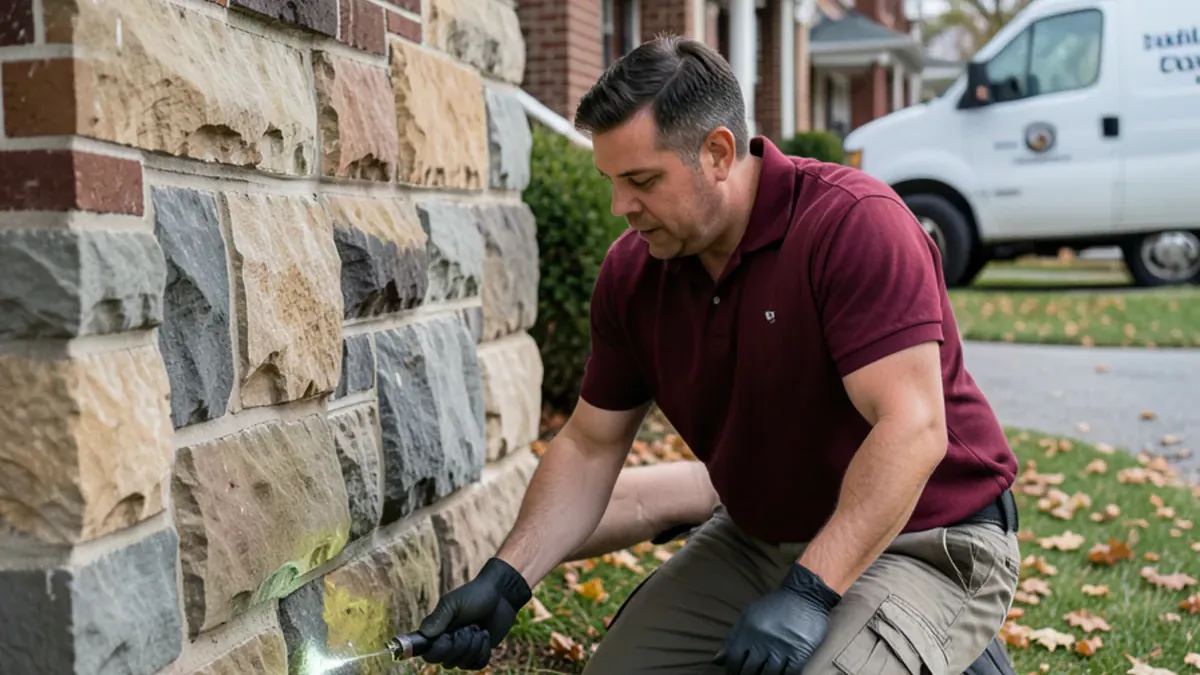
We read the evidence the mice leave behind. Droppings cluster near food and nesting spots, gray rub marks show a regular runway along a wall, and gnawing on wood or plastic tells us where they are trying to get through.
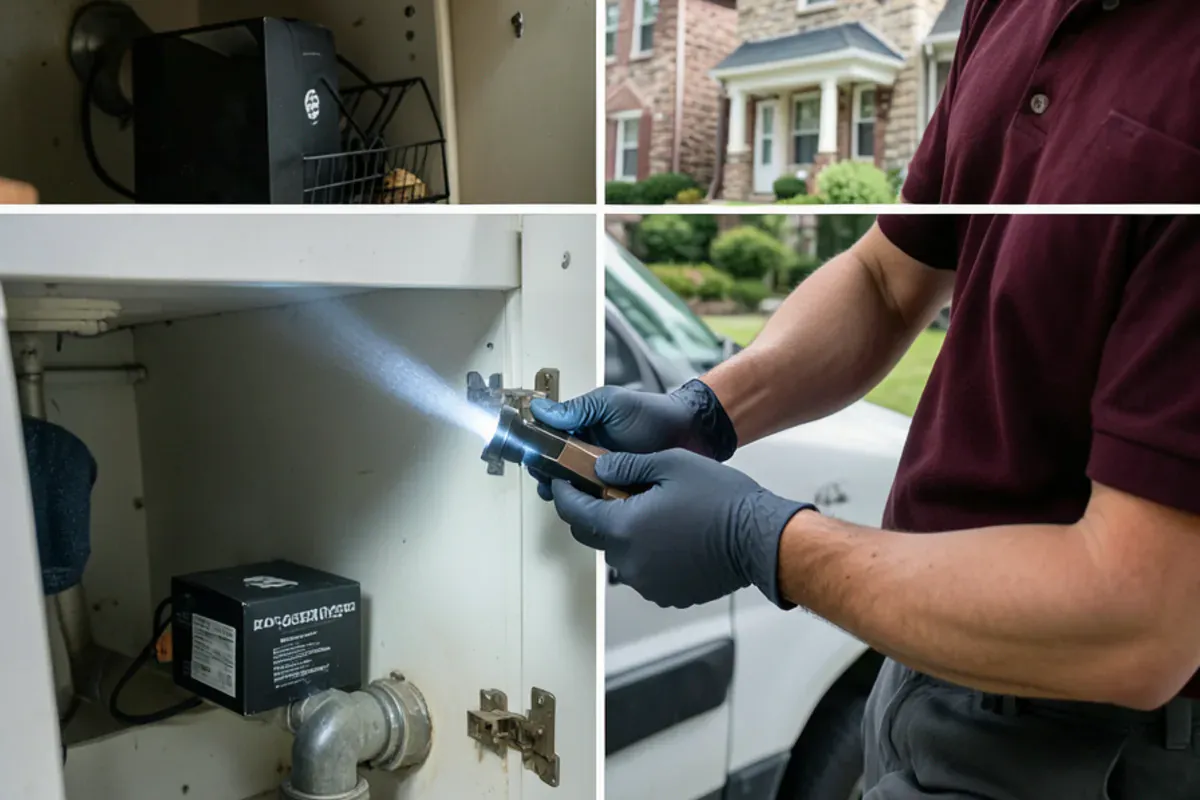
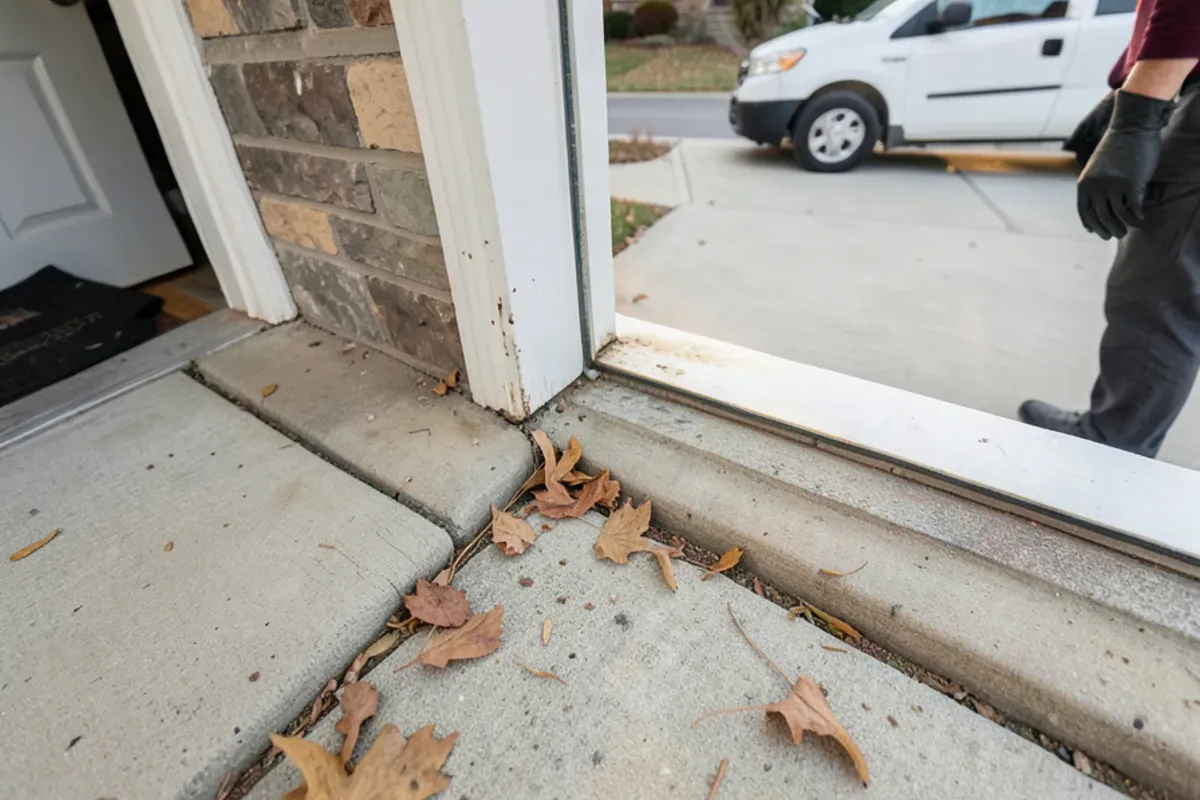
From there we work outward to the exterior, checking the foundation, utility penetrations, garage door seals, dryer vents and the gap where siding meets the foundation. The goal is a written map of where the mice live inside, how they travel and which gaps need sealing.
Traps or Bait Stations: Which Mouse Removal Method Fits?
Every method has a place, and most homes get a combination.
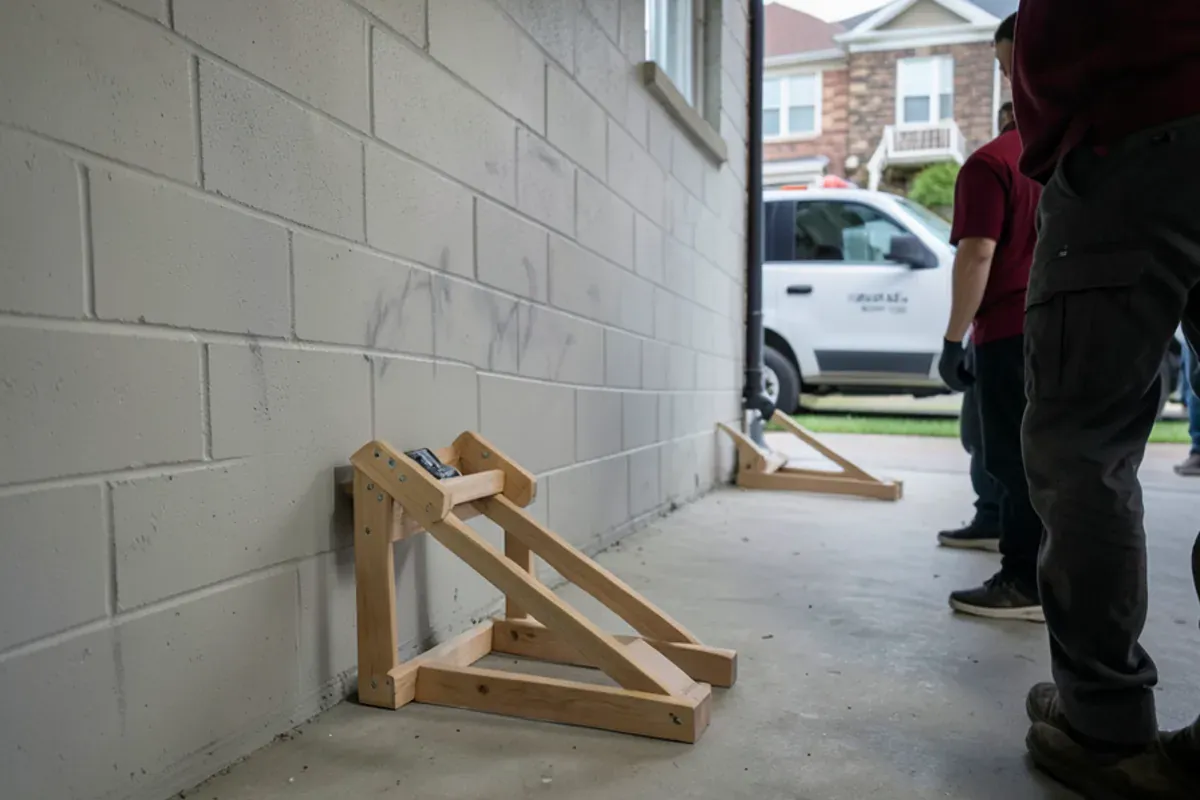
- Snap traps — our usual choice inside living areas; quick, poison-free and they leave no hidden carcass, though they need checking.
- Multiple-catch traps — low boxes that hold several mice, useful along basement walls with heavy traffic.
- Tamper-resistant bait stations — locked stations outdoors or in crawlspaces where label directions permit; effective on larger numbers but slower, and a mouse may die out of reach.
- Glue boards — rarely used; they are inhumane for the animal and can catch pets or children's fingers.
- Sealing gaps — the step that turns a short-term fix into a lasting one.
Your Mouse Exterminator Visit, Step by Step
Walk-through
We go room by room with you, noting droppings, gnaw marks and the rooms where you have heard or seen mice.
Exterior check
We circle the foundation and look up at the roofline for gaps around pipes, vents and corners.
Written quote
You get the plan in writing: device placement, entry points and the number of follow-ups we expect.
Device placement
Traps go along walls, behind appliances and in cabinets; any bait stays in locked stations out of reach.
Gap sealing
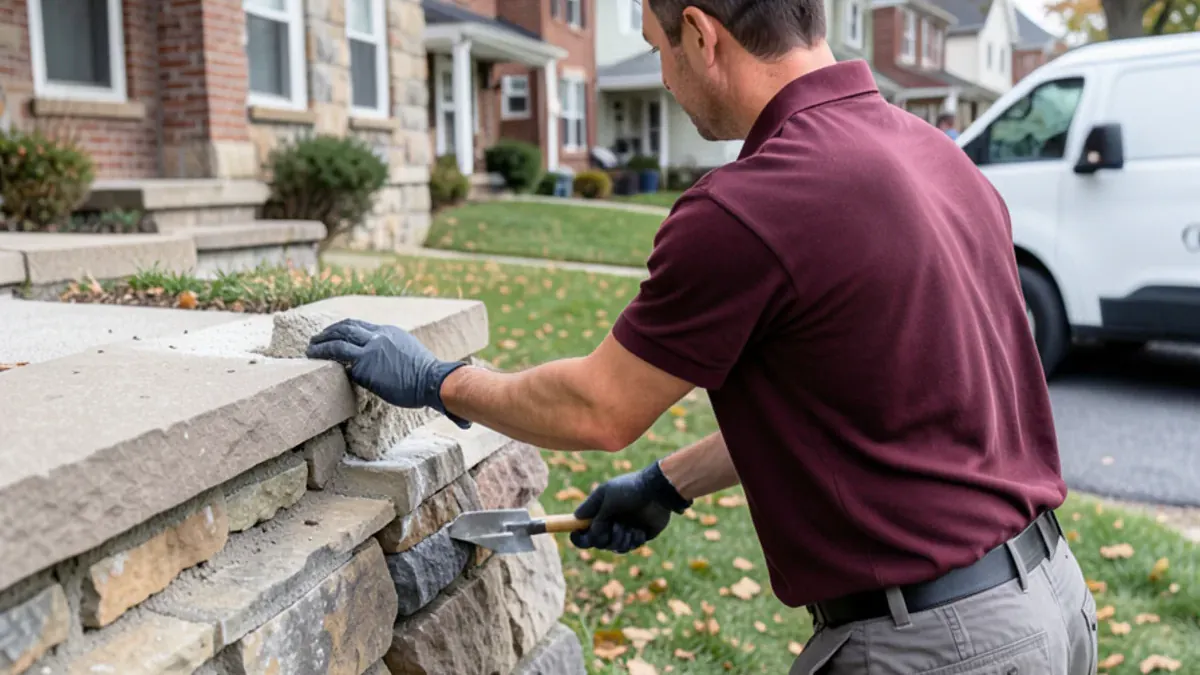
We close entry points with metal mesh, sealant or mortar patching, leaving no easy way back in.
Return visits
We remove caught mice, reset traps and look for fresh droppings until the activity stops.
Talk to us about mouse control
Call and speak with Thom or his team. The inspection is free, and you get a written quote before any treatment.
- ★ 4.8 from 21 Google reviews
- Open 7 days, 8 a.m. to 7 p.m.
- Free inspection before treatment
- Family-run, based in Media, PA
Open 7 days, 8 a.m. to 7 p.m.
How Long Does It Take to Get Rid of Mice?
In a typical home, catches are highest in the first few days, then taper off over one to three weeks. Mouse populations grow fast — a female can have a litter every few weeks — so a home with months of activity takes longer than one with a few new arrivals.
Afterward, expect to clean up droppings in cabinets and drawers, wash affected dishes and throw away chewed food. Where nesting has soiled insulation or a large area, our page on rodent cleanup and sanitation explains what is involved.
What Changes the Cost of Mouse Control
Mouse control is priced from the inspection rather than a flat rate, because the number of openings varies so much between houses on the same street. A 1970s split-level in Aston with a tighter foundation may need only a few utility penetrations closed, while a pre-war twin can need patching along the full stone foundation plus attention at the party wall.
Timing changes the job as well. A call in late August, before the fall surge, usually means fewer mice to trap and fewer return trips than a call in January after a family has bred inside the walls. Your written quote breaks out each of these items.
- How many rooms or floors show activity.
- Whether mice are in the attic, wall voids or only the basement.
- The number of gaps found and the materials needed to seal them.
- Foundation type: fieldstone and old block usually need more patching.
- Twins and rowhomes, where activity can come through the party wall.
- How many follow-up visits it takes to see zero activity.
Pennsylvania Law on Mouse Bait, Labels and Rental Units
Professional mouse baits are pesticides, and the Pennsylvania Department of Agriculture (PDA) oversees who applies them for hire under the Pesticide Control Act of 1973. PDA licenses pest control businesses and certifies applicators, and 7 Pa. Code § 128.31 puts a business's license number on its service vehicles, so it is fair to ask any company for it. The product label carries legal weight too, which is one reason bait inside a home stays in locked stations.
Renters have another layer. Pennsylvania courts recognize an implied warranty of habitability in residential leases (Pugh v. Holmes, 1979), and many leases spell out whether the landlord or the tenant handles routine mice. Read your lease before booking. This is general information, not legal advice.
Keeping Mice Out After the Last Trap Is Empty
Mice return to the same house if the openings stay open. Full rodent exclusion seals the foundation, vents and utility lines so the next cold snap does not bring a new group in. If you see larger droppings or burrows in the yard, it may be rats instead; compare the signs on our rat control page.
Simple habits help too: keep birdseed and pet food in sealed bins, store firewood away from the house and stack basement boxes on shelves rather than the floor.
What our mouse control includes
- Free room-by-room inspection for droppings, nests and runways
- Exterior check of the foundation, utility lines and roofline
- Written quote with a placement plan and expected follow-ups
- Snap traps and multiple-catch traps placed along runways
- Locked bait stations where label directions allow
- Closing dime-sized gaps at the foundation, vents and utility lines
- Return trips to clear caught mice and reset traps until activity stops
Why call No Bugs Exterminator for mouse control
We work in old houses daily
Our Media base puts us among the stone-foundation twins and older Delaware County homes where mice find the most gaps.
A plan you can read
After the free inspection you receive a written quote, so you know exactly what we will do about the mice.
Open 7 days
Our phone is answered seven days a week, 8 a.m. to 7 p.m., so a Saturday mouse sighting does not have to wait until Monday.
Same-day when there's room
Same-day visits are often possible when the schedule allows — call early in the day, especially in the October and November rush.
Where we provide mouse control
Mice show up all over our area each fall, but the reasons differ. In Drexel Hill, brick twins from the late 1940s share walls and basements. Post-war Cape Cods in Springfield often have gaps at the sill plate and garage. Homes in Upper Providence and Edgmont back onto Ridley Creek State Park, where field mice move from the woods straight into attics.
- Haverford Township
Havertown's 1950-era homes line Darby Creek's wooded banks, so mice move from the creek corridor into basements and attached garages once nights turn cold.
- Upper Providence Township (Delaware County)
Wooded lots backing onto Ridley Creek State Park and Rose Tree Park put field mice a few yards from garages, sheds and firewood stacks.
- Edgmont Township
Newer subdivisions beside the state park have tighter foundations, so mice here more often slip in at garage door corners and roofline gaps.
- Marple Township
Early-1960s homes around Lawrence Park and the Broomall strip tend to have block foundations, dryer vents and utility lines where mice get inside.
- Aston Township
Split-levels from the 1960s and 1970s near the Chester Creek valley have half-buried lower levels where mice enter along sill plates and garage walls.
- Nether Providence Township
Wallingford and Garden City homes along Crum Creek beside Smedley Park see field mice leave the creek woods for warm basements every fall.
- Rose Valley
Homes set in deep woods around Hedgerow Theatre give mice a short trip from leaf litter and woodpiles to foundations and attics.
- Woodlyn
Post-war houses off MacDade Boulevard, with a 1957 median build year, often have settled foundations and utility gaps that admit mice each October.
- Brookhaven
Ranch homes and garden apartments off Edgmont Avenue let mice travel between units, so we check shared utility runs and laundry rooms.
What customers say on Google
4.8 out of 5 from 21 reviews on Google. Quoted as written by customers.
Excellent service, very professional and friendly! Most importantly the results gave me peace of mind! Highly recommended!
Professional service with great results!
Thom is a top-notch pest control specialist! And is one of the most genuine guys in the industry. He came to inspect a situation I had going on at the house, took his time, offered detailed advice, and didn’t take a penny.
Mouse Control: common questions
How small a gap can a mouse fit through?
A mouse can squeeze through an opening about 1/4 inch wide, roughly the size of a dime. If its head fits, the body follows. That is why we check small openings such as gaps around gas lines, cracked mortar joints in stone foundations and the corners of garage doors, which homeowners often overlook.
How many mice do I have if I see one?
Seeing one mouse usually means there are more you have not seen. Mice are mostly nocturnal and stay hidden, so a sighting in daylight often signals a larger group or a disturbed nest. Counting fresh droppings in several rooms and catches during the first few days gives us a far better estimate than a single sighting.
How long does it take to clear mice?
Most homes go quiet within one to three weeks once traps are working and the main gaps are sealed. Heavier or longer-running infestations, or attached homes where mice move through a shared party wall, can take longer. We keep returning until traps stay empty and no fresh droppings appear, and your written quote states the expected number of visits.
Will mice leave on their own in spring?
Generally, no. Once mice find food, water and a warm nest inside, they have no reason to move out when the weather warms, and they keep breeding year-round indoors. Some field mice drift back outside, but house mice usually stay. Removing them and sealing the entry points is the reliable fix.
Are mice in the attic handled differently from mice in the basement?
Somewhat. Attic mice often climb in at the roofline, through gaps at soffits, gable vents or where a porch roof meets the wall, so the exterior check goes higher. Basement mice usually come in at the foundation. Traps are placed along attic rafters or beams, and soiled insulation may need cleanup once activity stops.
Related services

Helpful guides from our blog
Ready to get rid of the problem?
Thom and his team serve Media, Delaware County and southeastern Pennsylvania, open 7 days, 8 a.m. to 7 p.m..
- ★ 4.8 from 21 Google reviews
- Open 7 days, 8 a.m. to 7 p.m.
- Free inspection before treatment
- Family-run, based in Media, PA
Open 7 days, 8 a.m. to 7 p.m.