What Each Seasonal Visit Includes
Breeding sites change after every storm, so each stop repeats the same checklist before anything is applied.
- A walk of the yard for new standing water in gutters, tarps, toys and low spots
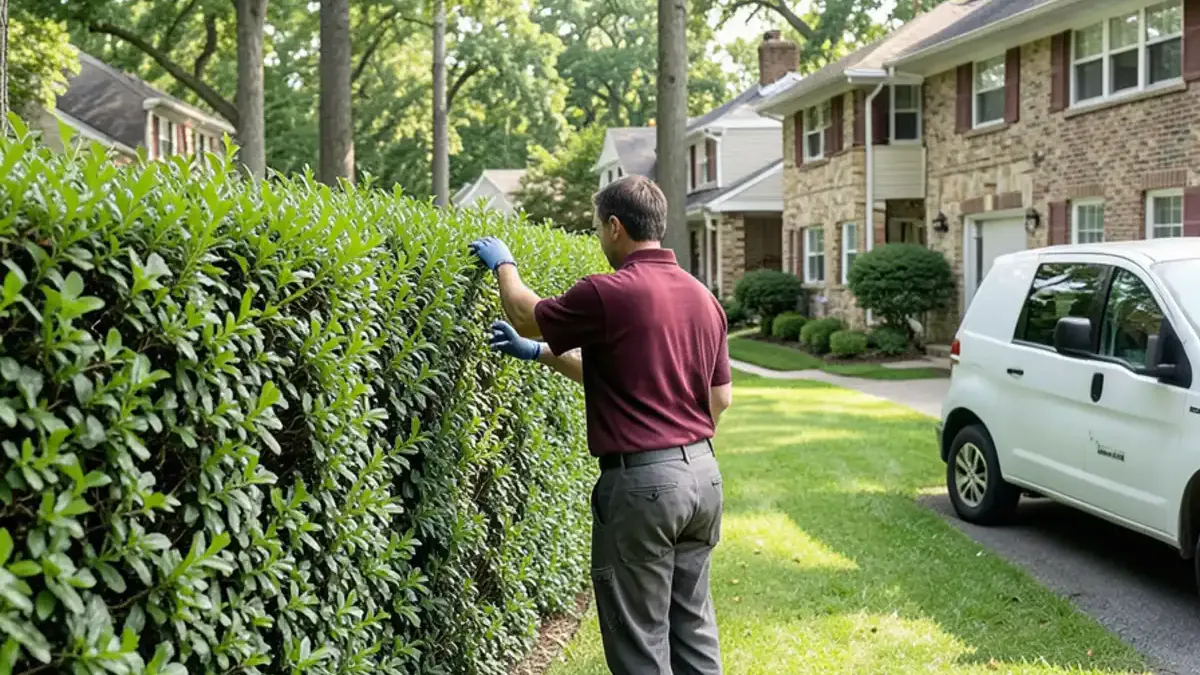
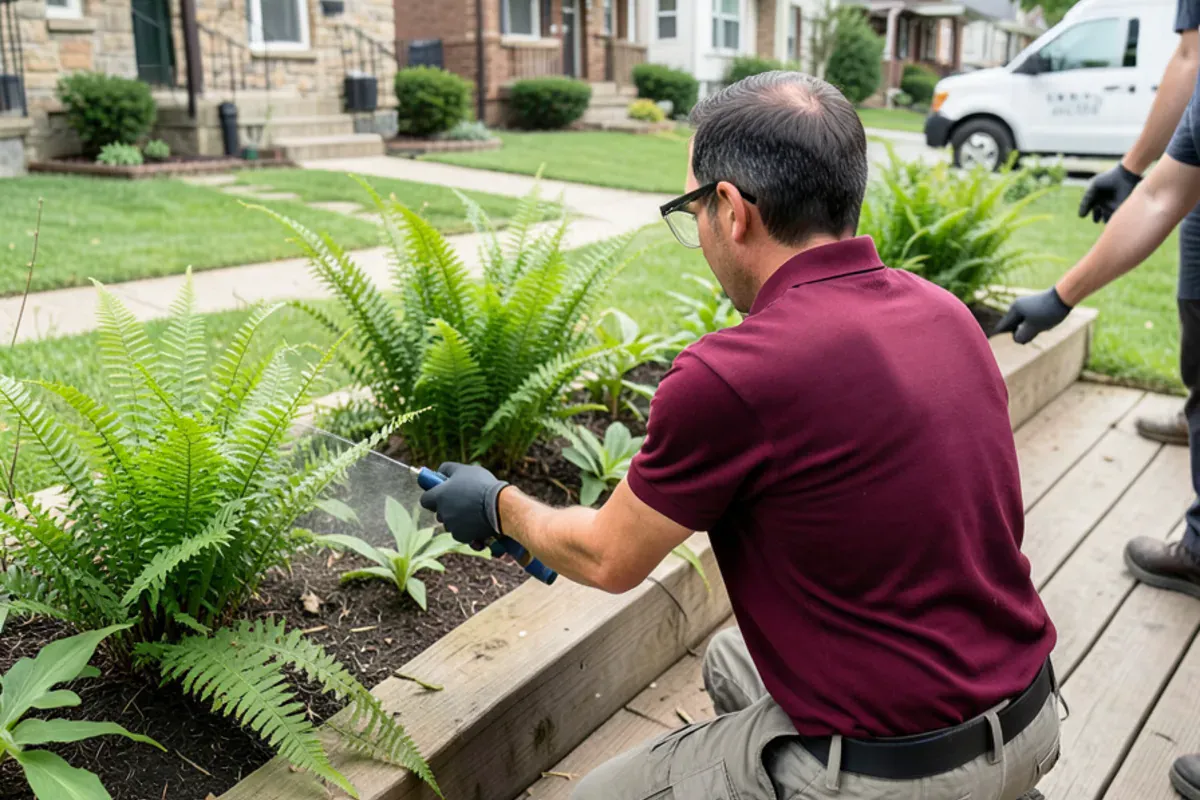
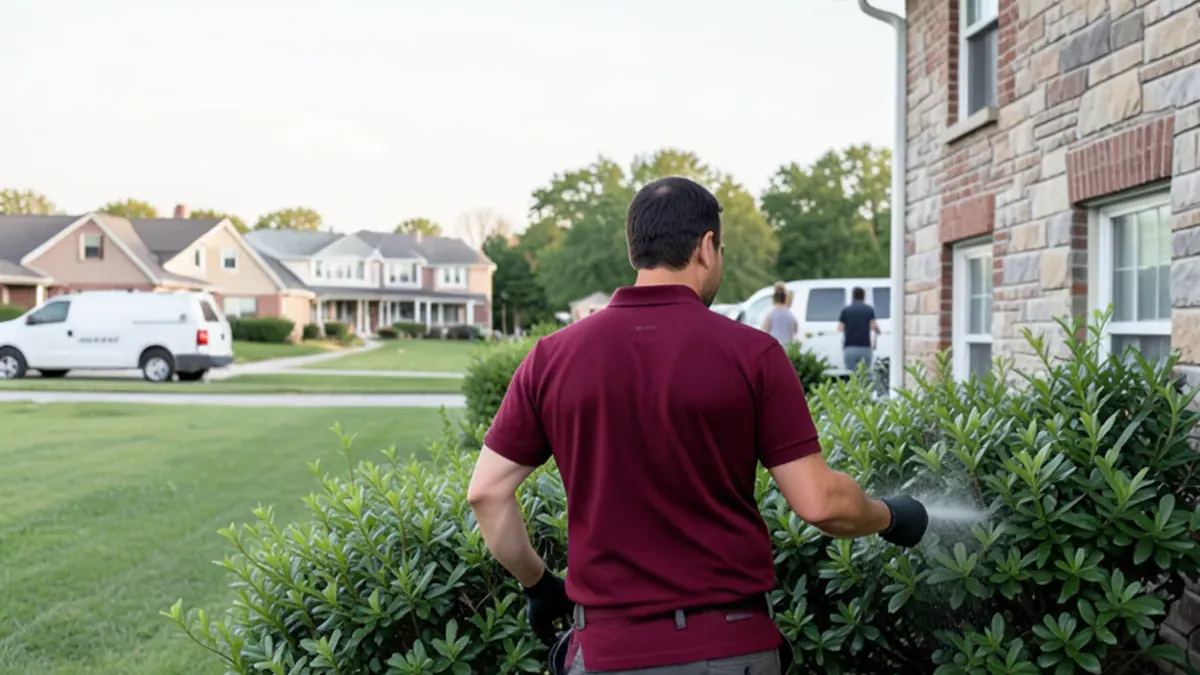
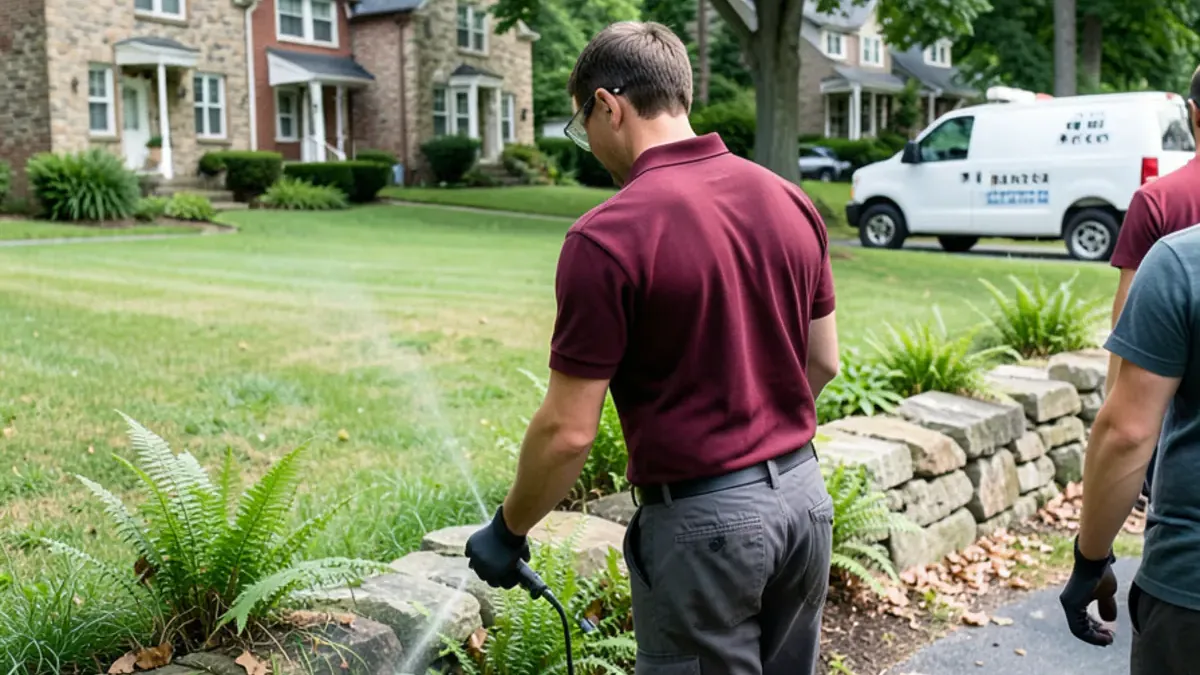
- Barrier spray on the undersides of shrub and low tree leaves, where mosquitoes rest by day
- Treatment under decks and porches, behind sheds and along fence lines
- Larvicide in catch basins, French drain outlets or ponds that cannot be emptied
- Blooms, vegetable beds and pollinator plantings left untreated
- A short visit note listing what was treated and anything to fix before the next stop
Seasonal Mosquito Program or One-Off Spray: How the Options Compare
Here is how a scheduled program compares with the other choices people ask about, including an installed misting system, listed only for reference.
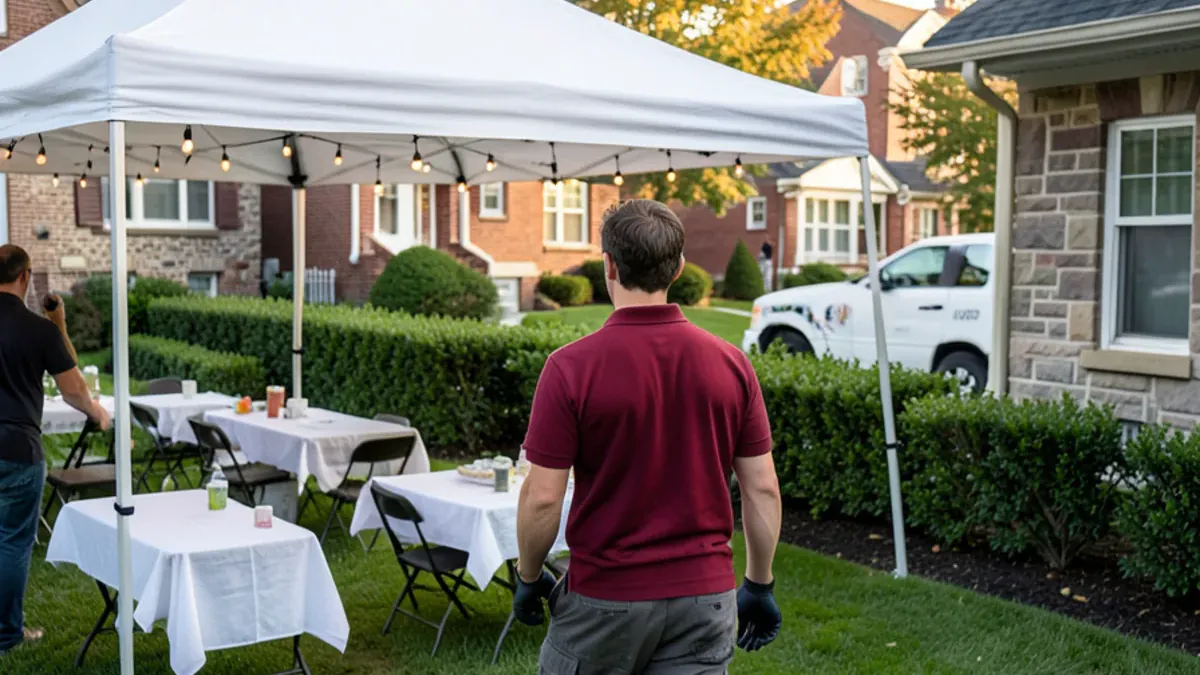
If you only need one evening covered, our special event mosquito spray is timed to the date of a party instead of the calendar.
| Option | Frequency | Suits | Trade-off |
|---|---|---|---|
| Seasonal barrier program | About every three weeks, May to early fall | Households that use the yard all summer | Needs a full-season commitment |
| One-time backyard spray | Once | A short spell of heavy biting | Fades after roughly three weeks |
| Event spray | One or two days before a gathering | Graduations, cookouts, small weddings | Covers the occasion, not the season |
| Botanical rotation | About every two weeks | Owners who prefer plant-oil products | Shorter residual, more visits |
| Installed misting system | Timed nozzles, several times daily | Reference only | Sprays on a timer whether or not mosquitoes or bees are present |
How a Program Season Runs, Visit by Visit
Free inspection
We map shrub beds, wood lines, drainage and anything that holds water, and mark plants that stay untreated.
Written quote and calendar
You get a written quote and a proposed visit schedule for the season before the first spray.
Opening visit in May
The first barrier goes down as nights warm up, ahead of the first big hatch.
Repeat visits
We return about every three weeks, rechecking water sources and reapplying before the previous barrier wears thin.
Midsummer adjustment
In July and August, when heat speeds up breeding, we look at whether shady corners or a neighbor-facing fence line need extra attention.
Closing visit
The final application lands in September or early October, and we note what to fix over the winter before next season.

Why Does a Scheduled Barrier Spray Beat Waiting Until Bites Get Bad?
Mosquito numbers build in waves. By the time a yard feels unbearable, several generations have already hatched in gutters and containers nearby, and one spray only resets the clock. Reapplying on a set interval means each new wave lands on treated foliage before it can settle in.
The schedule also forces a regular look at water, so a tarp full of rain or a clogged downspout gets caught on the next visit.
Local weather explains the timing. Delaware County summers bring repeated thunderstorms, and each one refills gutters, tarps and low spots in the lawn; after a week of July heat, those spots are producing adults. Yards beside Crum, Ridley or Chester creeks also catch mosquitoes drifting up from the bottomland, so late July through August is when untreated yards usually turn worst and a missed visit is felt fastest.
Talk to us about mosquito yard treatment
Call and speak with Thom or his team. The inspection is free, and you get a written quote before any treatment.
- ★ 4.8 from 21 Google reviews
- Open 7 days, 8 a.m. to 7 p.m.
- Free inspection before treatment
- Family-run, based in Media, PA
Open 7 days, 8 a.m. to 7 p.m.
What a Mosquito Yard Spray Can't Do
A barrier treatment does not seal a property. Mosquitoes breeding next door will still fly in, though many rest on treated leaves first. A downpour within an hour or two of an application can wash some product off.
Because we skip blooms to protect bees and butterflies, heavily flowered beds get less coverage than plain foliage. A shrub spray also does not reach the leaf litter at the wood line where ticks wait; that needs separate tick control aimed at the ground layer.

What Determines the Price of a Season?
Season pricing is set after the inspection and written into your quote. The factors that move it most are:
Shape matters more than acreage. A half-acre Thornbury lot that is mostly open lawn can take less time than a small Lansdowne yard wrapped in hedges, ivy and a shaded fence line, because the barrier goes on foliage where mosquitoes rest, not on grass.
Start date and length shift the total as well: a program that opens in early May and runs into October has more visits than one booked in July after biting has already peaked.
- Linear feet of hedge, shrub bed and wood line to be treated
- Number of visits in the season and when it starts
- Larvicide for ponds, drains or catch basins
- Optional add-ons such as mosquito stations or tick edge treatment
- Access: steep banks, fenced dog runs, thick ivy
- Conventional or botanical product choice
Pesticide Notification Rules for a Season-Long Program in Pennsylvania
Repeated spraying over a season brings Pennsylvania's notification rules into play more often than a single visit does. Under the Pesticide Control Act of 1973, the Pennsylvania Department of Agriculture (PDA) licenses the business and certifies whoever applies the product, and PDA's Pesticide Hypersensitivity Registry lists residents who have asked to be told before nearby outdoor applications. If a registered neighbor lives close by, each program visit may call for advance notice to them.
Homeowner associations and condo boards can add their own rules about spraying common areas, so check those documents before booking a program for a shared yard. You can also ask any provider for its PDA business license number, which 7 Pa. Code § 128.31 requires on service vehicles. This is general information, not legal advice.
Mosquito Stations and Other Add-Ons
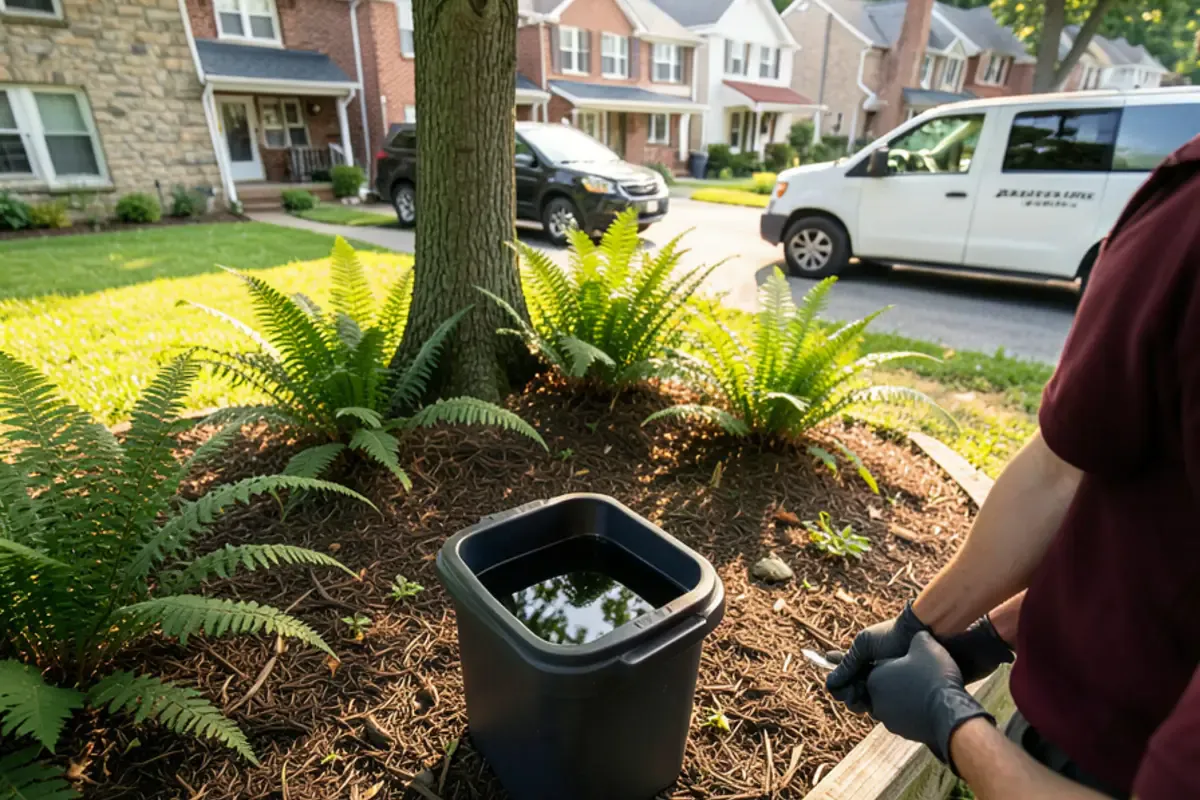
Some programs pair the spray with small dark containers of water dosed with a larvicide. Female mosquitoes that land to lay eggs pick up particles and carry them to other breeding spots, including hidden ones in hollow trees or a neighbor's clogged gutter. Ask whether stations make sense for your yard, particularly on shaded lots near a creek.
Tick treatment of the woods edge and a fall lanternfly egg check can share a program visit.
What our mosquito yard treatment includes
- Free inspection and a mapped list of breeding and resting sites
- Written quote with a proposed season calendar
- Barrier spray on shrubs, under decks and along fence lines
- Standing-water check and larvicide on every visit
- Untreated buffer around blooms, vegetable beds and hives
- Visit notes with fixes to make before the next stop
- Optional stations, tick edge work or lanternfly checks
Why call No Bugs Exterminator for mosquito yard treatment
Dates set up front
Thom and his team agree on the season's visits with you at the start, and we are open 7 days, 8 a.m. to 7 p.m., to keep to them.
A quote before the first spray
The inspection is free and the season's quote is in writing before any product goes down.
Media-based family business
We are a small, family-run company in Media, so most Delaware County yards are a short drive away.
Rated 4.8 on Google
Our rating comes from 21 Google reviews, and every program visit ends with a written note on what was treated and what to fix.
Where we provide mosquito yard treatment
Seasonal programs pay off where shade and water sit side by side: wooded lots in Edgmont Township beside Ridley Creek State Park, homes near the Crum Woods in Swarthmore, the deep tree cover of Rose Valley and the streets around Ridley Park Lake in Ridley Park. Each has resting shade right next to breeding water, so a single spray rarely lasts the summer.
- Glenolden
Yards beside Muckinipattis Creek off MacDade Boulevard stay damp through summer, so a set schedule keeps resting shrubs treated between storms.
- Norwood
Bounded by Darby and Muckinipattis creeks, Norwood yards get mosquito pressure from two directions, which favors a season-long barrier over one spray.
- Prospect Park
Homes on the Darby Creek side near the Morton Homestead sit close to creek bottomland that keeps producing mosquitoes from May into fall.
- Clifton Heights
This former mill borough on Darby Creek has small, shaded backyards where hedges and fence lines hold resting mosquitoes all season.
- Upper Providence Township (Delaware County)
Lots behind Rose Tree Park and the Ridley Creek State Park edge pair deep shade with creek moisture, so the barrier needs regular renewal.
- Village Green-Green Ridge
Ranch and split-level yards off Pennell Road have mature foundation shrubs and downspouts that make reliable resting and breeding spots.
- Boothwyn
Near Route 322 and Naamans Creek, 1970s yards with mature shade trees see steady summer biting that a three-week schedule is built to handle.
- Chester Township
Toby Farms homes near the Chester Creek edge combine creek-side dampness with shaded yards that rebuild mosquito numbers quickly after storms.
- Brookhaven
Ranch homes and garden apartments off Edgmont Avenue have hedges and shared lawns where a scheduled barrier covers resting sites before biting peaks.
What customers say on Google
4.8 out of 5 from 21 reviews on Google. Quoted as written by customers.
Very professional and knowledgable service providers. They mainly solved our problems in one visit!
Thom is a top-notch pest control specialist! And is one of the most genuine guys in the industry. He came to inspect a situation I had going on at the house, took his time, offered detailed advice, and didn’t take a penny.
Thom + his team were amazing. Very professional + provided me with a quote that made the most sense for my situation. Clearly I was not being gouged. Thom put the client first.
Mosquito Yard Treatment: common questions
How often is a yard sprayed in a season?
Most programs run about every three weeks from May into September or early October, which works out to roughly six to eight visits. Lots that back onto a wooded creek, such as those along Crum or Ridley creek, sometimes need the tighter end of that range in July and August, when heat speeds up breeding.
Does rain wash the treatment away?
Not once it has dried. Barrier products bind to leaf surfaces within an hour or two, so a typical afternoon thunderstorm the following day has little effect. A downpour right after application can reduce coverage, so we watch the forecast when scheduling. Let us know if a storm hit soon after a visit and we will look at it.
What should I do to my yard between visits?
Spend five minutes a week emptying anything that holds water: saucers, toys, wheelbarrows, tarps and the folds of grill covers. Clear gutters after big storms and keep shrubs trimmed so shade pockets stay small. The visit note we leave names the specific trouble spots on your property, so you know exactly where to look.
Do I need to be home during a program visit?
No. If gates are unlocked and pets are indoors, we can treat while you are at work. We leave a note with what was treated and how long to keep people and pets off treated areas, and we call ahead when we need a locked gate or garage opened.
Will the spray hurt bees in my garden?
We plan around them. Flowering plants, vegetable beds and pollinator gardens stay untreated, and the spray is aimed at shaded leaf undersides where mosquitoes rest rather than open blossoms. If you keep honeybee hives, mention them at the inspection so we can mark a wider buffer around the hive entrance.
Related services
Helpful guides from our blog
Ready to get rid of the problem?
Thom and his team serve Media, Delaware County and southeastern Pennsylvania, open 7 days, 8 a.m. to 7 p.m..
- ★ 4.8 from 21 Google reviews
- Open 7 days, 8 a.m. to 7 p.m.
- Free inspection before treatment
- Family-run, based in Media, PA
Open 7 days, 8 a.m. to 7 p.m.