
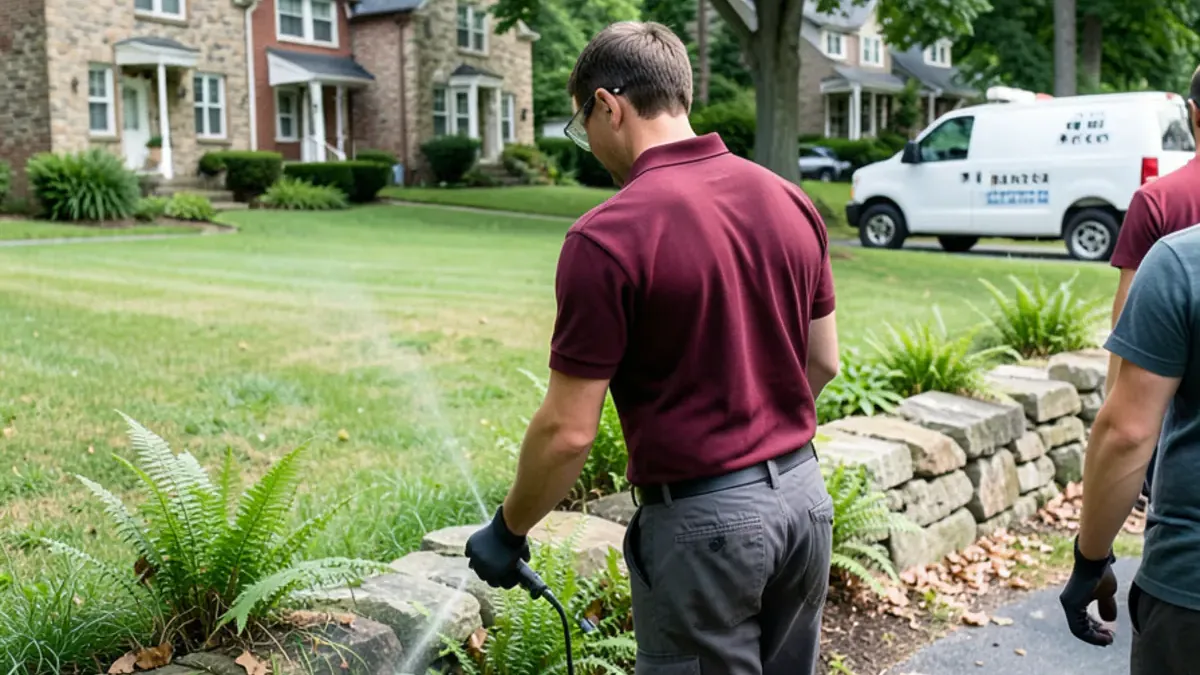
Why Does Tick Control Matter So Much in Pennsylvania?
Pennsylvania reports some of the highest Lyme disease case counts in the U.S., according to CDC data, and the blacklegged tick, often called the deer tick, is the species that carries it. The same tick can also spread other infections, including anaplasmosis and babesiosis.
Deer ticks in PA are easy to miss. A nymph, the stage most often found on people in late spring and early summer, is about the size of a poppy seed. American dog ticks and lone star ticks turn up here too, so cutting tick numbers where your family plays and gardens is a practical step. Questions about a bite or symptoms belong with your doctor.
Exposure here is not limited to hikers. Edgmont's median home dates to 1991 and Middletown's to 1977, according to Census (ACS) estimates, and many of those subdivisions were built right against woodland, so the back fence is often the edge of deer habitat and a child or dog can meet ticks without leaving the yard.
Signs of Ticks and the Local Habitat Behind Them
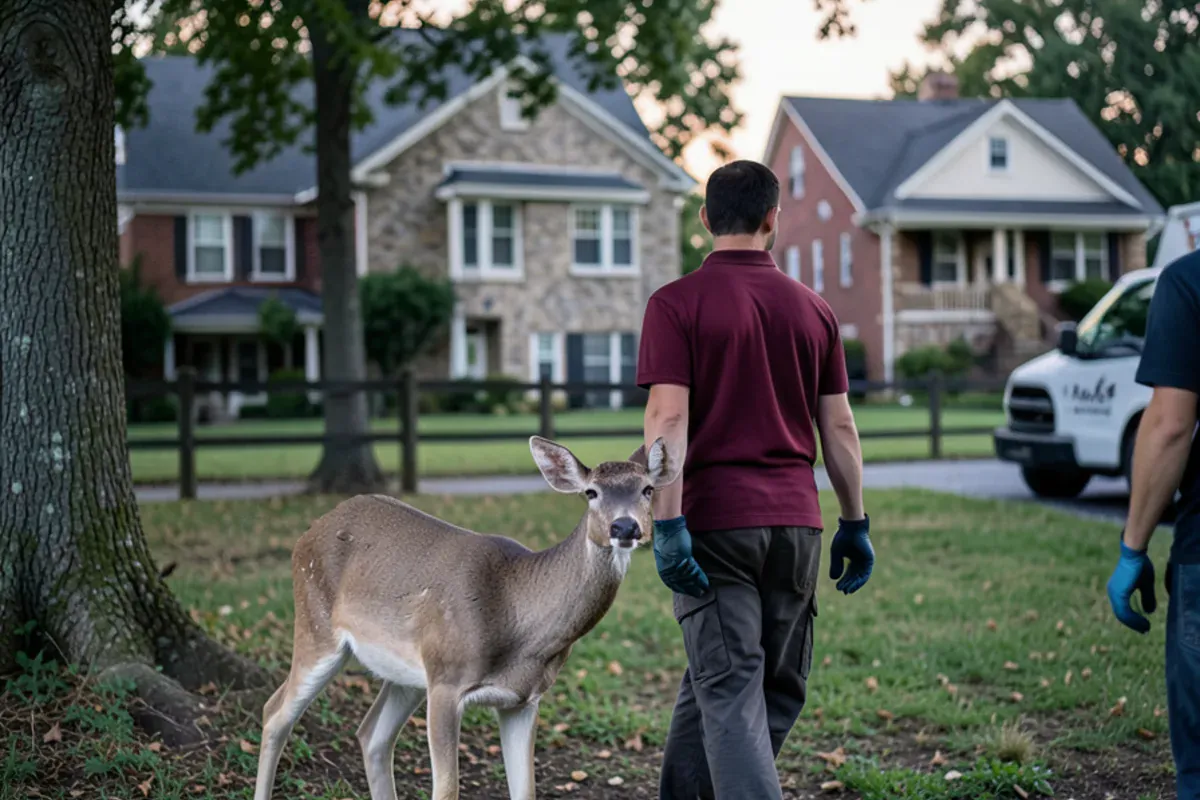
Most households notice ticks on a pet first. Other signs include ticks on children after play near the back of the yard, deer bedding or browsing at the wood line, and chipmunks or mice living in stone walls and woodpiles, since rodents feed young ticks.
Local terrain explains a lot. Houses that back onto Ridley Creek State Park, the Crum Woods, Smedley Park or the wooded ravines along Darby and Chester creeks share a long, shady border with deer habitat. Ticks dry out in open sun, so they cluster in that border: leaf litter, tall grass, pachysandra and ivy beds, and the base of stone walls.
How We Inspect a Property for Ticks
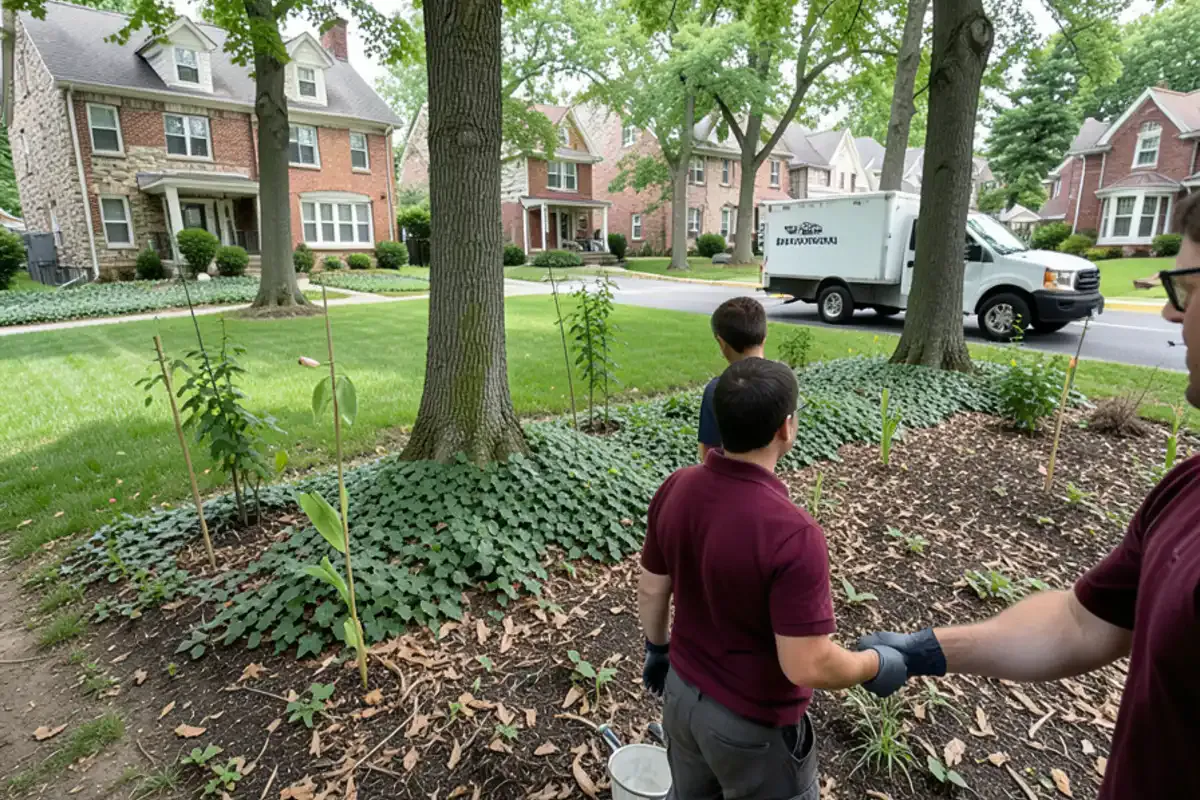
The free inspection follows the edges, not the middle of the lawn. We walk the transition zone between lawn and woods, check stone walls, woodpiles, ground cover, bird feeder areas and the paths deer use to enter the yard, and note where your family spends time outdoors.
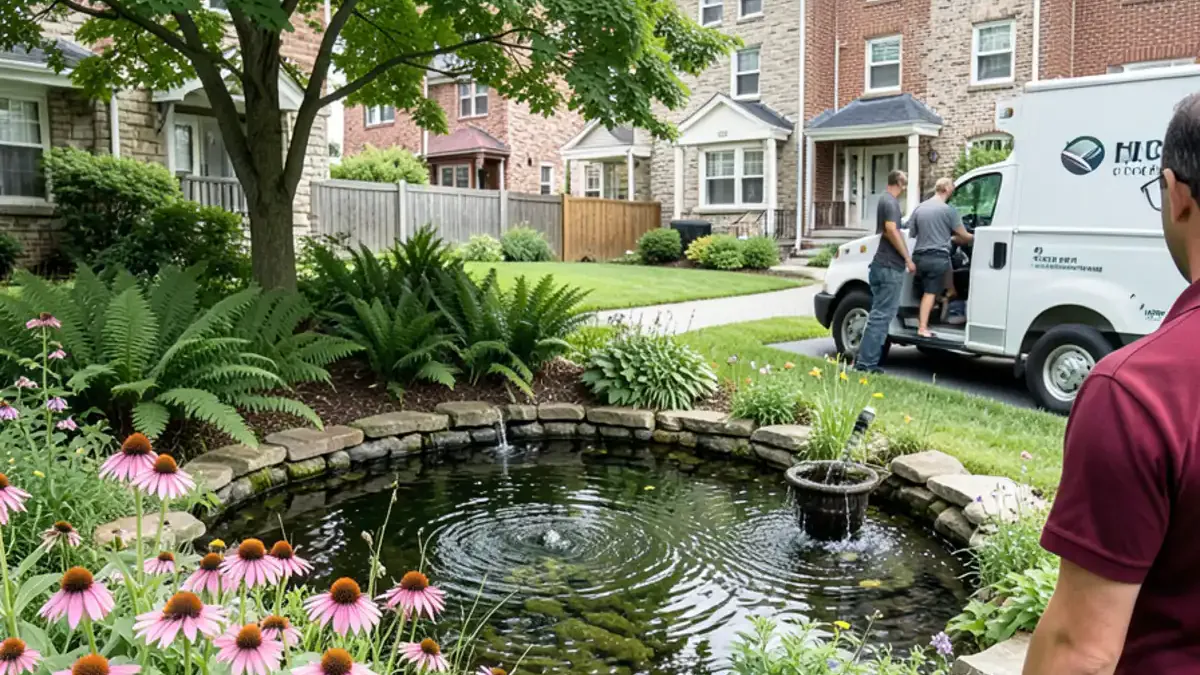
Where it helps, we pull a light-colored cloth across leaf litter to see whether ticks are present. We also look for flowering ground cover and wildflowers at the wood line so those patches can be skipped for pollinators. You then get a written quote showing the treatment band we recommend.
Tick Yard Treatment Options Compared
The goal is fewer ticks where people and pets go, not a sprayed-down property. These are the tools we discuss, with their limits.
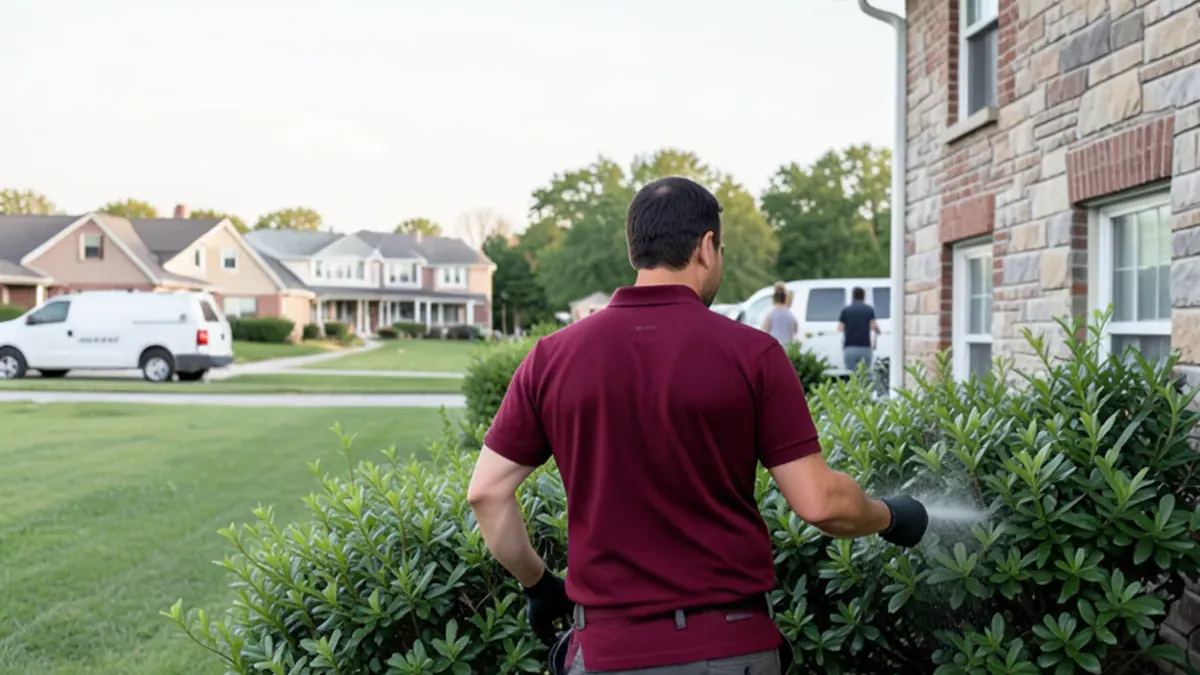
- Edge treatment: a residual tick spray for the yard applied to leaf litter, the wood line, stone walls and ground cover. It reaches ticks where they live but has to be repeated during the season.
- Rodent-targeted tubes: cotton treated with an insecticide that mice carry into their nests, which kills ticks feeding on them. Useful near stone walls; slower to show results.
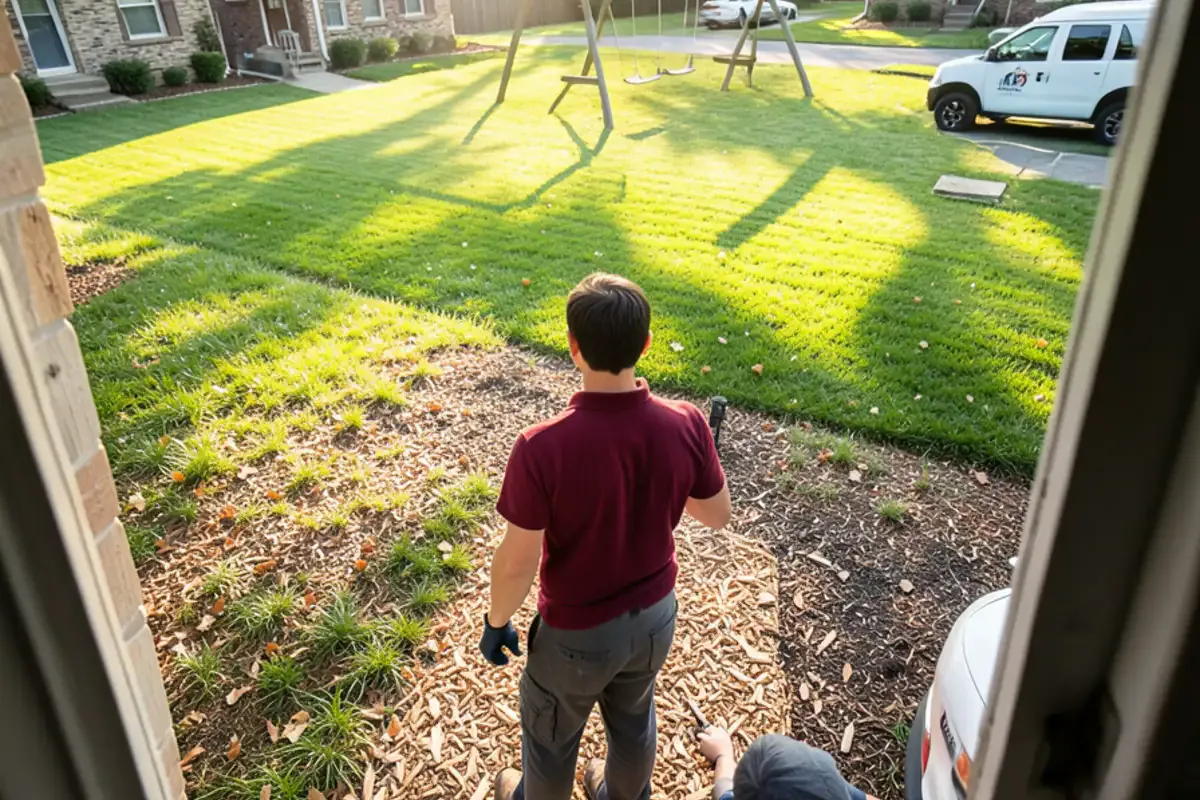
- Habitat changes: a wood-chip or gravel strip between lawn and woods, raked leaves and moved play sets. Permanent and inexpensive, but they take your own effort.
- Botanical sprays: plant-oil products with a shorter residual. Our natural mosquito control page covers how these lower-impact products work and where they fall short.
- Deer exclusion: fencing keeps the main adult-tick host out. Effective, though it is a larger project than most yards need.
Your Tick Treatment Visit, Step by Step
Book a free inspection
Tell us when you have been finding ticks and on whom: pets, children or adults.
Edge walk
We trace the lawn-to-woods border, stone walls and ground cover, and mark blooming plants to leave alone.
Written quote
You receive a written quote for a single treatment or a spring-and-fall plan.
Clear access
Move toys, dog bowls and outdoor cushions out of the treatment band before we arrive.
Treat the band
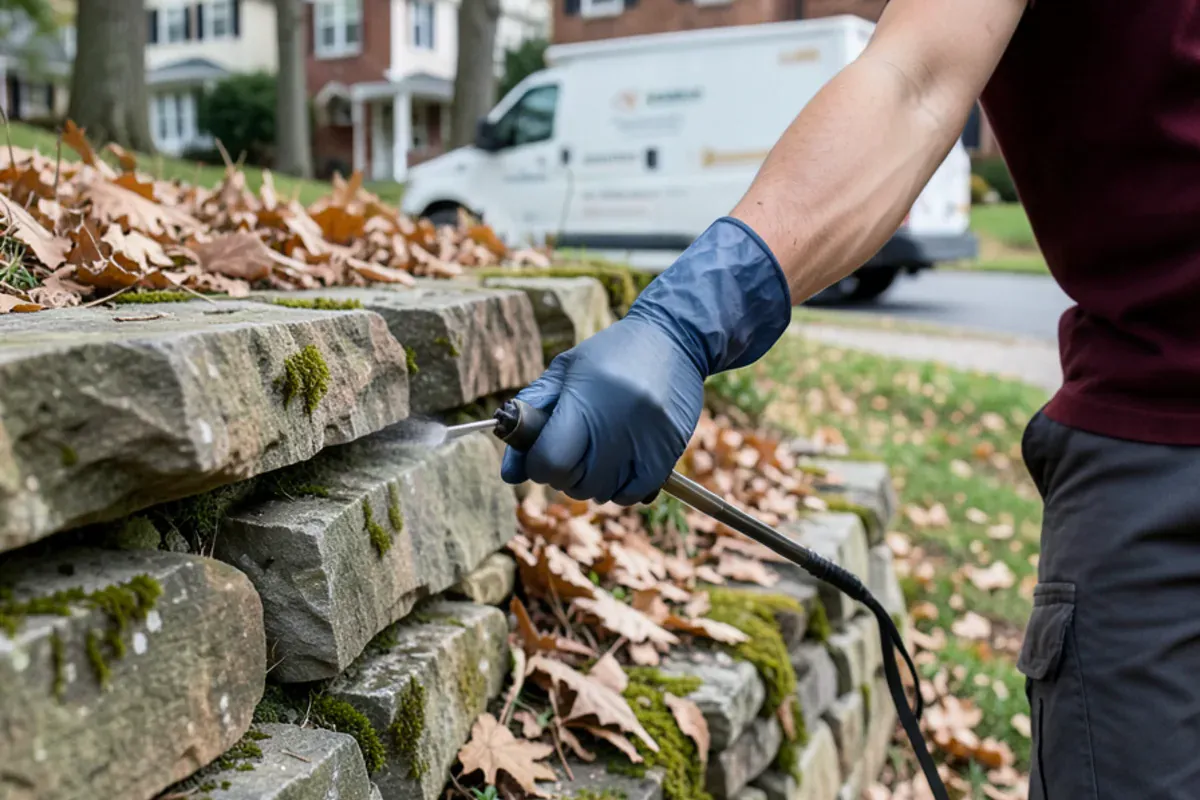
We apply product to leaf litter and ground cover along the wood line, around walls and woodpiles, and under shrubs at the yard's edge.
Re-entry and follow-up
Keep people and pets off treated areas until dry, and we set the next visit for the following tick peak.
Talk to us about tick control
Call and speak with Thom or his team. The inspection is free, and you get a written quote before any treatment.
- ★ 4.8 from 21 Google reviews
- Open 7 days, 8 a.m. to 7 p.m.
- Free inspection before treatment
- Family-run, based in Media, PA
Open 7 days, 8 a.m. to 7 p.m.
How Long Does Tick Spray for the Yard Keep Working?
A residual edge treatment usually reduces ticks for several weeks, with heavy rain and fresh leaf fall shortening that. Timing matters more than frequency. A treatment in late April or May hits nymphs before their early-summer peak, and a second round in September or October catches adults, which stay active on mild days well into late fall.
Expect fewer ticks on pets within a week or two, not zero. Deer and rodents keep bringing new ticks in from the woods, which is why the habitat steps below make each treatment last longer.
What Affects the Cost of Tick Control?
Your quote is written after the inspection and depends on:
The length of the border sets most of the scope. A Rose Valley or Edgmont lot where woods wrap three sides has a long band to treat, while a Ridley Township yard with one hedgerow along the back fence has a short one. Stone walls and deep ivy beds add time, because product has to reach into crevices and under foliage.
Timing changes the total as well: a single late-spring treatment is a smaller commitment than a spring-and-fall plan with a midsummer touch-up near the state park.
- Length of wood line, stone wall and ground-cover beds in the treatment band
- One treatment or a spring-and-fall plan
- How far the band needs to reach into the woods edge
- Rodent-targeted tubes or other add-ons
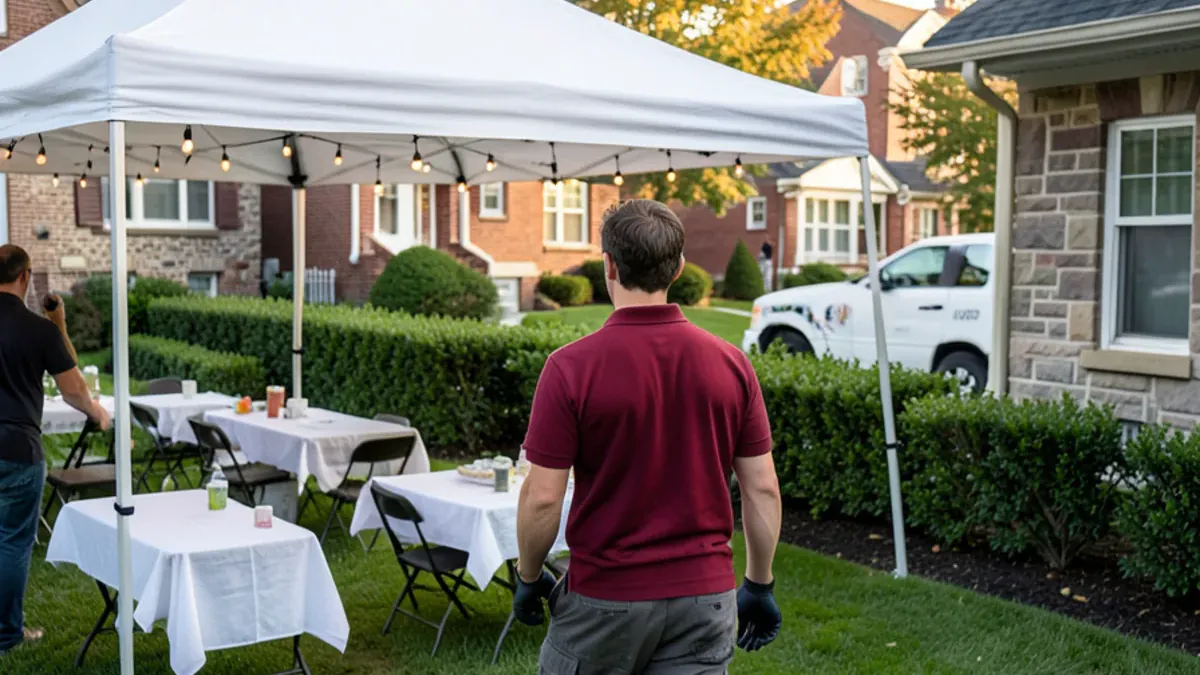
- Pairing the visit with a mosquito program or a special event mosquito spray before a backyard gathering
- Slope, brush and access along the property line
Pennsylvania Rules on Tick Spraying, Deer Fencing and Creek Buffers
Tick sprays are pesticides, and their use for hire in Pennsylvania falls under the Pesticide Control Act of 1973. The Pennsylvania Department of Agriculture (PDA) licenses pest control businesses and certifies applicators, and you can ask any provider for its PDA business license number. Product labels also forbid applying directly to water, which matters on the many Delaware County lots that slope down to a creek or swale, so the band stays back from the bank.
Deer, the main host for adult ticks, are managed by the Pennsylvania Game Commission, so feeding or removing them is not a pest control task. Deer fencing is usually a zoning question: many townships cap fence heights and require a permit, so check with your municipal office before building one. This is general information, not legal advice.
Tick Prevention Habits Between Treatments
Small, permanent changes reduce how many ticks reach the places you use. The CDC recommends a buffer of wood chips or gravel between lawn and wooded areas, and the rest is upkeep:
- Keep lawn cut short near the wood line and paths
- Rake leaves out of play areas and away from the house foundation
- Stack firewood neatly, off the ground and away from the house
- Move swing sets, sandboxes and patio seating into sunny, open areas
- Pull bird feeders back from the house, since spilled seed feeds mice
- Check pets and people after time near the woods, including behind knees and ears
What our tick control includes
- Free edge-focused tick inspection
- Written quote before work starts
- Treatment of leaf litter, wood line, stone walls and ground cover
- Untreated patches left for blooming wildflowers at the woods edge
- Spring and fall timing matched to nymph and adult peaks
- Habitat advice specific to your yard's layout
- Option to pair with mosquito or lanternfly visits
Why call No Bugs Exterminator for tick control
Near the parks
Our Media base sits close to Ridley Creek State Park and the Crum Woods, where many tick calls start.
Inspection comes first
Thom and his team walk the edges for free and quote in writing before treating.
Open 7 days
We are open 7 days, 8 a.m. to 7 p.m., so a tick visit can be booked around weekend yard time.
Family-run and local
We are a small Media business, so the deer-edged yards of Edgmont, Upper Providence and Rose Valley are a short drive from our base.
Rated 4.8 on Google
Our rating comes from 21 Google reviews, and every quote is in writing before a treatment band is sprayed.
Where we provide tick control
Ticks follow deer and woods, so pressure is heaviest on larger, tree-lined lots: Glen Riddle and Lima neighborhoods in Middletown Township, homes near the Ellis Preserve in Newtown Township, the open fields and hedgerows of Thornbury Township and the Brandywine side of Chadds Ford Township. We reach all four from Media.
- Edgmont Township
Deer trails run from Ridley Creek State Park up to newer subdivisions, so the back fence is often the edge of blacklegged tick habitat.
- Upper Providence Township (Delaware County)
Rose Tree Park and the state park edge put wooded lots behind most houses, giving ticks a long, shady leaf-litter border.
- Rose Valley
Homes set in deep woods, with only a 2% renter share, mean nearly every lot has its own long wood line and leaf litter where ticks wait.
- Nether Providence Township
Garden City and Wallingford yards back onto Crum Creek and Smedley Park, where deer follow the creek corridor and drop ticks along lawn edges.
- Marple Township
Lawrence Park streets and the grounds around Delaware County Community College meet wooded strips where deer, mice and ticks share the border.
- Concord Township
Garnet Valley subdivisions built in the 1990s sit against hedgerows and wood lots, and those lawn-to-tree edges hold the most ticks.
- Haverford Township
Wooded Darby Creek banks through Havertown and Llanerch bring deer close to 1950s homes and their backyard play areas.
- Chester County
Horse country, open fields and newer subdivisions west of Route 202 mix pasture edges with woods, a combination blacklegged ticks thrive in.
- Villanova
Large estate lots off Spring Mill Road keep wide wooded borders and shaded ornamental beds where ticks shelter and deer pass through.
What customers say on Google
4.8 out of 5 from 21 reviews on Google. Quoted as written by customers.
Very professional and knowledgable service providers. They mainly solved our problems in one visit!
Thom is a top-notch pest control specialist! And is one of the most genuine guys in the industry. He came to inspect a situation I had going on at the house, took his time, offered detailed advice, and didn’t take a penny.
Thom + his team were amazing. Very professional + provided me with a quote that made the most sense for my situation. Clearly I was not being gouged. Thom put the client first.
Tick Control: common questions
Why is tick control important in Pennsylvania?
Because the risk here is real. CDC data place Pennsylvania among the states with the highest Lyme disease counts, and blacklegged ticks thrive in the wooded suburbs around Media. Nymphs are tiny and easy to miss, so lowering tick numbers along the edges of your own yard reduces encounters in the place your family spends the most outdoor time.
Where do ticks live in a suburban yard?
Along the edges. Ticks need shade and humidity, so they gather in leaf litter at the wood line, in tall grass, in ivy or pachysandra beds, around woodpiles and at the base of stone walls. The sunny middle of a mowed lawn holds very few, which is why we treat a band along the border instead of the whole yard.
When should a yard be treated for ticks?
Two windows matter most. Late April through May targets nymphs before their June peak, and September or October targets adults, which stay active on mild days into late fall. In heavily wooded areas near Ridley Creek State Park, a midsummer touch-up between those two visits can help.
Is tick treatment safe for my dog?
Applied according to the label, dogs can go back into treated areas once the product has dried. We ask you to keep pets inside during the visit and move water bowls and toys out of the treatment band first. Yard treatment does not replace a tick preventive, so ask your veterinarian which one suits your dog.
Do you have to spray the whole lawn for ticks?
No. Most of the work is a band along the lawn-to-woods border, stone walls, ground-cover beds and woodpiles. Open, sunny turf rarely needs treatment because ticks dry out there. Keeping the band narrow also lets us leave flowering plants and vegetable beds alone.
Related services
Helpful guides from our blog
Ready to get rid of the problem?
Thom and his team serve Media, Delaware County and southeastern Pennsylvania, open 7 days, 8 a.m. to 7 p.m..
- ★ 4.8 from 21 Google reviews
- Open 7 days, 8 a.m. to 7 p.m.
- Free inspection before treatment
- Family-run, based in Media, PA
Open 7 days, 8 a.m. to 7 p.m.