
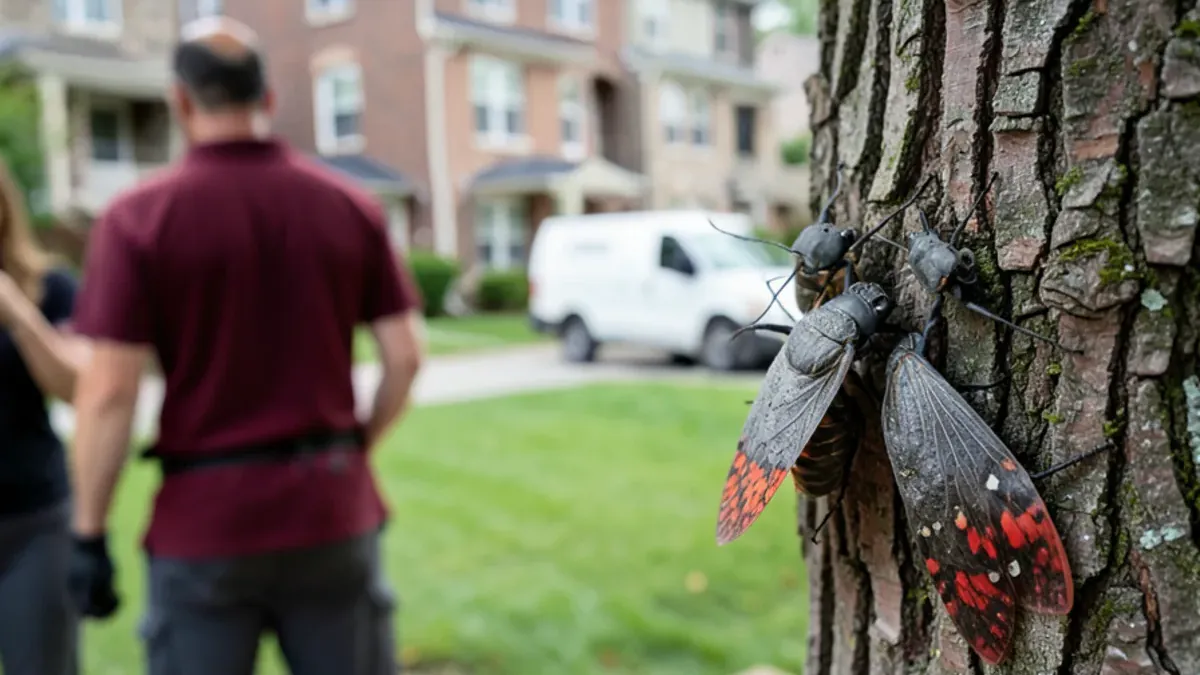
Spotted lanternfly in Delaware County, PA is no longer a new arrival; it is a yearly cycle every homeowner can plan around. The insect overwinters as egg masses, hatches into nymphs in late spring and feeds as winged adults from midsummer until hard frost. Hitting each stage at the right time does far more than spraying whatever you see in September.
Is Delaware County in the spotted lanternfly quarantine?
Yes. The Pennsylvania Department of Agriculture's spotted lanternfly quarantine covers southeastern Pennsylvania, including Delaware, Chester, Montgomery, Bucks and Philadelphia counties. The insect, a planthopper native to Asia, was first found in the United States in Berks County in 2014 and has spread outward from there.
For homeowners, the quarantine mainly means checking before you move things. Egg masses and adults hitch rides on vehicles, firewood, outdoor furniture, landscaping stone and trailers. Businesses that move goods in and out of the quarantine zone have their own permit rules, which PDA explains on its website.
Tree of heaven and the plants lanternflies favor
Tree of heaven is the lanternfly's preferred host. It is an invasive tree with long compound leaves and a rank smell when crushed, and it pops up along fences, rail lines, parking lots and the edges of yards. Where tree of heaven grows, lanternfly numbers tend to build.
Adults also feed heavily on grapevines, maples, black walnut, willow and many other plants. They pierce the bark and drink sap, then excrete a sugary liquid called honeydew. Black sooty mold grows on that honeydew, coating decks, patio furniture, cars and plants underneath, and the sweet residue draws yellow jackets and ants.
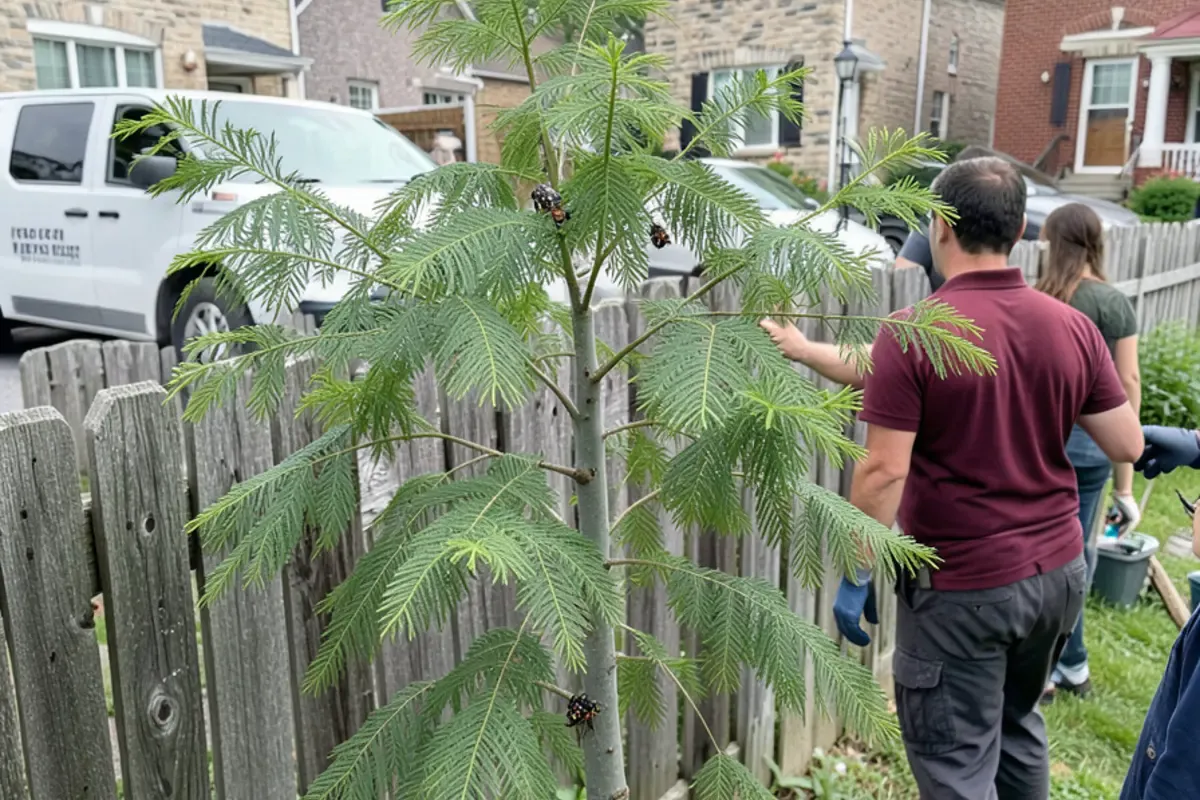
A lanternfly season plan for PA yards
Each life stage has its own response window. Work through the year in this order:
October through April: egg masses
Search trunks, stone walls, fences, outdoor furniture, grills and the undersides of vehicles and trailers. Scrape and destroy every mass you find.
May and June: early nymphs
Small black nymphs with white spots hatch and climb plants. Circle traps on trunks catch them as they walk upward.
July: late nymphs
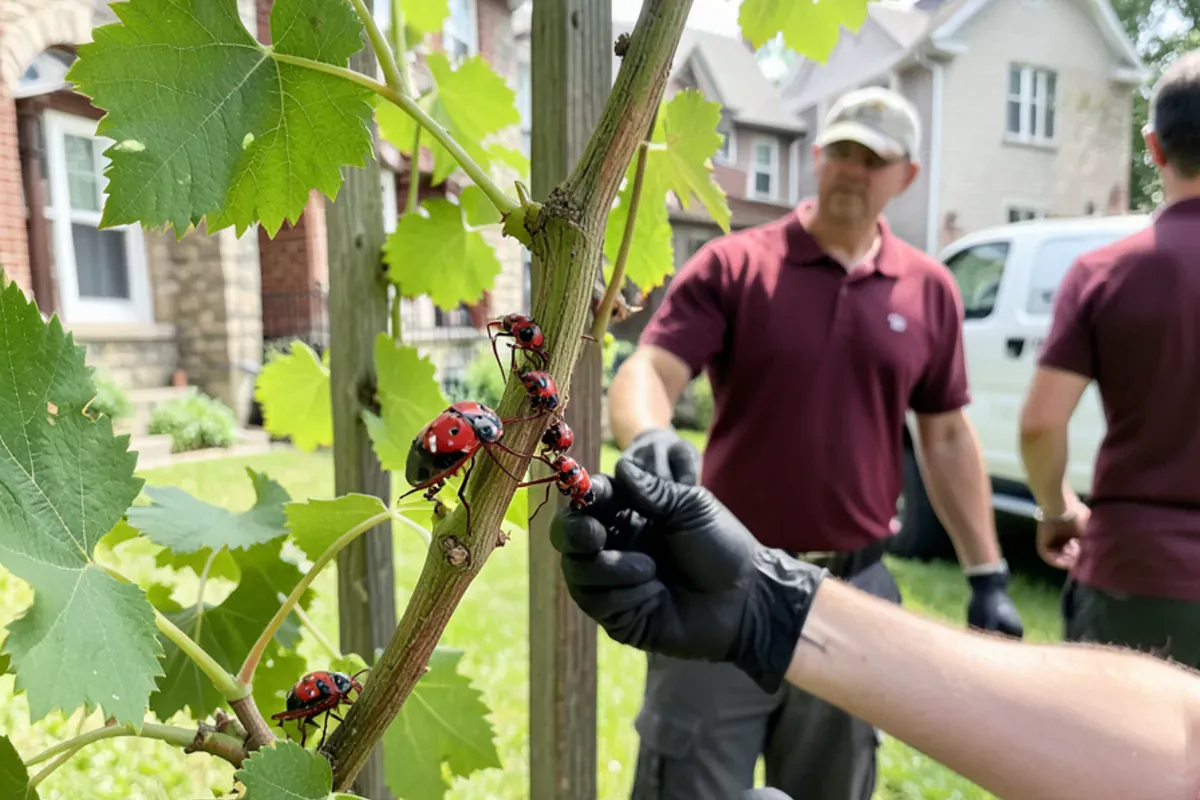
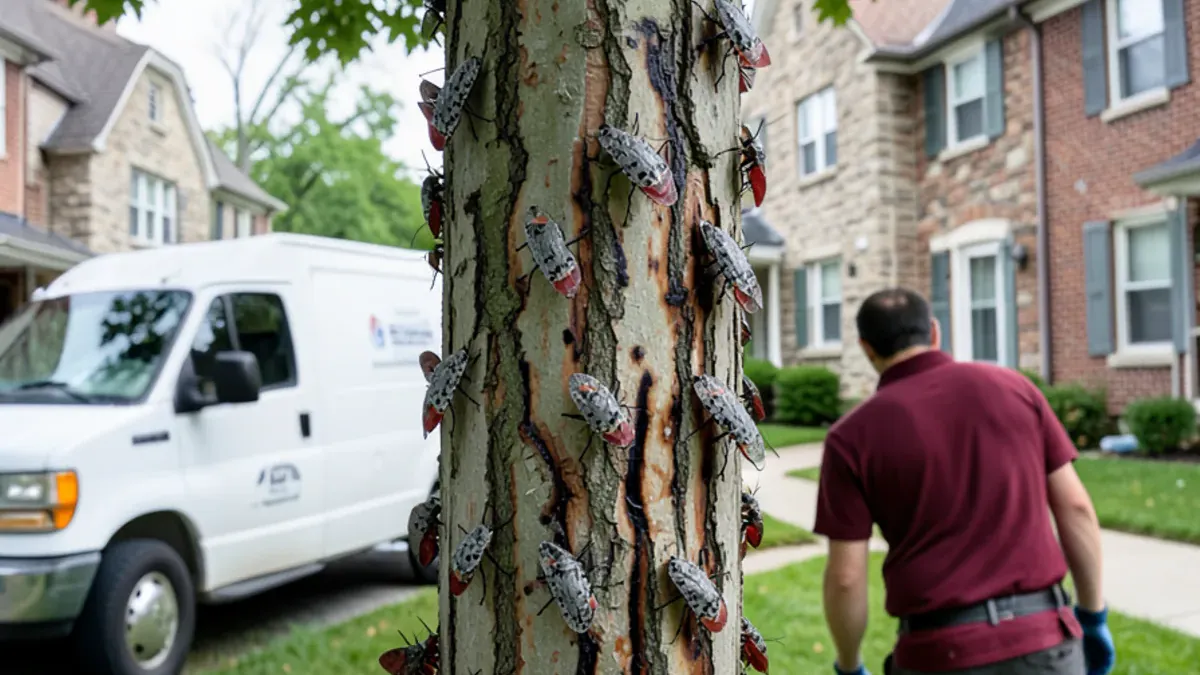
Nymphs turn red with black and white markings. Expect them on grapevines, roses and young trees.
Late July through frost: adults
Winged adults gather on host trees, mate and begin laying eggs in September. This is when targeted treatment of heavy hosts matters most.
After hard frost: reset
Adults die off. Note which trees carried the heaviest load, since those are your monitoring and treatment targets next year.
How to find and destroy lanternfly egg masses
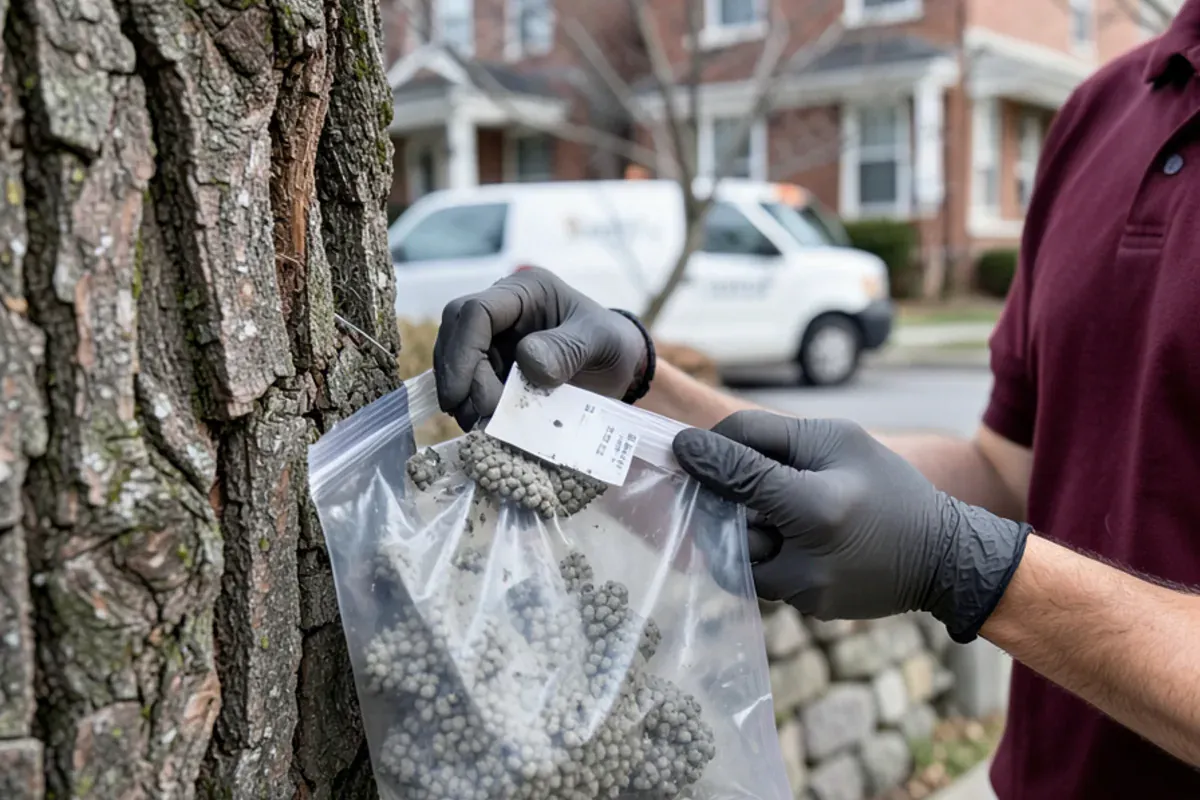
Fresh lanternfly egg masses look like a smear of gray mud or putty about an inch or two long. As they age, the covering cracks and shows rows of seed-like eggs underneath. Each mass holds dozens of eggs, so every one you destroy removes a future crop of nymphs.
PDA and Penn State Extension recommend scraping masses into a bag or container with rubbing alcohol or hand sanitizer, then sealing it. A plastic card or putty knife works well. Check above head height on trunks and the shaded side of rough-barked trees, and do not forget the bottom of a trailer or boat stored outdoors over the fall.
- Trunks of tree of heaven, maple, black walnut and willow, including high on the trunk
- Stone walls, boulders, retaining walls and the backs of stone steps
- Fence posts, rails and the underside of deck boards
- Outdoor furniture, grills, playsets and stored planters
- Firewood piles, tarps, trailers, boats and the wheel wells of vehicles parked outside
What lanternfly treatment can and cannot do
No treatment keeps lanternflies out of a yard for good, because adults fly in from neighboring properties all season. The realistic goal is to cut the numbers feeding on your most valued plants and reduce honeydew mess around living spaces.
Professional options include contact sprays on nymphs and adults where they gather, and systemic treatments applied to heavily used host trees so feeding insects pick up the product. Timing, the tree species and what else is growing nearby all shape which approach fits. Our spotted lanternfly control page goes through those choices in more detail, and our broader yard pest services cover mosquitoes and ticks on the same properties.
Sticky bands wrapped around trunks are a common do-it-yourself choice, but they catch birds and beneficial insects too. If you use them, cover them with a wire cage, or switch to circle traps.
Lanternfly control options compared
Most yards do best with two or three of these combined, matched to the season and to where the insects actually gather:
| Option | When | Best fit | Limits |
|---|---|---|---|
| Scraping egg masses | October to April | Every mass on trunks, walls, furniture and vehicles you can reach | Misses masses high in trees or on the property next door |
| Circle traps | May through frost | Trunks where nymphs climb in steady lines | Must be emptied regularly; catch fewer adults that fly in |
| Sticky bands | May to July | Small trees with heavy nymph traffic | Trap birds and beneficial insects unless covered with a wire cage |
| Contact spray | Nymph and adult season | Dense clusters on a few heavy hosts | Kills only the insects it reaches; new arrivals keep landing |
| Systemic host tree treatment | Mid to late summer, per label | Heavily used tree of heaven or maples | Not suited to every species or to trees near blooming plants bees visit |
| Tree of heaven removal | Planned with a root treatment | Lots where it is the main host | Resprouts from stump and roots if simply cut |
Do spotted lanternflies harm people, pets or houses?
They do not bite or sting, and they do not damage the structure of a home. The harm is to plants, crops and outdoor surfaces. Grape growers have been hit especially hard, and heavy feeding stresses ornamental trees already weakened by drought or other pests.
Around the house, the biggest complaints are the sheer numbers on decks and siding in September and the sticky residue that turns black. Pressure-washing and prompt cleanup keep mold from staining wood and stone.
Lanternfly patterns we see across the county
When we walk yards for lanternflies, we usually find the problem traces back to one or two host trees: a tree of heaven on a property line, a mature maple shading the deck, or a grape arbor. Spending effort on those few trees gives better results than treating every shrub.
Homes along wooded edges and near rail corridors in Delaware County often see the heaviest adult swarms because tree of heaven spreads easily in disturbed ground. We start with a free inspection and a written quote, and we will tell you honestly when scraping and traps are enough on their own.
We look up as well as down. Egg masses high on maple trunks, under the lip of a stone wall or on the back of a shed are the ones most people miss, and they hatch next to the same plants every spring. We are also frank about where money is wasted: spraying siding and decks in September kills the adults sitting there that afternoon, but more land the next day, so we rarely recommend paying for it. On lots with several tree of heaven stems, Penn State Extension has described removing most of them and leaving one treated host as a trap tree, which concentrates feeding where it does the most good. Grapevines and fruit trees need extra care with product choice and timing around harvest.
Quick answers
Should I report spotted lanternflies in Delaware County?
Check the Pennsylvania Department of Agriculture website first, because its reporting requests change as the insect spreads. Within the southeastern quarantine, the message to homeowners has long been to destroy the insects and egg masses you find and to inspect vehicles, firewood and outdoor gear before driving them out of the zone.
Should I cut down my tree of heaven?
Cutting alone usually backfires. Tree of heaven resprouts aggressively from the stump and roots, so one tree can become a thicket. Penn State Extension describes combining cutting with a targeted herbicide treatment to kill the root system. On a Delaware County lot with several of these trees, plan removal before anyone starts cutting.
Will spotted lanternflies come into my house?
Rarely, and they will not settle in. A few may ride inside on clothing or slip through an open door in September, when adults cover decks and siding, but they cannot feed or lay eggs on anything indoors and die within days. Close screens, brush off clothing before coming in, and vacuum up any strays rather than spraying inside.
When do lanternfly eggs hatch in Delaware County?
Usually from late April through June, with the first small black nymphs showing up on new growth in May. Hatching runs over several weeks because masses on sunny south-facing trunks warm faster than those on shaded stone walls. That stretch is why circle traps go up in early May and stay up, and why scraping any masses you missed is still worth it in April.
The bottom line
Scrape in winter, trap in spring, and focus treatment on a few heavy hosts in late summer, and the lanternfly season becomes manageable. If your trees or deck are already covered, call (209) 563-1650 and we will take a look.
Sources
Written by the No Bugs Exterminator team
A small, family-run pest control business in Media, PA, led by owner Thom. We write about what we see on inspections in Delaware County and southeastern Pennsylvania. About us.
Services mentioned in this guide
Want a professional opinion?
Book a free inspection and get a written quote before any treatment.
- ★ 4.8 from 21 Google reviews
- Open 7 days, 8 a.m. to 7 p.m.
- Free inspection before treatment
- Family-run, based in Media, PA
Open 7 days, 8 a.m. to 7 p.m.