
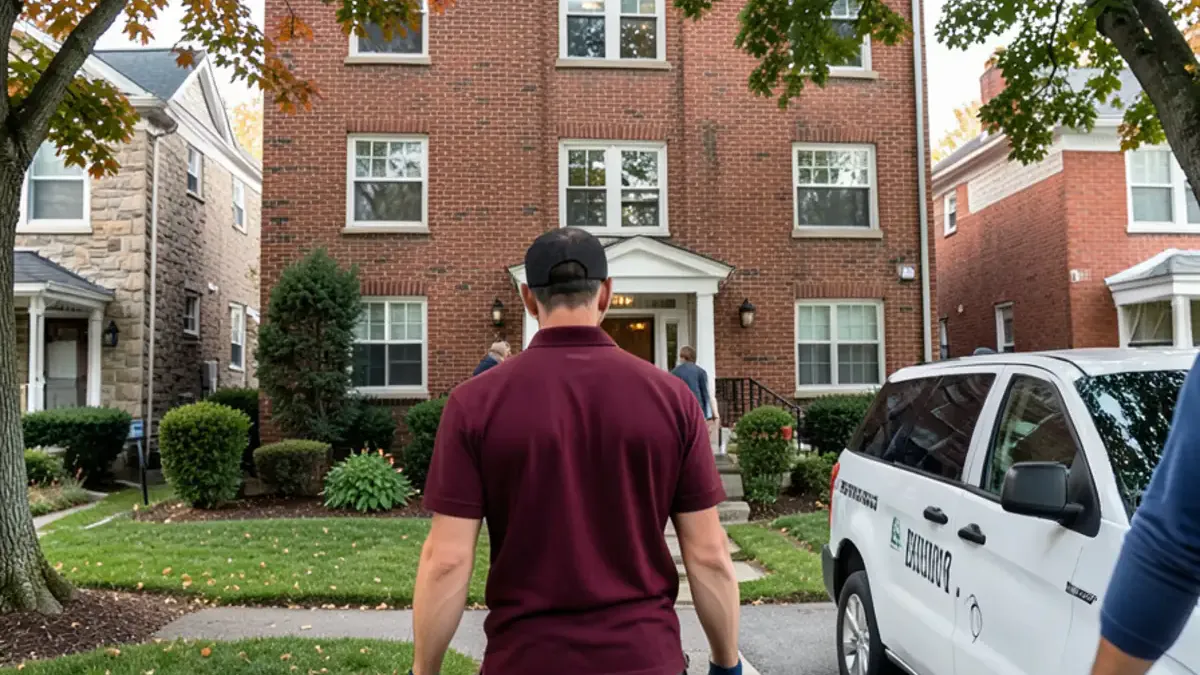
Why bed bugs in apartments spread so easily
Bed bugs follow people. In a building, that means through shared wall voids, along plumbing and heating risers, under entry doors and on furniture carried past other units.
Southeastern Pennsylvania has a lot of this housing. Census (ACS) estimates put renter-occupied homes at about 60 percent in Chester and 58 percent in Media borough, and many buildings date to the 1940s and 1950s, with pipe penetrations and gaps between units that have built up over the years.
The signs also show up unevenly in a building. One tenant may see nothing while the unit next door has spotting on every mattress, because bugs feed on the nearest sleeper first. Early clues worth reporting are a bug on the wall near a shared outlet, dark spotting along the party-wall baseboard, or several households mentioning bites within the same few weeks. That holds for garden apartments off Edgmont Avenue in Brookhaven as much as for the walk-ups above Media's shops.
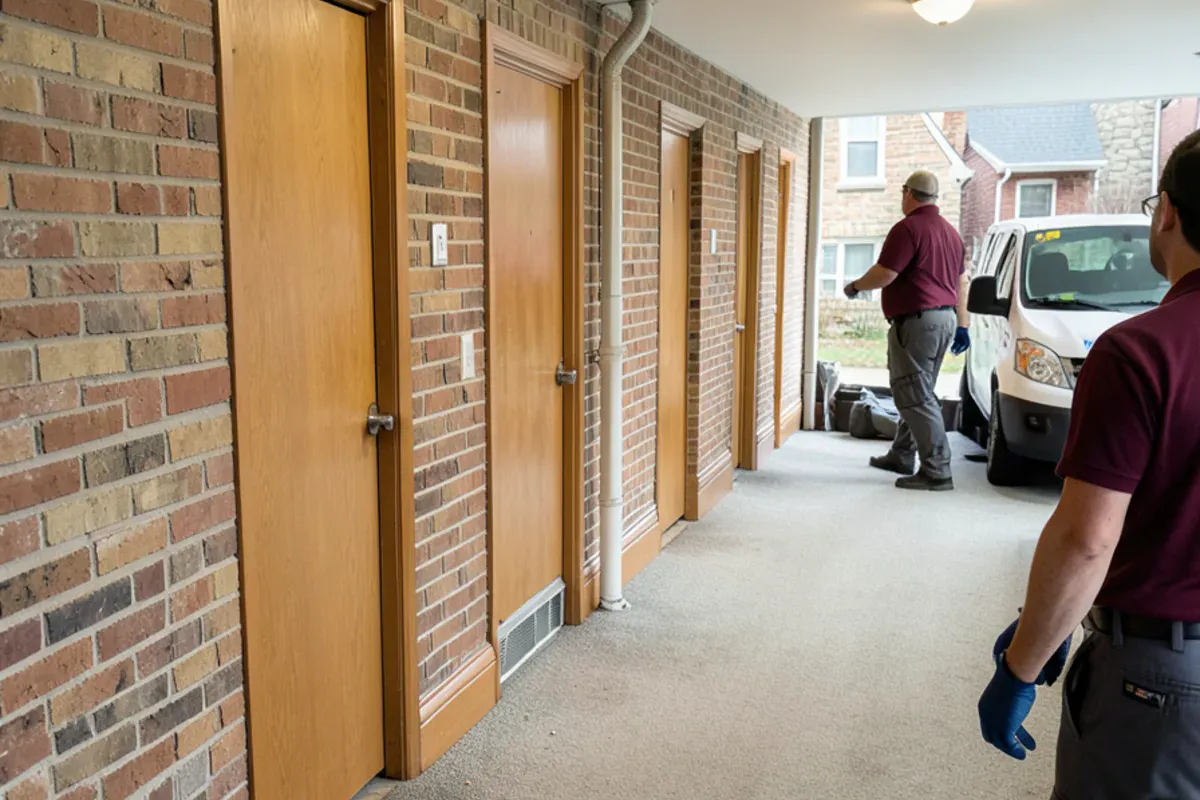
Landlord bed bug responsibility in PA: who handles what?
Pennsylvania courts recognize an implied warranty of habitability in residential leases (Pugh v. Holmes, 1979), and a serious infestation can raise habitability questions. Leases often assign routine pest responsibility, and local codes may add rules of their own, so the lease is the first document to read. This is general information, not legal advice.
In practice, treatment moves faster when the owner or manager arranges access and the tenant handles prep. Our article on who pays the exterminator in a Pennsylvania rental looks at the question in more depth.
- Tenants: report bites or bugs promptly and in writing, prep the unit, keep sleeping in the bedroom, and don't move furniture out without telling management
- Owners and managers: arrange inspection of the reported unit and its neighbors, give tenants notice of entry, and keep a record of every visit
- Everyone: avoid foggers and DIY sprays, which push bugs into adjoining units
Pennsylvania pesticide rules inside a shared building
Treating an occupied building is regulated work. The Pennsylvania Department of Agriculture (PDA) administers the Pesticide Control Act of 1973, licensing pest control businesses and certifying the applicators who apply residual sprays and dusts, and 7 Pa. Code § 128.31 calls for the business license number on service vehicles. Owners and managers can ask for that number before signing off on a building-wide plan.
Product labels add limits that matter in apartments: where a residual may go near beds, how long a unit stays empty after treatment, and what tenants with infants or pets should do. Boroughs and townships may also keep rental housing codes of their own, so the municipal code office is worth a call. This is general information, not legal advice.
Do neighboring units need to be inspected too?
Usually, yes. The common practice is to inspect the units on either side, directly above and directly below the reported one, then widen the circle if any of them show activity. Treating one apartment while bugs live next door invites the problem straight back.
Inspecting a neighbor doesn't mean treating it. A clean unit can be left alone and watched with interceptor cups, while an infested one joins the plan. Our bed bug inspection page lists what gets checked in each room.
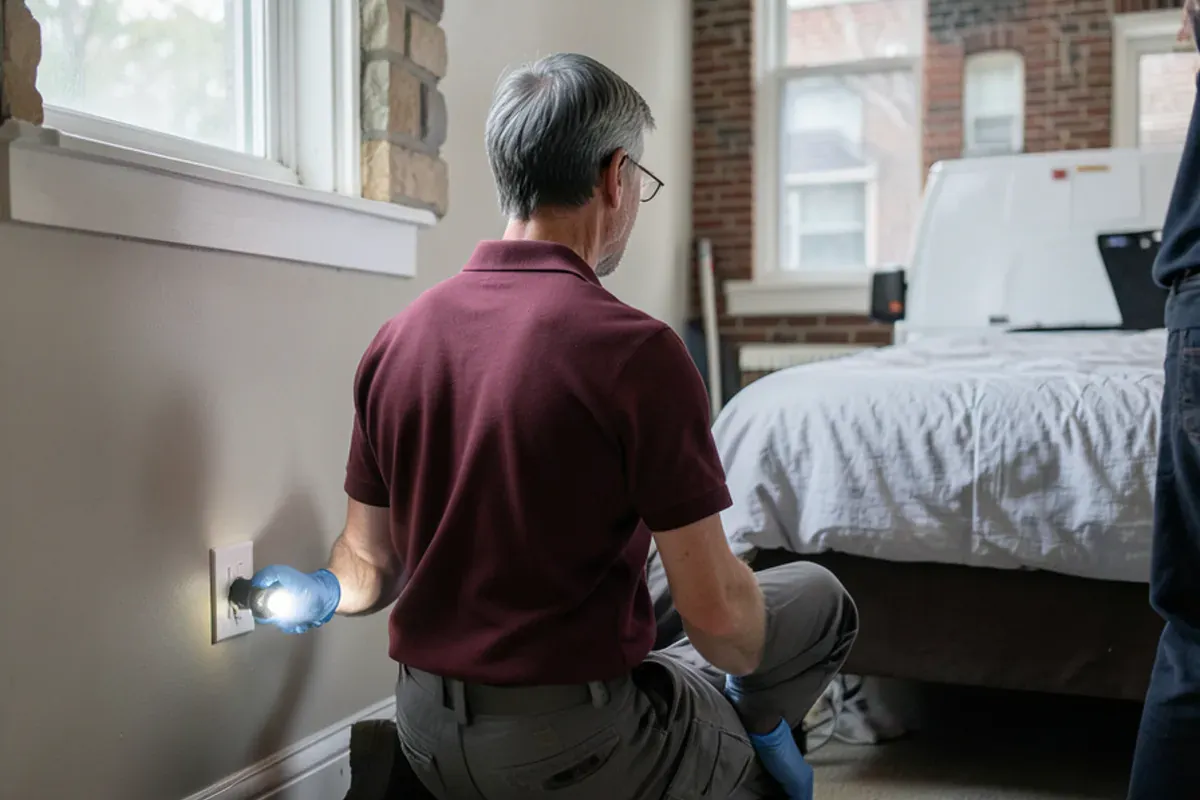
Scope of a multi-unit bed bug treatment
Large complexes, student housing and buildings with constant turnover may fit better under commercial bed bug extermination, where room-by-room records and scheduling carry more weight.
- Free inspection of the reported unit and the surrounding units you give us access to
- Written quote that lists units, rooms and follow-up visits
- Treatment of beds, upholstered furniture, baseboards, outlets and wall voids in affected units
- Attention to shared walls, pipe penetrations and gaps under entry doors
- Hallways or laundry rooms when the inspection points there
- Follow-up visits about two weeks apart until activity stops
Talk to us about apartment bed bug treatment
Call and speak with Thom or his team. The inspection is free, and you get a written quote before any treatment.
- ★ 4.8 from 21 Google reviews
- Open 7 days, 8 a.m. to 7 p.m.
- Free inspection before treatment
- Family-run, based in Media, PA
Open 7 days, 8 a.m. to 7 p.m.
How an apartment bed bug visit runs
Notice and access
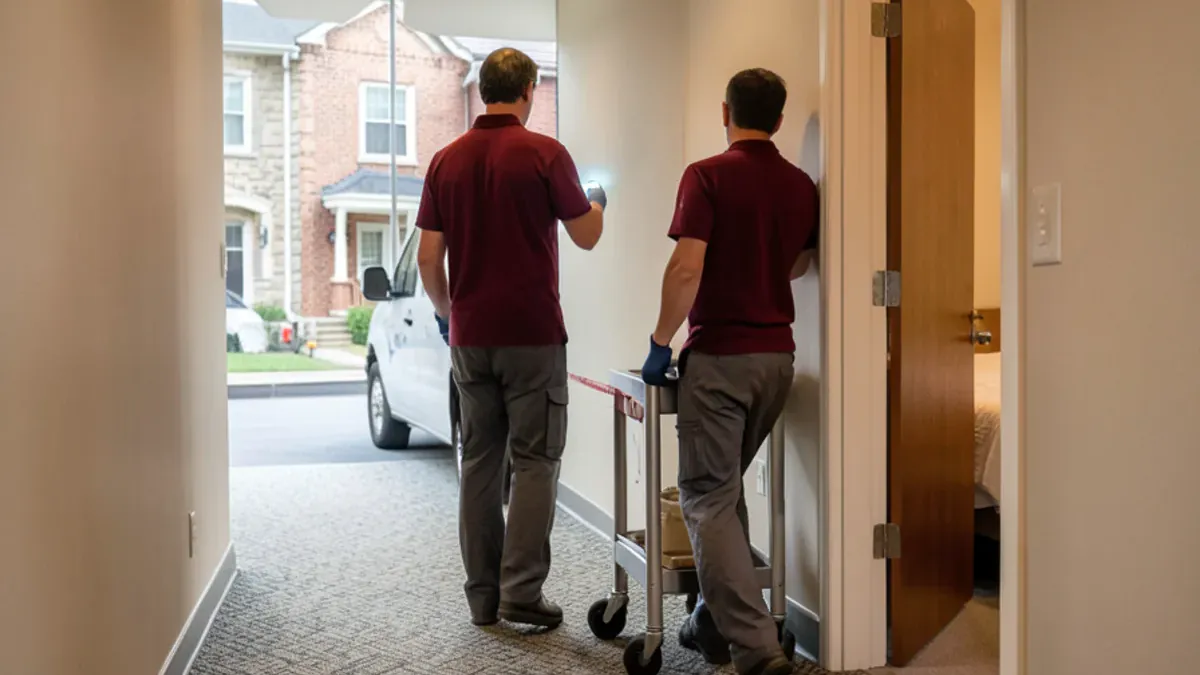
Management notifies the affected and neighboring tenants and confirms entry times for each unit.
Tenant prep
Tenants bag and hot-dry linens and clothing, clear floors and closets, and leave furniture where it is.
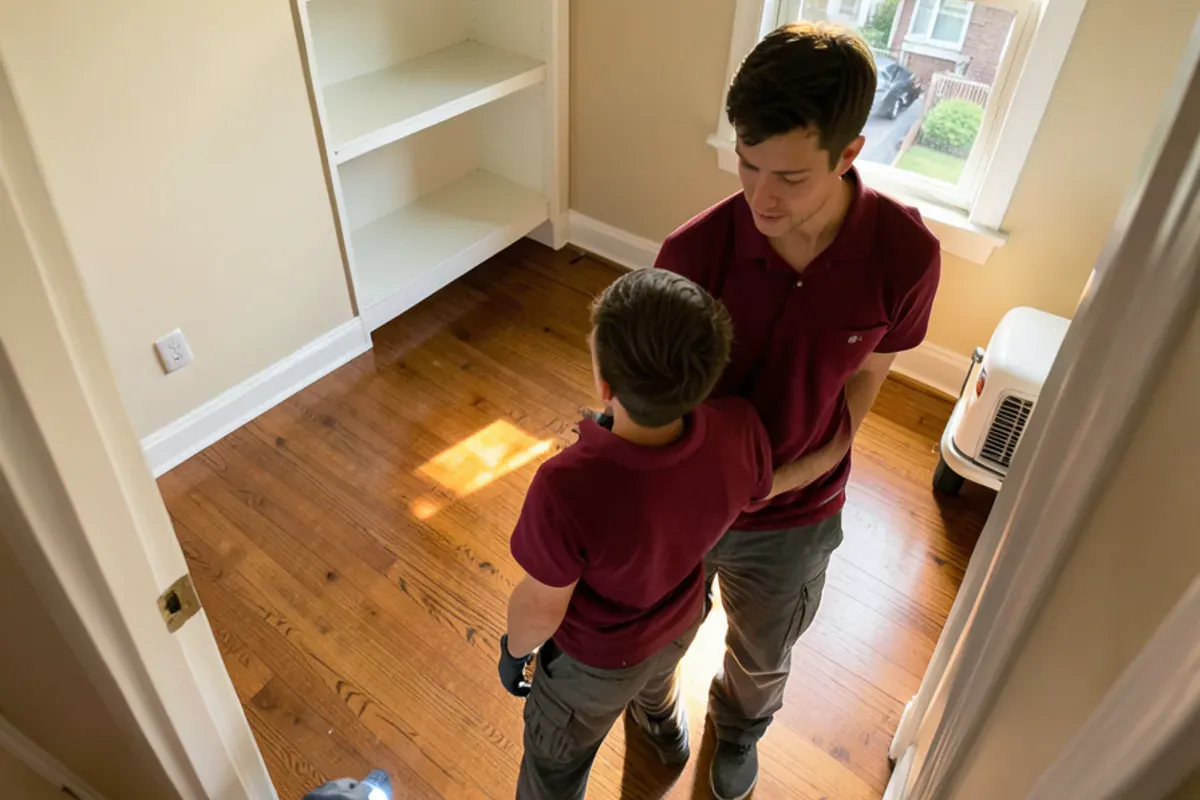
Inspect the reported unit
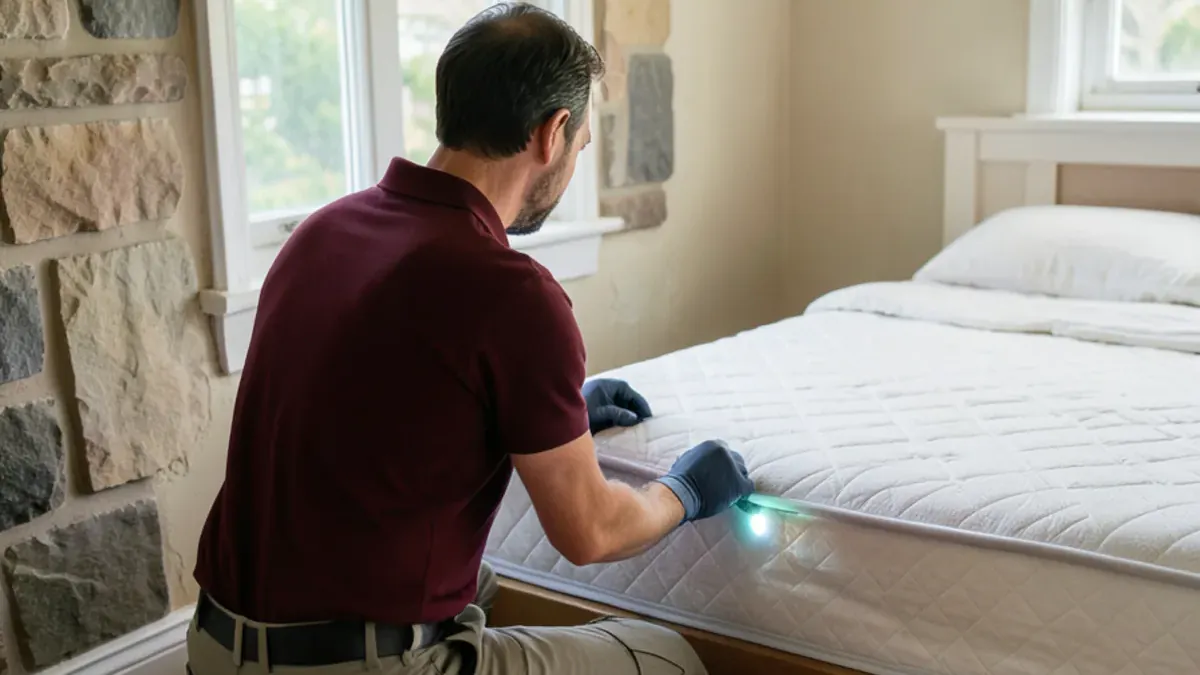
Beds, couches, room edges and shared walls are checked to confirm bed bugs and map the rooms involved.
Inspect the neighbors
Units beside, above and below get the same check, so the plan covers every unit with activity.
Treat
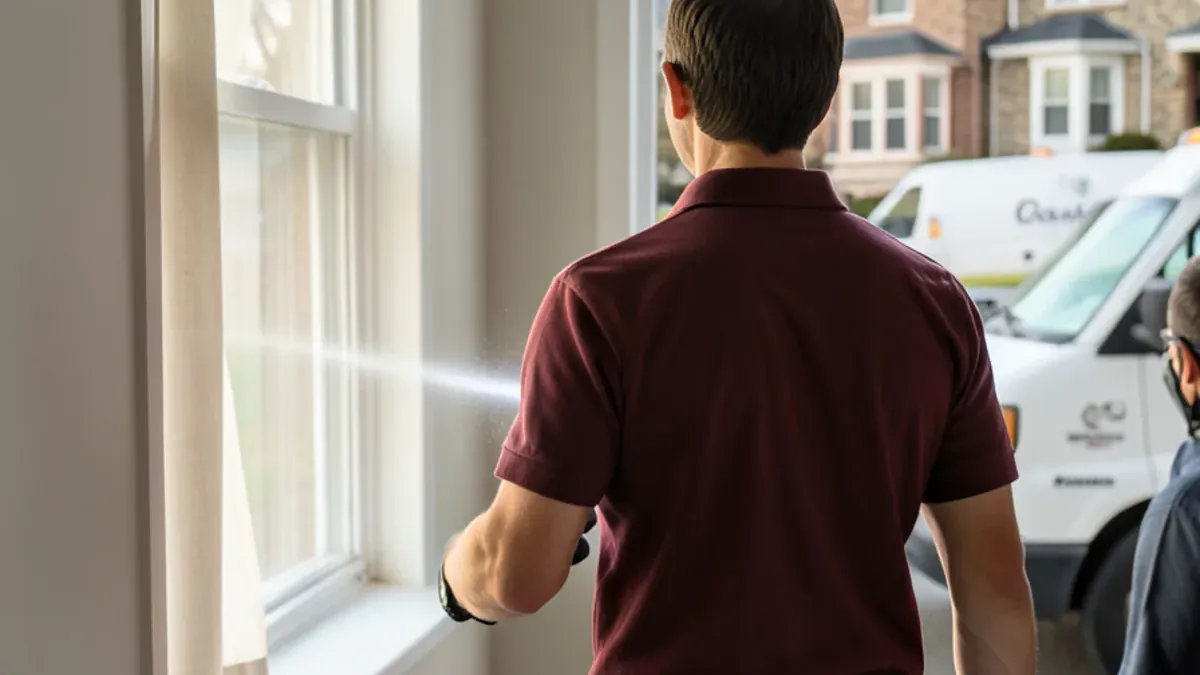
Affected units are treated room by room, with extra care at shared walls and plumbing openings.
Follow up
Return visits are booked about two weeks later, and findings for each unit are shared with the tenant and the manager.
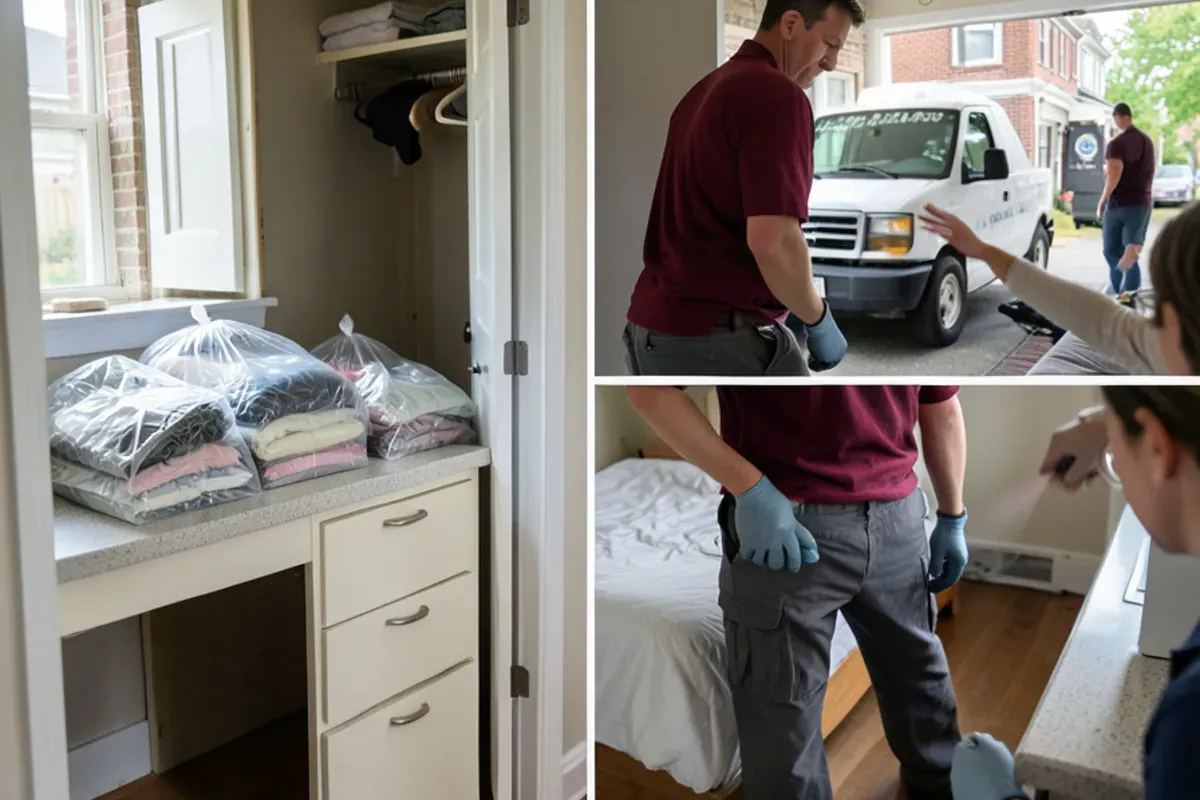
Records and communication between tenants and managers
Clear records protect everyone. Keep a simple log with the date bugs or bites were first reported, the dates of each inspection and treatment, which units were checked and what was found. Dated photos of any evidence help too.
We explain results at each visit and can review every unit's findings with the owner or manager. Tell us on the call what paperwork your building needs, and we will say what we can provide.
Scheduling around tenants and turnovers
We're open 7 days, 8 a.m. to 7 p.m., which helps when tenants work weekdays or a unit turns over between leases. A vacant unit is the easiest time to treat every closet and baseboard.
Tenants shouldn't move furniture or belongings out mid-treatment unless management agrees, since dragging infested items down a hallway spreads bugs to new units.
What affects the cost of apartment bed bug treatment
For a building, the quote is built unit by unit after we see the reported apartment and its neighbors.
Building layout moves the number more than any single bedroom. A stacked walk-up where the reported unit has neighbors on three sides and another unit below brings more inspections into the quote than an end unit in a two-story garden complex.
Turnover and prep matter too. A vacant unit between leases can be treated closet to closet in one pass, while an occupied unit with unfinished prep may need the visit moved. Buildings where several tenants report bites in the same month usually need a phased, unit-by-unit plan, which the written quote lays out before work begins.
- Number of units inspected and treated
- How many rooms and furniture pieces each unit holds
- Whether tenant prep is finished before the visit
- Shared walls, risers or common areas that need treatment
- Number of follow-up visits
What our apartment bed bug treatment includes
- Free inspection of the reported unit
- Inspection of neighboring units you give us access to
- Written quote listing units, rooms and follow-ups
- Prep instructions tenants can follow unit by unit
- Treatment of beds, furniture, room edges and shared walls
- Follow-up visits about two weeks apart
Why call No Bugs Exterminator for apartment bed bug treatment
Free inspections, clear quote
Inspections are free, and the written quote shows exactly which units and rooms are in the plan.
Bed bug specialists
Bed bugs are our specialty, including the shared-wall spread that apartment jobs involve.
Hours that suit tenants
Open 7 days, 8 a.m. to 7 p.m., so units can be scheduled around work shifts and turnovers.
Based in a renters' town
Thom and his team are based in Media, a borough where most homes are rented.
A fast first look at the reported unit
Same-day visits are often possible when the schedule allows — call early in the day.
Where we provide apartment bed bug treatment
Apartments shape bed bug work across our area. In Media, walk-up units sit above State Street shops; Drexel Hill includes the large Drexelbrook apartment community; Chester is about 60 percent renter-occupied per Census (ACS) estimates; and West Chester has a brick downtown full of student rentals. Each setting means different notice and access steps.
- Upland
A Chester Creek mill town where about 58 percent of homes are rented and much of the housing dates to the 1940s, so units often share old walls.
- Millbourne
About two-thirds of homes are rented beside the Market-Frankford Line's Millbourne station, so tenants move in and out often.
- Marcus Hook
A riverfront port town with a 1944 median build year and roughly 64 percent renters, where converted units share walls and risers.
- Rosemont
Apartment buildings off Lancaster Avenue near Rosemont College, about half rented, where student and tenant turnover follows the academic year.
- Collingdale
Twin and row streets along the Route 102 trolley with about 42 percent renters, so apartments carved from older houses are common.
- Sharon Hill
At the end of the Route 102 trolley line on Chester Pike, about 42 percent of homes are rented, many in multi-unit buildings.
- Chester Township
Toby Farms and the streets along Chester Creek are about 45 percent renter-occupied, so landlords and tenants often share the treatment plan.
- Brookhaven
Garden apartments off Edgmont Avenue sit beside ranch homes, and connected units there need neighbor inspections when one reports bugs.
- Linwood
Older homes near Route 13 with a 1947 median build year and nearly half rented, where shared walls let bugs reach the next unit.
What customers say on Google
4.8 out of 5 from 21 reviews on Google. Quoted as written by customers.
No Bugs Exterminator is the best I have seen. The owner is the nicest person in the world, he doesn’t rush anything, and is very thorough in job.
Thank you guys. I had bed bugs.!!! I called you and you came same day and all gone, now I can sleep with out getting bitten.
Thom is a top-notch pest control specialist! And is one of the most genuine guys in the industry. He came to inspect a situation I had going on at the house, took his time, offered detailed advice, and didn’t take a penny.
Apartment Bed Bug Treatment: common questions
Who pays for bed bug treatment in a Pennsylvania rental?
It depends on the lease and the circumstances. Pennsylvania recognizes an implied warranty of habitability, and many leases spell out who handles pests, so start there and talk with your landlord early. Some owners cover building-wide treatment because bugs cross unit lines. This is general information, not legal advice; a local attorney or tenant resource can speak to your situation.
Do neighboring units need to be inspected too?
In most cases, yes: the units beside, above and below the one with bed bugs. Bugs travel through shared walls, plumbing chases and gaps under doors, so treating a single unit can leave a source next door. Inspection is free, and only units with activity need treatment. Management usually arranges access and notice for each tenant.
How do you keep bed bugs from spreading through a building?
We inspect around the reported unit, treat shared-wall edges and pipe openings, and ask tenants not to move furniture or bags out mid-treatment. Interceptor cups in neighboring units act as an early warning. Infested items leaving the building should be bagged and labeled before they cross a hallway. Follow-ups continue until each treated unit shows no new activity.
Should a tenant treat bed bugs on their own first?
No. Store foggers and sprays tend to scatter bugs into the walls and the apartments next door, which makes the building-wide job bigger. Report the problem to your landlord or manager in writing, save a bug on clear tape or take a sharp photo, and keep sleeping in your bed so the bugs stay where they can be found.
Can you treat a vacant unit before a new tenant moves in?
Yes, and turnover is a good moment for it. An empty unit lets us reach every baseboard, closet and outlet without working around furniture. If the previous tenant had bed bugs, we'd also suggest checking the neighboring units, since bugs left without a host often wander through the walls looking for one.
Related services
Helpful guides from our blog
Ready to get rid of the problem?
Thom and his team serve Media, Delaware County and southeastern Pennsylvania, open 7 days, 8 a.m. to 7 p.m..
- ★ 4.8 from 21 Google reviews
- Open 7 days, 8 a.m. to 7 p.m.
- Free inspection before treatment
- Family-run, based in Media, PA
Open 7 days, 8 a.m. to 7 p.m.