
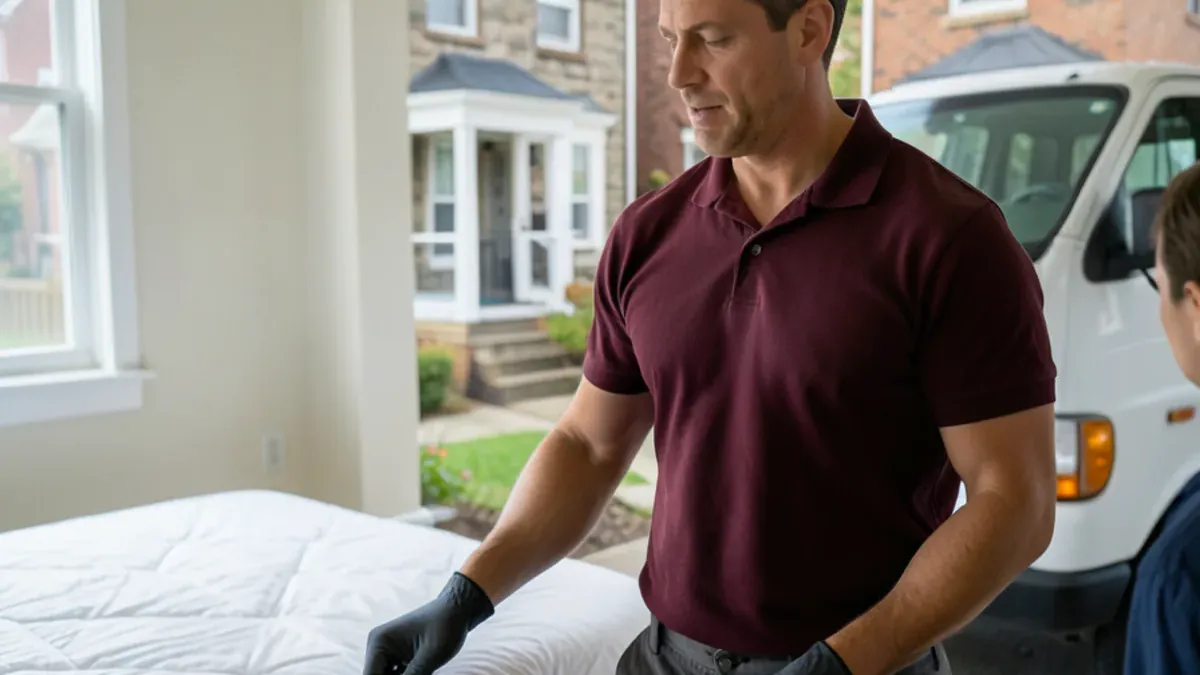
What professional bed bug spray actually does
A professional bed bug chemical treatment is not a mist over the whole room. Liquid products go into the cracks and seams where bugs rest, leaving a residue that kills bugs crossing it for weeks. Dust formulations, such as silica-based dusts, go into wall voids, outlet boxes and hollow bed frame parts, where liquids can't reach and dust stays active for a long time.
Vacuuming and contact products deal with the bugs you can see. The residual layer handles the ones you can't, including nymphs that hatch from eggs after the visit.
Why do store-bought bed bug sprays fall short?
Many consumer sprays only kill on contact, and bed bugs spend most of their lives tucked out of reach. Total-release foggers are worse: the mist settles on open surfaces while the bugs move deeper into walls, furniture and the rooms next door.
Bed bug populations in many areas have also become resistant to the pyrethroid insecticides common on store shelves. Professional plans rotate or combine product classes and lean on non-chemical steps, so resistance matters far less to the outcome.
Still waking up with bites after a week of spraying is a sign in itself. Bugs that survive a contact spray or a fogger tend to scatter into couches, closets and the bedroom next door, so the inspection has to widen. Keep the cans or bottles you used and show them to us, because knowing what went down, and where, helps us pick product classes and find where the bugs moved.
Where residual bed bug spray goes in local homes
Delaware County's older housing gives bed bugs plenty of cover. Pre-war twins and rowhomes have gaps under baseboards, radiator covers, picture rail and cracked plaster; later split-levels add carpet tack strip and hollow-core doors. Treatment follows the bugs into those spots.
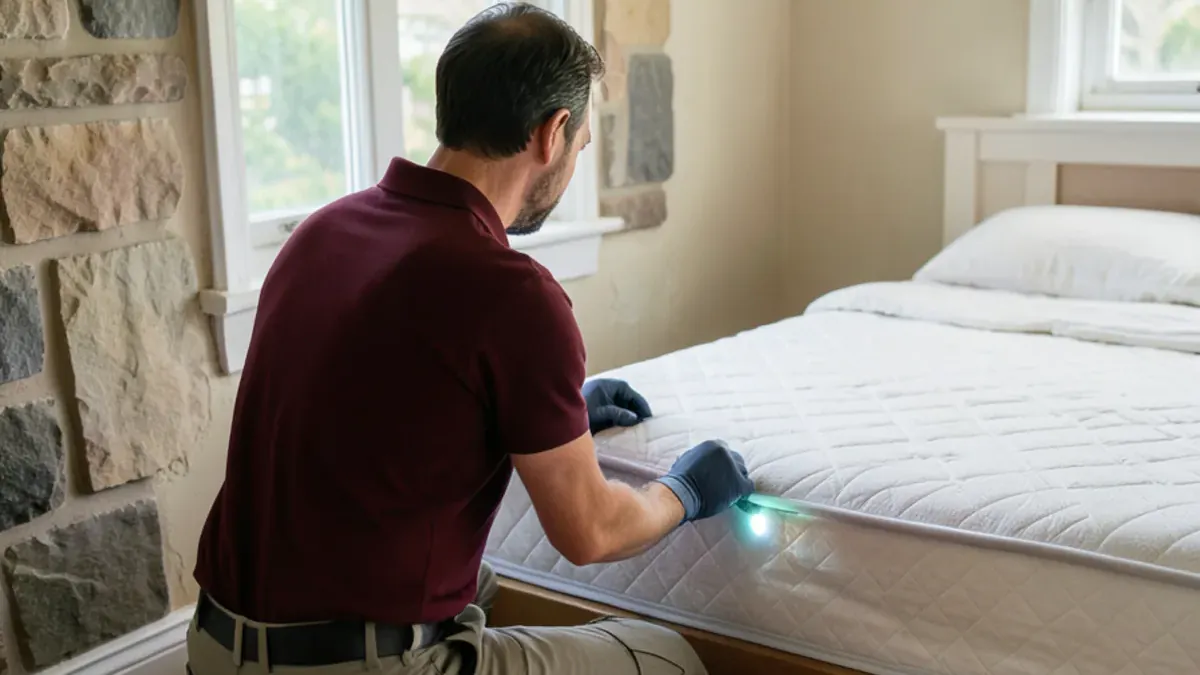
- Mattress and box spring seams, piping and the box spring's underside fabric
- Bed frame joints, slats, headboard backs and screw holes
- Nightstands, dressers and the undersides of drawers
- Couch and recliner seams, skirts and frames
- Baseboard gaps, carpet edges and tack strip
- Outlet and switch plate voids, treated with dust
- Door and window trim, radiator covers and picture rail near beds
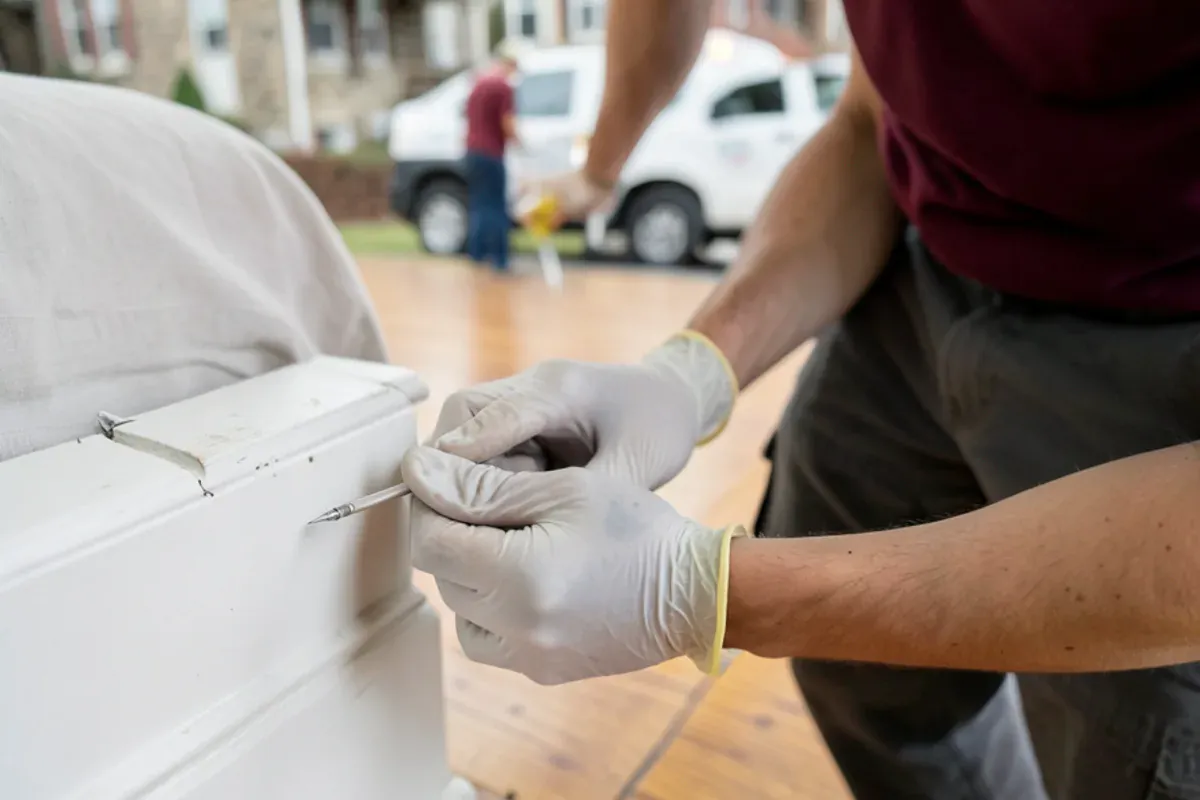
Mattress encasements, vacuuming and other non-chemical steps
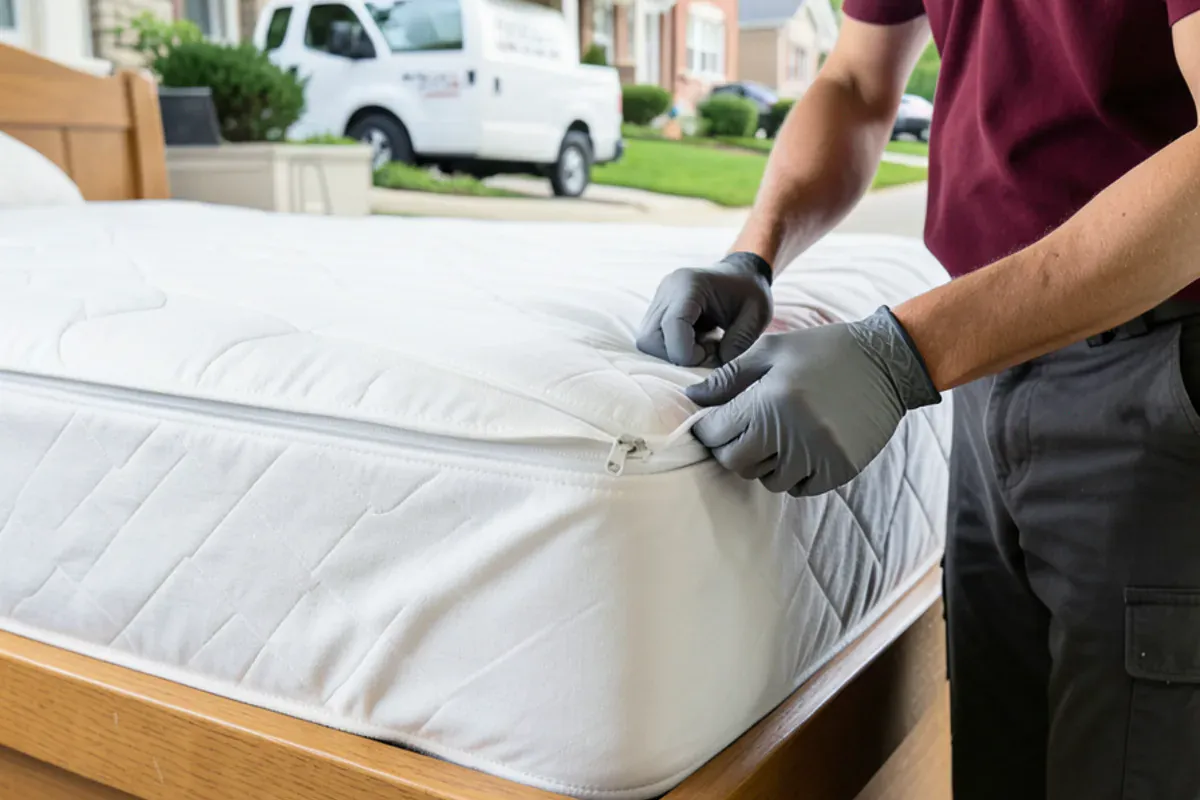
Mattress encasements are zippered covers made to be bed bug-proof. Once fitted, any bugs inside are sealed in, and the smooth surface leaves nowhere to hide, so new spotting is easy to see. Keep them on for at least a year, since adults can survive many months without a meal.
Vacuuming bed bugs out of seams and crevices before treatment cuts their numbers quickly. Use a crevice tool, then seal the vacuum bag in plastic and take it outside at once. Hot drying of linens and clothing, steam on heavily infested upholstery, and interceptor cups under the bed legs round out the plan.
Your chemical treatment visit, step by step
Review prep
We confirm linens are dried and bagged, floors are clear and beds stand a few inches from the walls.
Remove what we can
Live bugs, eggs and cast skins are vacuumed out of seams, tufts and frames.
Treat the bed and furniture
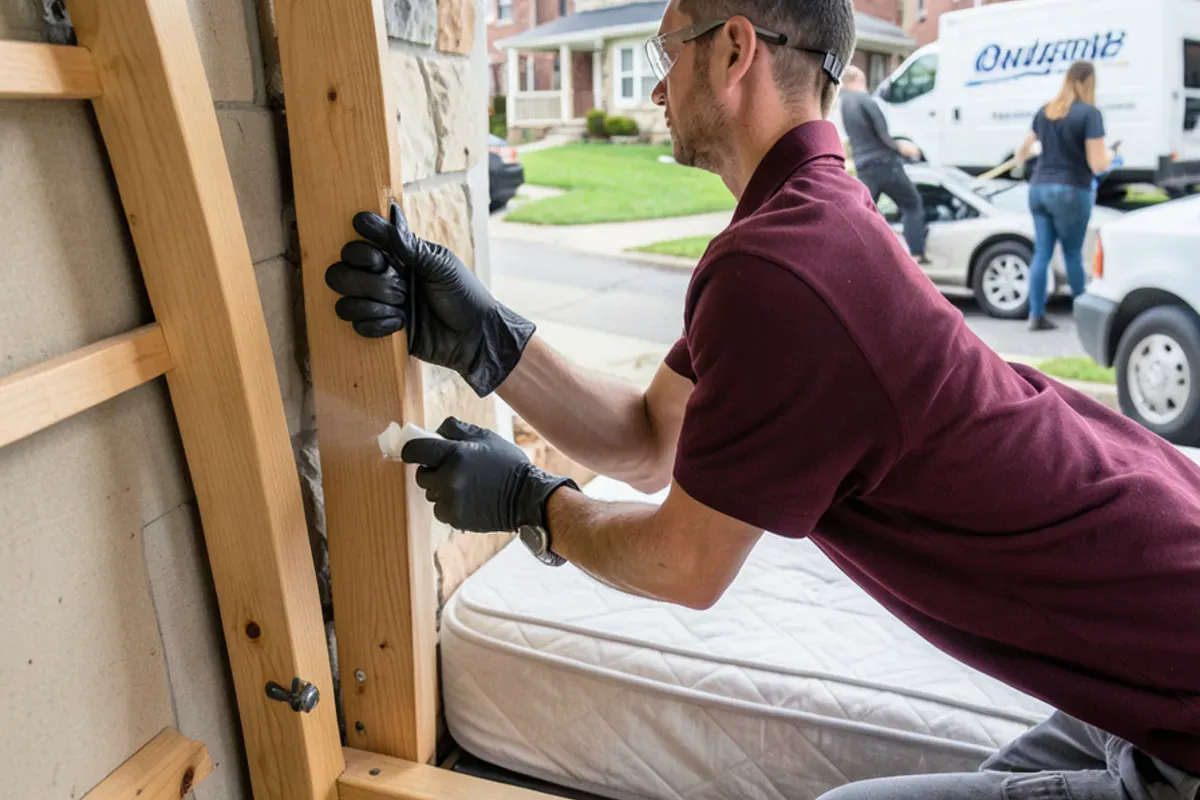
Seams, joints and undersides of beds, nightstands and upholstered seating receive a residual product.
Treat the room edges
Baseboards, carpet edges, trim and outlet voids get a liquid or a dust, depending on the spot.
Tell you when to re-enter
You get a time to stay out of the room until surfaces are dry, plus instructions for the days ahead.
Book the follow-up
The return visit is set for roughly two weeks out, to hit nymphs from eggs that survived the first round.
Talk to us about bed bug chemical treatment
Call and speak with Thom or his team. The inspection is free, and you get a written quote before any treatment.
- ★ 4.8 from 21 Google reviews
- Open 7 days, 8 a.m. to 7 p.m.
- Free inspection before treatment
- Family-run, based in Media, PA
Open 7 days, 8 a.m. to 7 p.m.
Why does a bed bug follow-up visit matter?
Eggs are glued into seams and cracks and are shielded from many products. They hatch over about one to two weeks, and each new nymph needs a blood meal before it can grow. A follow-up timed around two weeks after the first treatment kills those hatchlings before they mature and lay eggs of their own.
At the follow-up we inspect the same spots, compare activity with the first visit and re-treat where needed. Heavier jobs sometimes call for a third visit. The number planned for your home is written into the quote.
Pennsylvania pesticide law and the bed bug product label
Every residual liquid and dust in this treatment is an EPA-registered pesticide, and its label is legally binding. It lists the sites where the product may go, whether it may touch a mattress, and how long people and pets stay out of the room. In Pennsylvania, applying those products for hire is governed by the Pesticide Control Act of 1973, which the Pennsylvania Department of Agriculture (PDA) administers.
PDA licenses pest control businesses and certifies applicators by exam, and 7 Pa. Code § 128.31 requires the business license number on service vehicles. It's reasonable to ask any company for that number, and for the names of the products it plans to use in your bedrooms, before work starts.
What affects the cost of chemical bed bug treatment
Every price follows a free inspection and is put in writing, so you know what is covered.
Rooms that were already hit with store-bought sprays or foggers can enlarge the job, since scattered bugs often turn up in closets, couches and the next bedroom, and each extra room goes into the plan.
Housing style matters across Delaware County as well. Picture rail, radiator covers and deep baseboards in a pre-war Glenolden or Aldan house give residual products more ground to cover than the plain drywall of a newer townhome, and a party wall in a Colwyn twin brings the attached side into the conversation before the quote is final.
- Number of rooms and upholstered pieces to treat
- How long the infestation has been building
- Clutter that slows access to seams and baseboards
- Number of planned follow-up visits
- Encasements and monitors added to the plan
- Attached homes or apartments that also need attention
Living with treated rooms between visits
Once surfaces have dried and you have the go-ahead, sleep in the room again; in fact, you should. Sleeping elsewhere sends hungry bugs looking for you in rooms that weren't treated.
Don't wash or wipe down baseboards and bed frames between visits, since that removes the residual. Keep the bed off the wall, keep blankets from touching the floor, and leave clothing in sealed bags until the follow-up shows the room is clear. Renters can read how neighbor units fit in on our apartment bed bug treatment page, and hotels, dorms and care homes should see commercial bed bug extermination.
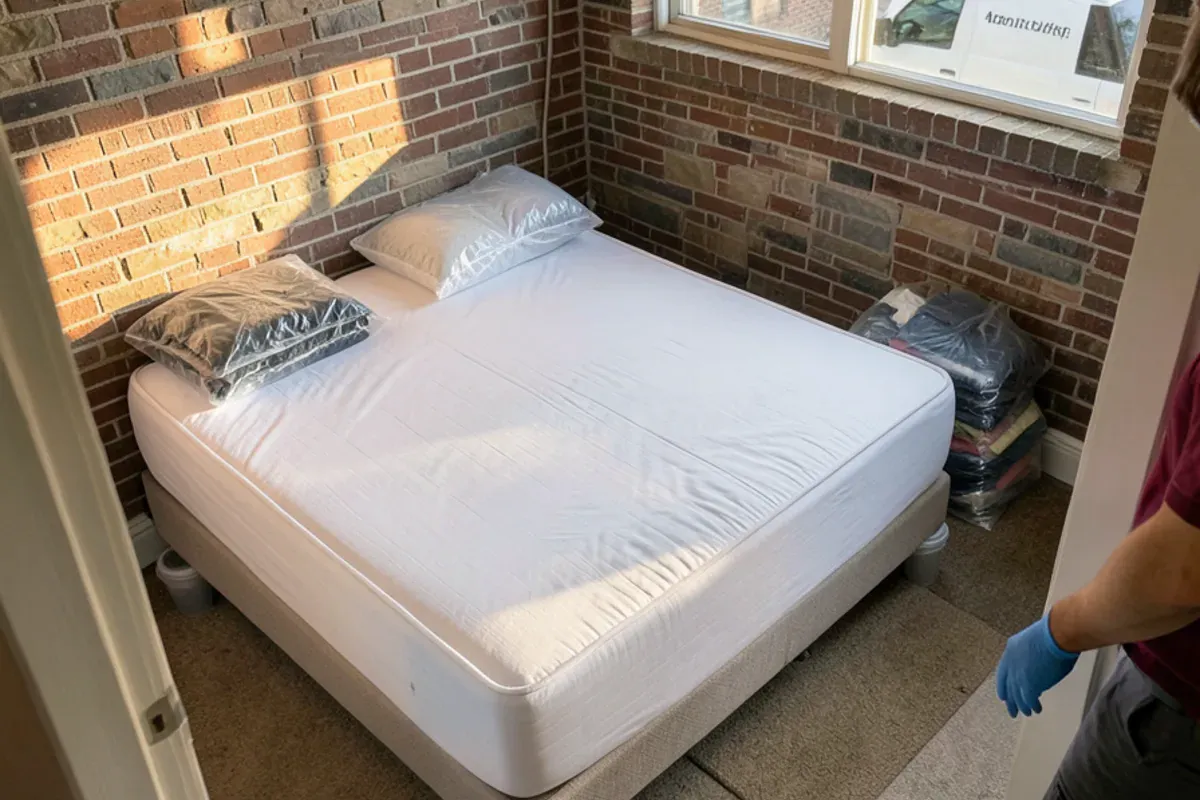
What our bed bug chemical treatment includes
- Free inspection and written quote
- Vacuuming of seams, tufts and frames before treatment
- Residual crack-and-crevice treatment of beds and furniture
- Dust treatment in outlet and wall voids where needed
- Baseboard, trim and carpet-edge treatment in affected rooms
- Encasement and interceptor cup recommendations
- Follow-up visit about two weeks later, with re-treatment where needed
Why call No Bugs Exterminator for bed bug chemical treatment
Specialists in bed bugs
Our business specializes in bed bugs, so follow-ups and hard-to-reach hiding spots are routine work for us.
Plan in writing
The free inspection leads to a written quote listing the rooms, the approach and each follow-up.
Follow-ups on weekends too
We're open 7 days, 8 a.m. to 7 p.m., so return visits can fit around your week.
Local and family-run
Thom and his team are based in Media and work in the older twins and rowhomes of Delaware County.
Quick start when bugs are biting
Same-day visits are often possible when the schedule allows — call early in the day.
Where we provide bed bug chemical treatment
In Yeadon, twin homes running up to Cobbs Creek share a center wall, and Darby has trolley-line rowhomes built the same way, so we pay close attention to the shared-wall side of each treated room. Larger pre-war houses in Swarthmore bring deep baseboards, radiator covers and picture rail, all of which get residual treatment when bed bugs are near.
- Glenolden
MacDade Boulevard homes with a 1954 median build year carry deep baseboards and trim gaps where residual products need careful placement.
- Norwood
Amosland Road streets between Darby and Muckinipattis creeks hold houses built around 1951, where plaster cracks and baseboard gaps are common hiding places.
- Folcroft
About a third of homes near the Heinz refuge are rented, so crack-and-crevice work often has to cover rooms on both sides of a shared wall.
- Aldan
Pre-war homes around the Clifton-Aldan rail stop have picture rail and old outlet boxes, spots where dust formulations reach bugs liquids miss.
- Darby Township
Briarcliffe and the township's other section date to around 1958, with carpet tack strip and baseboard gaps that hide bed bugs between visits.
- Eddystone
A river town at the mouth of Crum Creek with a 1948 median build year, where older walls and outlets need dust in their voids.
- Ridley Township
Holmes, Secane and Milmont Park houses from the 1950s include attached homes, so residual treatment pays close attention to any shared wall.
- Colwyn
Twin homes where Cobbs Creek meets Darby Creek, with about 55 percent rented, so follow-up timing has to work for tenants and owners.
- Parkside
Early-1900s bungalows beside Brookhaven have hollow trim and old floorboards that give bed bugs many cracks to rest in between visits.
What customers say on Google
4.8 out of 5 from 21 reviews on Google. Quoted as written by customers.
No Bugs Exterminator is the best I have seen. The owner is the nicest person in the world, he doesn’t rush anything, and is very thorough in job.
Thank you guys. I had bed bugs.!!! I called you and you came same day and all gone, now I can sleep with out getting bitten.
Thom is a top-notch pest control specialist! And is one of the most genuine guys in the industry. He came to inspect a situation I had going on at the house, took his time, offered detailed advice, and didn’t take a penny.
Bed Bug Chemical Treatment: common questions
How long after treatment should I stop seeing bed bugs?
Expect some bugs during the first one to two weeks, often slow-moving or dying in the open after crossing treated surfaces. After the follow-up visit, sightings should drop off sharply. Live bugs, fresh spotting or new bites three or more weeks after the final visit mean it is time to call so we can inspect again.
Why are follow-up visits needed?
Because eggs often survive the first treatment. They are cemented into seams and hatch over the next one to two weeks. A second visit about two weeks later treats those young nymphs before they can mature and breed. It also lets us check each room and adjust the plan if a couch or wall gap is still producing bugs.
Is it safe to sleep in the room after treatment?
Yes, once treated surfaces have dried and the re-entry time we give you has passed. Products go into seams, cracks and voids rather than across the bedding you lie on. Put on freshly dried linens, keep pets off treated furniture until it is dry, and follow the instructions we give you at the visit.
Will spraying make bed bugs spread to other rooms?
Repellent products and over-the-counter foggers can push bugs into walls and nearby rooms. Professional plans rely on non-repellent residuals and dusts that bugs walk across without sensing, so they stay put and pick up a lethal dose. We also check rooms beside the infested one, especially along shared walls in twins and apartments.
Do I need to throw away my couch?
Usually not. A couch's seams, skirt and frame can be vacuumed, steamed and treated much like a mattress. One that is torn, deeply infested or falling apart may be easier to replace, but wrap it in plastic and label it as infested before it leaves, so nobody picks it up off the curb.
Related services
Helpful guides from our blog
Ready to get rid of the problem?
Thom and his team serve Media, Delaware County and southeastern Pennsylvania, open 7 days, 8 a.m. to 7 p.m..
- ★ 4.8 from 21 Google reviews
- Open 7 days, 8 a.m. to 7 p.m.
- Free inspection before treatment
- Family-run, based in Media, PA
Open 7 days, 8 a.m. to 7 p.m.