
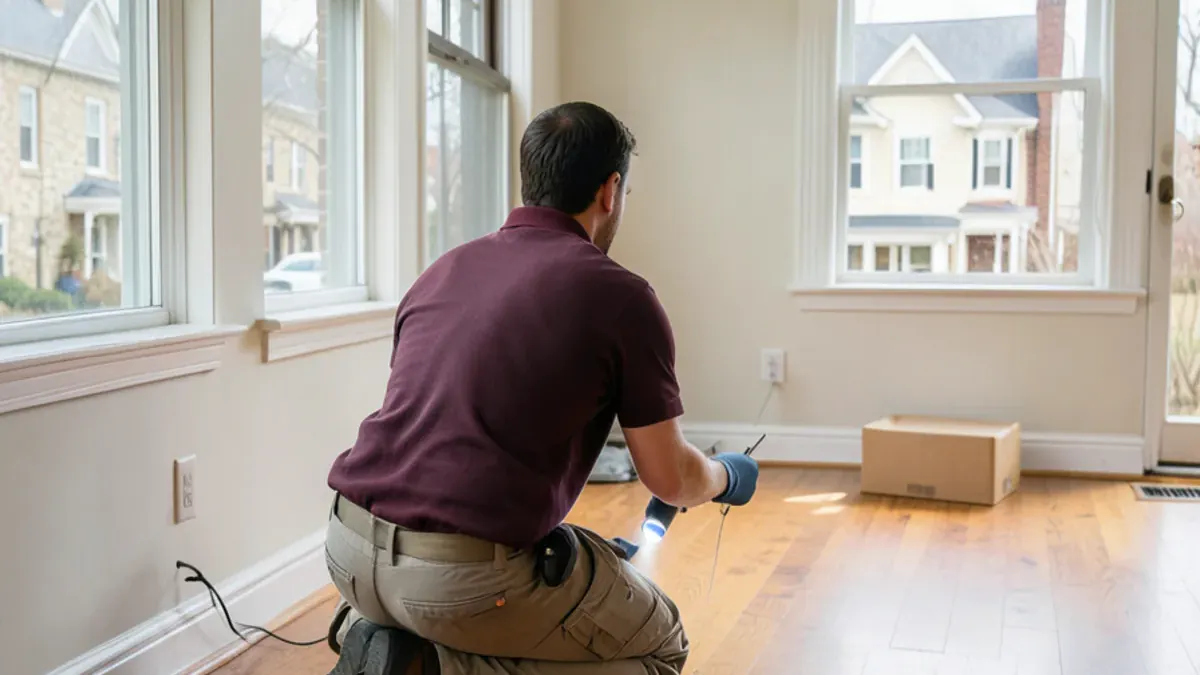
New home pest control in PA: what you inherit from the last owner
A home inspection for a sale looks at the roof, wiring and plumbing, not usually at the mice living behind the dishwasher. Pests that were tolerated, or hidden by furniture and boxes, become yours at closing.
In older Delaware County homes, the usual suspects are mice in basement sill plates, German cockroaches behind kitchen appliances, carpenter ants in damp porch framing and silverfish in bathrooms. A house that sat empty for months adds another problem: dried-out drain traps let in sewer odors and drain flies, and quiet rooms let mice spread out.
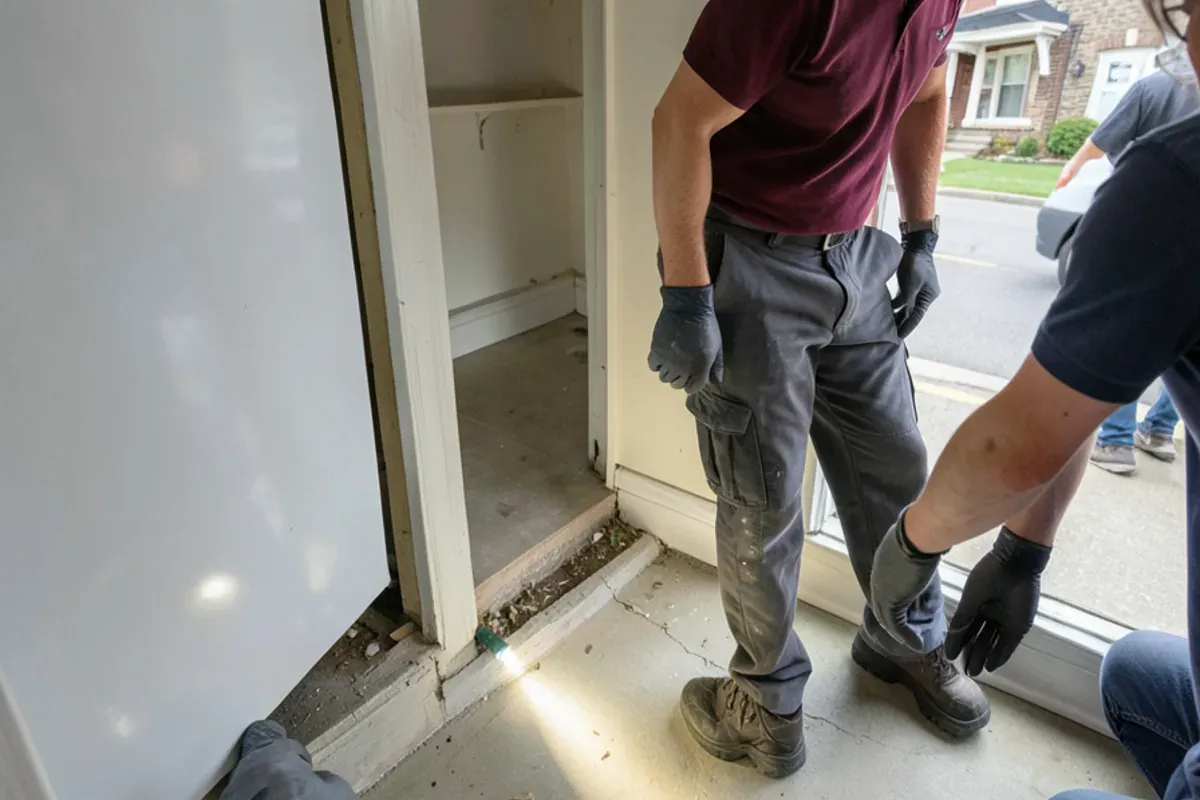
Pest treatment before moving in: why the empty house helps
With no furniture, we can reach behind baseboards, inside every cabinet, along closet floors and into the corners of the basement without moving a thing. Crack-and-crevice treatment and bait placement go faster and reach places that would be blocked once you unpack.
It also helps with timing. Re-entry intervals are easy to honor when nobody is living there yet, and sealing work, such as closing gaps around pipes, can be done before boxes are stacked in front of it.
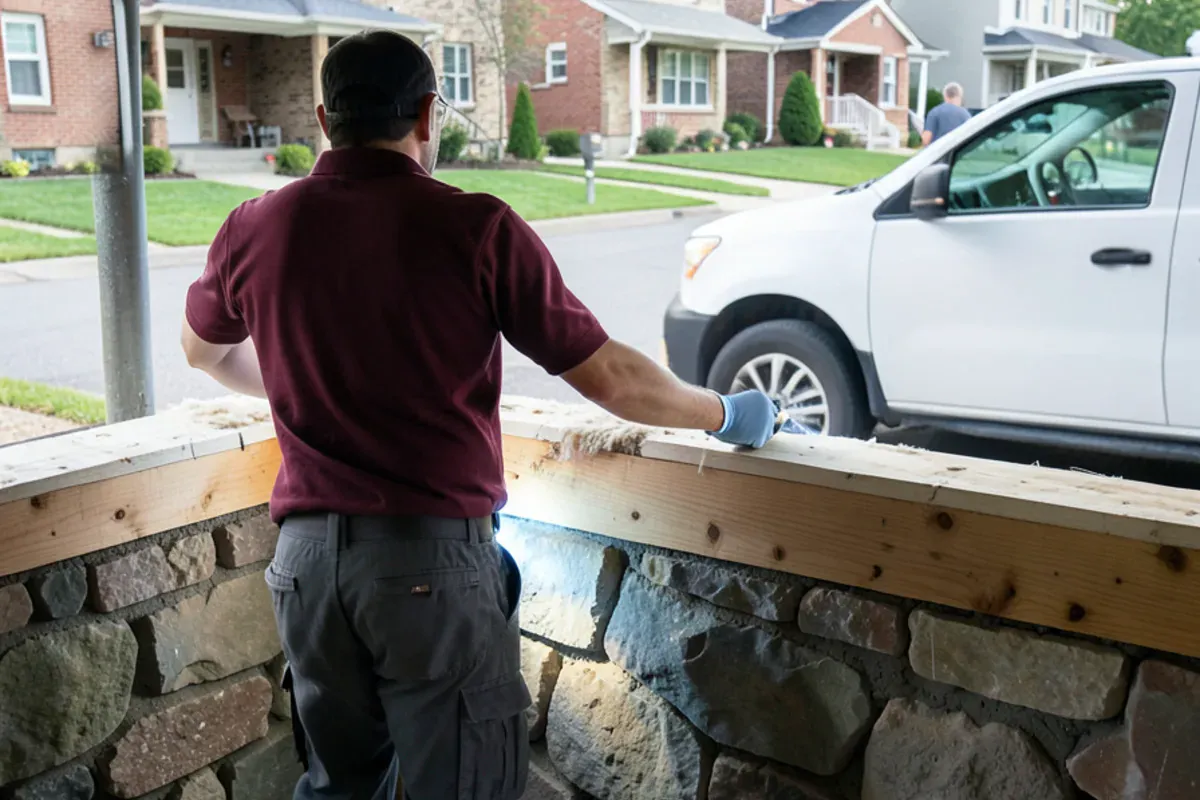
Empty rooms also reveal what furniture hid. Look for droppings at the back of bare cabinets, dead insects collected on windowsills, chewed corners on closet doors, grease marks along basement walls where mice ran, and small piles of sawdust under porch steps. In Delaware County houses near Darby, Crum or Chester Creek, a musty basement with damp sill wood is another cause we look for, because it draws carpenter ants and camel crickets.
Papers to gather at closing
Ask the seller or your agent for any pest records that came with the house. The most useful are the wood-destroying insect report from the sale, which commonly uses the NPMA-33 form and which lenders such as FHA or VA may require; receipts or notes from past pest treatments; and any termite service agreement, along with whether it transfers to you.
Bring those to the inspection. If a past termite treatment was done, its date and location tell us where to look first. If you still need a report for your own purchase, our WDI inspection report page explains what the lender is looking for.
What a move-in pest check covers
- Kitchen: behind and under appliances, inside every cabinet, under the sink
- Bathrooms: drain traps, vanity bases and gaps around supply pipes
- Basement or crawl space: sill plates, foundation cracks, moisture and droppings
- Attic: insulation, eaves and vents for nests and rodent signs
- Exterior: wood-to-soil contact, mulch depth, gaps around utility lines
- Garage: door seals and the shared wall with the house
How a move-in visit works
Book before move-in day
Call once you have a closing date; a visit a few days before the truck arrives gives treatments time to settle.
Free inspection of the empty house
We go room by room, top to bottom, while every surface is clear.
Written quote
You get a written quote for what we found, from a single targeted treatment to sealing and follow-up.
Treatment while empty
Baits, gels and dusts go into cabinets, voids and baseboards, and exterior work goes along the foundation.
Re-entry time and notes
We tell you when the movers and your family can come in and leave notes on what was applied where.
Optional check after you settle
If mice or roaches were active, a follow-up a few weeks after move-in confirms the problem is gone.
Talk to us about new home pest control
Call and speak with Thom or his team. The inspection is free, and you get a written quote before any treatment.
- ★ 4.8 from 21 Google reviews
- Open 7 days, 8 a.m. to 7 p.m.
- Free inspection before treatment
- Family-run, based in Media, PA
Open 7 days, 8 a.m. to 7 p.m.
Pennsylvania disclosure law, WDI reports and pest licensing at closing
Pennsylvania’s Real Estate Seller Disclosure Law requires sellers to disclose known material defects, and the standard disclosure form asks about wood-destroying insect damage and past treatment. Read that section before your move-in inspection and bring it with you.
A wood-destroying insect report, usually on the NPMA-33 form, must come from a properly licensed inspector. More broadly, the Pennsylvania Department of Agriculture (PDA) licenses pest control businesses under the Pesticide Control Act of 1973, so you can ask whoever treats your new house for its PDA license number. This is general information, not legal advice.
Is new construction free of pests?
Not entirely. Census (ACS) estimates show newer housing in places like Edgmont (median build year 1991), Bethel Township (1995) and Concord Township (1997). Building on former farmland and wooded lots disturbs soil and pushes field mice, ants and ticks toward the new houses.
Fresh mulch beds, stacked lumber left by the builder and irrigation along the foundation also attract pests. Southeastern Pennsylvania lies in a moderate-to-heavy subterranean termite zone, so ask your builder whether a soil treatment was applied; our pre-construction termite treatment page explains what that involves.
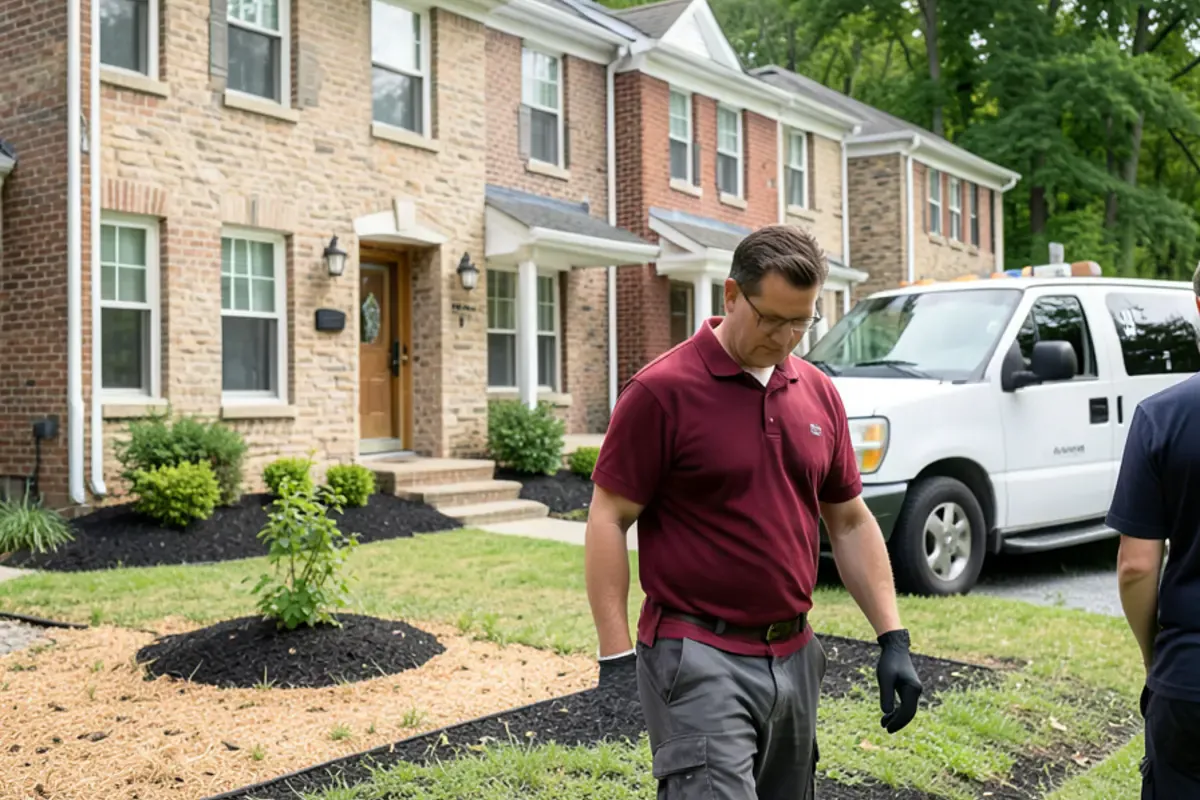
What affects the cost of a move-in treatment?
The quote depends mostly on what the inspection finds. A clean house may only need a preventive crack-and-crevice treatment and a few sealed gaps, while one with active mice or German cockroaches needs a fuller treatment and at least one follow-up after you unpack.
House age plays a large part. A 1940s twin with a fieldstone basement and a long sill line takes more sealing than a 1990s house on a poured foundation. A home that sat vacant through a winter often has more rodent activity to clear. Every item and visit is written into the quote before work starts:
- Size of the house and whether it has a basement, crawl space or attic
- Pests found during the inspection, if any
- How long the house sat empty and how many gaps need sealing
- Whether follow-up visits are needed after you move in
- Exterior work such as foundation treatment or mulch-line adjustments
Timing it around closing and the moving truck
Aim for a visit two to five days before move-in. We are open 7 days, 8 a.m. to 7 p.m., so a weekend between closing and moving day often works. If the house is already full of boxes, we can still treat, it just takes a little more moving things around.
Once you are settled, ongoing care looks like any other home; our residential pest control page covers what that involves. If Spanish is easier for your family, our exterminador en español page has the details.
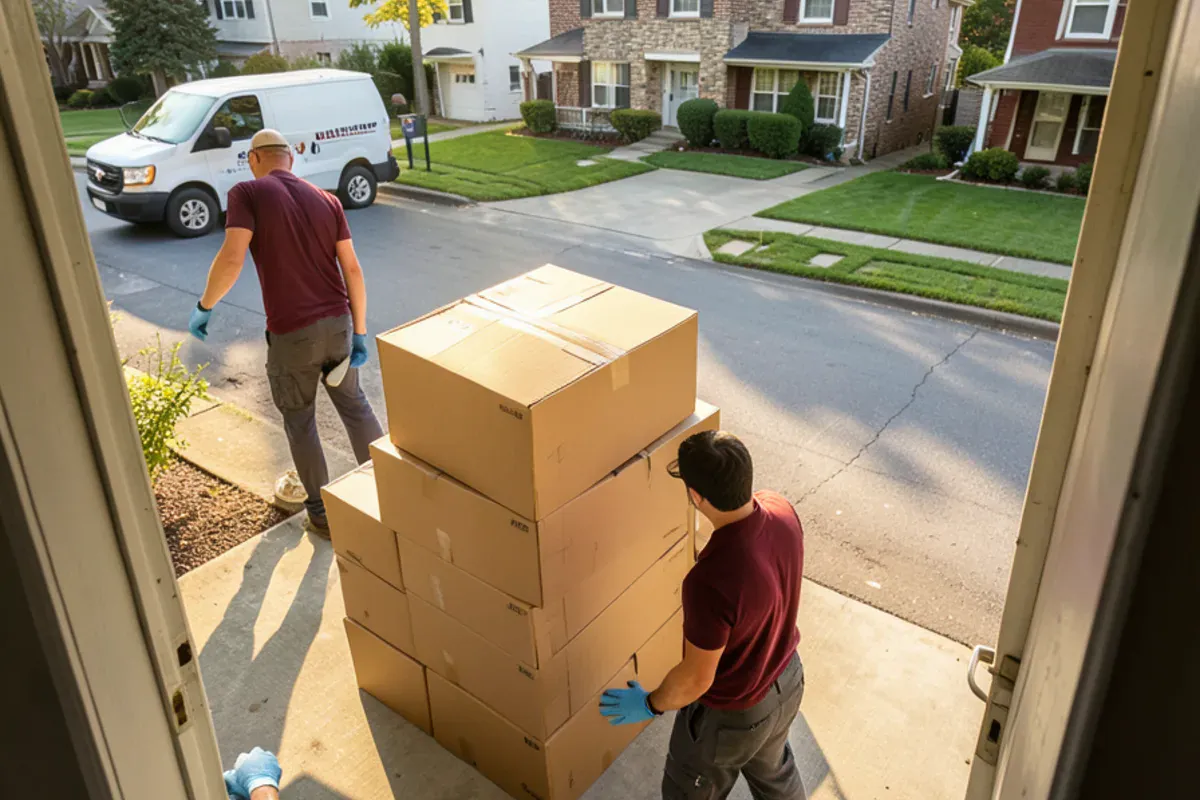
What our new home pest control includes
- Free room-by-room inspection of the empty house
- Review of the WDI report and past pest records you bring
- Written quote before treatment
- Crack-and-crevice and bait treatment while cabinets are empty
- Foundation-line exterior treatment where needed
- Sealing of small entry gaps found during the visit
- Re-entry guidance for movers and family
Why call No Bugs Exterminator for new home pest control
Easy to fit before the truck
We schedule 8 a.m. to 7 p.m., seven days a week, so the visit can land between closing and moving day.
Local to your new home
Thom and his team work from Media and serve new homeowners across Delaware County and nearby counties.
Inspection first, quote in writing
The move-in inspection is free, and you see the written quote before anything is applied.
Bed bugs, insects and rodents
We specialize in bed bugs and in controlling all insects and rodents, including the pests that ride in with moving boxes.
Google rating
Our 21 Google reviews average 4.8 stars.
Where we provide new home pest control
Move-in visits look different across our area. In Lansdowne and Ridley Park, Victorian-era and pre-war houses often come with basement mice and old sill plates to check. In Edgmont Township and Concord Township, newer subdivisions near woods and former fields bring fresh mulch beds, ticks and field mice to the foundation.
- Chester County
Subdivisions from the 1990s and 2000s west of Route 202 sit on former farmland, so new owners often meet field mice, ants and ticks in the first year.
- Montgomery County
Buyers moving into Main Line houses or Schuylkill River towns often inherit older stone foundations worth checking for mice and carpenter ants before unpacking.
- Boothwyn
Homes near Route 322 and Naamans Creek, with a median build year of 1972, can have slab-edge gaps and creek moisture a move-in check should cover.
- Chester Heights
Townhomes built around 1987 off Route 452 share walls with neighbors, so a pest the last owner put up with may still be active next door.
- Thornbury Township (Delaware County)
New owners of late-1990s large-lot homes near Glen Mills often find mulch beds against the siding and open fields drawing mice and ants to the foundation.
- Haverford Township
Many Havertown homes date to around 1950, so buyers should expect old sill plates, settled plaster and Darby Creek moisture to shape the move-in check.
- Springfield Township (Delaware County)
Post-war Cape Cods change hands often, and their block basements and attic knee walls hide mouse signs that an empty house finally reveals.
- Aston Township
Split-levels near Neumann University have lower levels at grade, where crickets and mice are easiest to stop before carpet and boxes go in.
- Upper Darby Township
Rowhome buyers here, where the median home dates to 1948, inherit party walls, so a move-in treatment should include the shared side of the basement.
- Middletown Township (Delaware County)
Houses around Glen Riddle and the Wawa station, built near 1977 on average, border woods and fields that send ants and ticks toward fresh landscaping.
What customers say on Google
4.8 out of 5 from 21 reviews on Google. Quoted as written by customers.
Thom + his team were amazing. Very professional + provided me with a quote that made the most sense for my situation. Clearly I was not being gouged. Thom put the client first.
Excellent Exterminator! Very courteous and professional! always arrives on time and will take care of any bugs!
Professional, thorough, great communication, timely, respectful of people and property…
New Home Pest Control: common questions
Should I treat a house before I move in?
If you can, yes. An empty house lets us reach every cabinet, closet floor and basement corner, so treatment is more thorough and you do not have to empty your kitchen later. A visit a few days before move-in also gives re-entry time without disrupting your family. If the inspection finds nothing, you have a baseline and nothing to treat.
Which pests hide in older Delaware County homes after a sale?
Mice in basement sill plates and wall voids, German cockroaches behind refrigerators and stoves, carpenter ants in damp porch framing and silverfish in bathrooms are the most common. Houses built before the 1950s, which make up a large share of eastern Delaware County, have more settling gaps for these pests to use.
Can you treat an empty house before furniture arrives?
Yes, and it is the easiest time to do it. We need access to the house, utilities on so we can check drains, and a contact who can meet us or arrange entry. After treatment, we tell you exactly when movers can start bringing furniture in, which is usually once any spray has dried.
Will moving boxes bring pests into the new house?
They can. Cardboard that sat in a basement or storage unit can carry German cockroaches, silverfish and occasionally bed bugs. Use new or clean boxes where possible, unpack kitchen and bedroom boxes first, and break down cardboard quickly rather than storing it in the new basement. Tell us if your old home had a pest problem.
Does a WDI report mean the house has no termites?
Not necessarily. A WDI report records the visible evidence an inspector found on the day of inspection, often on the NPMA-33 form. Termites hidden behind finished walls or under flooring may not show. If the report mentions past treatment or conditions conducive to termites, a closer termite inspection after closing is worth booking.
Related services

Helpful guides from our blog
Ready to get rid of the problem?
Thom and his team serve Media, Delaware County and southeastern Pennsylvania, open 7 days, 8 a.m. to 7 p.m..
- ★ 4.8 from 21 Google reviews
- Open 7 days, 8 a.m. to 7 p.m.
- Free inspection before treatment
- Family-run, based in Media, PA
Open 7 days, 8 a.m. to 7 p.m.