

Which pests cause trouble in Delaware County houses?
Housing age drives much of it. Census (ACS) estimates put the median home in Lansdowne at 1943, in Upper Darby at 1948 and in Yeadon at 1951. Houses of that era have fieldstone foundations, plaster walls with settling cracks and pipe chases that connect the basement to the upper floors.
Mice squeeze through gaps about the size of a dime, and the first cold nights each fall send them, along with stink bugs and boxelder bugs, toward warm basements and attics. Homes that back onto Crum, Ridley or Darby Creek also deal with damp-loving pests such as camel crickets, millipedes and carpenter ants.
Catch the early signs before a problem settles in: pepper-sized droppings at the back of a kitchen drawer, a stale ammonia smell under the sink, ants marching from a window sill after a rainstorm, or small piles of wood shavings below a damp porch post. Each sign points to a different pest and a different plan, and the inspection tells you which one you have.
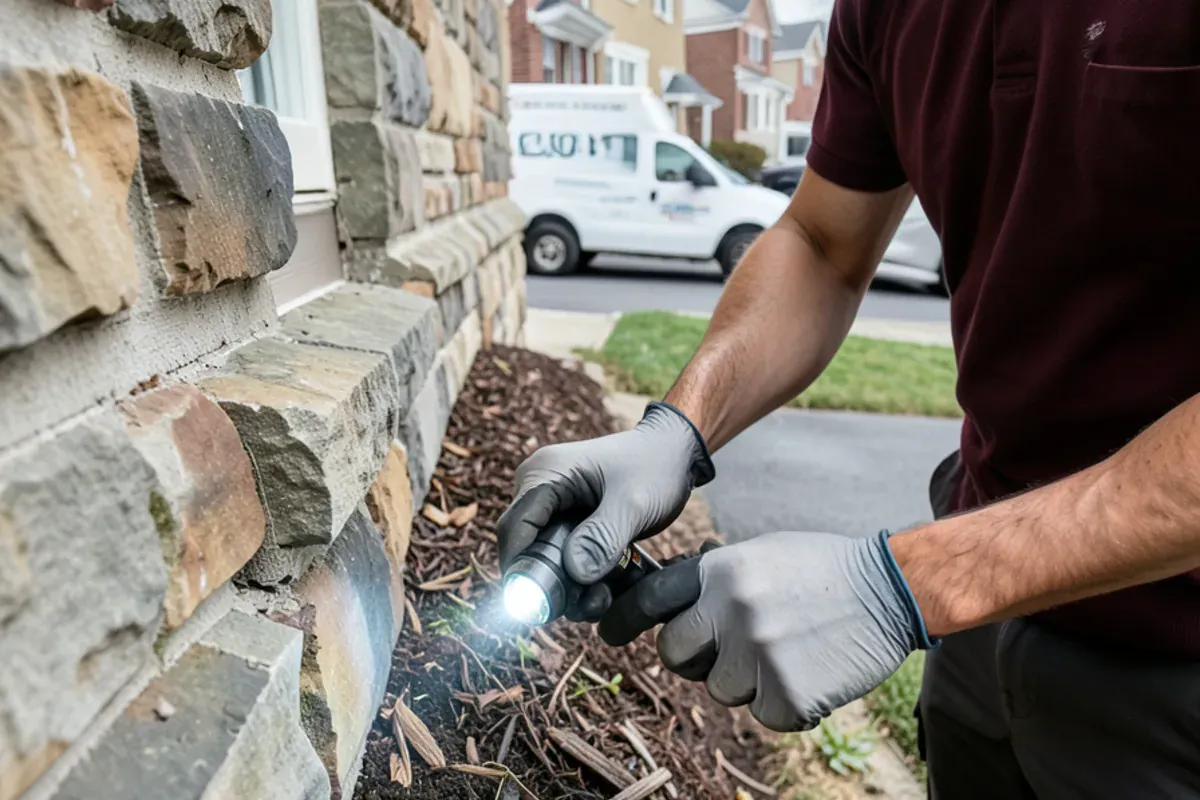
Twin home and rowhome pest control: what shared walls change
A twin or rowhome shares a party wall and often a basement wall with the house next door. German cockroaches, mice and bed bugs move along those shared voids, so treating only one side can push activity toward the other for a while.
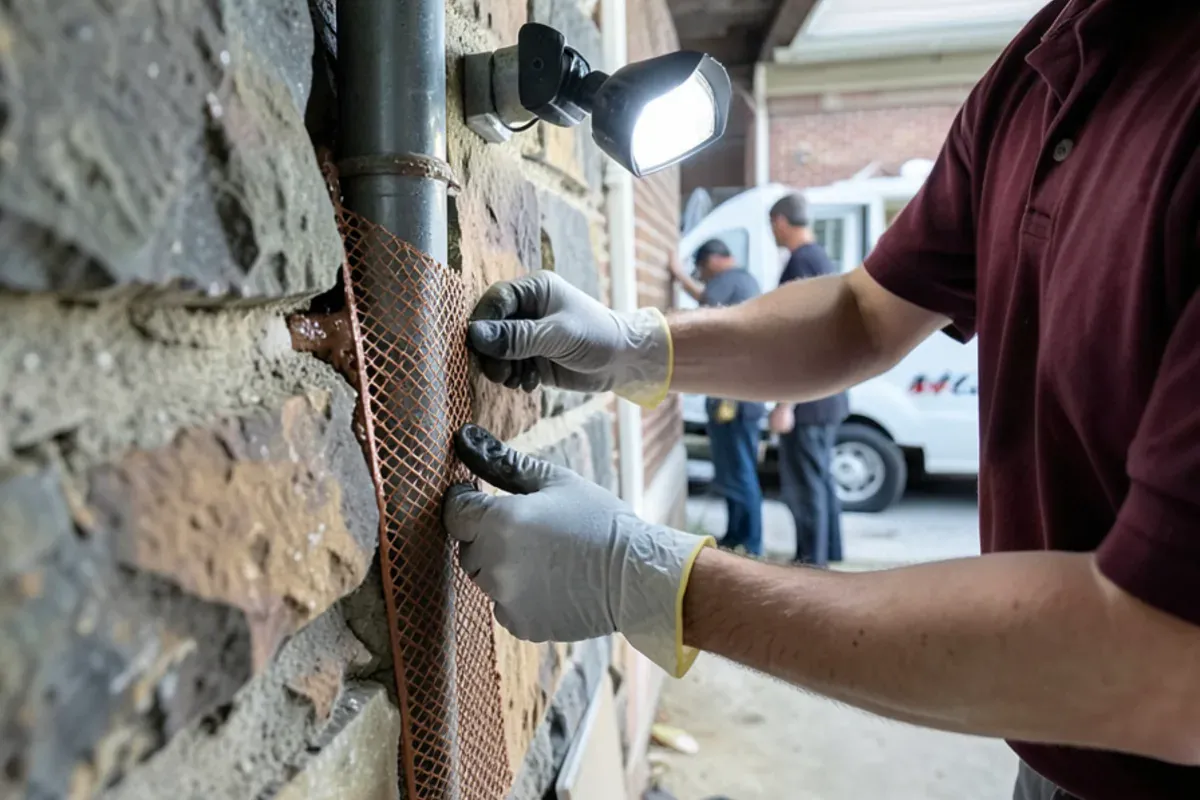
We concentrate on the points where your side meets that wall: outlet boxes, baseboard gaps, plumbing holes under sinks and the joist pockets in the basement. Closing those openings matters as much as any product we apply.
If your neighbor sees the same pest, treating both sides around the same time makes the result last.
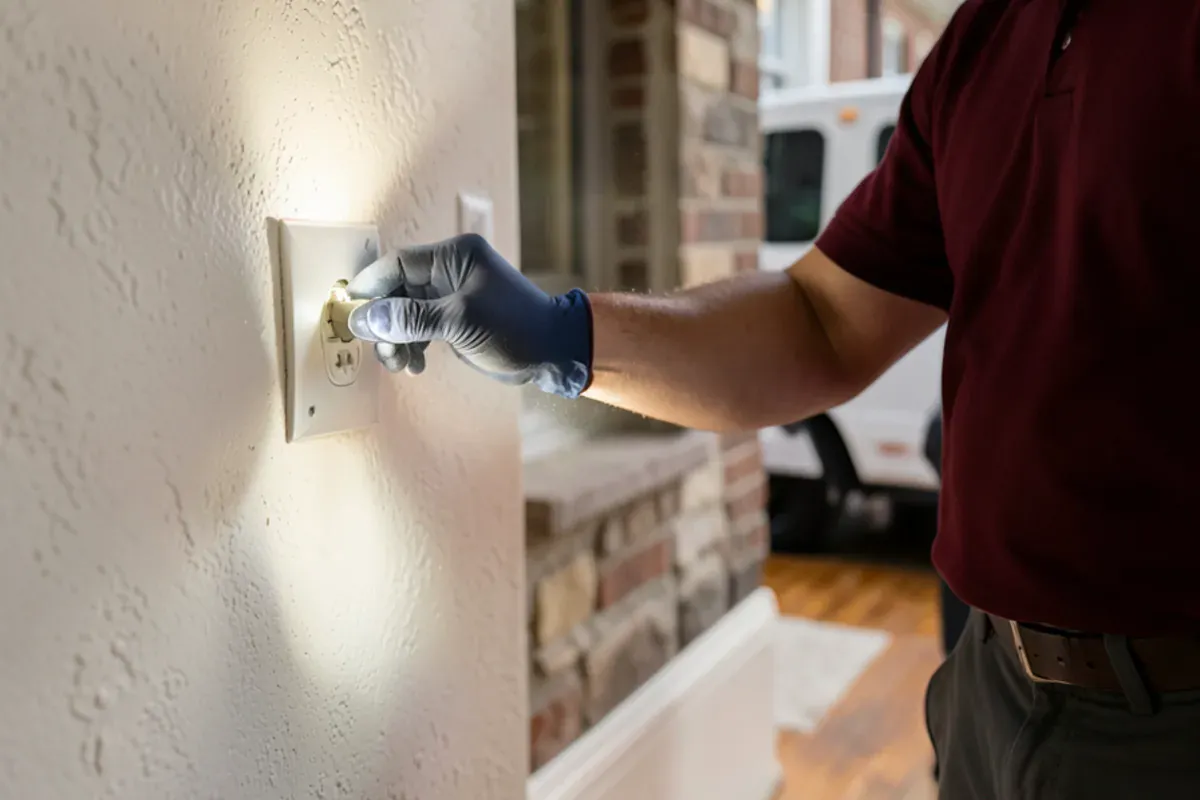
How a home pest control visit runs, step by step
You call and describe the problem
Tell us what you see and where. We book a time between 8 a.m. and 7 p.m., any day.
Free inspection, inside and out
We check the kitchen, baths, basement, attic access and exterior walls for droppings, shed skins, trails, nests and entry gaps.
Written quote
You receive a written quote naming the target pest, the areas to treat and any prep, before anything is applied.
Targeted treatment
Gels, baits, dusts or sprays go into cracks, voids and the foundation line, not across open floors.
Re-entry and notes
We tell you when each treated room is ready to use again and leave notes on what was applied and where.
Follow-up when the pest needs it
Mice and German cockroaches usually need a second check; we set that date before we leave.
What a residential visit covers, and what needs its own plan
General home service targets the crawling and nesting pests that commonly move into Pennsylvania houses. Termites and bed bugs follow their own inspection and treatment protocols, explained on our termite control and bed bug treatment pages.
- Odorous house ants, pavement ants and carpenter ants
- German and American cockroaches
- House mice and Norway rats, including entry-point sealing
- Spiders, centipedes, millipedes and camel crickets
- Stink bugs, boxelder bugs and other fall invaders
- Wasp and yellow jacket nests near doors, decks and eaves
How do we keep you in the loop?
Every job starts with a written quote, so you see the plan before work begins. After treatment, we note the products used, where they were placed and how long children and pets should stay out of treated rooms.
Keep those notes with your house papers; they help if a pest returns, if you switch to recurring service or if a buyer later asks what was done.
Talk to us about residential pest control
Call and speak with Thom or his team. The inspection is free, and you get a written quote before any treatment.
- ★ 4.8 from 21 Google reviews
- Open 7 days, 8 a.m. to 7 p.m.
- Free inspection before treatment
- Family-run, based in Media, PA
Open 7 days, 8 a.m. to 7 p.m.
Family-safe pest control in a lived-in house
Most home treatments place product in cracks, wall voids, tamper-resistant bait stations and along the outside foundation, out of reach of toddlers and pets.
We ask about pets, fish tanks, pregnancy and asthma first, then adjust products and placements. Covering the aquarium and picking up pet bowls is usually all the prep a general visit needs.
Pennsylvania pesticide rules that protect your household
Home pest control in this state falls under the Pennsylvania Department of Agriculture (PDA), which enforces the Pesticide Control Act of 1973. Under that law, PDA licenses pest control businesses and certifies the applicators who do the work, and 7 Pa. Code § 128.31 requires a business to show its license number on its service vehicles.
Before anyone treats your house, ask for the company’s PDA business license number and check it with the department. Ask, too, which products will be used indoors; the label sets the legal limits on where and how each one may go. If your child’s school sends a pesticide notice home, that comes from Act 35 of 2002, which requires public schools to run integrated pest management plans.
What shapes the cost of residential pest control in Delaware County, PA?
The price follows the work your house needs, not a flat rate per call. A 1940s rowhome with an open party-wall basement can take more sealing time than a newer colonial on a poured foundation, even though the colonial has more square feet.
Access matters as well. A finished basement with a drop ceiling, a crawlspace under an addition or a packed attic stretches both inspection and treatment. An established German cockroach population in a kitchen usually means a clean-out visit plus follow-ups. Each of these items, and the number of visits, appears on the written quote before we start.
If the same pest returns every season, compare quarterly pest control plans with a one-time pest treatment before you decide.
- The pest involved and how established it is
- Square footage and number of levels, including basement and attic
- Shared party walls that need extra treatment and sealing
- How many entry gaps need closing
- Whether follow-up visits are needed
- A single visit versus recurring service
Scheduling around school, work and the seasons
We are open 7 days, 8 a.m. to 7 p.m., so a Saturday morning or an early-evening weekday slot often suits working families. Mention any deadline on the call, such as a party or a house showing, and we will plan around it.
Book a few weeks ahead of the season that usually bothers you, so treatments have time to work before the pests peak.
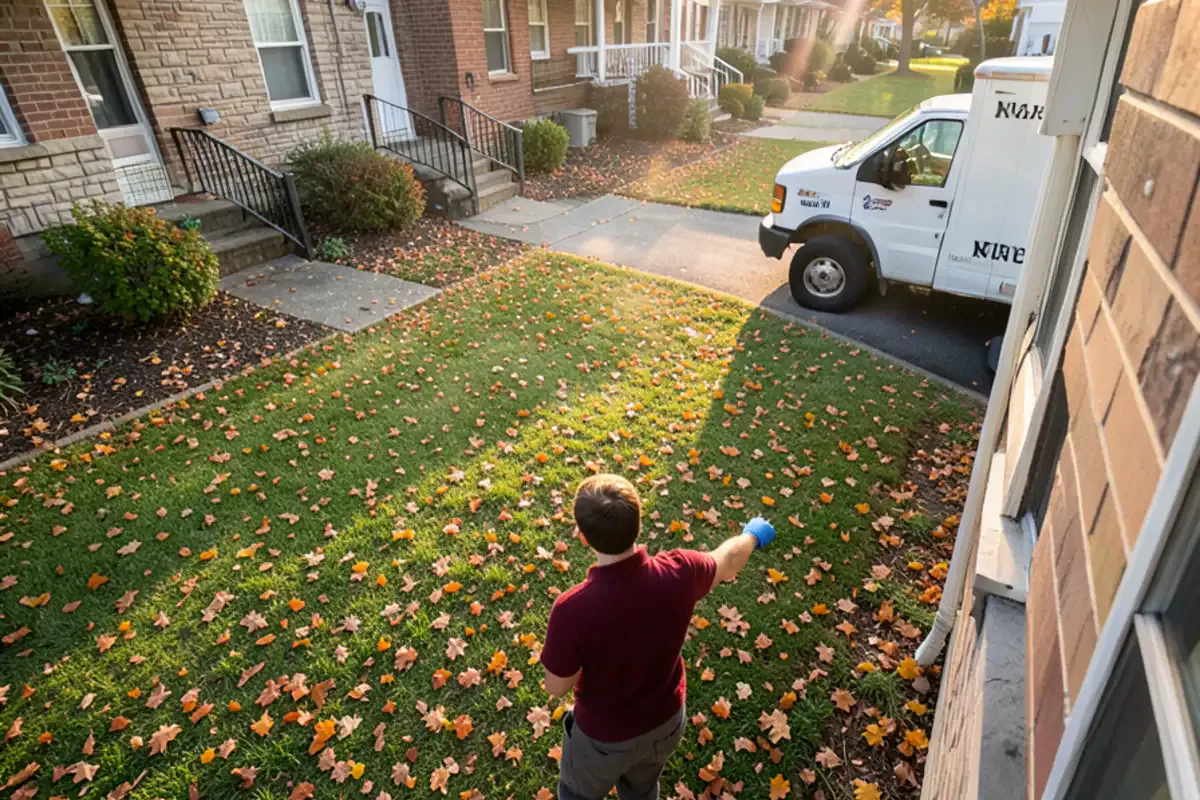
What our residential pest control includes
- Free inspection of living areas, basement, attic access and exterior
- Written quote before any product is applied
- Crack-and-crevice, gel and bait placements indoors
- Foundation-line exterior treatment where the pest calls for it
- Sealing of small entry gaps found during the visit
- Written notes on products, locations and re-entry times
- Follow-up check on mouse and cockroach jobs
Why call No Bugs Exterminator for residential pest control
Family-run, based in Media
Thom and his team work out of Media, so most Delaware County homes are a short drive from our base.
Inspection before treatment
We look at your house at no charge and hand you a written quote before treating anything.
Seven days a week
Home visits run 8 a.m. to 7 p.m. every day, weekends included.
Insects, rodents and bed bugs
The business specializes in bed bugs and in controlling all insects and rodents.
Well reviewed on Google
Customers have given us 4.8 stars across 21 Google reviews.
Quick visits when you need them
Same-day visits are often possible when the schedule allows — call early in the day.
Where we provide residential pest control
We serve houses across Delaware County. In Upper Darby and Lansdowne, pre-war twins and rowhomes mean shared-wall work on most jobs. In Springfield, post-war Cape Cods bring basement mice and fall invaders, while wooded lots in Upper Providence beside Ridley Creek State Park put carpenter ants, ticks and camel crickets close to the back door.
- Drexel Hill
Brick twins from around 1949 and the large Drexelbrook apartment community mean roaches and mice often travel through shared walls and utility runs.
- Haverford Township
Havertown and Llanerch homes from about 1950 back onto the wooded banks of Darby Creek, which brings carpenter ants, camel crickets and fall mice.
- Ridley Township
Post-war houses in Holmes, Secane and Milmont Park, with a median build year of 1957, see basement mice and stink bugs every October.
- Swarthmore
Large pre-war homes beside the Crum Woods have deep basements, big attics and porches where mice, ants and overwintering stink bugs settle in.
- Marple Township
Homes from around 1962 near Lawrence Park and the Broomall strip get spring ant trails and wasp nests under deck boards and eaves.
- Folsom
Compact post-war streets around Ridley High School and Morton Avenue share fences and back yards, so mice and yellow jackets move easily between lots.
- Prospect Park
Rail-borough twins from about 1949 on the Darby Creek side pair shared walls with damp basements that suit millipedes and camel crickets.
- Aston Township
Split-levels from the 1960s and 1970s along the Chester Creek valley have lower-level family rooms where crickets, spiders and mice show up first.
- Rose Valley
Deep woods around this Arts-and-Crafts community put carpenter ants and ticks right against older timber, stucco and stone houses.
- East Lansdowne
Pre-war twins with a median build year of 1938 have settled plaster and long party walls that let roaches and mice cross between homes.
What customers say on Google
4.8 out of 5 from 21 reviews on Google. Quoted as written by customers.
Thom + his team were amazing. Very professional + provided me with a quote that made the most sense for my situation. Clearly I was not being gouged. Thom put the client first.
Excellent Exterminator! Very courteous and professional! always arrives on time and will take care of any bugs!
Professional, thorough, great communication, timely, respectful of people and property…
Residential Pest Control: common questions
How do shared walls in Delaware County twins and rowhomes change pest treatment?
They make your house and your neighbor's behave like one building. Roaches, mice and bed bugs travel through party-wall voids, so we treat and seal the spots where your side meets that wall, such as outlets, plumbing runs and basement joist pockets. Treating both sides together keeps it from crossing back.
What does a residential pest visit include?
It includes an inspection inside and out, a written quote, the treatment and notes on what was applied. Indoors we use gels, baits and dusts in cracks and voids; outside we treat the foundation line when the pest calls for it. On mouse jobs we close the gaps they use, often around pipes and sill plates in older Delaware County basements.
Do I need to leave the house during treatment?
Usually not for the whole visit. With crack-and-crevice and bait work you can stay home, but keep people and pets out of the room being treated until we say it is ready, typically once any spray has dried. A heavy kitchen roach clean-out can need a longer break, and the written quote will say so.
Which seasons bring the most pests into Media homes?
Spring and fall. Warm spring days, often right after rain, bring ants and termite swarmers. From October, cold nights push mice, stink bugs and boxelder bugs into Media attics and basements. Summer belongs to wasps, yellow jackets and creek-side mosquitoes. Scheduling a few weeks before the season that usually bothers you lets treatments settle in first.
Can you treat one problem, like mice, without signing up for a yearly plan?
Yes. Many homeowners start with a single targeted service for one pest. We inspect, quote and treat that problem, and set a follow-up only if the pest needs one, as mice usually do. Recurring service is worth discussing later, once you have seen how the first treatment worked.
Related services
Helpful guides from our blog
Ready to get rid of the problem?
Thom and his team serve Media, Delaware County and southeastern Pennsylvania, open 7 days, 8 a.m. to 7 p.m..
- ★ 4.8 from 21 Google reviews
- Open 7 days, 8 a.m. to 7 p.m.
- Free inspection before treatment
- Family-run, based in Media, PA
Open 7 days, 8 a.m. to 7 p.m.