
What are a landlord's pest responsibilities under Pennsylvania law?
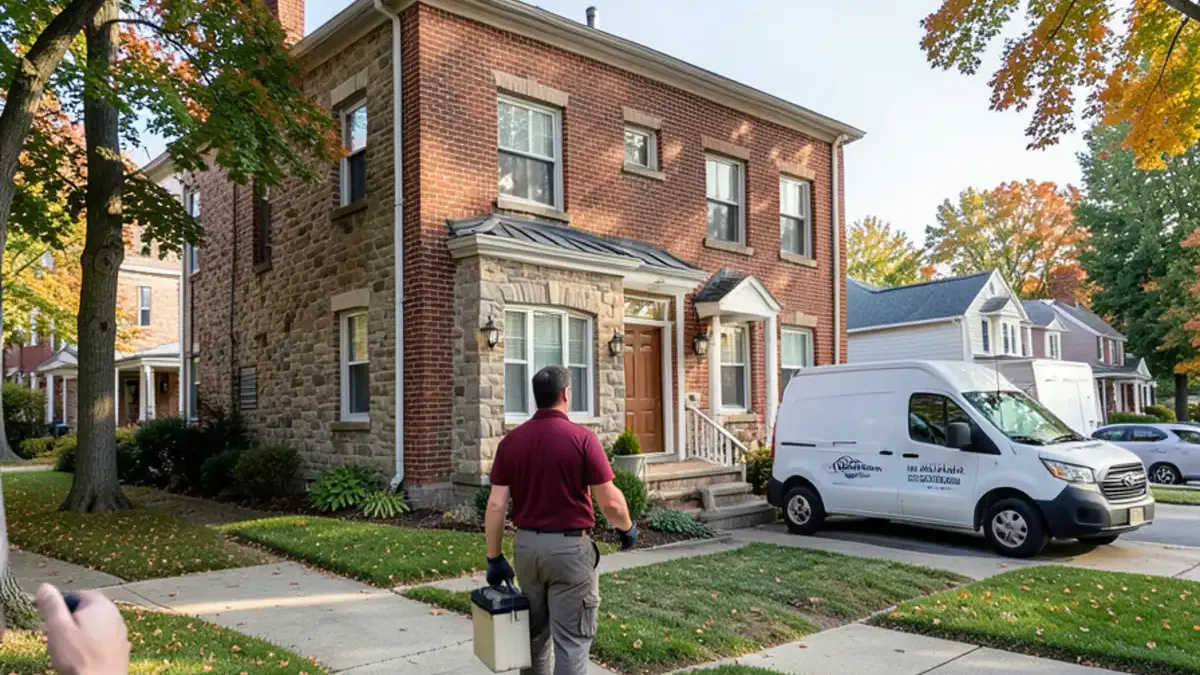
Pennsylvania courts recognize an implied promise of habitability in residential leases, going back to Pugh v. Holmes in 1979, and a serious infestation can bear on that. Leases often assign routine pest problems, such as ants in one kitchen, to the tenant, while building-wide issues stay with the owner. In practice, roaches and bed bugs in attached units almost always need the owner to coordinate treatment, whatever the lease says. This is general information, not legal advice.
The risk is higher in eastern Delaware County. Census (ACS) estimates put the renter-occupied share at about 60% in Chester, 55% in Yeadon, 50% in Darby and 43% in Upper Darby, much of it in pre-war twins and rowhomes where shared walls and connected basements let pests move freely between households.
When does one unit's pest problem become a building problem?
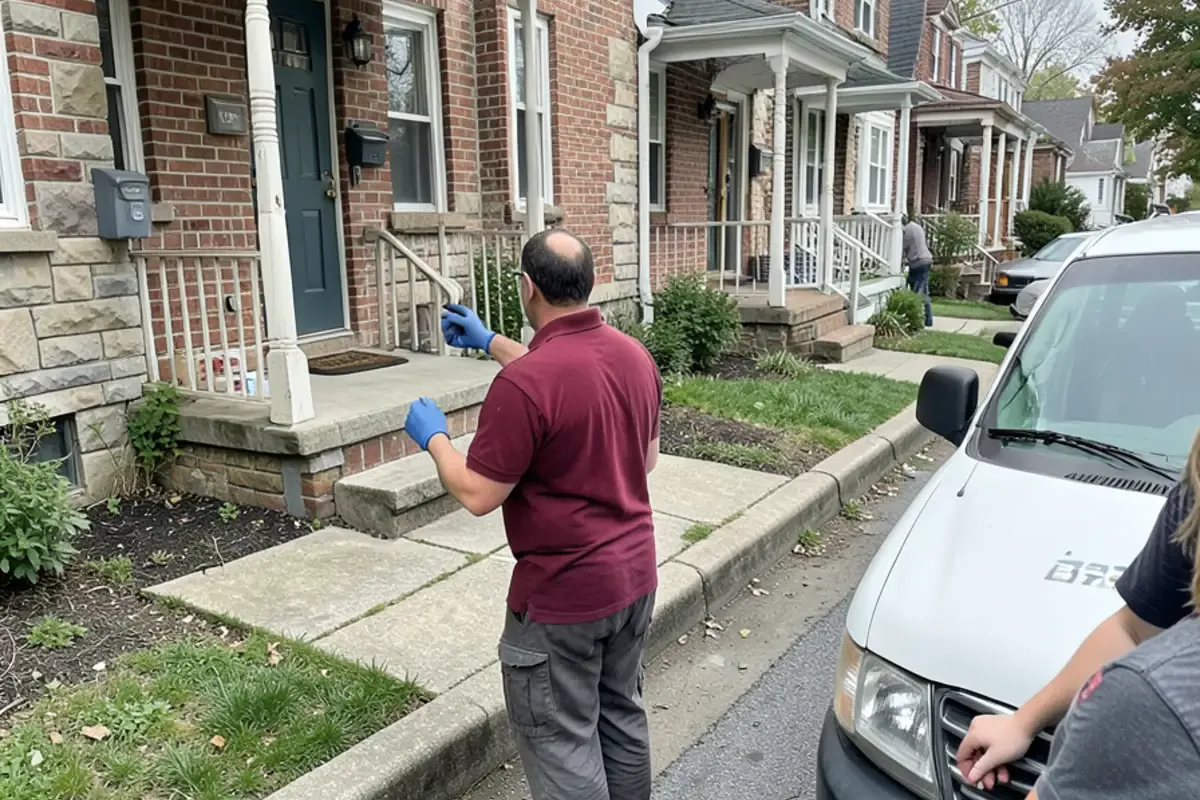
Usually sooner than the first complaint suggests. The pattern we watch for is repetition along a line: a roach report from 2B, then 3B a month later, then droppings in the basement laundry below them. That sequence points to a plumbing chase or shared wall, and treating only the unit that called just pushes the population next door.
Other warning signs show up in common areas first. German cockroaches seen in a trash room during the day, mouse droppings behind mailboxes, or a bed bug report from a unit beside one treated last season all mean the problem has outgrown a single apartment. So does a tenant setting off store-bought foggers, which tends to scatter roaches into neighboring units rather than kill them.
Local housing makes this common. Pre-war twins converted to apartments, connected rowhome basements and large garden-apartment complexes such as Drexelbrook all give pests routes that cross unit lines.
Building-wide contracts and what they cover
A building-wide contract covers the shared spaces where problems start and spread, then reaches into units on a rotation or when a tenant reports activity. For HOAs, the plan usually stays with exterior and common elements, leaving the inside of owner units to each owner. Our apartment pest control page explains how single-unit calls work for smaller landlords.
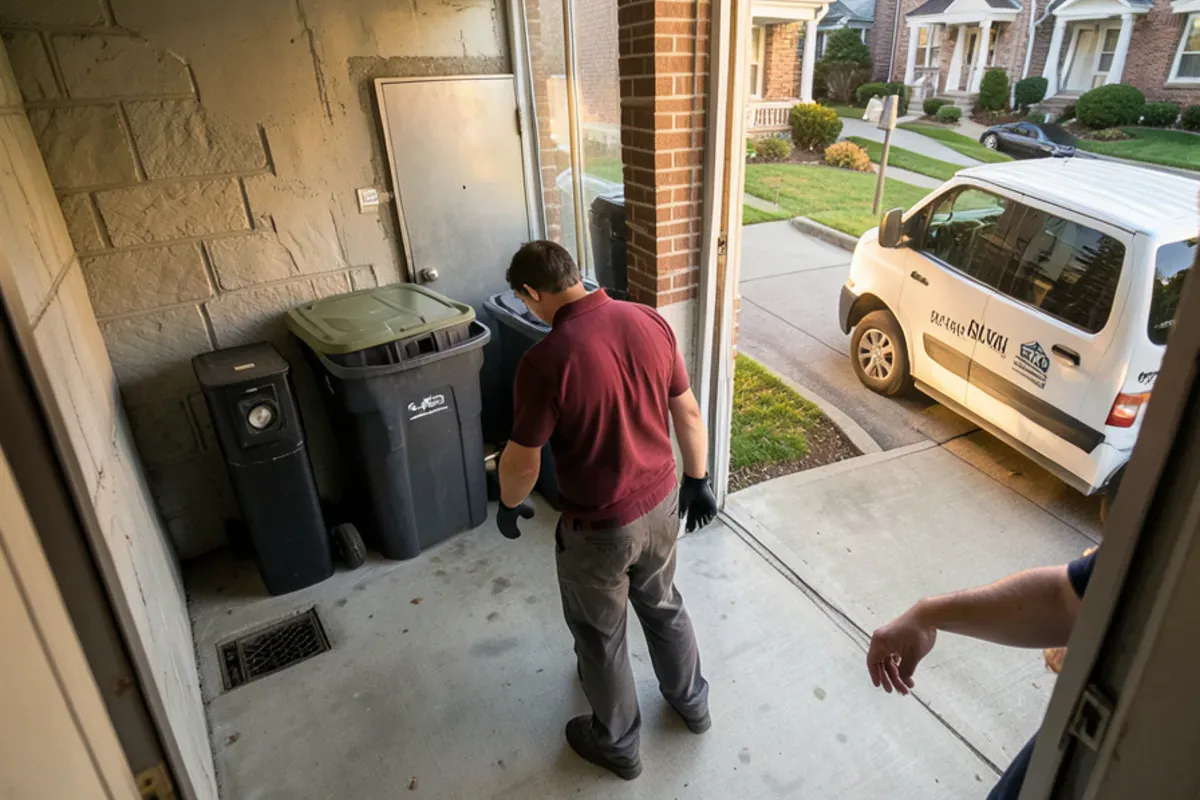
- Trash rooms, compactor chutes and dumpster enclosures
- Boiler rooms, basements and storage cages
- Laundry rooms and mail areas
- Hallways, stairwells and community rooms
- Exterior foundation, entry doors and utility penetrations
- Individual units on a rotation, at turnover or on request
How do tenant notices and unit access work?
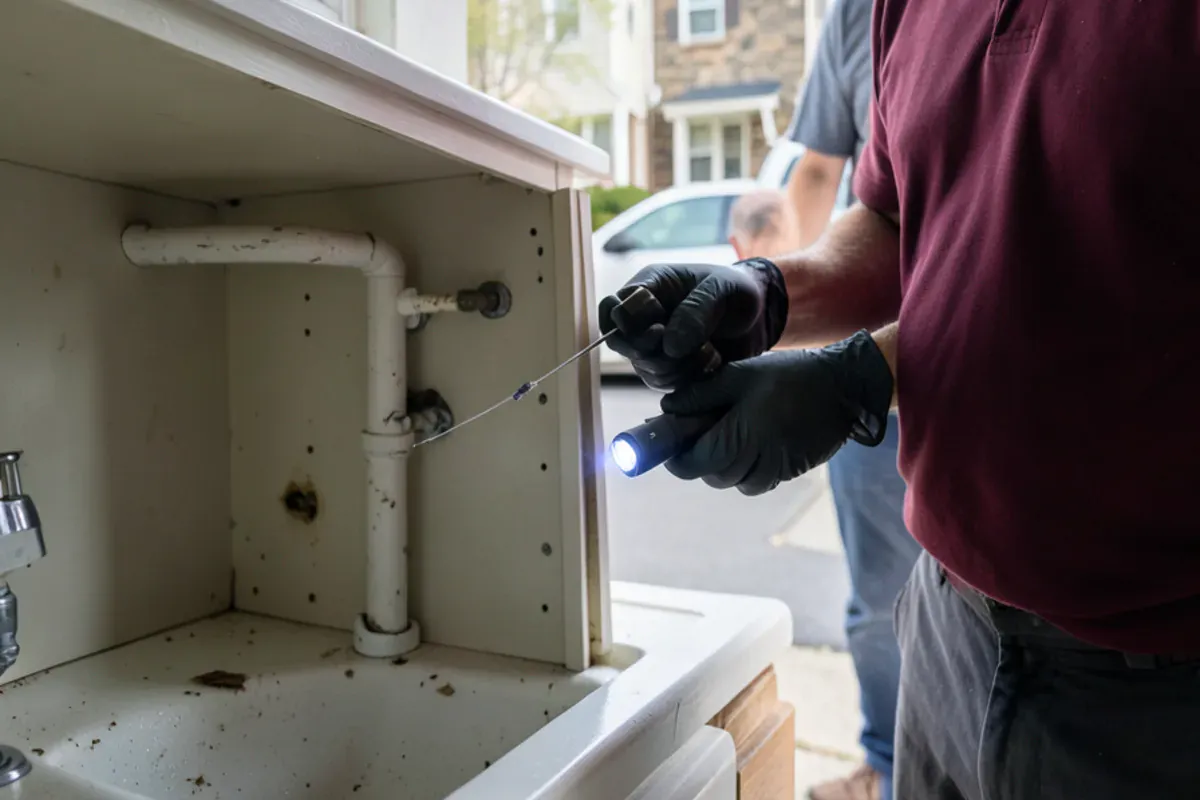
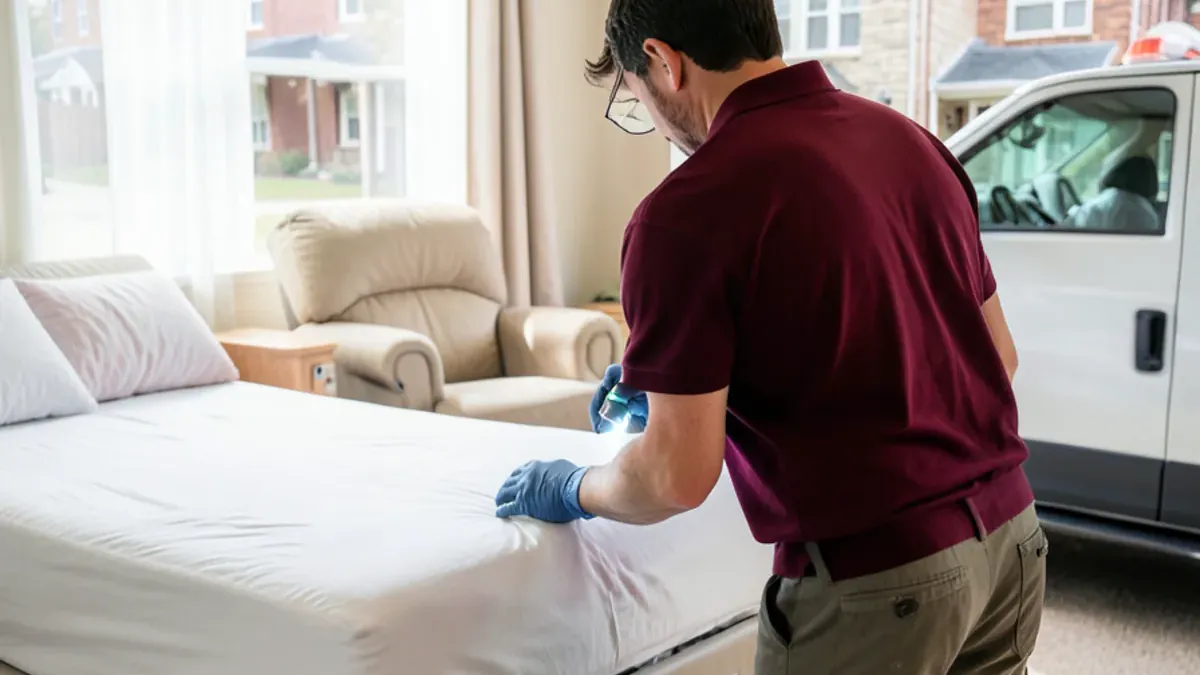
You send the notice your lease and Pennsylvania law call for; we supply the details that make it useful. That means the service date and time window, what the visit involves, and a plain-language prep sheet: clear the cabinets under the sink for roach work, bag laundry for bed bug work, move pets and aquariums as directed.
Prep makes or breaks multifamily pest control. A unit that was not prepared, or that we could not enter, is marked on the report so you can follow up with that tenant instead of guessing why a problem lingers. For bed bugs between apartments, see our apartment bed bug treatment page.
Talk to us about property management pest control
Call and speak with Thom or his team. The inspection is free, and you get a written quote before any treatment.
- ★ 4.8 from 21 Google reviews
- Open 7 days, 8 a.m. to 7 p.m.
- Free inspection before treatment
- Family-run, based in Media, PA
Open 7 days, 8 a.m. to 7 p.m.
Unit-by-unit reporting for managers
After each building visit you receive a written record for every unit we entered or tried to enter. Each line shows access status, prep level, what we found, what we applied and whether a follow-up is needed. Over a few visits, those notes show which stack or wing keeps reporting activity, which usually points to a shared wall void, plumbing chase or trash room.
Managers who oversee several properties can keep each building's records separate. If a building also has a medical suite or care services, the stricter routine on our healthcare and senior living pest control page applies, and ground-floor shops fall under office and retail pest control.
Scheduling service across a building
We group units by stack, since apartments stacked on top of one another share plumbing walls and pests travel along them. Common areas get serviced on the same day so nothing is missed between floors. Because we are open every day of the week, weekend slots are available for buildings where tenants work weekdays.
Turnovers are the cheapest time to fix a unit: an empty apartment can be inspected, treated and sealed before the next tenant moves in.
How a building service day runs
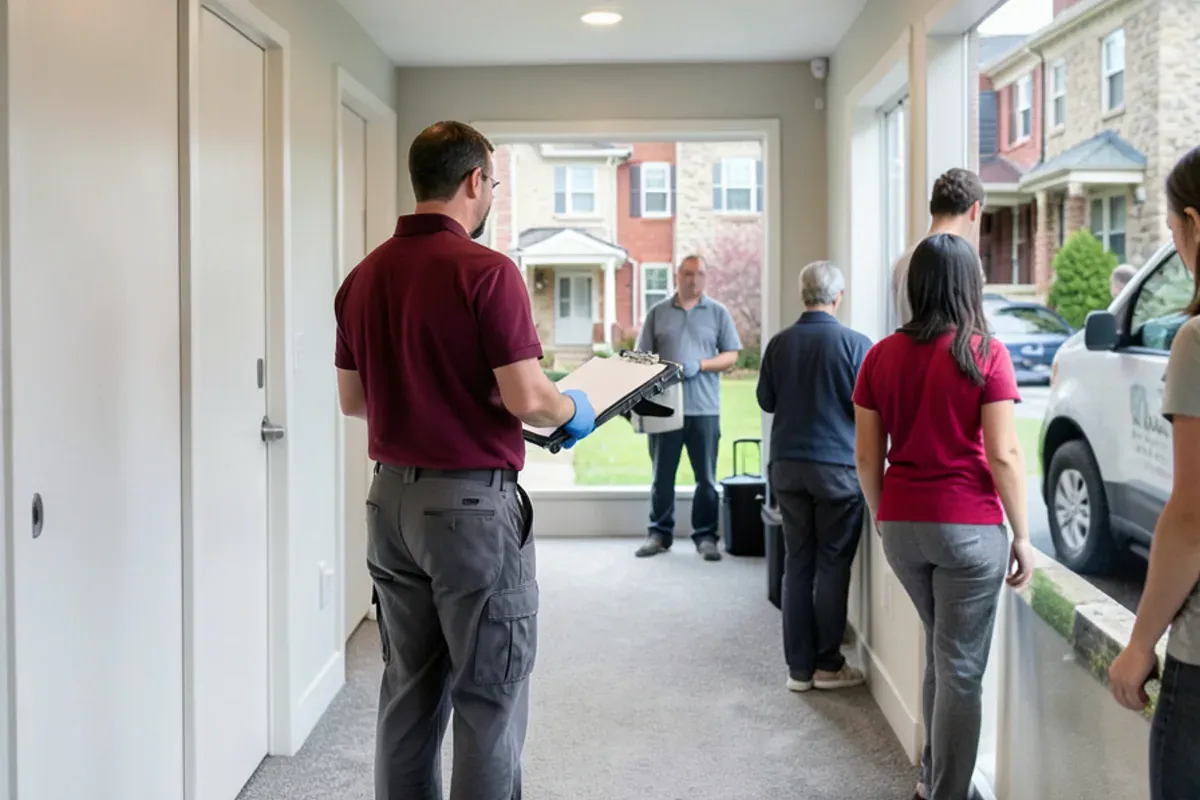
Confirm the unit list
You send the units on the schedule and any tenant reports; we confirm the date and time window.
Start in common areas
Trash rooms, basements and laundry areas get inspected and treated first.
Work the units by stack
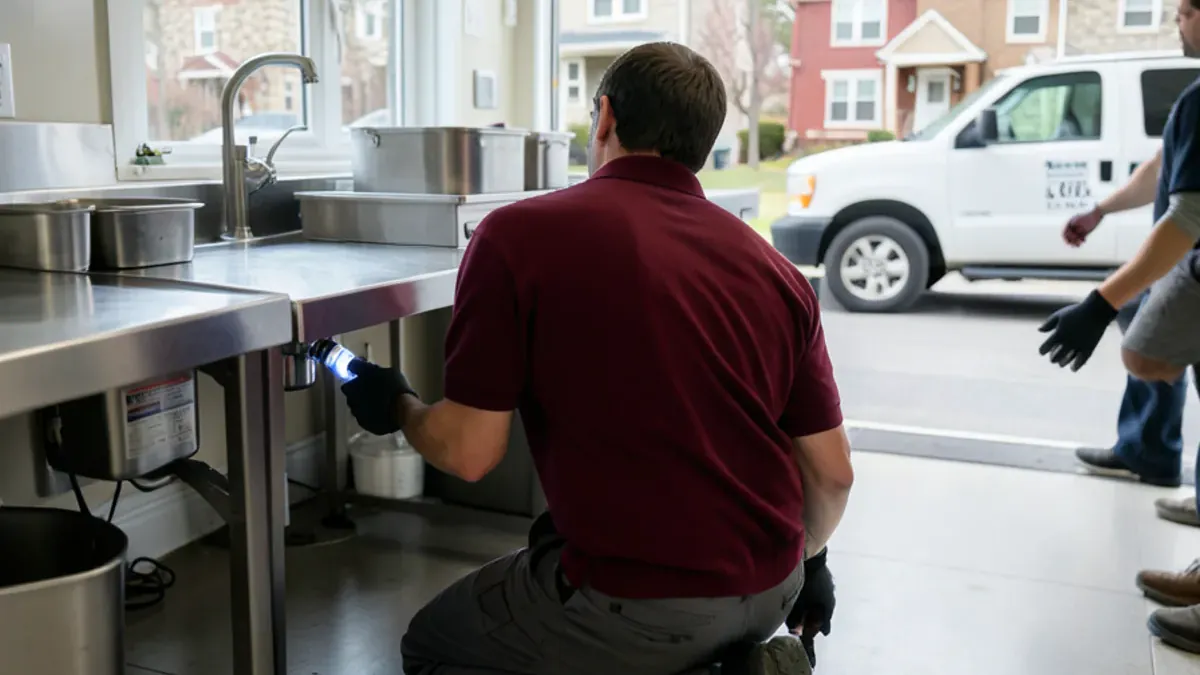
We enter each unit with your staff or keys, inspect kitchens and baths, and treat where we find activity.
Record access and prep
Units that were not ready or could not be entered are marked for follow-up.
Check the exterior
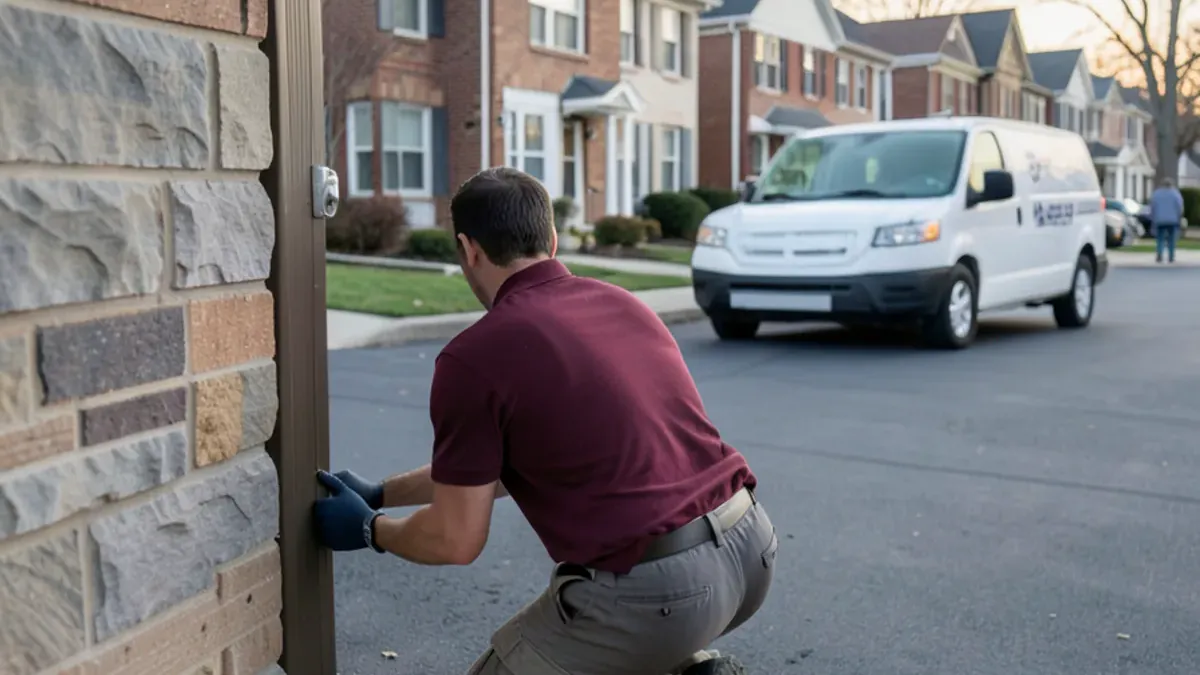
Rodent stations, foundation gaps and door sweeps are reviewed before we leave.
Send the unit report
You receive the written unit-by-unit record for your files.
What drives the cost of a property contract?
Each building is quoted after a free inspection, in writing, before any work begins. The main factors:
Building style shapes the scope as much as unit count. A converted Victorian with four apartments over one fieldstone basement can need more sealing work per unit than a newer garden complex, because mice use the gaps around old pipes and sills. A twenty-building complex, on the other hand, is mostly a question of how many units rotate through each visit and how many exterior rodent stations ring the property. Units that were not prepared or could not be entered, and need a return trip, are another variable worth planning for.
- Number of units and floors
- How many units are included per visit
- Common-area square footage and basement size
- Whether bed bugs or German cockroaches are already present
- Visit frequency for the building
- Exterior rodent stations and exclusion work
- Turnover inspections between tenants
What our property management pest control includes
- Free building inspection and written quote
- Common-area service on every visit
- Unit treatments on rotation, at turnover or on request
- Tenant prep sheets for roach and bed bug work
- Unit-by-unit written report with access status
- Exterior rodent monitoring and sealing notes
- Weekend scheduling for occupied buildings
Why call No Bugs Exterminator for property management pest control
Bed bugs are our specialty
We specialize in bed bugs, the pest that most often spreads from one apartment to the next.
One small team
Thom and his team handle your buildings, so the people reading last month's notes are the ones who wrote them.
Open every day
Service runs seven days a week, from 8 a.m. until 7 p.m., so building visits can land on the day tenants are home.
Quote before commitment
A free inspection and written quote come before any building contract is signed.
Reports that match your rent roll
Each unit report is organized by building and unit number, so your office can match findings to leases and follow up with the right tenant.
Where we provide property management pest control
Much of our rental work is in Chester, where roughly 60% of homes are renter-occupied, and in Yeadon and Darby, where twin homes and trolley-line rowhomes were built around 1950. In Lansdowne, where the median home dates to 1943, older stone basements and shared chases call for a building-wide plan rather than one-off unit visits.
- Drexel Hill
The large Drexelbrook apartment community and blocks of 1949-era brick twins mean many shared walls, so roach and bed bug work has to be planned by building.
- Millbourne
Census (ACS) estimates put 66% of homes as renter-occupied in this tiny borough at the Millbourne Market-Frankford Line station, in housing with a 1944 median build year.
- Morton
In this small Media/Wawa Line rail borough, 41% of homes are rented, and frequent turnovers are the best time to inspect and seal empty units.
- Collingdale
Twin and row streets along the Route 102 trolley, with 42% of homes rented, share basements and party walls that carry roaches between landlords’ units.
- Sharon Hill
Attached homes near Chester Pike at the end of the Route 102 line are 42% renter-occupied, so one untreated unit can reinfest the house next door.
- Chester Township
Toby Farms and the neighborhoods edging the city of Chester are 45% renter-occupied, with 1970s housing where mice follow utility lines between units.
- Linwood
Older homes near Route 13, median built 1947 and 48% rented, have aging basements where landlords need mice and roaches handled before each new lease.
- Rosemont
Apartment buildings off Lancaster Avenue near Rosemont College help push the renter-occupied share to 51%, so stack-by-stack scheduling matters.
- Norristown
The Montgomery County seat on the Schuylkill is 57% renter-occupied, with housing from around 1957 where bed bugs and roaches spread through shared walls.
What customers say on Google
4.8 out of 5 from 21 reviews on Google. Quoted as written by customers.
We use them for a year now very happy with the service for both of my businesses
Thom is a top-notch pest control specialist! And is one of the most genuine guys in the industry. He came to inspect a situation I had going on at the house, took his time, offered detailed advice, and didn’t take a penny.
Thom + his team were amazing. Very professional + provided me with a quote that made the most sense for my situation. Clearly I was not being gouged. Thom put the client first.
Property Management Pest Control: common questions
Do you offer building-wide contracts?
Yes. A building-wide contract covers common areas and the exterior on every visit, plus units on a rotation, at turnover or when tenants report problems. It suits apartment buildings, garden complexes and HOAs that want one plan instead of scattered service calls. We set the scope after a free inspection and put it in a written quote, so you can see exactly which spaces and units are included.
How do you handle tenant notices?
You issue the notice under your lease, and we give you what to put in it: the date, the time window, what the visit involves and a prep sheet written in plain language. Bed bug and cockroach work each need different prep, so the sheet changes with the job. Unprepared units are noted on our report so you know which tenants need a reminder.
Can you report unit-by-unit results?
Yes. Each visit produces a written line for every scheduled unit: whether we got in, how well it was prepared, what we found, what we applied and whether it needs a follow-up. Over several visits that record shows which stack or wing keeps reporting activity, which is usually the fastest way to find a shared wall void or plumbing chase feeding the problem.
What happens if a tenant won't allow access?
We mark the unit as no access on the report and move on to the next one, so the rest of the building stays on schedule. Untreated units can keep reinfesting neighbors, especially with bed bugs and German cockroaches, so you will want to follow up with that tenant and rebook. We can return for the missed units on a later date.
Who pays for pest control, the landlord or the tenant?
It depends on the lease and the cause. Many leases make tenants responsible for routine problems inside their unit and the owner responsible for building-wide or structural issues, and Pennsylvania courts recognize an implied promise of habitability in residential leases. Shared-wall infestations usually end up with the owner coordinating treatment. This is general information, not legal advice.
Related services
Helpful guides from our blog
Ready to get rid of the problem?
Thom and his team serve Media, Delaware County and southeastern Pennsylvania, open 7 days, 8 a.m. to 7 p.m..
- ★ 4.8 from 21 Google reviews
- Open 7 days, 8 a.m. to 7 p.m.
- Free inspection before treatment
- Family-run, based in Media, PA
Open 7 days, 8 a.m. to 7 p.m.