
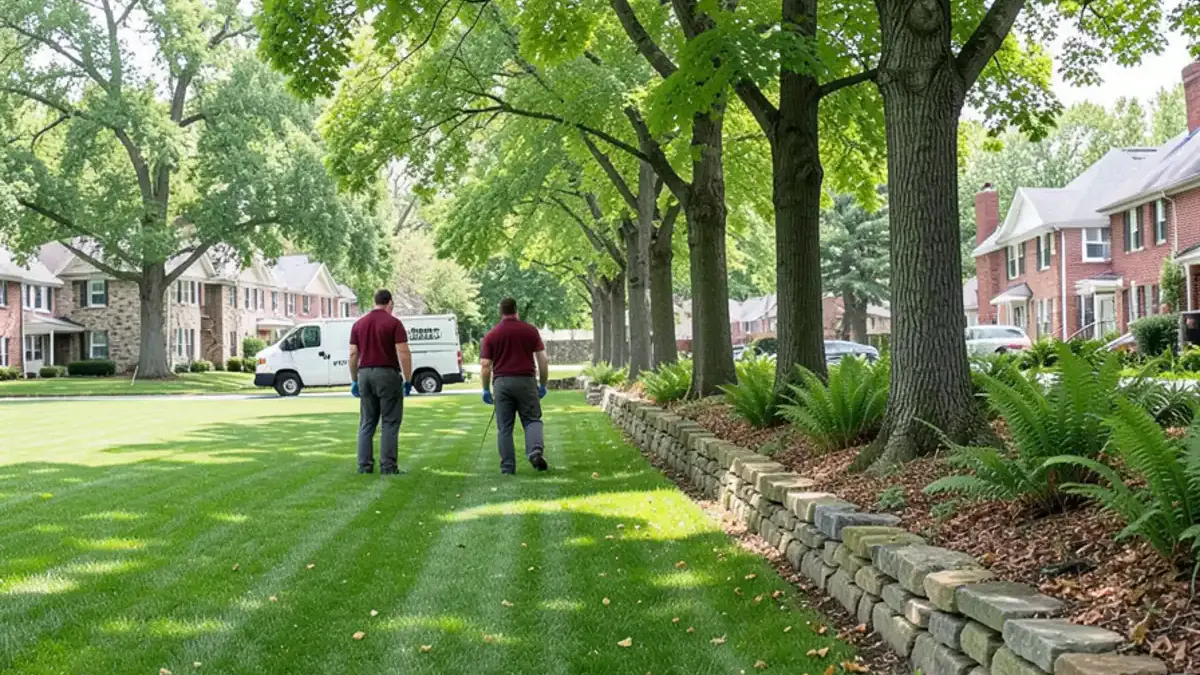
Ticks in Pennsylvania carry Lyme disease, and the state reports some of the highest case counts in the country, according to CDC data. In the Media area, wooded parks and shaded backyards sit right next to each other, so ticks are a backyard concern, not only a hiking one. Here is when they are active, where they wait, and what actually lowers the odds of a bite at home.
Ticks in Pennsylvania and Lyme disease: why PA numbers run high
Lyme disease is spread by the blacklegged tick, often called the deer tick. Southeastern Pennsylvania gives that tick nearly everything it needs: mixed hardwood forest, thick leaf litter, plenty of white-tailed deer for adult ticks to feed on, and large numbers of white-footed mice and other small animals that young ticks feed on first.
Suburban development adds another layer. Lawns that end at a wooded strip, stone walls covered in ivy and backyard bird feeders that draw rodents all bring tick habitat within a few steps of the patio. That edge zone, where lawn meets woods, is where most residential exposure happens.
When is deer tick season in PA?
Ticks are never fully gone in this region. Different life stages peak at different times, and adults stay active on mild winter days whenever the temperature climbs above freezing.
| Tick | Peak months | What to know |
|---|---|---|
| Blacklegged (deer) tick nymph | May through July | About the size of a poppy seed and easy to miss; responsible for most Lyme infections |
| Blacklegged (deer) tick adult | October through early spring | Larger and easier to spot; active on warm winter days |
| American dog tick | April through August | Larger brown tick with white markings, common in grassy areas and along trails |
| Lone star tick | Spring and summer | Less common here but reported in Pennsylvania; adult females have a single white spot |
The two-year blacklegged tick life cycle, and why mice matter
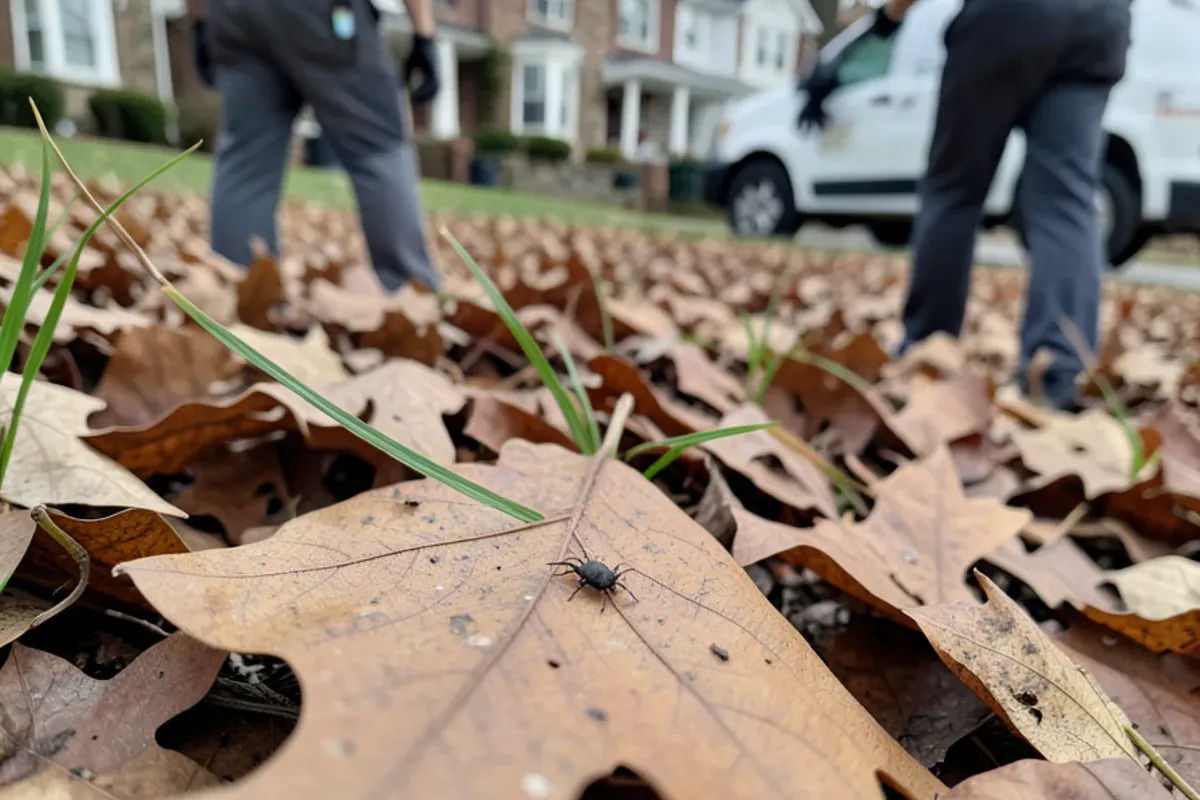
A blacklegged tick takes about two years to go from egg to adult, and it feeds once at each stage. Eggs hatch into larvae in summer, and those larvae usually feed on white-footed mice, chipmunks and ground-feeding birds. That first meal is where most ticks pick up the Lyme bacteria, since infected mice pass it along so efficiently.
The larvae rest through winter and come back the following spring as nymphs, the stage behind most human infections because they are so small. Nymphs that feed in summer molt into adults by fall, and adults look for deer. A yard full of mice and chipmunks under stone walls and woodpiles is effectively a tick nursery, which is why cutting rodent cover belongs in any tick plan.
Where ticks wait around Media-area homes
Ridley Creek State Park, Tyler Arboretum and the wooded creek valleys around Media are beautiful places to walk, and they are also prime tick country. Homes that border those woods, or any wooded lot, tend to see more ticks along the lawn edge than in the middle of the yard.
Ticks do not jump or fly. They climb grass and low plants and wait for a host to brush past. The spots that hold the most ticks around a house are shady and humid: leaf piles, ground cover like pachysandra and ivy, the base of stone walls, woodpiles and the strip of tall grass along a fence.
Tick prevention in the yard: changes that work
Landscape changes reduce tick numbers on their own and make any treatment work better. The CDC and Penn State Extension both describe a similar approach:
- Keep grass mowed short, especially near play areas, paths and patios
- Rake and remove leaf litter from lawn edges and under shrubs each fall and spring
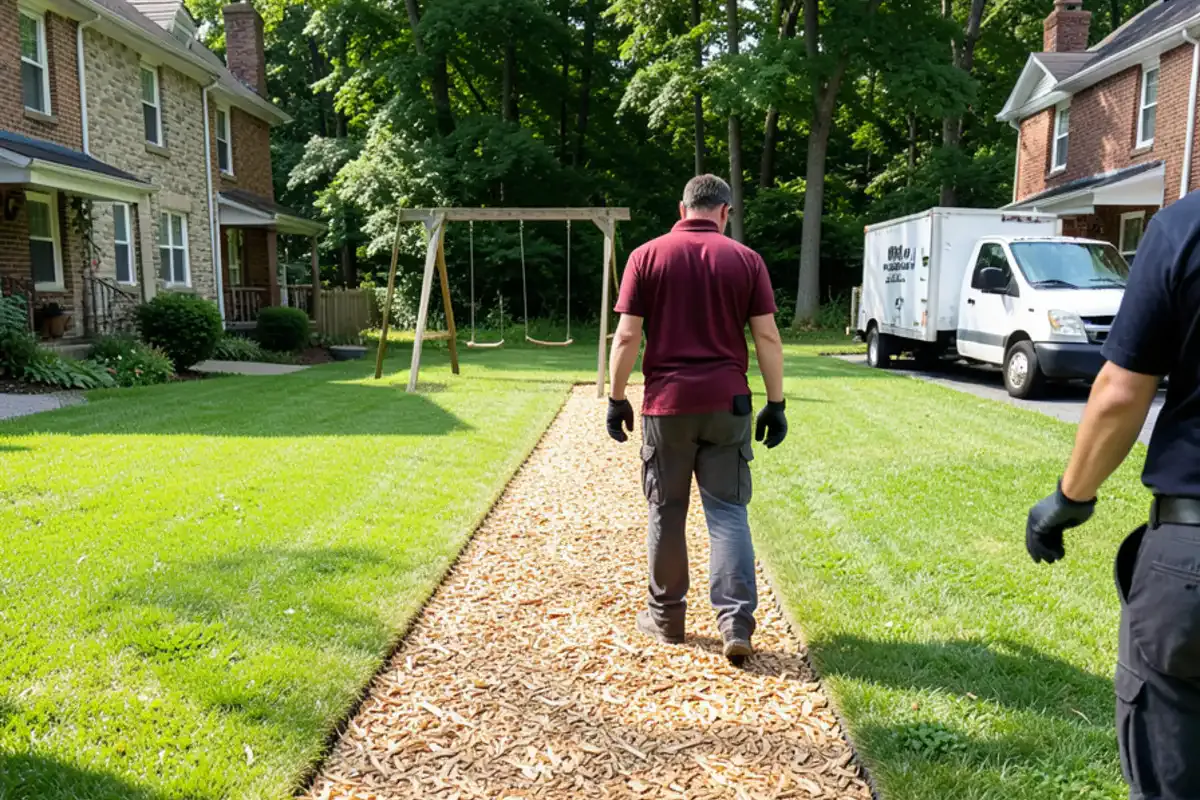
- Lay a strip of wood chips or gravel about three feet wide between lawn and woods
- Stack firewood neatly in a dry, sunny spot away from the house
- Move swing sets, sandboxes and seating out of shaded edges and into the sun
- Discourage deer with fencing or plant choices, and keep bird feeders away from the house to limit rodents
How do you check your own yard for ticks?
A simple tick drag shows where ticks are concentrated before you spend effort on the whole property. Pick a dry morning in late May or June, when nymphs are most active:
Make the drag
Staple or tie a square of white flannel or light-colored towel, roughly a yard across, to a broom handle or stick.
Walk the edges
Pull it slowly over leaf litter, ground cover, the base of stone walls and the strip where lawn meets woods.
Stop and look
Check both sides of the cloth every ten to twenty steps; nymphs look like specks of pepper that move.
Compare zones
Note how many you find along the back edge, the side beds and the open lawn. The difference tells you where to focus.
Clean up
Drop any ticks into rubbing alcohol, wash the cloth in hot water, and do a tick check on yourself afterward.
What does a tick yard treatment do?
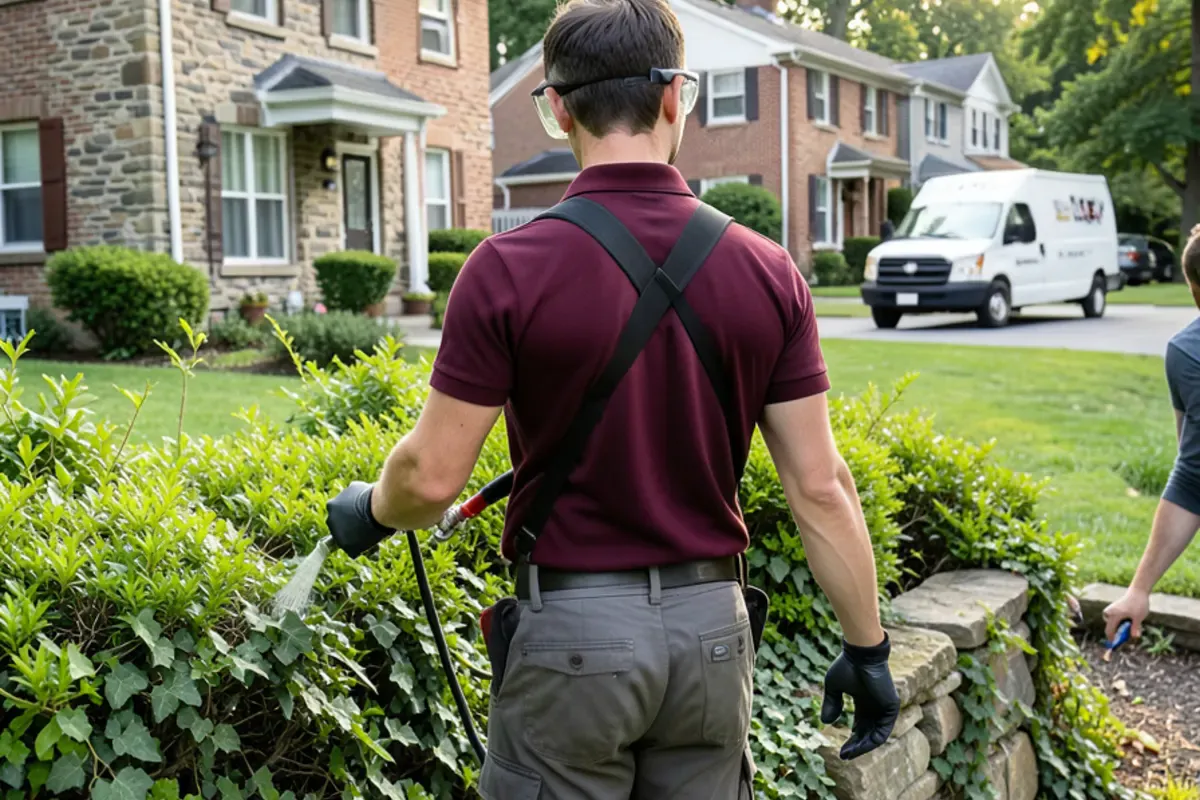
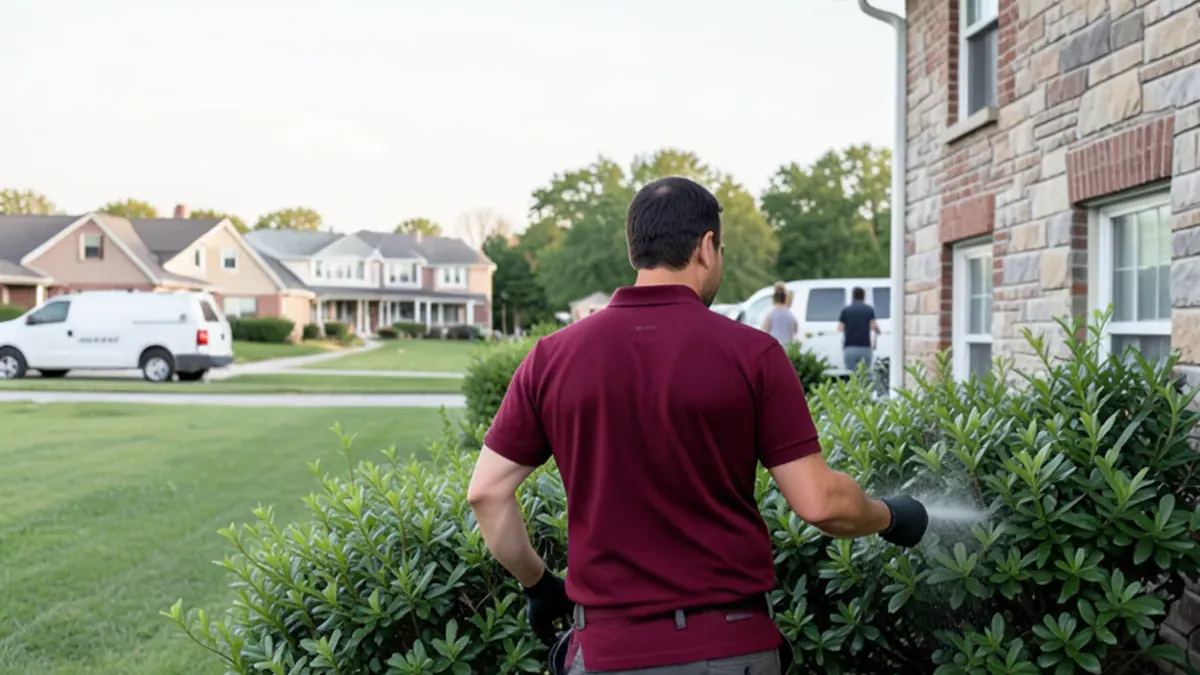
A professional tick treatment targets the places ticks actually live rather than the open lawn. The technician focuses on the wooded border, shrub beds, ground covers, stone walls and shaded fence lines, where a light application reaches ticks waiting in leaf litter and low growth.
Timing matters. A spring application aims at nymphs before their summer peak, and a fall application reaches adults. Most properties need treatments repeated through the season, because deer and rodents keep carrying new ticks in from surrounding woods. Our tick control page covers scheduling, and many homeowners pair it with a mosquito yard treatment since both target the same shady zones.
Personal habits that matter as much as the yard
Even a treated yard cannot account for the trail behind your house or the park down the road. The CDC recommends EPA-registered repellents on skin, permethrin-treated clothing and gear, and a full-body tick check after time outdoors. Showering soon after coming inside helps you spot ticks that have not attached yet.
Putting dry clothes in the dryer on high heat for a short cycle kills ticks hiding in fabric. Check pets daily during warm months, since dogs carry ticks indoors, and ask your veterinarian about tick prevention. If you develop a rash, fever or flu-like symptoms after a tick bite, seek medical care and mention the bite.
Tick patterns we see on wooded lots near Media
When we inspect a yard for ticks, we start at the property line rather than the lawn. The heaviest activity almost always sits where mowed grass meets leaf litter, along stone walls and around ornamental beds with dense ground cover. Yards that back onto parkland or a creek valley usually need more attention along that back edge than anywhere else.
Homes in and around Media, PA range from compact borough lots to properties that run right into the woods, so the plan for one street can look nothing like the next. Every tick program we set up starts with a free inspection and a written quote.
There are trade-offs we explain on every tick visit. Product labels keep us out of creek banks, wetlands and standing water, so on lots that slope down to Ridley Creek or Crum Creek, the last stretch before the water gets leaf removal and a chip border rather than spray. Timing is the other limit: a first visit in late June has already missed part of the nymph peak, so we push for a May start. Deer fencing is the most lasting change on big wooded lots, but it is a construction project with township rules attached, not a pest visit, and we say so when it comes up.
Quick answers
Can ticks survive a Pennsylvania winter?
Yes. Blacklegged ticks shelter in leaf litter under snow and become active whenever winter temperatures rise above freezing. Adult deer ticks can turn up on hikers and dogs in wooded places such as Ridley Creek State Park during mild spells in December, January and February, so tick checks are worth keeping up year-round.
Does a tick yard treatment make my yard tick-free?
No treatment removes every tick, because deer, mice and birds carry new ones in from surrounding land. The goal is to cut numbers sharply in the areas your family uses. Combining treatment with mowing, leaf cleanup and a wood-chip border along the woods gives the strongest result, especially on lots that back onto open space.
How long should kids and pets stay off a treated yard?
Follow the product label, which sets the re-entry time. In general, people and pets should stay off treated areas until the application has dried completely, and play equipment along the wooded edge should be kept clear during the visit. Ask the technician to point out exactly which beds and borders were treated before anyone heads back outside.
Do permethrin cotton tubes for mice reduce ticks?
Sometimes, as one part of a plan. The tubes hold cotton treated with permethrin; mice carry it back to their nests, and the treatment kills young ticks feeding on them. Research results are mixed, with better effects when tubes are used over several seasons on smaller lots near Media-area woods. They do nothing about adult ticks riding in on deer, so keep the edge cleanup going.
The bottom line
Ticks are part of life in southeastern Pennsylvania, but a tidy lawn edge, smart habits and well-timed treatments keep them from being part of your backyard routine. To have Thom and his team look over your property, call (209) 563-1650.
Sources
Written by the No Bugs Exterminator team
A small, family-run pest control business in Media, PA, led by owner Thom. We write about what we see on inspections in Delaware County and southeastern Pennsylvania. About us.
Services mentioned in this guide

Want a professional opinion?
Book a free inspection and get a written quote before any treatment.
- ★ 4.8 from 21 Google reviews
- Open 7 days, 8 a.m. to 7 p.m.
- Free inspection before treatment
- Family-run, based in Media, PA
Open 7 days, 8 a.m. to 7 p.m.