
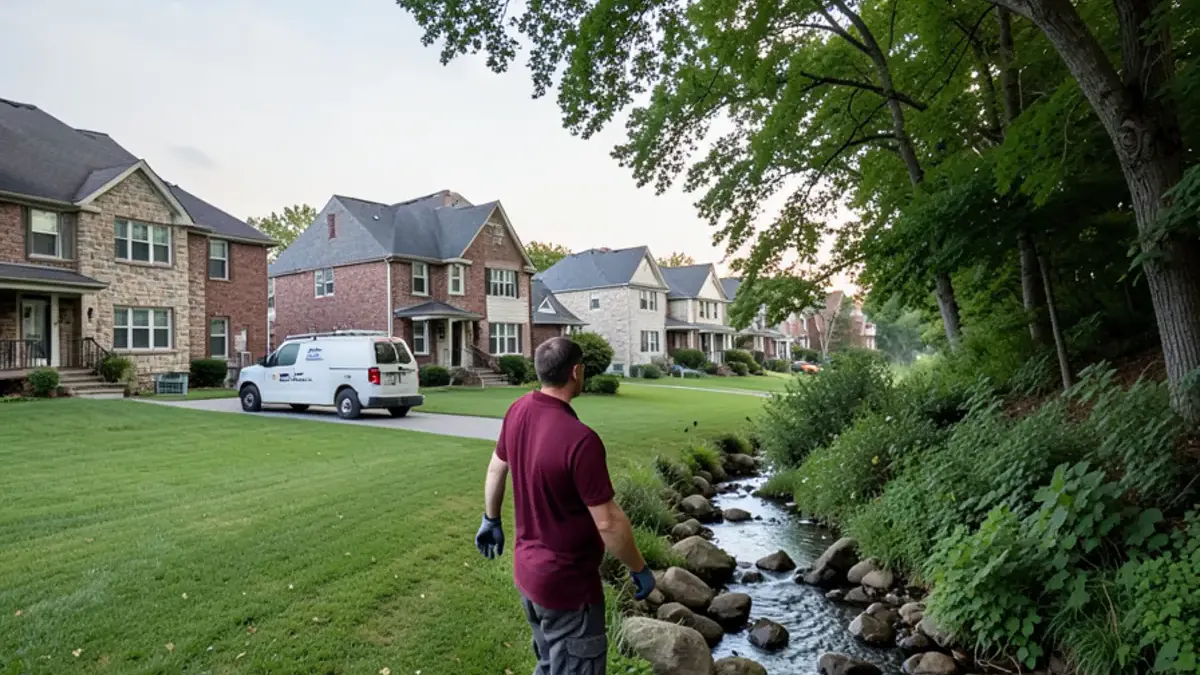
Mosquitoes in Delaware County, PA are worst where shade, moisture and still water meet, and the creek valleys running through the county supply all three. A home on a bluff above Crum Creek or along the Darby Creek floodplain often has far more trouble than a sunny lot a mile away. The good news is that most of the problem comes from places you can find and fix.
Why creekside yard mosquitoes are so persistent
A fast-moving creek is not the main breeding ground. Mosquito larvae need still water, and moving current flushes them out. The trouble comes from everything around the creek: side pools left after storms, low spots in the floodplain, saturated soil, and the thick shade that keeps yards cool and damp all day.
Adult mosquitoes spend daylight hours resting on the undersides of leaves in dense, shady vegetation. Creek corridors in Delaware County are lined with exactly that kind of cover, so even mosquitoes that bred in a neighbor's gutter find ideal resting spots in a wooded backyard.
Crum, Ridley and Darby creeks at a glance
Crum Creek runs south through Marple, Springfield, Swarthmore and Nether Providence on its way to the Delaware River, passing the Crum Woods and Smedley Park. Ridley Creek flows through Ridley Creek State Park and the valley just outside Media before reaching the river near Chester. Darby Creek cuts through Haverford Township and the eastern boroughs, then joins the tidal marshes at the John Heinz National Wildlife Refuge at Tinicum.
Each corridor brings wooded banks, steep shaded slopes and backyards that end at the water. Along the lower Darby Creek, low ground and marsh add even more standing water late in the season.
Does Darby Creek flooding bring more pests?
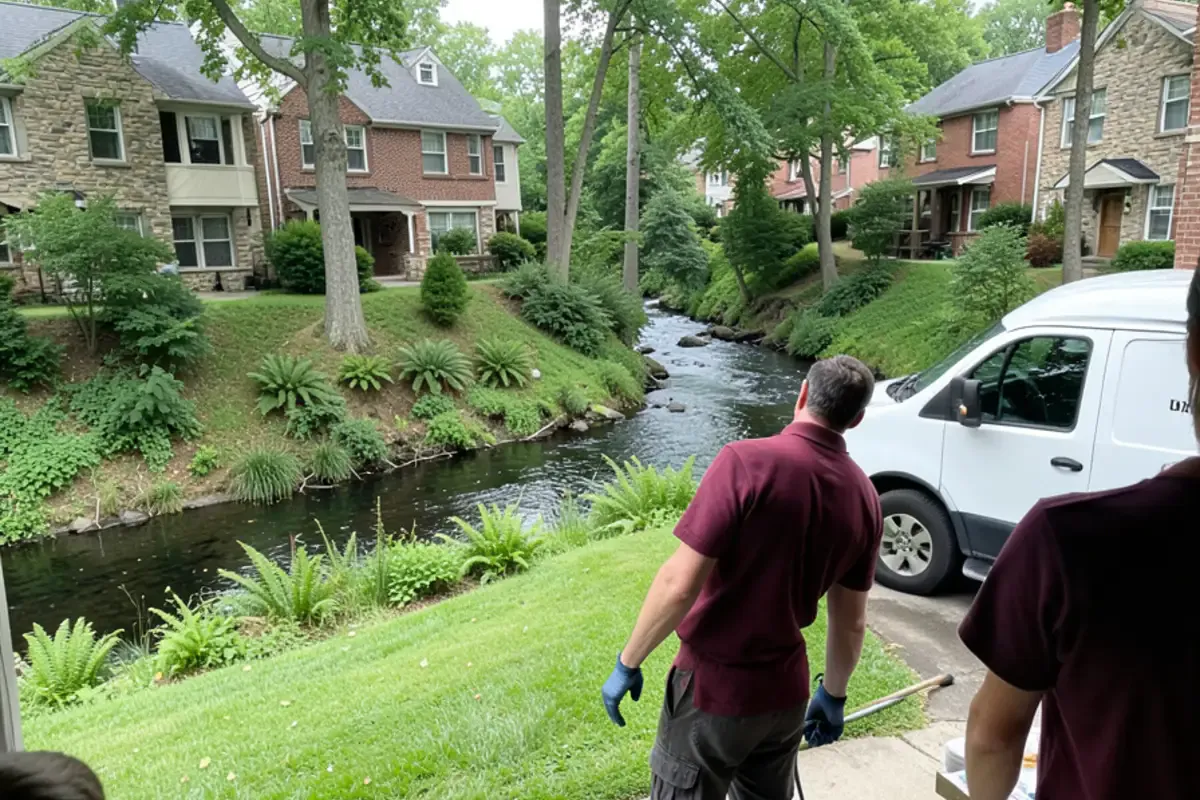
It can. Darby Creek is known for flooding after heavy rain, and floodwater left behind in yards, basements and low corners of lots can produce a new wave of mosquitoes within about a week in summer heat. Some mosquito species lay eggs on damp ground that hatch only when flooded, which is why a burst of biting often follows a big storm.
Flooding also stirs up other pests. Wet basements draw camel crickets, centipedes and springtails, and displaced rodents look for dry ground, sometimes inside garages and crawl spaces. After high water recedes, drain what you can, dry out basements quickly and check the foundation for new gaps.
Where mosquitoes breed on a typical lot
Before any treatment, walk the property after a rain and empty anything holding water. These are the spots we find most often:
- Clogged gutters and downspout extensions that never fully drain
- Corrugated drain pipes and their buried outlets
- Tarps over firewood, grills and boats
- Plant saucers, buckets, toys and wheelbarrows
- Birdbaths and ornamental pots that are not refreshed weekly
- Tree holes and hollow stumps near the creek bank
- Low spots in the lawn and window wells that pond after storms
Do rain gardens and stormwater basins breed mosquitoes?
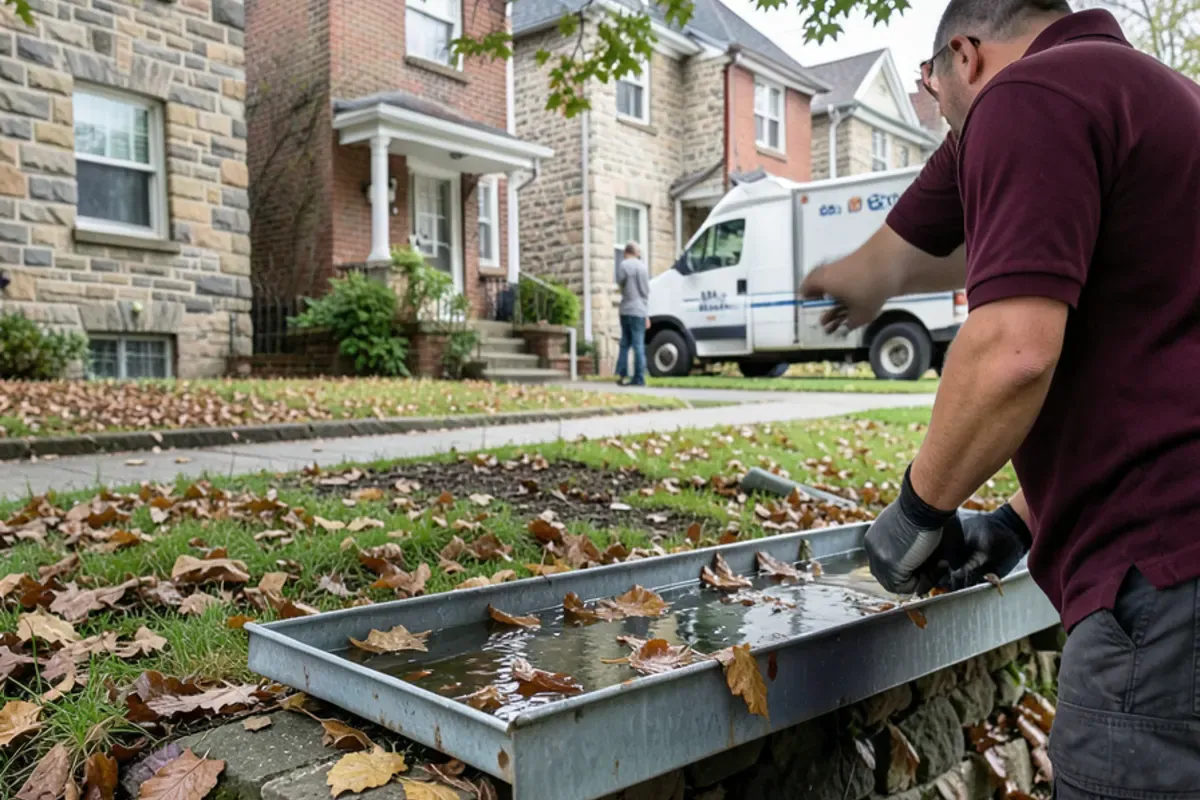
Only when they hold water too long. A rain garden built correctly drains within a day or two after a storm, which is faster than mosquito larvae can develop. Trouble starts when the soil compacts or silt clogs the bed and water sits for most of a week. If yours still has a puddle four or five days after rain, loosen the soil or regrade the low end.
Other stormwater features near creek corridors behave the same way. Sump pump discharge lines that dump into a low corner, French drain outlets buried under leaves, and grassy swales with a dip in the middle can all hold still water through July. Detention basins on homeowners association or township land are not yours to treat; report water that never drains to the municipality, which can pass it along to Pennsylvania's West Nile virus program run through DEP and county partners.
West Nile virus in Delaware County: what to know
Pennsylvania's Department of Environmental Protection runs a statewide West Nile virus surveillance program, and positive mosquito samples turn up in southeastern Pennsylvania most summers. The mosquito most associated with West Nile in this region, the northern house mosquito, breeds in stagnant, nutrient-rich water such as clogged catch basins, neglected pools and containers of rotting leaves.
The Asian tiger mosquito, the black-and-white daytime biter that has become common in the county, breeds in small containers and rarely flies far from where it hatched. Both species mean the same thing for homeowners: the water sources on and right around your lot matter more than the creek itself.
What cuts mosquitoes back in a creekside yard?
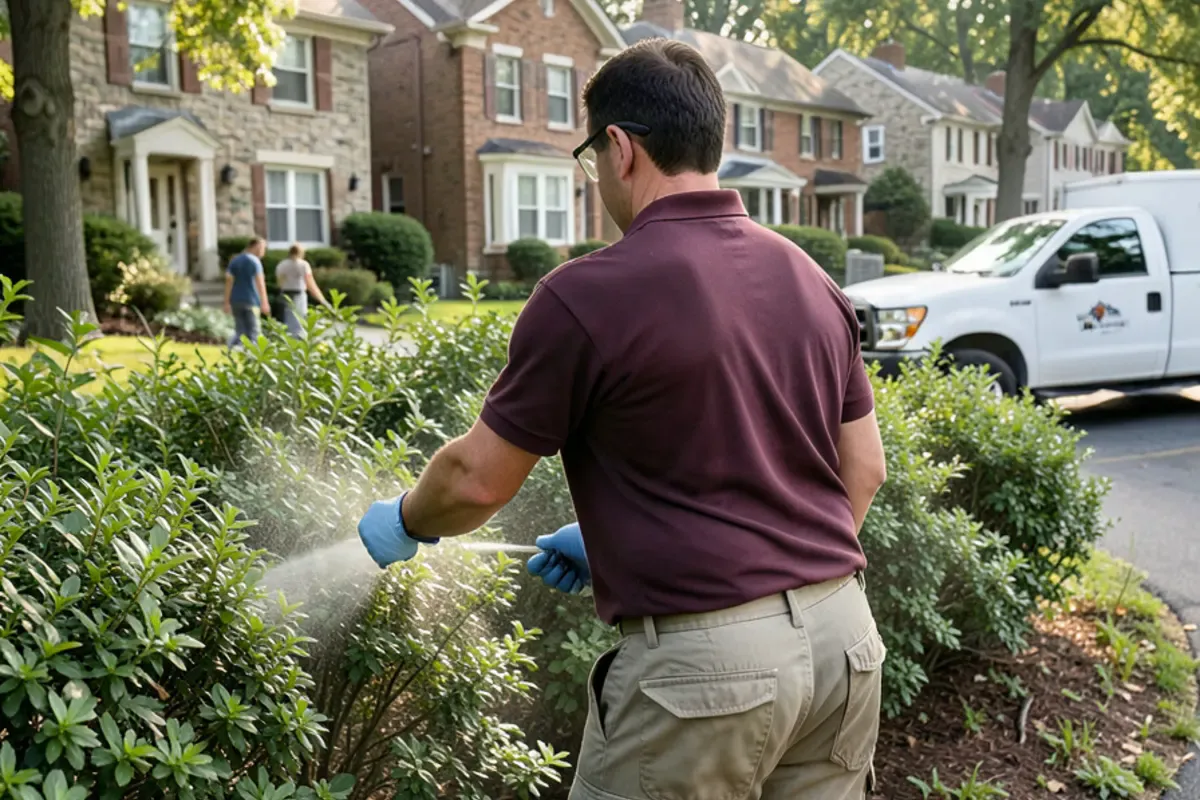
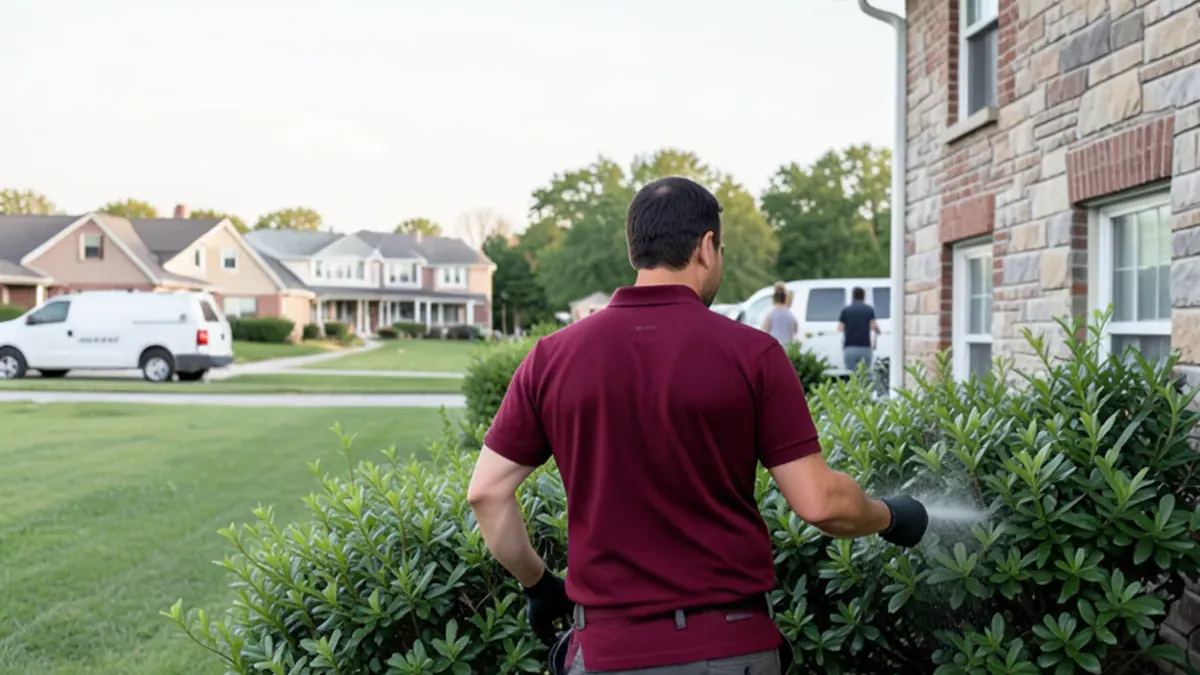
Source reduction comes first and never stops. After that, the most effective step for most creekside properties is a mosquito yard treatment applied to the shrubs, groundcover and the shaded undersides of foliage where adults rest. Standing water that cannot be drained, such as a decorative pond or a low corner that stays wet, can be treated with a larvicide made from naturally occurring bacteria that targets mosquito larvae.
Treatments are typically repeated every few weeks through mosquito season in PA, which runs roughly from May into early fall depending on temperature. Homeowners who prefer botanical products can read about natural mosquito control, and our mosquito control overview explains how yard work and treatment fit together. Thinning dense undergrowth and opening the yard to sun and breeze also makes a measurable difference.
Opening up shade on a creek bank without breaking local rules
Less shade means fewer resting adults, but creekside slopes need care. Thinning low branches and invasive undergrowth such as multiflora rose, Japanese knotweed and porcelain berry opens the yard to sun and breeze while leaving tree roots to hold the bank. Clearing a slope to bare soil invites erosion, and the sediment ends up in the creek.
Many townships along the Crum, Ridley and Darby regulate clearing and grading within a stream buffer, so check with the township before removing vegetation near the water. Mowing a path, trimming shrubs up off the ground and keeping leaf piles away from the patio usually stay well within those rules and still cut the cool, damp cover mosquitoes depend on.
What creek-valley properties show us each summer
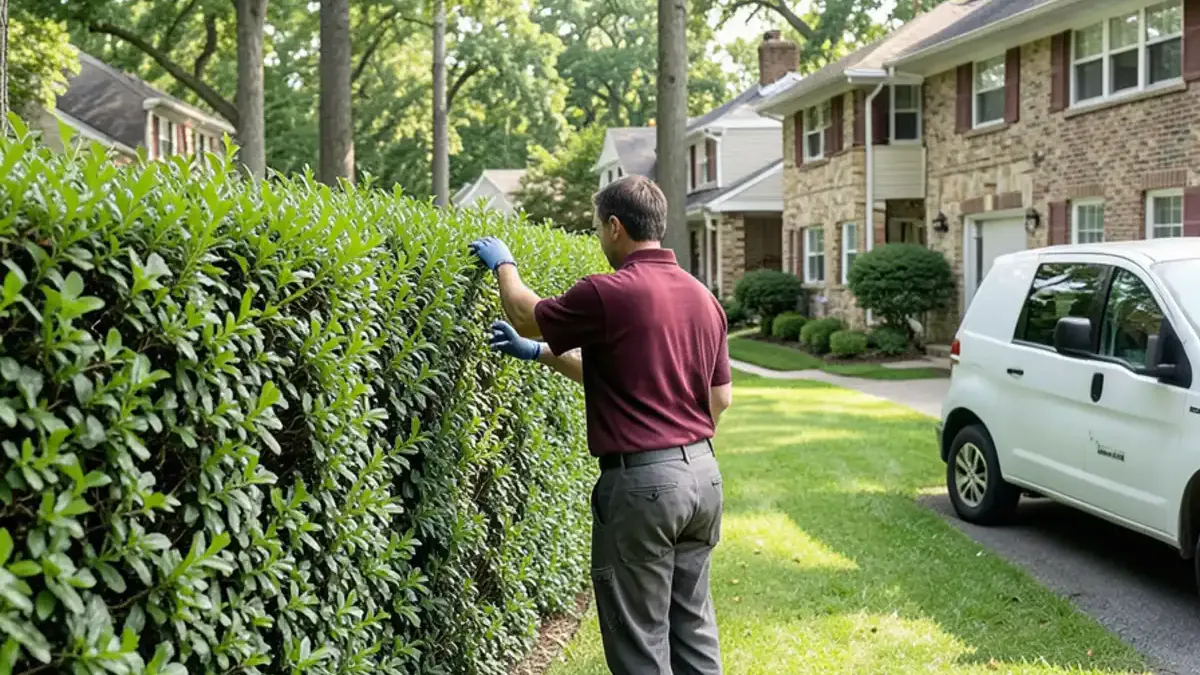
When we inspect a yard along one of these creeks, the breeding sites we find are rarely in the creek. They are in a downspout extension buried under mulch, a kayak flipped right side up behind the shed, or a cluster of planters on a shaded patio. Fixing those few sources often does as much as the treatment that follows.
In Haverford Township, where Darby Creek's wooded banks back up to many older homes, the steep, shaded slopes behind houses are classic mosquito resting areas. Every yard plan we write starts with a free inspection and a written quote.
Creek lots also come with limits we explain before the first visit. Product labels keep us away from the water's edge and off flowering plants that bees work, and jewelweed and other bloomers grow thick along these banks in late summer, so the band nearest the creek often gets cleanup advice rather than treatment. On the lower Darby Creek floodplain, a heavy storm can refill every low spot and wash residue off leaves within days, so we would rather schedule a follow-up after high water than stick rigidly to a calendar. Steep, wet slopes also limit where anyone can safely walk with equipment, and we tell you which parts of the yard we can reach.
Quick answers
How long is mosquito season in Delaware County?
Mosquitoes become noticeable in May and usually stay active until the first steady frosts, often in October. A warm, wet September can stretch the season, and creekside yards in Delaware County tend to see activity later than open, sunny lots because shade and moisture hold on longer.
Will treating my yard help if the creek is right behind it?
Yes, because most mosquitoes biting you hatched nearby and rest in your own shrubs and shade. Treating resting areas and removing standing water on your lot cuts numbers sharply. Some will still drift in from neighboring land, which is why treatments repeat through the season and why neighbors along the same stretch of creek see better results together.
Can you treat the creek itself for mosquitoes?
No. A flowing public creek is not something a homeowner or pest company should treat, and moving water is rarely where the larvae are anyway. The work stays on your property: draining containers and low spots, treating still water you own with a mosquito-specific larvicide, and treating the shaded plants where adults rest along your side of the bank.
Are mosquitoes worse near the John Heinz refuge marshes?
Somewhat, mostly in late summer. The refuge's tidal marsh at Tinicum keeps water on the landscape all season, and nearby neighborhoods can see more dusk-biting species drifting in on calm evenings. Even there, though, the day-biting tiger mosquitoes behind most backyard complaints usually come from containers, gutters and drains on the block itself, so the standing-water sweep still matters most.
The bottom line
A creekside lot will never be mosquito-free, but it does not have to keep you off the patio all summer. Clear the standing water, open up the shade where you can, and call (209) 563-1650 when you want help with the rest.
Sources
Written by the No Bugs Exterminator team
A small, family-run pest control business in Media, PA, led by owner Thom. We write about what we see on inspections in Delaware County and southeastern Pennsylvania. About us.
Services mentioned in this guide
Want a professional opinion?
Book a free inspection and get a written quote before any treatment.
- ★ 4.8 from 21 Google reviews
- Open 7 days, 8 a.m. to 7 p.m.
- Free inspection before treatment
- Family-run, based in Media, PA
Open 7 days, 8 a.m. to 7 p.m.