
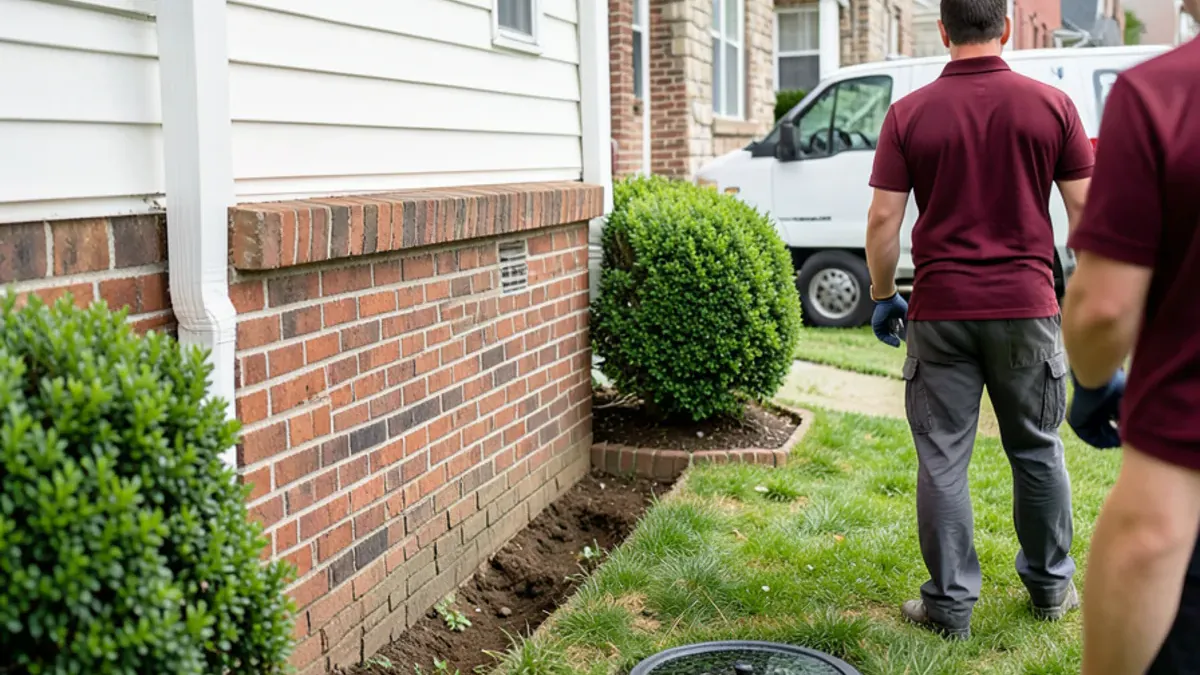
Comparing liquid termite treatment vs bait stations comes down to one idea: a liquid barrier creates a treated zone in the soil that termites cannot cross safely, while bait stations feed foraging termites a slow-acting material they carry home to the colony. Both control Eastern subterranean termites, the species behind most damage in southeastern Pennsylvania.
How does a liquid termite barrier work?
They differ in speed, disruption, upkeep and which houses they suit, and those differences start with how each method reaches the colony.
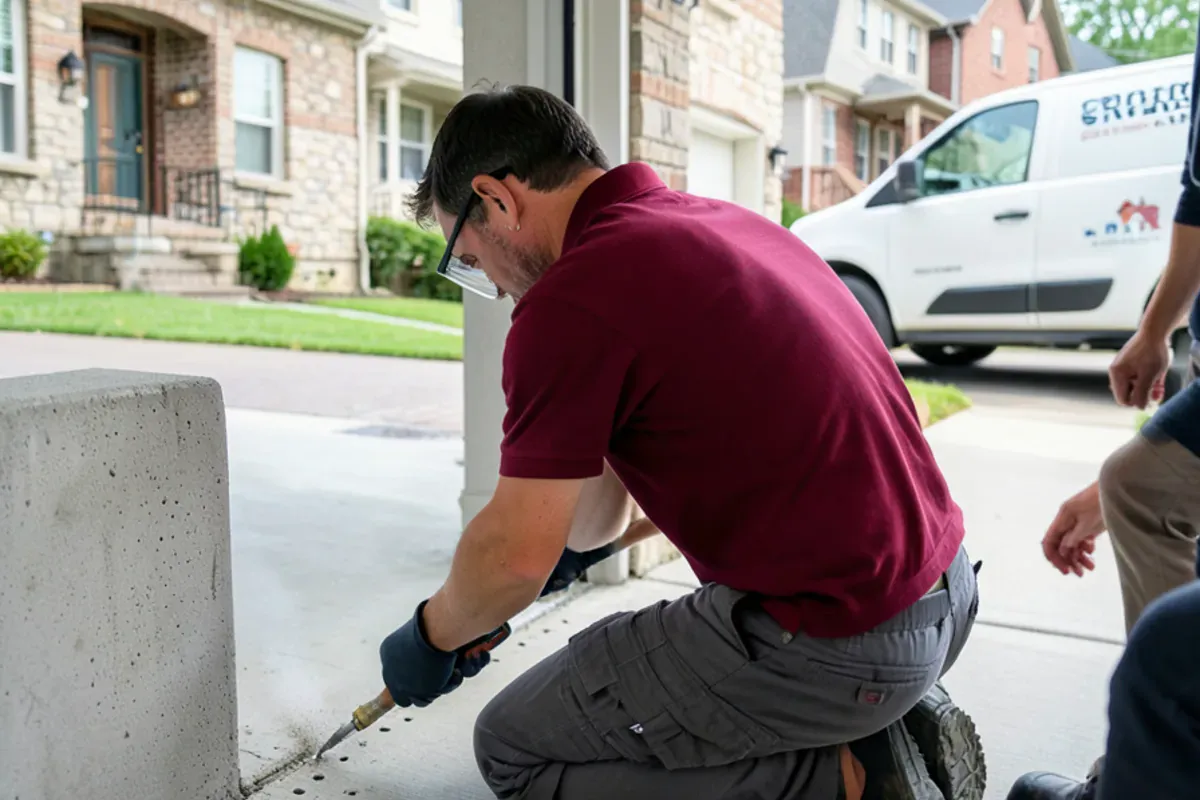
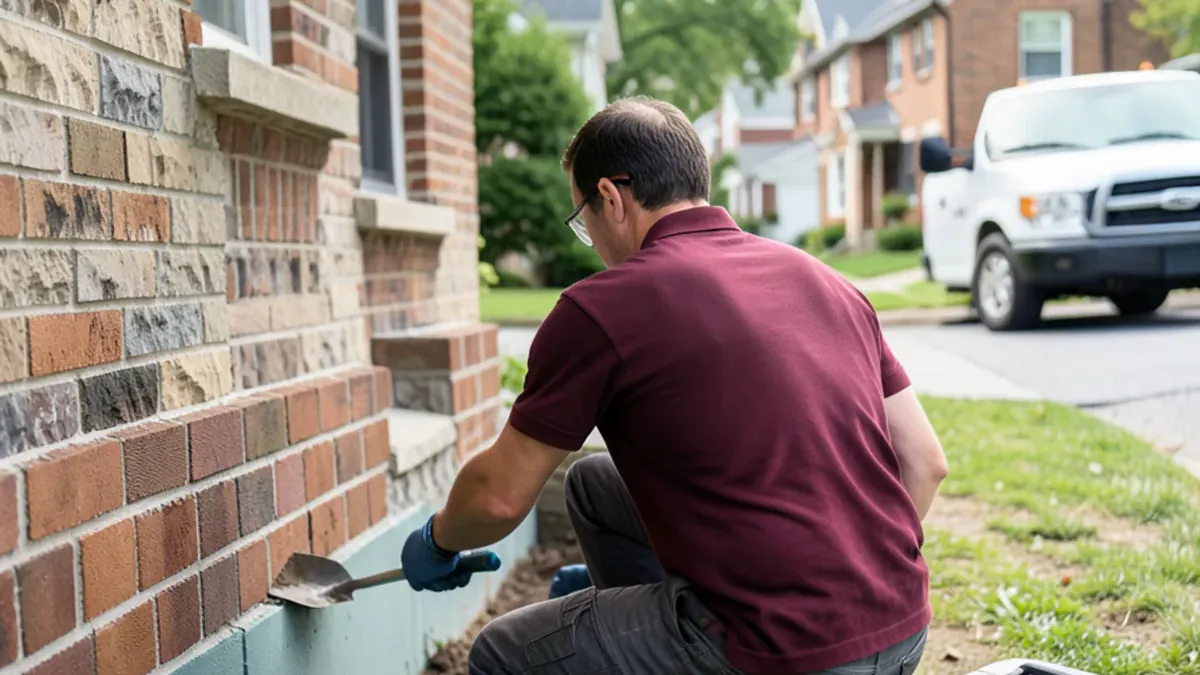
A liquid treatment surrounds the foundation with soil that has been treated with a termiticide. The technician digs a shallow trench along the outside walls, rods the product into the soil below and treats it, and drills small holes through slabs, porches or garage floors that sit against the house so the soil beneath can be reached. Inside a basement, some treatments also cover cracks and the soil under the floor.
Modern liquid termiticides are generally non-repellent. Termites cannot detect them, so they tunnel through the treated soil, pick up the active ingredient and share it with nestmates. The effect on activity near the house tends to be fairly quick, and protection in undisturbed soil can last for years, as described on the product label.
How do in-ground termite bait stations work?
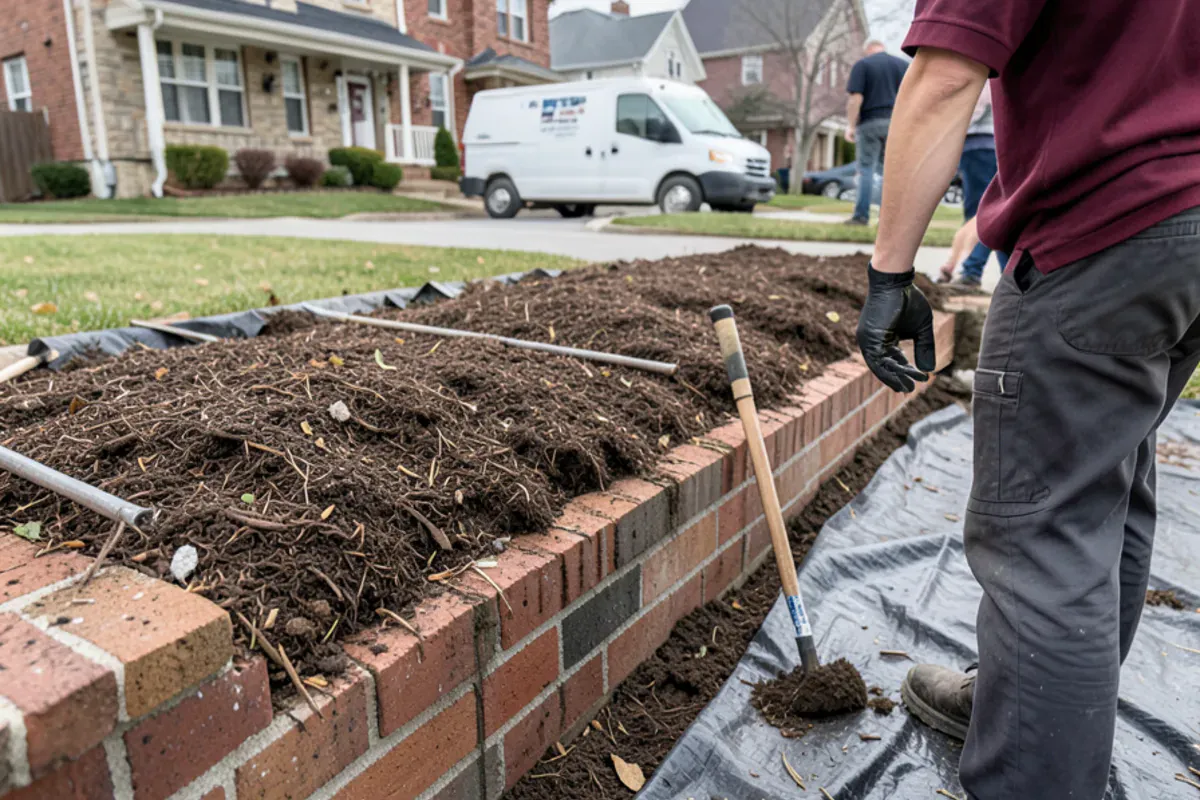
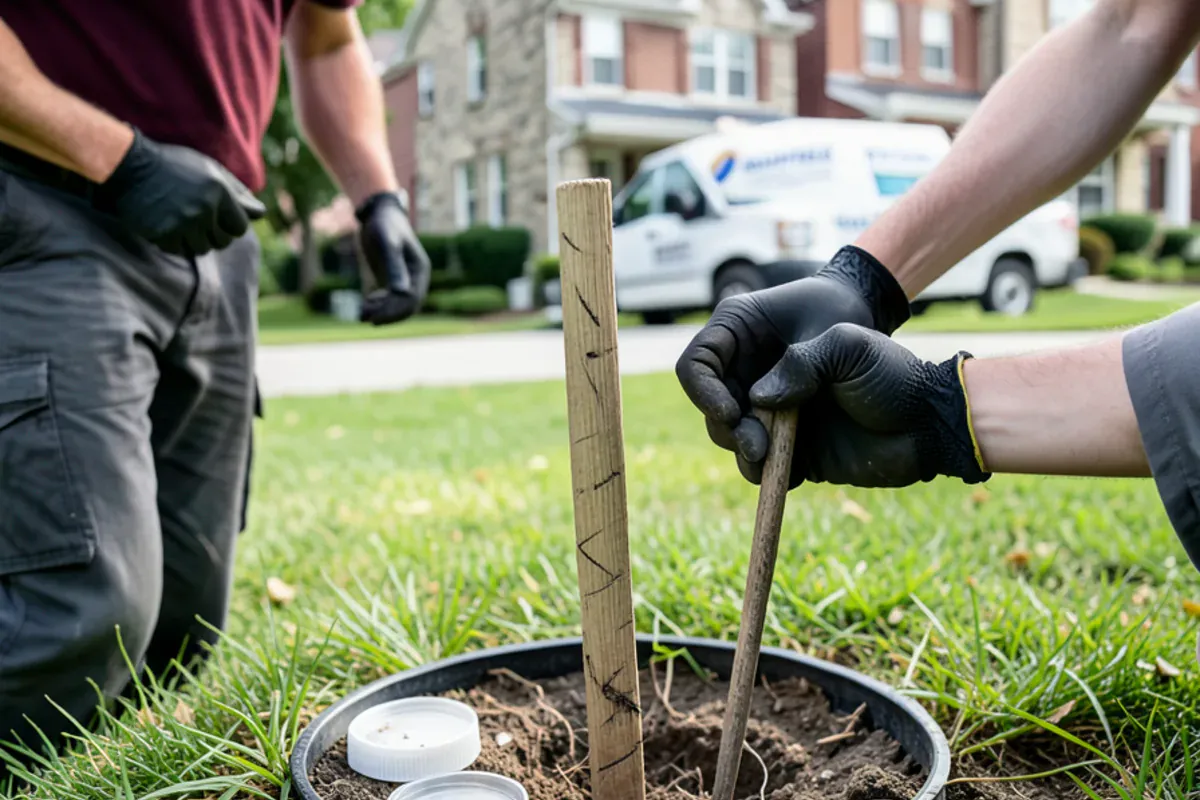
Bait stations are small cylinders set into the soil at intervals around the house. Each one starts with a monitoring piece of wood or cellulose. During scheduled service visits, the technician checks for termite feeding; once termites find a station, it is loaded with bait containing a slow-acting insect growth regulator.
Worker termites feed on the bait and carry it back through the tunnel system. Because it works slowly, it spreads widely before any effect appears, and the colony declines over a period of weeks to months. The system keeps working only as long as the stations are inspected and refilled, so a service agreement is part of the method itself.
Liquid termite treatment vs. bait stations at a glance
| Question | Liquid barrier | Bait stations |
|---|---|---|
| How it works | Treated soil zone around and under the structure | Colony feeds on slow-acting bait and declines |
| Speed against active termites | Usually faster near the house | Slower; depends on termites finding stations |
| Disruption | Trenching, drilling slabs, moving plantings | Small holes in the yard for each station |
| Ongoing service | Optional inspections or renewal | Required monitoring and bait replacement |
| Sensitive sites | Wells, cisterns and drainage near the foundation may limit use | Often preferred where soil treatment is restricted |
| What can undermine it | Soil disturbance from landscaping or additions | Missed service visits or damaged stations |
Which termite treatment lasts longest?
Neither one is permanent. A liquid treatment can last for years when the soil is left alone, but new patios, garden beds, additions and regrading can break the treated zone. A bait system lasts exactly as long as it is serviced; stop the visits and protection stops with them.
In practice, longevity depends on how the home changes and whether it is inspected regularly. Whichever method you choose, ask the provider to put the inspection schedule, renewal terms and re-treat conditions in writing so you know what happens if termites return.
What each method asks of you after installation
Both methods need some care from the homeowner. Most of it is simple, and skipping it is one of the more common reasons a treatment stops protecting the house.
- Liquid barrier: tell your provider before you pour a patio, build an addition, regrade or dig new beds along the foundation, since disturbed soil can break the treated zone.
- Liquid barrier: keep mulch thin and a few inches below the siding, and keep downspouts carrying water away from the treated soil line.
- Bait stations: leave the station lids visible and reachable; do not cover them with mulch, pavers or soil, and mow around them rather than over them.
- Bait stations: keep a simple sketch of where the stations sit, report any that are damaged or missing, and make sure the yard is accessible on service days.
- Either method: keep firewood, lumber and cardboard off the ground near the house.
Matching the method to a Springfield Township house
Many homes in Springfield Township are post-war Cape Cods and colonials; Census (ACS) estimates put the median build year at 1955. Since they were built, those houses have gained enclosed porches, slab additions, finished basements and deep foundation plantings, and each of those affects the choice.
These conditions tend to steer the decision:
- A finished basement or wall paneling that blocks interior access often points toward bait or exterior-only work.
- Large slab porches and additions mean more drilling for a liquid treatment.
- A well, cistern or drainage line close to the foundation can limit where liquid may be applied.
- Active termites in a wall right now often call for faster action at that spot.
- Plans to regrade or redo landscaping soon may make a liquid barrier harder to keep intact.
- Some homes use both: liquid at known activity points and bait stations around the rest of the perimeter.
Getting a recommendation for your house
The method should follow the inspection. We start with a free inspection, then provide a written quote that explains which approach fits your foundation and why. Our liquid termite treatment and termite bait stations pages go deeper into each method, and the termite control overview covers inspection and follow-up.
Both methods depend on site conditions, so call (209) 563-1650 to confirm which options are available for your property. We are open seven days a week, 8 a.m. to 7 p.m., and Springfield is about a ten-minute drive from our Media base.
What we check before recommending a termite method
When we inspect for termites, the method usually becomes clear from three things: where the activity is, what sits against the foundation, and what is inside the basement walls. Mud tubes on an exposed block wall are easy to reach; the same tubes behind finished drywall are not.
We also ask how long the owners plan to stay and what yard projects are coming. A homeowner about to add a patio or replant the foundation beds is in a different position from one who expects the yard to stay as it is for years.
Under older porches we also look for buried wood. Form boards and grade stakes were sometimes left in place when stoops and rear patios were poured against Springfield Cape Cods decades after the houses went up, and that hidden lumber is a ready food source sitting right against the foundation. When we find signs of it, the porch becomes a priority zone, whichever method protects the rest of the perimeter.
Quick answers
Can liquid treatment and bait stations be used together?
Yes, and it is fairly common. A typical combination treats the soil at a spot where termites are already active, such as a porch slab or a damaged sill, and places bait stations around the rest of the house for ongoing monitoring. The inspection decides whether a combined plan adds value or whether one method covers the home on its own.
Do bait stations attract termites toward the house?
No. Subterranean termites forage through the soil by chance, following moisture and wood rather than being lured from a distance. Stations simply sit in the paths termites are already likely to travel, which is why they are spaced around the full perimeter. If termites are near the foundation, the stations give the colony something to find before it finds the house.
How soon should termite activity stop after treatment?
It depends on the method. With a non-repellent liquid, termites working through treated soil near the house are usually affected within weeks. With bait, the colony declines over weeks to months once workers start feeding. Either way, a few swarmers may still appear the following spring from a colony that was not fully reached, so report them rather than assuming the treatment failed. Follow-up inspections confirm progress.
The bottom line
A liquid barrier acts faster and needs less upkeep once installed, while bait stations disturb less and work through ongoing monitoring. Your foundation, your yard and your plans for the house decide which fits. When you want a recommendation based on what is actually under your home, we are glad to inspect it.
Sources

Written by the No Bugs Exterminator team
A small, family-run pest control business in Media, PA, led by owner Thom. We write about what we see on inspections in Delaware County and southeastern Pennsylvania. About us.
Services mentioned in this guide
Want a professional opinion?
Book a free inspection and get a written quote before any treatment.
- ★ 4.8 from 21 Google reviews
- Open 7 days, 8 a.m. to 7 p.m.
- Free inspection before treatment
- Family-run, based in Media, PA
Open 7 days, 8 a.m. to 7 p.m.