
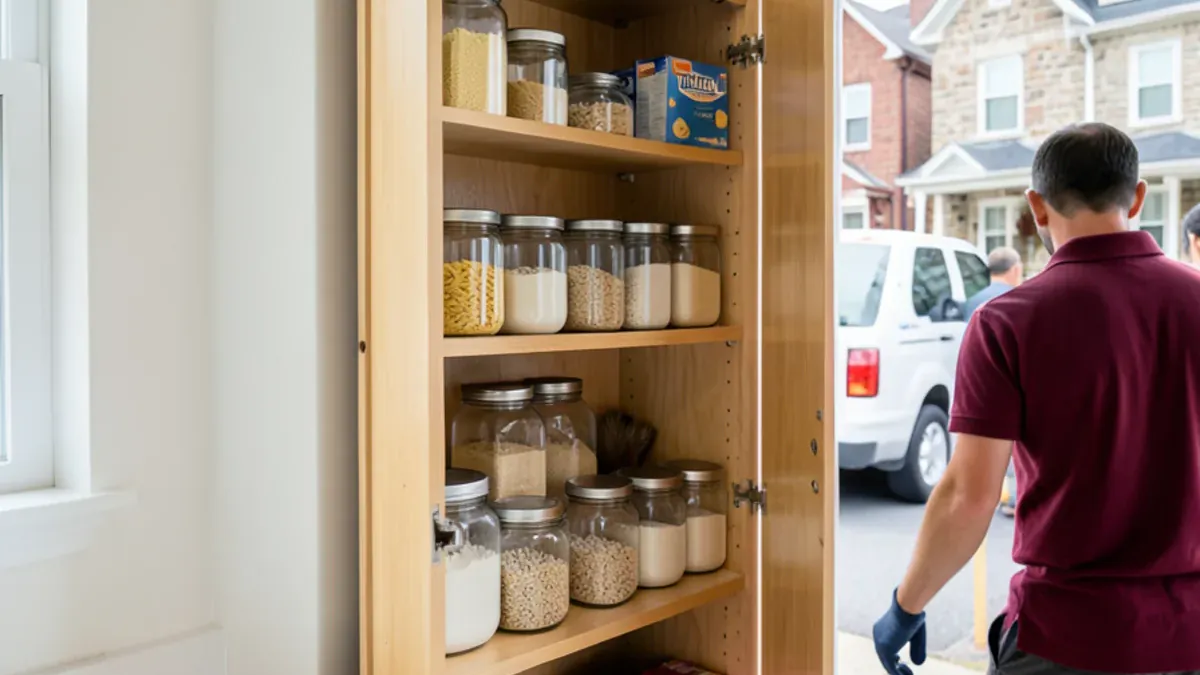
If you want to know how to prevent pantry moths and beetles, start with where they come from: most arrive already inside a package of flour, rice, cereal, nuts or pet food, then spread to every open container on the shelf. Prevention means finding that first source, clearing the shelves properly and switching to storage they cannot get into.
Which pantry pest do you have?
The steps below work for moths, flour beetles and weevils alike. What changes from one pest to the next is which packages you open first.
Knowing the pest tells you which foods to check first. These are the ones we find most often in kitchens around Delaware County.
| Pest | What you notice | Foods it favors |
|---|---|---|
| Indian meal moth | Small moths with copper-tipped wings flying at night; silky webbing in food; larvae crawling up walls | Cereal, grains, nuts, dried fruit, birdseed, pet food |
| Sawtoothed grain beetle | Slim brown beetles about 1/8 inch long in and around packages | Cereal, flour, pasta, dried fruit |
| Red or confused flour beetle | Reddish-brown beetles in flour; grayish tint or musty smell | Flour, cake mixes, crackers |
| Rice or granary weevil | Small snouted beetles; holes in whole kernels | Rice, whole grains, popcorn, dried corn |
| Drugstore or cigarette beetle | Tiny round brown beetles near spices or decorations | Spices, tea, dried flowers, pet treats |
Pantry moths: why the webbing and the ceiling crawlers matter
With pantry moths, the adults are the part you see but not the part that does the damage. The larvae live in food, spinning silky threads that clump grains together. When they finish feeding, they often leave the food and climb walls and ceilings to find a spot to pupate, which is why people find small cream-colored caterpillars far from the pantry.
Do not confuse them with clothes moths, which stay in closets and feed on wool and other natural fibers. If you see small moths near sweaters rather than food, our clothes moth control page covers that problem instead.
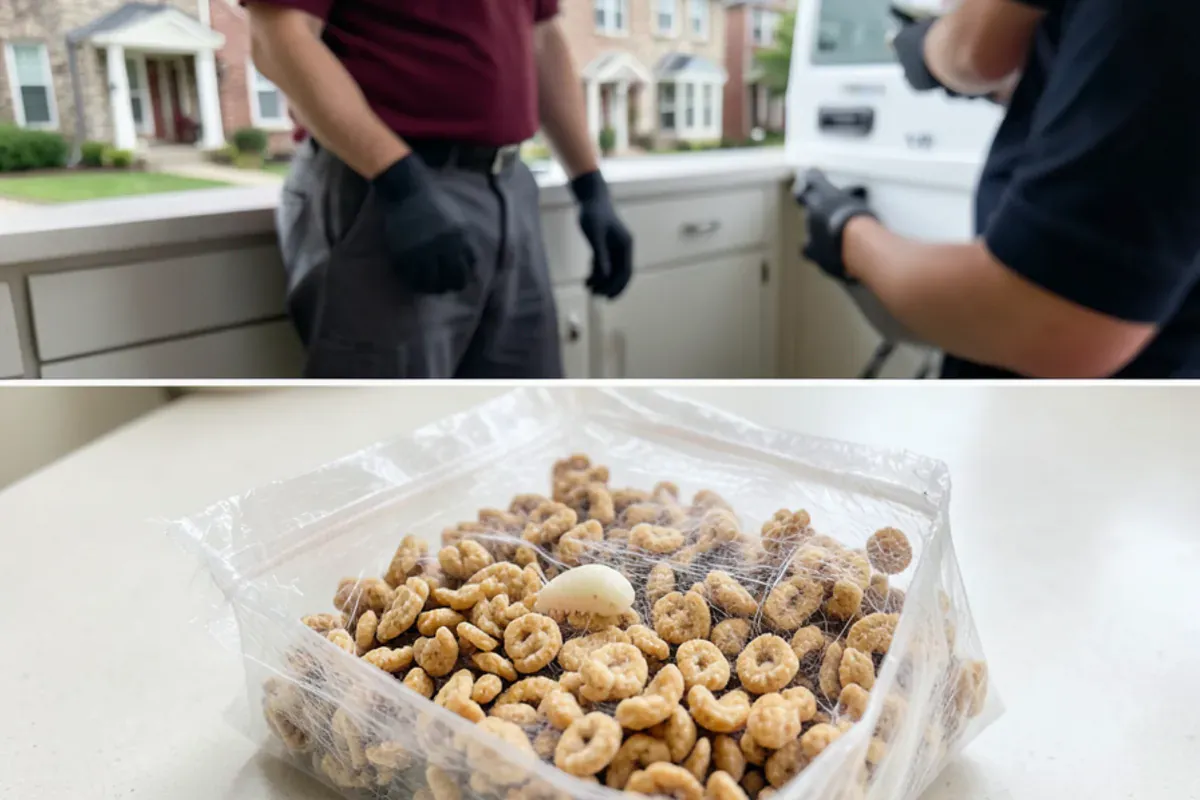
How to clear an infested pantry, step by step
A half-done cleanout is the most common reason pantry pests come back. Plan an hour and do the whole cabinet at once.
Empty every shelf
Take everything out, including spices, pet food, birdseed and decorative items like dried corn or potpourri.
Inspect each package
Look for webbing, clumps, small holes, live insects or a fine dust at the bottom. Check folded flaps and the seams of bags.
Bag and discard the infested items
Seal them in a plastic bag and take them outside to the trash the same day.
Freeze anything you are unsure about
Holding a sealed package at 0°F for about four days kills eggs and larvae you cannot see.
Vacuum and wipe
Vacuum shelves, corners, shelf-pin holes and the gap where the cabinet meets the wall, then wipe with soapy water. Empty the vacuum outdoors.
Restock in sealed containers
Only put food back once it is in glass, metal or hard plastic containers with tight lids.
Sealed food storage: how to prevent pantry moths and beetles long term
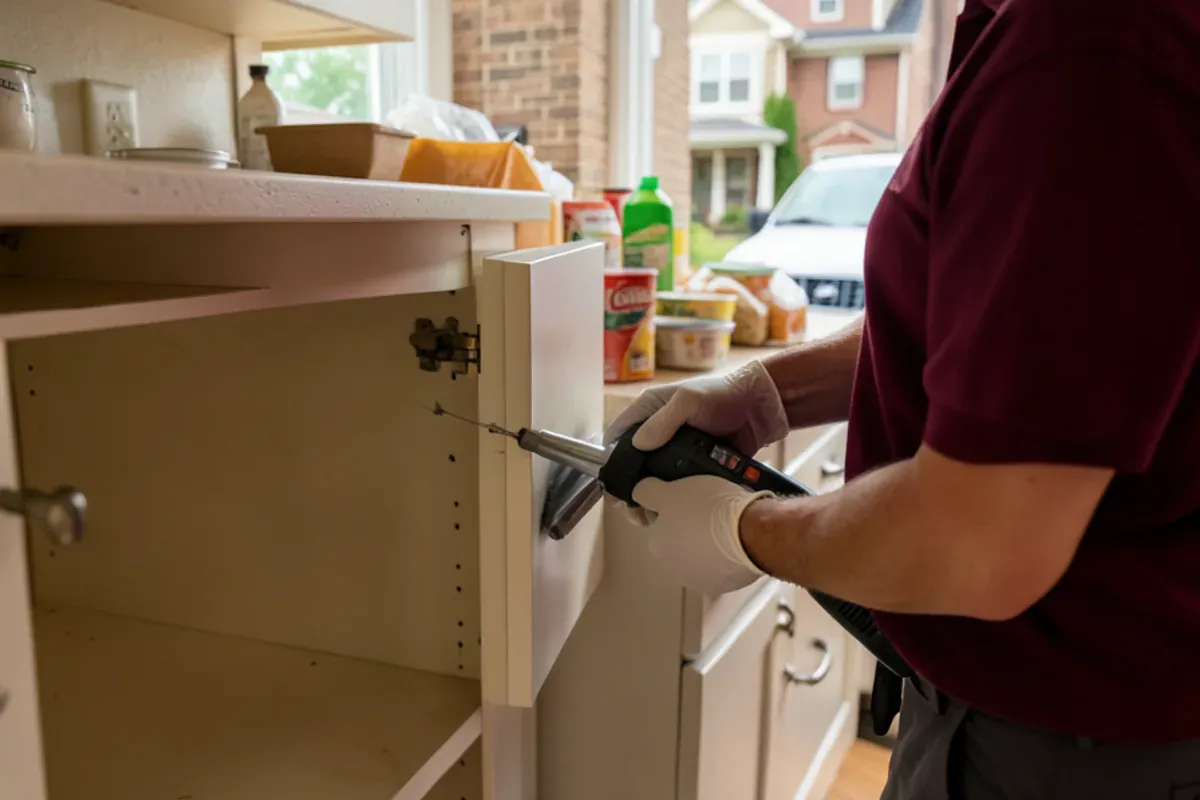
Paper, cardboard and thin plastic bags slow pantry pests down only a little; larvae and beetles can chew through or slip in at folds. Sealed storage keeps a new infestation confined to one container instead of the whole shelf.
- Use glass jars or hard plastic containers with gasket lids for flour, rice, cereal, pasta, nuts and baking mixes.
- Store pet food and birdseed in sealed bins, ideally in the garage rather than the kitchen pantry.
- Buy dry goods in amounts you will use within a couple of months, and rotate older items to the front.
- Check packages at the store for torn corners or webbing before buying.
- Keep shelves clear of spills and crumbs, and wipe them down every few months.
- Write the date on containers when you refill them so older food gets used first.
Do bay leaves, traps or sprays keep pantry pests away?
Bay leaves are a popular tip, but there is little evidence they repel pantry insects. Pheromone traps for Indian meal moths are useful for monitoring because they catch males and show whether moths are still around, yet they will not end an infestation on their own.
Sprays on shelves where food is stored are not a good idea, and they do nothing to the larvae inside packages. The cleanout and sealed storage are what actually work. When the problem keeps returning after a careful cleanout, the source is usually somewhere you have not looked: a forgotten bag of birdseed in the basement, a pet food bin in the garage, or a wall void behind the cabinets.
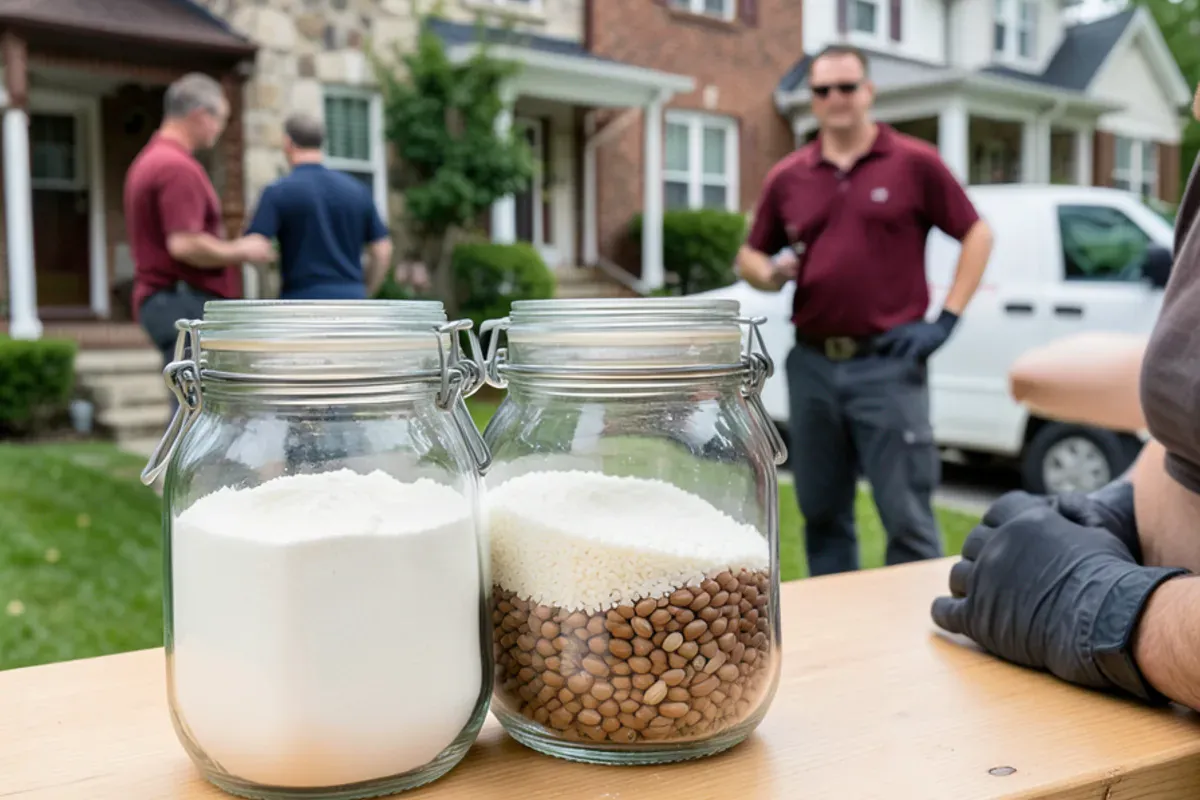
When should you call for help with weevils in rice or moths that keep coming back?
Call when you have done a full cleanout and still see insects a few weeks later, when larvae are turning up in several rooms, or when you run a home kitchen business or care for someone whose food must stay clean. Our pantry pest control service starts by tracking down the source, then treats cracks and voids away from food. The wider insect control section covers the other kitchen insects we handle.
Where the source usually turns out to be
When we inspect a kitchen with recurring pantry moths, the source is often not in the main pantry at all. We find it in a bag of birdseed in the basement, a big sack of dog food in a mudroom closet, or an old box of cereal pushed to the back of a high shelf.
Once the source is out, we usually set a pheromone trap in each affected cabinet and ask the homeowner to look at it after two or three weeks. A trap that stays empty tells us the cleanout worked. A trap still catching moths a month later means there is another package or a cabinet void we have not found yet. Sometimes the honest answer is that no treatment is needed at all, because one infested bag of rice was the whole problem. When treatment does make sense, it goes into cracks, shelf-pin holes and the void behind the cabinet face, never onto shelves where food sits.
Media's older apartments and twins often have cabinets with gaps where they meet the walls, and larvae wander into those spaces. If you are in the borough, our page on pest control in Media explains how we schedule kitchen visits.
Quick answers
Can pantry pests come from the grocery store?
Yes, and that is the usual way they arrive. Eggs or larvae can be inside a sealed package long before you open it, especially in whole grains, nuts, dried fruit and pet food. Checking packages before buying helps, and freezing new bags of flour or birdseed for about four days before storing them stops many problems before they start.
Are pantry moths and flour beetles harmful?
They do not bite people or damage the house, but they contaminate food with webbing, droppings and shed skins, which means the food should be thrown out. The bigger cost is the time and wasted groceries when an infestation spreads across a pantry, which is why we focus on finding and removing the source package first.
Can pantry moth larvae get into screw-top jars?
Sometimes. Young larvae and tiny beetles can work through loose threads on thin plastic screw tops or slip under lids that do not seat fully. Glass or hard plastic containers with a rubber gasket or clamp seal stop them reliably. If you find insects inside a closed container, treat that container as the source: discard the food, wash the jar in hot soapy water and check the shelf below it.
Should I throw out my spices if I find drugstore beetles?
Throw out any jar or packet with live beetles, holes or fine powder at the bottom, and check paprika, chili powder, dried herbs and tea first, since those are favorites. Spices that look clean can go in the freezer for about four days, then back into sealed containers. In older Delaware County kitchens, also check the cabinet seams nearby, because beetles leaving one jar often settle there.
The bottom line
Find the source package, clear the whole cabinet and move dry goods into sealed containers, and most pantry problems end there. If moths or beetles keep coming back after a careful cleanout, call (209) 563-1650 for a free inspection.
Sources
Written by the No Bugs Exterminator team
A small, family-run pest control business in Media, PA, led by owner Thom. We write about what we see on inspections in Delaware County and southeastern Pennsylvania. About us.
Services mentioned in this guide

Want a professional opinion?
Book a free inspection and get a written quote before any treatment.
- ★ 4.8 from 21 Google reviews
- Open 7 days, 8 a.m. to 7 p.m.
- Free inspection before treatment
- Family-run, based in Media, PA
Open 7 days, 8 a.m. to 7 p.m.